Loading...
Camillo Benso Count of Cavour vs Stanley Baldwin
Camillo Benso Count of Cavour leads by 10.7 pts · 2 figures compared
…

Camillo Benso Count of Cavour
Politician · Modern
63.0Total
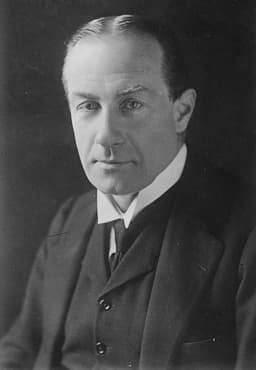
Stanley Baldwin
Politician · Modern
52.3Total
Basic Information
Born
1810
1867
Died
1861
1947
Era
Modern
Modern
Nationality
Italy
United Kingdom
Occupation
Politician
Politician
Civilization
Western
Western
Score Comparison
Military (10%)
14.9
19.0
Political (20%)
82.0
60.0
Influence (20%)
68.0
58.0
Legacy (20%)
65.0
49.2
Leadership (15%)
79.8
79.8
Strategy (15%)
39.6
26.5
TOTAL
63.0
52.3
Camillo Benso Count of Cavour — Complete Timeline
1852 AD
Appointed Prime Minister of Piedmont-SardiniaPolitical Action◆ Major
Cavour was appointed Prime Minister of the Kingdom of Piedmont-Sardinia by King Victor Emmanuel II. He implemented economic reforms, modernized the army, and pursued a policy of diplomatic maneuvering to unify Italy under Piedmontese leadership.
Italian UnificationPoliticsPiedmont
Impact: nationalconstructive
1855 AD
Crimean War ParticipationWar◆ Major
Cavour sent Piedmontese troops to fight alongside Britain and France in the Crimean War. This participation gained Piedmont-Sardinia a seat at the Congress of Paris, where Cavour raised the Italian question, gaining international sympathy for unification.
DiplomacyCrimean WarItalian Unification
Impact: regional
1858 AD
Plombières Agreement with Napoleon IIIPolitical Action◆ Major
Cavour secretly met with French Emperor Napoleon III at Plombi
DiplomacyAllianceItalian Unification
Impact: regional
1859 AD
Second Italian War of IndependenceWar
Cavour provoked Austria into declaring war, leading to the Second Italian War of Independence. Franco-Piedmontese forces won key battles at Magenta and Solferino, resulting in the annexation of Lombardy and the unification of central Italian states under Piedmont.
WarItalian UnificationAustria
Impact: regionalconstructive
1861 AD
Proclamation of the Kingdom of ItalyPolitical Action
Cavour oversaw the proclamation of the Kingdom of Italy under King Victor Emmanuel II, with the first Italian parliament meeting in Turin. He died shortly after, but his diplomatic and political efforts had largely achieved Italian unification.
Italian UnificationKingdom of ItalyPolitics
Impact: globalconstructive
Stanley Baldwin — Complete Timeline
1926 AD
General Strike of 1926Political Action◆ Major
As Prime Minister, Baldwin faced the General Strike called by the Trades Union Congress in support of coal miners. Baldwin's government used emergency powers and propaganda to maintain essential services, and the strike collapsed after nine days, weakening the trade union movement.
General StrikeLabour RelationsConservative Government
Impact: national
1927 AD
Trade Disputes and Trade Unions Act 1927Political Action◆ Major
Baldwin's government passed the Trade Disputes and Trade Unions Act, which made general strikes illegal and restricted trade union political funds. The Act required union members to opt in to paying the political levy, reducing Labour Party funding.
Trade UnionsLegislationConservative Policy
Impact: nationaldestructive
1931 AD
Statute of Westminster 1931Political Action◆ Major
Baldwin's government enacted the Statute of Westminster, which granted legislative independence to the Dominions of the British Empire (Canada, Australia, New Zealand, South Africa, Irish Free State, Newfoundland). This established the legal basis for the modern Commonwealth.
CommonwealthDecolonizationConstitutional Law
Impact: globalconstructive
1935 AD
Re-armament ProgrammePolitical Action◆ Major
Baldwin's government initiated a major re-armament programme in response to German re-militarization, including expansion of the Royal Air Force and Royal Navy. This marked a shift from earlier disarmament policies, though critics argued it was too slow.
RearmamentDefence PolicyNazi Germany
Impact: national
1936 AD
Abdication Crisis of Edward VIIIPolitical Action
As Prime Minister, Baldwin managed the constitutional crisis caused by King Edward VIII's desire to marry Wallis Simpson, a divorced American. Baldwin insisted the King abdicate if he married Simpson, leading to Edward's abdication in December 1936 and the accession of George VI.
MonarchyConstitutional CrisisAbdication
Impact: national
Expert Analysis
Origins
Camillo Benso, Count of Cavour, was born in 1810 in Turin into a noble Piedmontese family. His early career mixed military service with estate management, but his true passion lay in politics and economics. He traveled extensively in Britain and France, absorbing liberal ideas. Cavour entered parliament in 1848 and quickly became a leading figure in the moderate liberal camp. Stanley Baldwin was born in 1867 in Bewdley, Worcestershire, into a wealthy industrial and political family. His father was a ironmaster and Conservative MP. Baldwin was educated at Harrow and Cambridge, then joined his family's iron business. He entered Parliament in 1908, aged 41, as a Conservative backbencher, slowly rising through party ranks.
Rise to Power
Cavour's rise was meteoric. He became Prime Minister of Piedmont-Sardinia in 1852, aged 42. He transformed the kingdom into a modern state: building railways, reforming finances, and promoting free trade. His diplomatic masterstroke was the Plombières Agreement with Napoleon III in 1858, securing French military support against Austria. The resulting Second Italian War of Independence (1859) gave Piedmont Lombardy. Cavour then orchestrated plebiscites in central Italian states, annexing them. By 1861, he had unified most of Italy under King Victor Emmanuel II, becoming the first Prime Minister of Italy. Baldwin's rise was more gradual. He served as Financial Secretary to the Treasury (1917-1921) and President of the Board of Trade (1921-1922). He became Prime Minister in 1923 after Andrew Bonar Law's resignation. His first term was brief, but he returned in 1924 and again in 1935. Baldwin's power rested on his reputation as a safe pair of hands, particularly during crises like the General Strike of 1926 and the Abdication Crisis of 1936.
Leadership & Governance
Cavour's leadership was activist and strategic. He reformed the Piedmontese economy, reducing tariffs, expanding credit, and building infrastructure. Politically, he pursued a policy of 'fusion' with moderate nationalists, isolating radicals and clericals. His governance style was pragmatic, willing to use both diplomacy and war. In contrast, Baldwin's leadership was consensus-driven and reactive. He managed the 1926 General Strike by using emergency powers and avoiding concessions, then passed the Trade Disputes and Trade Unions Act 1927 to restrict union power. He also navigated the Statute of Westminster 1931, granting dominions legislative independence. Baldwin's rearmament program from 1934 was cautious, seeking to balance military needs with public opinion and economic constraints. Cavour scored 82.0 in political skill, Baldwin 60.0.
Triumph & Tragedy
Cavour's greatest triumph was Italian unification. He created a unified kingdom from a patchwork of states, achieving in a decade what many thought impossible. His tragedy was dying on June 6, 1861, just months after the Kingdom's proclamation, leaving unfinished business like Venice and Rome. Baldwin's triumphs included peacefully managing the Abdication Crisis of 1936, preserving the monarchy's constitutional role. He also faced the General Strike without crushing the unions, maintaining social peace. However, his tragedy was the failure to rearm more quickly against Nazi Germany; his 1935 rearmament program was inadequate, and his 1937 government's expansion of the RAF and Royal Navy came too late. Critics argue his caution contributed to Britain's unpreparedness in 1939.
Character & Destiny
Cavour was a calculating, energetic pragmatist. He combined liberal idealism with realpolitik, using secret diplomacy and war as instruments of policy. His character drove him to unify Italy, but his premature death limited his direct impact. Baldwin was seen as a calm, reassuring figure, embodying English moderation. He preferred conciliation to confrontation. However, his indecisiveness on rearmament and his famous 'appalling frankness' about the dangers of rearmament damaged his reputation. Historians like John Charmley argue Baldwin prioritized party unity over national preparedness. Cavour's character was proactive, Baldwin's reactive.
Legacy
Cavour's legacy is foundational: he is the architect of Italian unification. His political methods—balancing monarchy and parliament, using plebiscites, allying with France—set patterns for Italian politics. His economic reforms modernized northern Italy. Baldwin's legacy is more contested. He is remembered for managing the constitutional crisis of 1936 and for the Statute of Westminster, which reshaped the Commonwealth. But his rearmament record and his role in the 1930s appeasement era are criticized. His political score is 60.0, influence 58.0, legacy 49.2. Cavour's scores are higher: political 82.0, influence 68.0, legacy 65.0. The total score gap is 10.7 points in Cavour's favor.
Conclusion
Cavour had the greater impact. He transformed the map of Europe, creating a unified Italy that became a major power. Baldwin, while effective in managing crises, did not fundamentally change Britain or the world. Cavour's diplomatic and political achievements were more consequential, and his scores reflect this: leadership 79.8 vs 79.8 (equal), but political 82.0 vs 60.0, influence 68.0 vs 58.0, legacy 65.0 vs 49.2. Cavour's strategic vision (strategy 39.6 vs 26.5) also outmatched Baldwin's. Cavour's work reshaped a continent; Baldwin's work maintained stability in a declining empire. Thus, Cavour is the more significant historical figure.
Rankings
🥇
Camillo Benso Count of CavourLeader
Mil: 14.9Pol: 82.0Inf: 68.0
63.0
🥈
Stanley Baldwin
Mil: 19.0Pol: 60.0Inf: 58.0
52.3
+10.7 behind
How This Comparison Works
Algorithm
Each figure is scored on 6 dimensions (0—100 scale) based on structured historical data: Military (10%), Political (20%), Influence (20%), Legacy (20%), Leadership (15%), Strategy (15%). The weighted total produces the final ranking.
Data Sources
Scores are computed from structured sub-indicators in the database. Scale factors adjust for era (Ancient ×0.85, Modern ×1.0) and civilization size (Eastern ×1.05, Other ×0.80) to account for differences in population and military scale.
Maximum 3 Figures
Comparisons are limited to 2—3 figures to ensure readability and statistical meaningfulness.
Error Margins
±5 points per dimension — Sub-scores are derived from historical records with inherent uncertainty. Two figures within 5 points on a dimension should be considered roughly equivalent in that area.
Total Score Accuracy
±3 points overall — The weighted combination of 6 dimensions produces a total score with approximately ±3 points of uncertainty. Differences of less than 3 points are not statistically significant— the figures are effectively tied.
Known Limitations
- Historical records are incomplete and uneven across civilizations
- Figures from oral-tradition societies may be underrepresented
- Occupation labels can misclassify multi-role figures
- Scores measure capability and impact, not moral character
- Quantitative scoring is a comparison tool, not absolute truth
Capability Radar
Military (10%) — Battles & Warfare
Battles
5
8
Win Rate
5
12
Expansion
40
15
Political (20%) — Governance & Reform
Reform
85
60
Diplomacy
90
65
Economy
80
55
Influence (20%) — Cultural & Global Reach
Cultural
60
30
Global
70
50
Legacy (20%) — Historical Impact
Historical
80
55
Longevity
75
40
Leadership (15%) — Power & Stability
Tenure
60
70
Stability
70
60
Strategy (15%) — Tactics & Innovation
Strategy
35
17
Tactics
5
22
Reform
30
27
Similar Comparisons
Comments & Discussion
No comments yet. Be the first to share your thoughts!