Loading...
Lee Teng-hui vs Stanley Baldwin
Lee Teng-hui leads by 4.3 pts · 2 figures compared
…
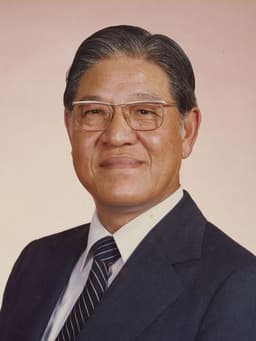
Lee Teng-hui
Politician · Modern
56.6Total
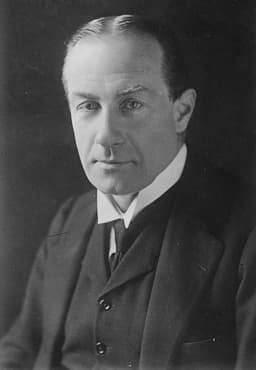
Stanley Baldwin
Politician · Modern
52.3Total
Basic Information
Born
1923
1867
Died
—
1947
Era
Modern
Modern
Nationality
China
United Kingdom
Occupation
Politician
Politician
Civilization
Eastern
Western
Score Comparison
Military (10%)
14.3
19.0
Political (20%)
78.0
60.0
Influence (20%)
55.0
58.0
Legacy (20%)
58.0
49.2
Leadership (15%)
78.0
79.8
Strategy (15%)
35.3
26.5
TOTAL
56.6
52.3
Lee Teng-hui — Complete Timeline
1987 AD
End of martial law and democratizationPolitical Action◆ Major
As president, Lee Teng-hui oversaw the lifting of martial law in Taiwan, ending 38 years of military rule. This allowed for the formation of opposition parties and expanded political freedoms.
Martial LawDemocratization
Impact: nationalprogressive
1996 AD
First direct presidential electionPolitical Action◆ Major
Lee Teng-hui won Taiwan's first direct presidential election, a landmark in the island's democratization. China conducted missile tests near Taiwan during the campaign to intimidate voters.
ElectionDemocratization
Impact: nationalprogressive
1999 AD
Special state-to-state relations statementPolitical Action◆ Major
Lee described cross-strait relations as 'special state-to-state relations,' implying Taiwan's separate sovereignty. This statement angered China and heightened tensions across the Taiwan Strait.
Cross-Strait RelationsSovereignty
Impact: regionaldestructive
Stanley Baldwin — Complete Timeline
1926 AD
General Strike of 1926Political Action◆ Major
As Prime Minister, Baldwin faced the General Strike called by the Trades Union Congress in support of coal miners. Baldwin's government used emergency powers and propaganda to maintain essential services, and the strike collapsed after nine days, weakening the trade union movement.
General StrikeLabour RelationsConservative Government
Impact: national
1927 AD
Trade Disputes and Trade Unions Act 1927Political Action◆ Major
Baldwin's government passed the Trade Disputes and Trade Unions Act, which made general strikes illegal and restricted trade union political funds. The Act required union members to opt in to paying the political levy, reducing Labour Party funding.
Trade UnionsLegislationConservative Policy
Impact: nationaldestructive
1931 AD
Statute of Westminster 1931Political Action◆ Major
Baldwin's government enacted the Statute of Westminster, which granted legislative independence to the Dominions of the British Empire (Canada, Australia, New Zealand, South Africa, Irish Free State, Newfoundland). This established the legal basis for the modern Commonwealth.
CommonwealthDecolonizationConstitutional Law
Impact: globalconstructive
1935 AD
Re-armament ProgrammePolitical Action◆ Major
Baldwin's government initiated a major re-armament programme in response to German re-militarization, including expansion of the Royal Air Force and Royal Navy. This marked a shift from earlier disarmament policies, though critics argued it was too slow.
RearmamentDefence PolicyNazi Germany
Impact: national
1936 AD
Abdication Crisis of Edward VIIIPolitical Action
As Prime Minister, Baldwin managed the constitutional crisis caused by King Edward VIII's desire to marry Wallis Simpson, a divorced American. Baldwin insisted the King abdicate if he married Simpson, leading to Edward's abdication in December 1936 and the accession of George VI.
MonarchyConstitutional CrisisAbdication
Impact: national
Expert Analysis
Origins
Lee Teng-hui was born on January 15, 1923, in Sanzhi, Taiwan, under Japanese rule. His family were Hakka farmers; he studied at Kyoto Imperial University and later at Cornell University, earning a Ph.D. in agricultural economics. His early career included roles in agricultural administration under the Kuomintang (KMT) regime.
Stanley Baldwin was born on August 3, 1867, in Bewdley, Worcestershire, England, into a wealthy industrialist family. He studied at Harrow and Trinity College, Cambridge, entering the family iron and steel business. He entered politics as a Conservative MP in 1908, serving in junior ministerial roles before becoming Prime Minister.
Rise to Power
Lee Teng-hui rose under KMT patronage, becoming mayor of Taipei in 1978 and governor of Taiwan Province in 1981. In 1984, he was chosen as Vice President under Chiang Ching-kuo. Upon Chiang's death in 1988, Lee succeeded him as President, surprising many as a native Taiwanese. He consolidated power by outmaneuvering KMT hardliners, leveraging his position to push reforms.
Baldwin rose through Conservative ranks, becoming Chancellor of the Exchequer in 1922 under Bonar Law. When Law resigned in 1923, Baldwin succeeded him as Prime Minister, despite limited experience. He called a general election to secure a mandate for protectionist tariffs but lost, returning to power in 1924 after defeating the Labour government.
Leadership & Governance
Lee's leadership focused on democratization: he ended martial law in 1987 (effective 1989), legalized opposition parties, and held Taiwan's first direct presidential election in 1996, winning with 54% of the vote. He promoted Taiwanization, elevating native Taiwanese in government, and pursued pragmatic diplomacy. His 'special state-to-state relations' statement in 1999 asserted Taiwan's separate sovereignty, straining cross-strait ties. Lee scored 78.0 in political skill, reflecting his ability to navigate authoritarian structures to implement democratic reforms.
Baldwin's governance emphasized stability and consensus. He successfully managed the 1926 General Strike by using emergency powers and broadcasting to the nation, maintaining order without excessive force. He passed the 1927 Trade Disputes Act to curb union power. He also enacted the Statute of Westminster 1931, granting legislative independence to Dominions. However, his rearmament program was slow initially, criticized for underestimating Nazi Germany. Baldwin scored 79.8 in leadership, reflecting his crisis management and parliamentary skill.
Triumph & Tragedy
Lee's greatest triumph was overseeing Taiwan's peaceful transition from authoritarian rule to democracy, a rare achievement in East Asia. His tragedy lies in the unresolved cross-strait tensions; his state-to-state statement provoked Chinese missile tests in 1995-96, risking conflict. He also faced corruption allegations against his family, tarnishing his legacy.
Baldwin's triumph was resolving the abdication crisis of 1936, forcing Edward VIII to choose between the throne and Wallis Simpson, preserving the monarchy's integrity. His tragedy was his failure to rearm Britain more aggressively in the 1930s, leaving the country underprepared for World War II. Historians criticize his complacency and focus on domestic stability over foreign threats.
Character & Destiny
Lee was pragmatic and strategic, using his outsider status to build coalitions. His calculated risk-taking enabled democratization but alienated China. Baldwin was conciliatory and cautious, prioritizing national unity. His aversion to confrontation led to decisive action in crises but also to procrastination on defense. Baldwin's character suited peacetime but not the looming war.
Legacy
Lee's legacy is the consolidation of Taiwanese democracy and identity. His reforms set a precedent for peaceful political transition. He is revered as the 'father of democracy' in Taiwan but viewed as a separatist by China. Baldwin's legacy is mixed: remembered for managing interwar crises but blamed for appeasement and slow rearmament. His impact on constitutional governance and labor relations endures.
Conclusion
Lee Teng-hui had a greater transformative impact. His political score of 78.0 versus Baldwin's 60.0 reflects his role in democratizing a previously authoritarian state. While Baldwin's leadership score (79.8) surpasses Lee's (78.0), Lee's total score of 56.6 exceeds Baldwin's 52.3, and his legacy score of 58.0 against 49.2 underscores his enduring influence. Lee fundamentally altered Taiwan's political landscape, whereas Baldwin's achievements were more about managing existing systems. Thus, Lee Teng-hui is the more significant historical figure.
Rankings
🥇
Lee Teng-huiLeader
Mil: 14.3Pol: 78.0Inf: 55.0
56.6
🥈
Stanley Baldwin
Mil: 19.0Pol: 60.0Inf: 58.0
52.3
+4.3 behind
How This Comparison Works
Algorithm
Each figure is scored on 6 dimensions (0—100 scale) based on structured historical data: Military (10%), Political (20%), Influence (20%), Legacy (20%), Leadership (15%), Strategy (15%). The weighted total produces the final ranking.
Data Sources
Scores are computed from structured sub-indicators in the database. Scale factors adjust for era (Ancient ×0.85, Modern ×1.0) and civilization size (Eastern ×1.05, Other ×0.80) to account for differences in population and military scale.
Maximum 3 Figures
Comparisons are limited to 2—3 figures to ensure readability and statistical meaningfulness.
Error Margins
±5 points per dimension — Sub-scores are derived from historical records with inherent uncertainty. Two figures within 5 points on a dimension should be considered roughly equivalent in that area.
Total Score Accuracy
±3 points overall — The weighted combination of 6 dimensions produces a total score with approximately ±3 points of uncertainty. Differences of less than 3 points are not statistically significant— the figures are effectively tied.
Known Limitations
- Historical records are incomplete and uneven across civilizations
- Figures from oral-tradition societies may be underrepresented
- Occupation labels can misclassify multi-role figures
- Scores measure capability and impact, not moral character
- Quantitative scoring is a comparison tool, not absolute truth
Capability Radar
Military (10%) — Battles & Warfare
Battles
16
8
Win Rate
15
12
Expansion
20
15
Political (20%) — Governance & Reform
Reform
85
60
Diplomacy
70
65
Economy
75
55
Influence (20%) — Cultural & Global Reach
Cultural
60
30
Global
60
50
Legacy (20%) — Historical Impact
Historical
70
55
Longevity
55
40
Leadership (15%) — Power & Stability
Tenure
75
70
Stability
65
60
Strategy (15%) — Tactics & Innovation
Strategy
22
17
Tactics
25
22
Reform
30
27
Similar Comparisons
Comments & Discussion
No comments yet. Be the first to share your thoughts!