Loading...
Camillo Benso di Cavour vs Manuel L. Quezon
Camillo Benso di Cavour leads by 3.9 pts · 2 figures compared
…

Camillo Benso di Cavour
Politician · Modern
57.7Total
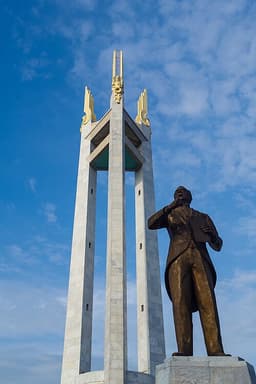
Manuel L. Quezon
Politician · Modern
53.8Total
Basic Information
Born
1810
1878
Died
1861
1944
Era
Modern
Modern
Nationality
Italy
Philippines
Occupation
Politician
Politician
Civilization
Western
Eastern
Score Comparison
Military (10%)
50.0
10.7
Political (20%)
75.0
72.0
Influence (20%)
68.0
62.0
Legacy (20%)
40.0
52.0
Leadership (15%)
79.8
66.0
Strategy (15%)
25.0
35.3
TOTAL
57.7
53.8
Camillo Benso di Cavour — Complete Timeline
1852 AD
Appointed Prime Minister of SardiniaPolitical Action◆ Major
Cavour became Prime Minister of the Kingdom of Sardinia under King Victor Emmanuel II. He implemented liberal reforms, modernized the economy, and positioned Sardinia as the leading state for Italian unification.
Italian UnificationPolitical Leadership
Impact: nationalconstructive
1855 AD
Crimean War ParticipationWar◆ Major
Cavour committed Sardinian troops to the Crimean War on the side of Britain and France. This diplomatic move gained Sardinia a seat at the Congress of Paris, allowing Cavour to raise the Italian question internationally.
DiplomacyItalian Unification
Impact: regionalconstructive
1858 AD
Plombières AgreementPolitical Action
Cavour met secretly with French Emperor Napoleon III at Plombi
DiplomacyItalian UnificationAlliance
Impact: regionalconstructive
1859 AD
Second Italian War of IndependenceWar◆ Major
Cavour provoked Austria into war, leading to French-Sardinian victories at Magenta and Solferino. The subsequent Armistice of Villafranca gave Lombardy to Sardinia, but Cavour resigned in protest over the peace terms.
Italian UnificationWarDiplomacy
Impact: regional
1860 AD
Expedition of the Thousand SupportPolitical Action
Cavour secretly supported Garibaldi's Expedition of the Thousand to conquer Sicily and Naples. He then sent Sardinian troops to prevent Garibaldi from marching on Rome, annexing the Papal States except for Rome itself.
Italian UnificationGaribaldiAnnexation
Impact: nationalconstructive
1861 AD
Proclamation of the Kingdom of ItalyPolitical Action
Cavour oversaw the proclamation of the Kingdom of Italy under King Victor Emmanuel II, with Turin as capital. He became the first Prime Minister of Italy but died three months later, leaving unification incomplete.
Italian UnificationFoundingGovernment
Impact: nationalconstructive
Manuel L. Quezon — Complete Timeline
1934 AD
Signed the Tydings-McDuffie ActPolitical Action◆ Major
Quezon, as president of the Philippine Senate, negotiated and secured the passage of the Tydings-McDuffie Act in the U.S. Congress. This act established the Philippine Commonwealth and set a 10-year transition period to full independence.
LegislationIndependenceU.S.-Philippines Relations
Impact: nationalconstructive
1935 AD
Became First President of the Philippine CommonwealthPolitical Action
Manuel L. Quezon was elected as the first president of the Philippine Commonwealth, a transitional government established under U.S. sovereignty leading to full independence. He was inaugurated on November 15, 1935.
PresidencyCommonwealthIndependence
Impact: nationalconstructive
1937 AD
Established the National Language (Filipino)Cultural◆ Major
Quezon proclaimed Tagalog as the basis of the national language of the Philippines, later named Filipino. This decision aimed to unify the diverse linguistic groups of the archipelago and promote national identity.
Language PolicyNational IdentityCultural Unification
Impact: nationalconstructive
1942 AD
Went into Exile During Japanese OccupationPolitical Action◆ Major
After the Japanese invasion of the Philippines, Quezon fled to the United States, establishing a government-in-exile in Washington, D.C. He continued to lead the Commonwealth government and advocate for Philippine interests during World War II.
ExileWorld War IIGovernment-in-Exile
Impact: national
1944 AD
Died in ExileOther
Quezon died of tuberculosis in Saranac Lake, New York, while still in exile. His death occurred before the liberation of the Philippines, and he was succeeded by Vice President Sergio Osme
DeathExileWorld War II
Impact: nationaltragic
Expert Analysis
Origins
Camillo Benso, Count of Cavour (born 1810 in Turin), came from a noble Piedmontese family. He received a military education but later embraced liberal ideas, traveling extensively in France and England. His exposure to constitutional governance and economic liberalism shaped his vision for a unified Italy. Cavour entered politics in 1848 as a moderate liberal, advocating for constitutional reforms in the Kingdom of Sardinia.
Manuel L. Quezon (born 1878 in Baler, Philippines) was the son of a schoolteacher and a Chinese mestizo. He studied law at the University of Santo Tomas and joined the Philippine Revolution against Spain in 1899. After the Philippine-American War, he entered politics, serving as governor of Tayabas and later as a representative in the Philippine Assembly. His early career was marked by advocacy for Philippine autonomy under U.S. rule.
Rise to Power
Cavour's rise accelerated in 1852 when he became Prime Minister of Sardinia. He modernized the economy through free trade, railway construction, and banking reforms. His strategic move was committing Sardinian troops to the Crimean War (1855), gaining a seat at the Congress of Paris (1856) and bringing the Italian question to European attention. The Plombières Agreement (1858) with Napoleon III secured French military support against Austria, leading to the Second Italian War of Independence (1859). Cavour's political score of 75.0 reflects his diplomatic acumen.
Quezon rose through the Philippine political system under U.S. colonial rule. He became Senate President in 1916 and led the campaign for Philippine independence. The Tydings-McDuffie Act (1934), which he negotiated, established a 10-year Commonwealth period leading to full independence. In 1935, Quezon was elected first President of the Philippine Commonwealth, a transitional government. His political score of 72.0 is comparable to Cavour's, but his path was constrained by American sovereignty.
Leadership & Governance
Cavour governed through coalition-building and pragmatic reforms. He strengthened the Sardinian monarchy while expanding parliamentary power. His economic policies lowered tariffs, encouraged foreign investment, and expanded infrastructure. Cavour's strategy score of 25.0 reflects a focus on diplomacy over military action; he used war as a tool but avoided direct command. His leadership score of 79.8 indicates effective management of competing factions.
Quezon centralized power in the presidency, creating a strong executive. He promoted social justice through land reform and labor laws, but also faced criticism for cronyism and suppressing dissent. Quezon established the National Language (Filipino) based on Tagalog to foster unity. His leadership score of 66.0 is lower than Cavour's, partly due to the limitations of colonial governance and internal opposition.
Triumph & Tragedy
Cavour's greatest triumph was the Proclamation of the Kingdom of Italy in 1861, uniting most of the peninsula under Victor Emmanuel II. He died three months later, not seeing the complete unification (Venetia and Rome were added later). His tragedy was the failure to achieve a more federal or liberal state; the new kingdom retained Sardinia's centralized system, ignoring regional differences. Cavour also sacrificed Nice and Savoy to France, a controversial move.
Quezon's triumph was securing the Tydings-McDuffie Act and establishing the Commonwealth, setting the stage for independence in 1946. His tragedy was the Japanese occupation (1942-1945), forcing him into exile in the U.S., where he died in 1944 before liberation. His collaboration with the U.S. military and the controversial War Manpower Commission conscription policies marred his legacy.
Character & Destiny
Cavour was a pragmatist, often described as manipulative but effective. He believed in realpolitik, using alliances and diplomacy to achieve Italian unity. His health was poor; he died at 51 from malaria. His character—calculating, patient, and visionary—shaped the Risorgimento's success. Historians rate him as a master of political maneuvering.
Quezon was charismatic and authoritarian, known as "the Boss." He maintained tight control over Philippine politics and used patronage. His decision to go into exile was criticized by some as abandoning the country, but he continued lobbying for Philippine interests in Washington. His death in exile prevented him from seeing independence realized.
Legacy
Cavour's legacy is foundational to modern Italy. His unification model—using a single kingdom to absorb others—influenced nation-building elsewhere. Italy's political structure, though flawed, bears his imprint. His influence score of 68.0 and legacy score of 40.0 reflect his centrality to Italian history but limited global recognition.
Quezon's legacy is the establishment of Philippine independence and the national language. He is remembered as the father of the Philippine Commonwealth. His influence score of 62.0 and legacy score of 52.0 indicate his importance to the Philippines. However, his authoritarian tendencies and exile cloud his reputation.
Conclusion
Cavour had greater historical impact. His political score (75.0 vs 72.0) and leadership score (79.8 vs 66.0) show superior governance. Cavour created a nation from fragmented states, altering European power dynamics. Quezon, though crucial to Philippine independence, operated within an American framework and left a more contested legacy. Cavour's total score of 57.7 exceeds Quezon's 53.8, reflecting his broader influence on world history. While Quezon's achievements were significant for the Philippines, Cavour's actions reshaped Europe. Therefore, Cavour stands as the more consequential figure.
Rankings
🥇
Camillo Benso di CavourLeader
Mil: 50.0Pol: 75.0Inf: 68.0
57.7
🥈
Manuel L. Quezon
Mil: 10.7Pol: 72.0Inf: 62.0
53.8
+3.9 behind
How This Comparison Works
Algorithm
Each figure is scored on 6 dimensions (0—100 scale) based on structured historical data: Military (10%), Political (20%), Influence (20%), Legacy (20%), Leadership (15%), Strategy (15%). The weighted total produces the final ranking.
Data Sources
Scores are computed from structured sub-indicators in the database. Scale factors adjust for era (Ancient ×0.85, Modern ×1.0) and civilization size (Eastern ×1.05, Other ×0.80) to account for differences in population and military scale.
Maximum 3 Figures
Comparisons are limited to 2—3 figures to ensure readability and statistical meaningfulness.
Error Margins
±5 points per dimension — Sub-scores are derived from historical records with inherent uncertainty. Two figures within 5 points on a dimension should be considered roughly equivalent in that area.
Total Score Accuracy
±3 points overall — The weighted combination of 6 dimensions produces a total score with approximately ±3 points of uncertainty. Differences of less than 3 points are not statistically significant— the figures are effectively tied.
Known Limitations
- Historical records are incomplete and uneven across civilizations
- Figures from oral-tradition societies may be underrepresented
- Occupation labels can misclassify multi-role figures
- Scores measure capability and impact, not moral character
- Quantitative scoring is a comparison tool, not absolute truth
Capability Radar
Military (10%) — Battles & Warfare
Battles
10
16
Win Rate
10
20
Expansion
60
19
Political (20%) — Governance & Reform
Reform
85
70
Diplomacy
90
60
Economy
80
55
Influence (20%) — Cultural & Global Reach
Cultural
65
55
Global
70
55
Legacy (20%) — Historical Impact
Historical
80
60
Longevity
75
50
Leadership (15%) — Power & Stability
Tenure
60
65
Stability
70
50
Strategy (15%) — Tactics & Innovation
Strategy
40
22
Tactics
10
24
Reform
30
32
Similar Comparisons
Comments & Discussion
No comments yet. Be the first to share your thoughts!