Loading...
Camillo Cavour vs Ghulam Ishaq Khan
Camillo Cavour leads by 9.6 pts · 2 figures compared
…
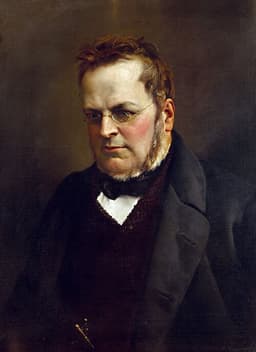
Camillo Cavour
Politician · Modern
65.0Total

Ghulam Ishaq Khan
Politician · Modern
55.4Total
Basic Information
Born
1810
1915
Died
1861
2006
Era
Modern
Modern
Nationality
Italy
Pakistan
Occupation
Politician
Politician
Civilization
Western
Indian
Score Comparison
Military (10%)
20.0
51.7
Political (20%)
82.0
68.0
Influence (20%)
65.0
50.2
Legacy (20%)
80.0
41.7
Leadership (15%)
79.8
74.0
Strategy (15%)
25.0
60.0
TOTAL
65.0
55.4
Camillo Cavour — Complete Timeline
1858 AD
Plombières AgreementPolitical Action
Cavour met secretly with Napoleon III at Plombi
UnificationDiplomacyFrance
Impact: regionalconstructive
1859 AD
Second Italian War of IndependenceWar◆ Major
Cavour provoked Austria into declaring war, then allied with France to defeat Austrian forces at Magenta and Solferino. The war resulted in Lombardy being annexed by Piedmont-Sardinia. Cavour resigned temporarily after Napoleon III's separate armistice at Villafranca.
UnificationWarAustria
Impact: regionalconstructive
1860 AD
Expedition of the ThousandPolitical Action◆ Major
Cavour secretly supported Garibaldi's expedition to conquer Sicily and Naples, while publicly maintaining neutrality. He sent Piedmontese troops south to meet Garibaldi and prevent him from marching on Rome. This maneuver led to the annexation of the Kingdom of the Two Sicilies.
UnificationGaribaldiAnnexation
Impact: regionalconstructive
1861 AD
Proclamation of the Kingdom of ItalyPolitical Action
Cavour, as prime minister, oversaw the first Italian parliament's proclamation of Victor Emmanuel II as King of Italy on March 17, 1861. The new kingdom excluded Venice and Rome. Cavour died three months later, leaving unification incomplete.
UnificationMonarchyParliament
Impact: globalconstructive
Ghulam Ishaq Khan — Complete Timeline
1985 AD
Chairman of the Senate of PakistanPolitical Action
Ghulam Ishaq Khan was elected Chairman of the Senate of Pakistan, a position he held until becoming president. As Senate chairman, he served as acting president during Zia-ul-Haq's absence and oversaw the passage of the Eighth Amendment, which expanded presidential powers.
Legislative RoleConstitutional Amendment
Impact: national
1988 AD
Appointment as President of PakistanPolitical Action◆ Major
Ghulam Ishaq Khan was elected President of Pakistan by the electoral college after the death of President Zia-ul-Haq. He succeeded to the presidency following Zia's death in a plane crash, becoming the first non-military president in over a decade.
Presidential SuccessionPakistan Politics
Impact: national
1990 AD
Dismissal of Benazir Bhutto's governmentPolitical Action◆ Major
President Ghulam Ishaq Khan used Article 58(2)(b) of the Constitution to dismiss Prime Minister Benazir Bhutto's government, citing corruption and mismanagement. This action dissolved the National Assembly and triggered a general election, establishing a pattern of presidential intervention in Pakistani politics.
Constitutional CrisisGovernment DismissalPakistan Politics
Impact: nationaldestructive
1993 AD
Dismissal of Nawaz Sharif's governmentPolitical Action◆ Major
President Ghulam Ishaq Khan dismissed Prime Minister Nawaz Sharif's government under Article 58(2)(b), accusing it of corruption and nepotism. The Supreme Court later reinstated Sharif, but the crisis led to both Khan and Sharif resigning, ending Khan's presidency.
Constitutional CrisisGovernment DismissalSupreme Court
Impact: nationaldestructive
Expert Analysis
Origins
Camillo Cavour was born on August 10, 1810, in Turin, into an aristocratic Piedmontese family. His father, Michele Cavour, was a conservative nobleman, while his mother, Adèle de Sellon, came from a Swiss Calvinist background. Cavour was educated at the Royal Military Academy of Turin, but he soon developed liberal leanings, influenced by the works of Jeremy Bentham and Adam Smith. After traveling in England and France, he turned to agriculture and journalism, becoming a vocal advocate for constitutional government and free trade.
Ghulam Ishaq Khan was born on January 20, 1915, in the small village of Ismail Khel in the North-West Frontier Province of British India (now Khyber Pakhtunkhwa, Pakistan). His father, Ghulam Qadir Khan, was a farmer. Ishaq Khan studied at the Islamia College in Peshawar and later at the University of the Punjab, where he earned a degree in chemistry. He entered the Indian Civil Service in 1941, serving in various administrative posts before and after the partition of India.
Rise to Power
Cavour entered politics in 1848, after King Charles Albert granted a constitution to Piedmont-Sardinia. He was elected to the Chamber of Deputies and quickly gained a reputation as a moderate liberal. In 1852, he became Prime Minister under King Victor Emmanuel II. His rise was marked by his ability to navigate between conservatives and republicans, forming the 'Connubio' (marriage) alliance with the center-left. The Plombières Agreement in July 1858, where Cavour secured French military support against Austria, was a turning point. He provoked Austria into declaring war in April 1859, leading to the Second Italian War of Independence. Victories at Magenta and Solferino resulted in Lombardy being ceded to Piedmont.
Ghulam Ishaq Khan rose through the civil service, serving as a secretary in the Ministry of Finance and later as Chairman of the Water and Power Development Authority (WAPDA). His reputation for financial prudence led to his appointment as Finance Minister under President Zia-ul-Haq in 1977. He was elected Chairman of the Senate in 1985, and after Zia's death in a plane crash in 1988, he became Acting President, then was elected President by the electoral college. His rise was facilitated by his bureaucratic background and lack of a political base, making him a compromise candidate.
Leadership & Governance
Cavour's leadership style was pragmatic and diplomatic. He modernized Piedmont's economy through free trade, railway construction, and banking reforms. He skillfully used the Crimean War to gain a seat at the Paris Peace Conference, raising Piedmont's international standing. His governance focused on centralization and secularization, reducing the power of the Church. In contrast, Ghulam Ishaq Khan governed as a constitutional enforcer, using Article 58(2)(b) to dismiss two elected governments: Benazir Bhutto's in 1990 and Nawaz Sharif's in 1993. His leadership was characterized by a strict adherence to fiscal discipline and anti-corruption rhetoric, but his actions undermined democratic stability. Cavour's political score is 82.0, while Ishaq Khan's is 68.0, reflecting their differing effectiveness.
Triumph & Tragedy
Cavour's greatest triumph was the unification of Italy under the House of Savoy. He orchestrated the Proclamation of the Kingdom of Italy on March 17, 1861, though he died later that year. His secret support for Garibaldi's Expedition of the Thousand secured the South. His greatest failure was the Treaty of Turin (1860), which ceded Nice and Savoy to France, a controversial concession. Ghulam Ishaq Khan's triumph was maintaining fiscal stability during economic crises, but his tragedy was his role in destabilizing democracy. His dismissals of Bhutto and Sharif were upheld by the Supreme Court but set a precedent for military-backed presidential interventions. He scored 51.7 in military, reflecting his lack of direct military involvement, while Cavour scored 20.0, as his strength was political, not military.
Character & Destiny
Cavour was a realist, often described as cunning and manipulative. He believed in 'political chemistry'—mixing forces to achieve unification. His character drove him to take calculated risks, like the Plombières Agreement. His destiny was to die at 51, months after achieving his life's work. Ghulam Ishaq Khan was seen as aloof, honest, and rigid. His bureaucratic temperament made him reluctant to compromise, leading to confrontations with elected leaders. His destiny was to be a transitional figure, overshadowed by the military's role in Pakistani politics. Historians note Cavour's influence score of 65.0 versus Ishaq Khan's 50.2.
Legacy
Cavour's legacy is foundational to modern Italy. His policies of economic liberalism and secular statehood shaped the kingdom. He is remembered as a master statesman, though criticized for sacrificing democracy for unity. Ghulam Ishaq Khan's legacy is mixed: he is credited with upholding constitutional provisions but blamed for weakening democracy. His use of Article 58(2)(b) was later repealed in 1997. Cavour's total score of 65.0 surpasses Ishaq Khan's 55.4, indicating greater historical impact.
Conclusion
Camillo Cavour had a greater impact than Ghulam Ishaq Khan. Cavour's political maneuvering created a unified Italian nation, influencing European geopolitics. Ishaq Khan's actions, while constitutionally significant, were reactive and ultimately detrimental to democratic consolidation in Pakistan. Cavour's legacy scores 80.0, compared to Ishaq Khan's 41.7, underscoring his enduring influence.
Rankings
🥇
Camillo CavourLeader
Mil: 20.0Pol: 82.0Inf: 65.0
65.0
🥈
Ghulam Ishaq Khan
Mil: 51.7Pol: 68.0Inf: 50.2
55.4
+9.6 behind
How This Comparison Works
Algorithm
Each figure is scored on 6 dimensions (0—100 scale) based on structured historical data: Military (10%), Political (20%), Influence (20%), Legacy (20%), Leadership (15%), Strategy (15%). The weighted total produces the final ranking.
Data Sources
Scores are computed from structured sub-indicators in the database. Scale factors adjust for era (Ancient ×0.85, Modern ×1.0) and civilization size (Eastern ×1.05, Other ×0.80) to account for differences in population and military scale.
Maximum 3 Figures
Comparisons are limited to 2—3 figures to ensure readability and statistical meaningfulness.
Error Margins
±5 points per dimension — Sub-scores are derived from historical records with inherent uncertainty. Two figures within 5 points on a dimension should be considered roughly equivalent in that area.
Total Score Accuracy
±3 points overall — The weighted combination of 6 dimensions produces a total score with approximately ±3 points of uncertainty. Differences of less than 3 points are not statistically significant— the figures are effectively tied.
Known Limitations
- Historical records are incomplete and uneven across civilizations
- Figures from oral-tradition societies may be underrepresented
- Occupation labels can misclassify multi-role figures
- Scores measure capability and impact, not moral character
- Quantitative scoring is a comparison tool, not absolute truth
Capability Radar
Military (10%) — Battles & Warfare
Battles
5
42
Win Rate
5
44
Expansion
35
50
Political (20%) — Governance & Reform
Reform
85
40
Diplomacy
90
45
Economy
80
55
Influence (20%) — Cultural & Global Reach
Cultural
65
20
Global
75
20
Legacy (20%) — Historical Impact
Historical
85
30
Longevity
80
20
Leadership (15%) — Power & Stability
Tenure
60
60
Stability
70
30
Strategy (15%) — Tactics & Innovation
Strategy
30
54
Tactics
10
57
Reform
40
61
Similar Comparisons
Comments & Discussion
No comments yet. Be the first to share your thoughts!