Loading...
Anthony Eden vs Camillo Cavour
Camillo Cavour leads by 17.2 pts · 2 figures compared
…

Anthony Eden
Politician · Modern
47.8Total
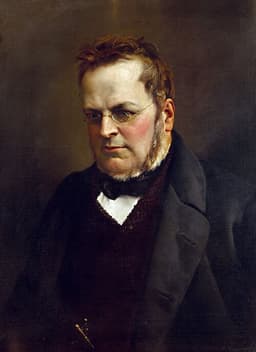
Camillo Cavour
Politician · Modern
65.0Total
Basic Information
Born
1897
1810
Died
1977
1861
Era
Modern
Modern
Nationality
United Kingdom
Italy
Occupation
Politician
Politician
Civilization
Western
Western
Score Comparison
Military (10%)
49.1
20.0
Political (20%)
42.3
82.0
Influence (20%)
52.5
65.0
Legacy (20%)
45.8
80.0
Leadership (15%)
51.9
79.8
Strategy (15%)
41.7
25.0
TOTAL
47.8
65.0
Anthony Eden — Complete Timeline
1953 AD
Anglo-Egyptian Agreement on SudanPolitical Action◆ Major
As Foreign Secretary, Eden negotiated the Anglo-Egyptian Agreement that granted self-government to Sudan, leading to its independence in 1956. This resolved a long-standing dispute between Britain and Egypt over the status of Sudan.
SudanDecolonizationDiplomacy
Impact: regionalconstructive
1954 AD
Geneva Conference on IndochinaPolitical Action◆ Major
As Foreign Secretary, Eden chaired the Geneva Conference that ended the First Indochina War. The conference resulted in the Geneva Accords, which temporarily divided Vietnam at the 17th parallel and established Laos and Cambodia as independent neutral states.
IndochinaDiplomacyVietnam
Impact: globalconstructive
1956 AD
Suez CrisisWar
As Prime Minister, Eden ordered British forces to invade Egypt after Nasser nationalized the Suez Canal. The operation was conducted in collusion with France and Israel. International condemnation, especially from the US, forced a humiliating withdrawal, damaging British prestige.
Suez CanalEgyptImperial Decline
Impact: globaldestructive
1957 AD
Resignation as Prime MinisterPolitical Action◆ Major
Eden resigned as Prime Minister in January 1957, citing ill health. The Suez Crisis had severely damaged his reputation and authority. He was succeeded by Harold Macmillan. Eden's resignation marked the end of a brief and controversial premiership.
ResignationSuez CrisisMacmillan
Impact: national
Camillo Cavour — Complete Timeline
1858 AD
Plombières AgreementPolitical Action
Cavour met secretly with Napoleon III at Plombi
UnificationDiplomacyFrance
Impact: regionalconstructive
1859 AD
Second Italian War of IndependenceWar◆ Major
Cavour provoked Austria into declaring war, then allied with France to defeat Austrian forces at Magenta and Solferino. The war resulted in Lombardy being annexed by Piedmont-Sardinia. Cavour resigned temporarily after Napoleon III's separate armistice at Villafranca.
UnificationWarAustria
Impact: regionalconstructive
1860 AD
Expedition of the ThousandPolitical Action◆ Major
Cavour secretly supported Garibaldi's expedition to conquer Sicily and Naples, while publicly maintaining neutrality. He sent Piedmontese troops south to meet Garibaldi and prevent him from marching on Rome. This maneuver led to the annexation of the Kingdom of the Two Sicilies.
UnificationGaribaldiAnnexation
Impact: regionalconstructive
1861 AD
Proclamation of the Kingdom of ItalyPolitical Action
Cavour, as prime minister, oversaw the first Italian parliament's proclamation of Victor Emmanuel II as King of Italy on March 17, 1861. The new kingdom excluded Venice and Rome. Cavour died three months later, leaving unification incomplete.
UnificationMonarchyParliament
Impact: globalconstructive
Expert Analysis
Origins
Anthony Eden was born on June 12, 1897, at Windlestone Hall in County Durham, England, into a conservative aristocratic family. His father, Sir William Eden, was a baronet and artist, but the family faced financial difficulties. Eden was educated at Eton and later served in World War I, where he won the Military Cross. After the war, he studied Oriental languages at Christ Church, Oxford, and was elected to Parliament in 1923 as a Conservative. His early career included roles as Parliamentary Private Secretary to the Foreign Secretary and later as Minister without portfolio for League of Nations affairs.
Camillo Benso, Count of Cavour, was born on August 10, 1810, in Turin, then part of the Kingdom of Sardinia. His family owned substantial estates, and his father was a conservative aristocrat. Cavour was educated at the Military Academy of Turin but disliked military life, preferring liberal ideas. He traveled widely in France and England, studying political economy. He became a successful agricultural entrepreneur and founded the newspaper *Il Risorgimento* in 1847, advocating for constitutional government and Italian unification. Cavour entered politics in 1848 as a deputy in the Sardinian parliament.
Rise to Power
Eden rose to prominence as a specialist in foreign affairs. He became Foreign Secretary in 1935 at age 38, the youngest since 1812. He advocated for collective security through the League of Nations and opposed appeasement of Nazi Germany. He resigned in 1938 over Prime Minister Neville Chamberlain's policy of negotiating with Mussolini. He returned to government in 1939 and served as Foreign Secretary again under Winston Churchill during World War II. His role in wartime diplomacy, including relations with the United States and the Soviet Union, solidified his reputation. However, he was passed over for prime minister in 1955, but succeeded Churchill later that year.
Cavour entered the government of Piedmont-Sardinia as Minister of Agriculture in 1850, then Minister of Finance in 1851. He modernized the economy, promoted free trade, and built railways. He became Prime Minister in 1852 and skillfully used diplomacy to advance Italian unification. He engineered the Crimean War entry in 1855 to gain a seat at the peace conference, where he raised the Italian question. His secret meeting with Napoleon III at Plombières in 1858 secured French military support against Austria, a turning point. He provoked Austria into war in 1859, leading to victories at Magenta and Solferino, and gained Lombardy. He used Garibaldi's Expedition of the Thousand in 1860 to conquer the south, then sent Piedmontese troops to secure the Papal States, unifying Italy under Victor Emmanuel II.
Leadership & Governance
Eden's leadership style was diplomatic and cautious, but he could be indecisive. As Prime Minister, he faced the Suez Crisis in 1956 when Egyptian President Nasser nationalized the Suez Canal. Eden, viewing Nasser as a second Hitler, colluded with France and Israel to invade Egypt. He ordered military action without consulting the United States or the Commonwealth, and faced international condemnation. His governance approach was reactive and secretive, leading to a disastrous outcome. He scored 42.3 in political skills, reflecting his failure to manage the crisis.
Cavour was a master of realpolitik, combining economic reform with shrewd diplomacy. He modernized Piedmont-Sardinia's economy, building infrastructure and promoting trade. He used Parliament to build consensus for his policies. His leadership score of 79.8 reflects his ability to achieve Italian unification through alliances, manipulation of public opinion, and strategic use of force. He integrated the newly acquired territories into a single state with a centralized government, though he died shortly after the proclamation of the Kingdom of Italy in 1861.
Triumph & Tragedy
Eden's greatest triumph was his role in the Geneva Conference of 1954, which ended the First Indochina War. He chaired the conference and secured the Geneva Accords, temporarily stabilizing Southeast Asia. His tragedy was the Suez Crisis in 1956, which he initiated and then aborted under US pressure. The crisis exposed British decline, fractured the Anglo-American alliance, and led to his resignation in 1957. Eden's military score of 49.1 reflects his mismanagement of the operation.
Cavour's greatest triumph was the unification of Italy, achieved through the Plombières Agreement, the war of 1859, and the annexation of southern Italy in 1860. His tragedy was his premature death at age 50 in 1861, just months after Italy's unification, leaving the new nation with many unresolved problems, such as regional disparities and the Rome question. His political score of 82.0 underscores his effective statecraft.
Character & Destiny
Eden was known for his charm, diplomatic skill, and vanity. He resented being overshadowed by Churchill and was determined to assert his own authority. His character led him to overreact to Nasser, seeing him as a dictator to be confronted. His destiny was to be remembered as the prime minister who presided over Britain's imperial decline. Historical assessments note his poor judgment during Suez, which destroyed his career.
Cavour was pragmatic, calculating, and tireless. He believed in gradual reform and constitutional monarchy. His character enabled him to outmaneuver rivals like Garibaldi and Mazzini, and to exploit great power rivalries for Italian unification. His destiny was to die at the height of his success, but his work endured. He is considered the architect of modern Italy, with a legacy score of 80.0.
Legacy
Eden's legacy is largely negative due to Suez. The crisis accelerated the end of British imperialism and the shift of power to the United States. His influence score of 52.5 reflects his limited long-term impact. He is remembered as a failed prime minister, though his earlier diplomatic work is noted.
Cavour's legacy is immense. He is one of the founders of modern Italy, and his methods of unification—combining diplomacy, war, and popular uprisings—became a model for nation-building. His economic reforms laid the foundation for Italy's industrialization. His total score of 65.0 reflects his enduring influence on Italian political structures.
Conclusion
Camillo Cavour had a greater impact than Anthony Eden. Cavour achieved a monumental nation-building project, scoring 65.0 overall, while Eden's mismanagement of Suez led to a score of 47.8. Cavour's political skill (82.0) and legacy (80.0) far exceed Eden's (42.3 and 45.8). Eden's failure is a case study in how not to conduct foreign policy, while Cavour's success is a model of statecraft. Thus, Cavour is the more significant historical figure.
Rankings
🥇
Camillo CavourLeader
Mil: 20.0Pol: 82.0Inf: 65.0
65.0
🥈
Anthony Eden
Mil: 49.1Pol: 42.3Inf: 52.5
47.8
+17.2 behind
How This Comparison Works
Algorithm
Each figure is scored on 6 dimensions (0—100 scale) based on structured historical data: Military (10%), Political (20%), Influence (20%), Legacy (20%), Leadership (15%), Strategy (15%). The weighted total produces the final ranking.
Data Sources
Scores are computed from structured sub-indicators in the database. Scale factors adjust for era (Ancient ×0.85, Modern ×1.0) and civilization size (Eastern ×1.05, Other ×0.80) to account for differences in population and military scale.
Maximum 3 Figures
Comparisons are limited to 2—3 figures to ensure readability and statistical meaningfulness.
Error Margins
±5 points per dimension — Sub-scores are derived from historical records with inherent uncertainty. Two figures within 5 points on a dimension should be considered roughly equivalent in that area.
Total Score Accuracy
±3 points overall — The weighted combination of 6 dimensions produces a total score with approximately ±3 points of uncertainty. Differences of less than 3 points are not statistically significant— the figures are effectively tied.
Known Limitations
- Historical records are incomplete and uneven across civilizations
- Figures from oral-tradition societies may be underrepresented
- Occupation labels can misclassify multi-role figures
- Scores measure capability and impact, not moral character
- Quantitative scoring is a comparison tool, not absolute truth
Capability Radar
Military (10%) — Battles & Warfare
Battles
30
5
Win Rate
29
5
Expansion
38
35
Political (20%) — Governance & Reform
Reform
30
85
Diplomacy
40
90
Economy
30
80
Influence (20%) — Cultural & Global Reach
Cultural
20
65
Global
35
75
Legacy (20%) — Historical Impact
Historical
45
85
Longevity
30
80
Leadership (15%) — Power & Stability
Tenure
25
60
Stability
20
70
Strategy (15%) — Tactics & Innovation
Strategy
35
30
Tactics
41
10
Reform
44
40
Similar Comparisons
Comments & Discussion
No comments yet. Be the first to share your thoughts!