Loading...
Cao Pi vs Demetrius I Poliorcetes
Demetrius I Poliorcetes leads by 2.1 pts · 2 figures compared
…

Cao Pi
Emperor · Ancient
54.8Total
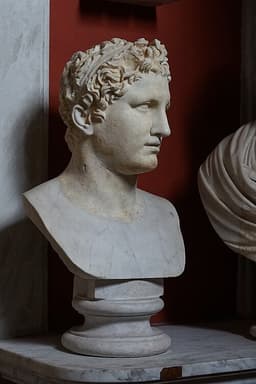
Demetrius I Poliorcetes
Emperor · Ancient
56.9Total
Basic Information
Born
187
-337
Died
226
-283
Era
Ancient
Ancient
Nationality
China
Macedon
Occupation
Emperor
Emperor
Civilization
Eastern
Western
Score Comparison
Military (10%)
47.5
67.3
Political (20%)
45.0
48.0
Influence (20%)
55.7
58.0
Legacy (20%)
52.0
50.0
Leadership (15%)
74.0
65.7
Strategy (15%)
52.5
61.2
TOTAL
54.8
56.9
Cao Pi — Complete Timeline
220 AD
Establishment of the Nine-Rank SystemReform◆ Major
Cao Pi implemented the Nine-Rank System for official selection, which classified candidates into nine grades based on family background and talent. This system aimed to reduce the influence of powerful families but eventually entrenched aristocratic privilege, lasting until the Sui dynasty.
Bureaucratic ReformNine-Rank SystemCivil Service
Impact: nationalconstructive
Forced Abdication of Emperor XianPolitical Action
Cao Pi pressured Emperor Xian of Han to abdicate, then accepted the throne himself, founding the Cao Wei dynasty. He granted Emperor Xian the title Duke of Shanyang and allowed him to live in retirement. This ended the Han dynasty and began the Three Kingdoms period.
AbdicationHan Dynasty EndCao Wei
Impact: national
Death of Cao CaoPolitical Action◆ Major
Cao Pi succeeded his father Cao Cao as King of Wei and Chancellor of the Han dynasty. He immediately moved to consolidate power, forcing the Han emperor to abdicate within months. This succession marked the transition from de facto to de jure control of northern China.
SuccessionCao CaoWei Dynasty
Impact: national
222 AD
Invasion of WuWar◆ Major
Cao Pi launched a large-scale invasion of the Eastern Wu state, but was defeated at the Battle of Dongkou. The Wei navy was repelled by Wu forces under Lu Xun. This failure ended Cao Pi's ambition to quickly unify China and solidified the Three Kingdoms stalemate.
InvasionWei-Wu WarThree Kingdoms
Impact: regional
Demetrius I Poliorcetes — Complete Timeline
306 BC
Battle of Salamis in Cyprus (306 BC)War◆ Major
Demetrius commanded the Macedonian fleet to a decisive victory over Ptolemy I's navy off Salamis, Cyprus. He destroyed or captured much of the Ptolemaic fleet, allowing him to conquer Cyprus and establish a base for his father Antigonus I Monophthalmus.
Naval BattleCyprusAntigonid
Impact: regional
305 BC
Siege of Rhodes (305-304 BC)War◆ Major
Demetrius Poliorcetes besieged the city of Rhodes with massive siege engines, including the Helepolis, a 130-foot siege tower. After a year-long siege, he failed to capture the city and was forced to withdraw, but his innovative siege techniques earned him the epithet 'Poliorcetes' (Besieger of Cities).
SiegeMilitary EngineeringRhodes
Impact: regional
294 BC
Proclaimed King of Macedon (294 BC)Political Action◆ Major
After a period of chaos in Macedon, Demetrius seized the throne and was proclaimed king. He ruled Macedon for seven years, attempting to restore Antigonid power and launch campaigns to reclaim his father's empire in Asia.
KingshipMacedonAntigonid
Impact: regional
285 BC
Capture and Death in Seleucid Captivity (285 BC)Other◆ Major
After being defeated by Lysimachus and Pyrrhus, Demetrius fled to Asia Minor but was captured by Seleucus I. He was held in honorable captivity in Apamea, where he died three years later from illness and excessive drinking, ending his turbulent career.
CaptivityDeathSeleucid
Impact: regionaltragic
Expert Analysis
Origins
**Cao Pi** (187-226 AD) was born in Bozhou, China, as the eldest son of the warlord Cao Cao and Lady Bian. His father's conquests during the late Han dynasty provided a privileged upbringing, but also intense political pressure. Cao Pi was educated in military and civil affairs from a young age, competing with his brothers for succession.
**Demetrius I Poliorcetes** (337-283 BC) was born in Macedonia as the son of Antigonus I Monophthalmus, a general under Alexander the Great. His father's ambition to reunite Alexander's empire shaped Demetrius's early life. He fought alongside his father from age 20, learning siege warfare and naval tactics.
Rise to Power
Cao Pi's rise was engineered through careful political maneuvering. After Cao Cao's death in 220 AD, Pi inherited the title King of Wei and Chancellor. Within months, he forced Emperor Xian of Han to abdicate, establishing the Cao Wei dynasty. He secured loyalty by granting the former emperor a nominal title and using the Nine-Rank System to co-opt local elites.
Demetrius rose through military victories. In 306 BC, he crushed Ptolemy I's fleet at Salamis, Cyprus, capturing 100 ships. This victory led his father to proclaim him co-king. In 294 BC, after years of campaigning, he seized the Macedonian throne. His epithet "Poliorcetes" (Besieger) came from his failed but spectacular siege of Rhodes in 305-304 BC, where he deployed the Helepolis, a 130-foot siege tower.
Leadership & Governance
Cao Pi's governance focused on institutional consolidation. He implemented the Nine-Rank System, which classified officials into nine grades based on family background and talent. This system, while stabilizing the regime, entrenched aristocratic power. He also reformed the legal code and promoted Confucian learning. His military leadership scored 47.5, reflecting his failed invasion of Wu in 222-223 AD, where his navy was repelled at Dongkou.
Demetrius was a charismatic but erratic ruler. He spent heavily on grand projects, like the Helepolis and a massive funerary ship for his father. His rule in Macedon (294-287 BC) was marked by constant warfare and unpopularity; he taxed heavily to fund his campaigns. His political score of 48.0 indicates instability. He failed to build lasting institutions, relying on personal loyalty and plunder.
Triumph & Tragedy
Cao Pi's greatest success was founding the Cao Wei dynasty, which lasted 46 years. His Nine-Rank System endured for centuries, shaping Chinese bureaucracy. His greatest failure was the invasion of Wu, which drained resources and damaged his reputation. He also alienated his brothers, leading to internal strife after his death.
Demetrius's triumph was his military prowess: he scored 67.3 in military, with victories at Salamis and the capture of Athens. His tragedy was his capture by Seleucus I in 285 BC. After defeat by Lysimachus and Pyrrhus, he fled to Asia Minor but was imprisoned in Apamea, where he died in 283 BC from alcoholism and neglect.
Character & Destiny
Cao Pi was calculating and ruthless, yet also a poet and scholar. His decision to force abdication was pragmatic but alienated Han loyalists. His character led to a stable but short-lived dynasty. Demetrius was bold and innovative, but his arrogance and lack of fiscal discipline caused his downfall. Ancient historians describe him as charismatic but reckless.
Legacy
Cao Pi's legacy is institutional: the Nine-Rank System influenced Chinese governance until the Sui dynasty. His dynasty, Cao Wei, set the stage for the Three Kingdoms era. Demetrius is remembered for his siege engines, which advanced military technology. However, his kingdom collapsed after his death, and his son Antigonus II Gonatas only secured Macedon later.
Conclusion
Cao Pi had greater long-term impact. Despite a lower total score (54.8 vs 56.9), his political reforms shaped Chinese bureaucracy for centuries, while Demetrius's conquests were ephemeral. Cao Pi's leadership score of 74.0 versus Demetrius's 65.7 reflects his ability to build a stable state. Demetrius's military genius was impressive but ultimately futile. Thus, Cao Pi's legacy endures.
Rankings
🥇
Demetrius I PoliorcetesLeader
Mil: 67.3Pol: 48.0Inf: 58.0
56.9
🥈
Cao Pi
Mil: 47.5Pol: 45.0Inf: 55.7
54.8
+2.1 behind
How This Comparison Works
Algorithm
Each figure is scored on 6 dimensions (0—100 scale) based on structured historical data: Military (10%), Political (20%), Influence (20%), Legacy (20%), Leadership (15%), Strategy (15%). The weighted total produces the final ranking.
Data Sources
Scores are computed from structured sub-indicators in the database. Scale factors adjust for era (Ancient ×0.85, Modern ×1.0) and civilization size (Eastern ×1.05, Other ×0.80) to account for differences in population and military scale.
Maximum 3 Figures
Comparisons are limited to 2—3 figures to ensure readability and statistical meaningfulness.
Error Margins
±5 points per dimension — Sub-scores are derived from historical records with inherent uncertainty. Two figures within 5 points on a dimension should be considered roughly equivalent in that area.
Total Score Accuracy
±3 points overall — The weighted combination of 6 dimensions produces a total score with approximately ±3 points of uncertainty. Differences of less than 3 points are not statistically significant— the figures are effectively tied.
Known Limitations
- Historical records are incomplete and uneven across civilizations
- Figures from oral-tradition societies may be underrepresented
- Occupation labels can misclassify multi-role figures
- Scores measure capability and impact, not moral character
- Quantitative scoring is a comparison tool, not absolute truth
Capability Radar
Military (10%) — Battles & Warfare
Battles
45
75
Win Rate
50
60
Expansion
50
70
Political (20%) — Governance & Reform
Reform
65
40
Diplomacy
70
50
Economy
60
45
Influence (20%) — Cultural & Global Reach
Cultural
55
55
Global
40
55
Legacy (20%) — Historical Impact
Historical
65
60
Longevity
55
50
Leadership (15%) — Power & Stability
Tenure
55
55
Stability
50
30
Strategy (15%) — Tactics & Innovation
Strategy
60
70
Tactics
55
85
Reform
40
50
Similar Comparisons
Comments & Discussion
No comments yet. Be the first to share your thoughts!