Loading...
This comparison has not been analyzed yet.
One-time AI generation (~1 minute). Scores and timeline are already available below.
Carl Bildt vs Jack Lynch
Carl Bildt leads by 3.6 pts · 2 figures compared
…

Carl Bildt
Politician · Modern
57.1Total
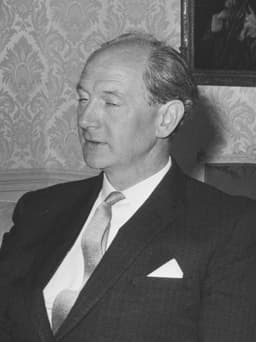
Jack Lynch
Politician · Modern
53.5Total
Basic Information
Born
1949
1917
Died
—
1999
Era
Modern
Modern
Nationality
Sweden
Ireland
Occupation
Politician
Politician
Civilization
Western
Western
Score Comparison
Military (10%)
50.0
49.8
Political (20%)
72.0
68.0
Influence (20%)
60.0
52.5
Legacy (20%)
48.3
44.2
Leadership (15%)
66.0
66.0
Strategy (15%)
43.7
42.9
TOTAL
57.1
53.5
Carl Bildt — Complete Timeline
1991 AD
Election as Prime Minister of SwedenPolitical Action◆ Major
Carl Bildt became Prime Minister of Sweden at age 42, leading a centre-right coalition government. His tenure focused on economic liberalization, tax reforms, and EU membership negotiations.
Swedish PoliticsModerate PartyCoalition Government
Impact: nationalconstructive
1994 AD
Negotiation of Sweden's EU Accession TreatyPolitical Action◆ Major
Bildt's government successfully negotiated Sweden's accession to the European Union, culminating in the signing of the accession treaty. Sweden joined the EU in 1995 after a referendum.
European UnionSwedish EU MembershipAccession Treaty
Impact: regionalconstructive
1995 AD
Appointment as EU Special Envoy to the BalkansPolitical Action◆ Major
After leaving office, Bildt served as the EU's Special Envoy to the former Yugoslavia, playing a key role in the Dayton Peace Accords and post-war reconstruction in Bosnia and Herzegovina.
Balkan Peace ProcessDayton AccordsDiplomacy
Impact: regionalconstructive
2006 AD
Service as Swedish Foreign MinisterPolitical Action◆ Major
Bildt served as Sweden's Minister for Foreign Affairs under Prime Minister Fredrik Reinfeldt. He focused on EU foreign policy, Middle East peace, and climate diplomacy, representing Sweden internationally.
Swedish Foreign PolicyDiplomacy
Impact: nationalconstructive
Jack Lynch — Complete Timeline
1966 AD
Became Taoiseach of IrelandPolitical Action◆ Major
Lynch succeeded Se
LeadershipFianna FáilIrish Politics
Impact: national
1969 AD
Responded to the Outbreak of the TroublesPolitical Action◆ Major
Lynch's government faced the outbreak of the Northern Ireland Troubles in 1969. He made a televised address stating that the Irish government 'can no longer stand by' as violence erupted. This led to the deployment of Irish Army field hospitals near the border and increased tensions with the UK.
Northern IrelandTroublesBorder
Impact: regional
1970 AD
Arms Crisis and Resignation of MinistersPolitical Action
In May 1970, Lynch sacked two ministers, Charles Haughey and Neil Blaney, for allegedly conspiring to import arms for the IRA. The Arms Crisis led to a major political scandal and trial, though the accused were acquitted. Lynch's actions were seen as a defense of democratic norms.
Arms CrisisIRAScandal
Impact: nationaldestructive
1973 AD
Lost Re-election to Fine Gael-Labour CoalitionPolitical Action◆ Major
Lynch's Fianna F
Election DefeatCoalitionFianna Fáil
Impact: national
This comparison has not been analyzed yet.
One-time AI generation (~1 minute). Scores and timeline are already available below.
Rankings
🥇
Carl BildtLeader
Mil: 50.0Pol: 72.0Inf: 60.0
57.1
🥈
Jack Lynch
Mil: 49.8Pol: 68.0Inf: 52.5
53.5
+3.6 behind
How This Comparison Works
Algorithm
Each figure is scored on 6 dimensions (0—100 scale) based on structured historical data: Military (10%), Political (20%), Influence (20%), Legacy (20%), Leadership (15%), Strategy (15%). The weighted total produces the final ranking.
Data Sources
Scores are computed from structured sub-indicators in the database. Scale factors adjust for era (Ancient ×0.85, Modern ×1.0) and civilization size (Eastern ×1.05, Other ×0.80) to account for differences in population and military scale.
Maximum 3 Figures
Comparisons are limited to 2—3 figures to ensure readability and statistical meaningfulness.
Error Margins
±5 points per dimension — Sub-scores are derived from historical records with inherent uncertainty. Two figures within 5 points on a dimension should be considered roughly equivalent in that area.
Total Score Accuracy
±3 points overall — The weighted combination of 6 dimensions produces a total score with approximately ±3 points of uncertainty. Differences of less than 3 points are not statistically significant— the figures are effectively tied.
Known Limitations
- Historical records are incomplete and uneven across civilizations
- Figures from oral-tradition societies may be underrepresented
- Occupation labels can misclassify multi-role figures
- Scores measure capability and impact, not moral character
- Quantitative scoring is a comparison tool, not absolute truth
Capability Radar
Military (10%) — Battles & Warfare
Battles
28
30
Win Rate
35
31
Expansion
32
34
Political (20%) — Governance & Reform
Reform
55
50
Diplomacy
75
60
Economy
60
55
Influence (20%) — Cultural & Global Reach
Cultural
40
30
Global
60
25
Legacy (20%) — Historical Impact
Historical
50
35
Longevity
40
30
Leadership (15%) — Power & Stability
Tenure
60
55
Stability
55
60
Strategy (15%) — Tactics & Innovation
Strategy
41
39
Tactics
42
40
Reform
44
44
Similar Comparisons
Comments & Discussion
No comments yet. Be the first to share your thoughts!