Loading...
Jack Lynch vs Napoleon Bonaparte
Napoleon Bonaparte leads by 17.4 pts · 2 figures compared
…
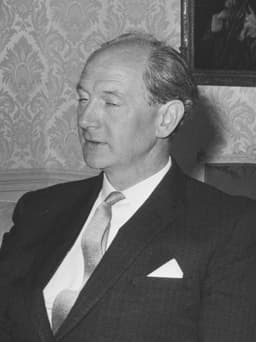
Jack Lynch
Politician · Modern
53.5Total

Napoleon Bonaparte
General · Modern
70.9Total
Basic Information
Born
1917
1769
Died
1999
1821
Era
Modern
Modern
Nationality
Ireland
France
Occupation
Politician
General
Civilization
Western
Western
Score Comparison
Military (10%)
49.8
94.0
Political (20%)
68.0
72.0
Influence (20%)
52.5
40.0
Legacy (20%)
44.2
80.0
Leadership (15%)
66.0
78.0
Strategy (15%)
42.9
90.0
TOTAL
53.5
70.9
Jack Lynch — Complete Timeline
1966 AD
Became Taoiseach of IrelandPolitical Action◆ Major
Lynch succeeded Se
LeadershipFianna FáilIrish Politics
Impact: national
1969 AD
Responded to the Outbreak of the TroublesPolitical Action◆ Major
Lynch's government faced the outbreak of the Northern Ireland Troubles in 1969. He made a televised address stating that the Irish government 'can no longer stand by' as violence erupted. This led to the deployment of Irish Army field hospitals near the border and increased tensions with the UK.
Northern IrelandTroublesBorder
Impact: regional
1970 AD
Arms Crisis and Resignation of MinistersPolitical Action
In May 1970, Lynch sacked two ministers, Charles Haughey and Neil Blaney, for allegedly conspiring to import arms for the IRA. The Arms Crisis led to a major political scandal and trial, though the accused were acquitted. Lynch's actions were seen as a defense of democratic norms.
Arms CrisisIRAScandal
Impact: nationaldestructive
1973 AD
Lost Re-election to Fine Gael-Labour CoalitionPolitical Action◆ Major
Lynch's Fianna F
Election DefeatCoalitionFianna Fáil
Impact: national
Napoleon Bonaparte — Complete Timeline
1799 AD
Coup of 18 BrumaireOther◆ Major
Napoleon Bonaparte, with support from his brother Lucien and key political figures, overthrew the Directory in a bloodless coup. He established the Consulate with himself as First Consul, effectively becoming the ruler of France. This event ended the French Revolution's most unstable period.
French RevolutionCoupRise to Power
Impact: regional
1804 AD
Promulgation of the Napoleonic CodeOther◆ Major
Napoleon enacted the Civil Code of the French, known as the Napoleonic Code, a comprehensive set of laws that replaced the fragmented feudal legal systems. The code established legal equality, protected property rights, and secularized law. It became the basis for legal systems in many European and world countries.
Legal ReformNapoleonic CodeCivil Law
Impact: globalconstructive
1805 AD
Battle of AusterlitzWar◆ Major
Napoleon's Grande Arm
Napoleonic WarsBattleDecisive Victory
Impact: global
1812 AD
Invasion of RussiaWar◆ Major
Napoleon led the Grande Arm
Napoleonic WarsInvasionDisaster
Impact: globaldestructive
1815 AD
Battle of WaterlooWar◆ Major
Napoleon's French army was defeated by the combined forces of the Duke of Wellington's Anglo-Allied army and Gebhard Leberecht von Bl
Napoleonic WarsBattleFinal Defeat
Impact: globaldestructive
Expert Analysis
jack-lynch-vs-napoleon-bonaparte
# The Lion and the Hurler: Two Paths to Power in a Turbulent Century
On a spring evening in 1969, Jack Lynch sat before a television camera in Dublin, his voice steady but his eyes betraying the weight of a nation fracturing at its borders. Just over a century earlier, another man had stood on a balcony in Paris, watching the smoke rise from a burning continent he had set ablaze. Both men inherited storms. One chose to fan the flames; the other chose to hold the line. What separates a conqueror from a caretaker? The answer lies not merely in ambition, but in the raw materials of character and the cages of circumstance.
Origins
Napoleon Bonaparte was born in 1769 on the rugged island of Corsica, a place of fierce independence and simmering resentment against French rule. His family was minor nobility, but his education at French military academies was a crucible of humiliation and drive. The young Corsican was mocked for his accent and his height, and he absorbed the revolutionary fervor of the age like a sponge. The old order was collapsing, and for a gifted outsider, the chaos was an invitation.
Jack Lynch was born in 1917 in Cork, Ireland, into a world of settled certainties and quiet rebellion. His father was a tailor, his mother a homemaker, and the family’s Catholicism and nationalism were the unspoken air they breathed. Unlike Napoleon, Lynch did not grow up dreaming of empires. He grew up dreaming of hurling fields and Gaelic football pitches. By the time he was a young man, he had won multiple All-Ireland medals, becoming a folk hero not through conquest but through grace under pressure on the grass. His education was legal, not military. His revolution was not against a king but against the idea that Ireland could not govern itself.
Rise to Power
Napoleon’s ascent was a masterpiece of opportunism and nerve. By 1796, at just twenty-six, he had taken command of the French Army of Italy and turned a rabble into a conquering force. His genius was not merely tactical but theatrical—he understood that victory needed a narrative. The Italian campaign, the Egyptian expedition, the coup of 18 Brumaire in 1799—each step was a gamble that paid off because he was willing to risk everything. By 1804, he crowned himself Emperor, taking the revolution’s promise of meritocracy and bending it into a throne.
Lynch’s rise was slower, steadier, and built on a different kind of trust. He entered politics in the 1940s, a time when Ireland was defining itself through neutrality and economic isolation. He became Taoiseach in 1966, succeeding Seán Lemass, the architect of modern Ireland. Lynch was not a firebrand. He was a consensus-builder, a man whose sporting past had taught him that the best leaders are those who make the team better. His rise was not a seizure of power but a quiet inheritance, and the key turning point—the outbreak of the Troubles in 1969—was thrust upon him, not chosen.
Leadership & Governance
Napoleon governed as he conquered: with speed, brilliance, and a terrifying singularity of purpose. The Napoleonic Code was his greatest peacetime achievement, a legal framework that swept away feudal remnants and enshrined equality before the law—at least for men. He reformed education, centralized the state, and built roads and canals that bound France together. Yet his military genius was also his political flaw. He could not stop. Austerlitz in 1805 was his masterpiece, a battle so perfect it became a legend. But then came the Peninsular War, the invasion of Russia in 1812, and the slow bleed of an overstretched empire. Strategy was his gift; strategy was also his blindness.
Jack Lynch’s governance was the opposite: cautious, defensive, and deeply moral. The Arms Crisis of 1970 revealed his character. When two of his ministers, Charles Haughey and Neil Blaney, were accused of plotting to import arms for Northern Irish republicans, Lynch sacked them without hesitation. He chose the rule of law over the call of blood. His televised address in 1969, in which he stated that the Irish government “can no longer stand by” as violence engulfed the North, was a masterstroke of ambiguity—it reassured nationalists without committing troops. Lynch understood that in a time of fire, the leader’s job is not to throw more fuel but to protect the house.
Triumph & Tragedy
Napoleon’s greatest triumph was Austerlitz, where he crushed the combined armies of Russia and Austria. His greatest tragedy was Waterloo in 1815, a battle he should have won but lost through a combination of bad luck, stubborn subordinates, and his own exhaustion. He died in exile on Saint Helena in 1821, a prisoner of the British, still dreaming of glory.
Lynch’s triumph was quieter: he held Ireland together. The tragedy was that he could not hold his own party together. The Arms Crisis fractured Fianna Fáil, and the ghost of Haughey would haunt Irish politics for decades. Lynch lost re-election in 1973, returned in 1977, and resigned in 1979, worn down by the endless compromises of peace. He died in 1999, remembered not as a conqueror but as a decent man.
Character & Destiny
Napoleon’s character was a force of nature: restless, brilliant, and incapable of contentment. He once said, “Power is my mistress.” He meant it. His decisions—from the invasion of Russia to the refusal to compromise at Waterloo—flowed from a personality that saw the world as a chessboard and himself as the only player. Destiny, for him, was a thing to be seized.
Lynch’s character was the opposite: serene, disciplined, and deeply aware of limits. He was a man who could have been a legend on the hurling field and chose instead to be a servant in the Dáil. His decisions flowed from a sense of duty, not ambition. Destiny, for him, was a thing to be endured.
Legacy
Napoleon’s legacy is carved into the stone of Europe. The Napoleonic Code still shapes the legal systems of dozens of countries. His military tactics are still studied. He is remembered as both a liberator and a tyrant, a man who spread the ideals of the French Revolution and then betrayed them.
Jack Lynch’s legacy is quieter but no less real. He is remembered as the man who kept the Republic out of the Northern conflict, who chose law over passion, who proved that a leader can be both strong and gentle. In a century of fire, he was the man who held the hose.
Conclusion
What drove these two men to such different outcomes? Perhaps it was the size of their stages. Napoleon had a continent to reshape; Lynch had a small island to protect. But more than that, it was the size of their egos. Napoleon believed he was destiny. Lynch believed he was a caretaker. One built an empire that crumbled; the other built a peace that held. In the end, the hurler from Cork may have taught us more about leadership than the emperor from Corsica. The world remembers the conqueror, but it survives thanks to the steady hands.
Rankings
🥇
Napoleon BonaparteLeader
Mil: 94.0Pol: 72.0Inf: 40.0
70.9
🥈
Jack Lynch
Mil: 49.8Pol: 68.0Inf: 52.5
53.5
+17.4 behind
How This Comparison Works
Algorithm
Each figure is scored on 6 dimensions (0—100 scale) based on structured historical data: Military (10%), Political (20%), Influence (20%), Legacy (20%), Leadership (15%), Strategy (15%). The weighted total produces the final ranking.
Data Sources
Scores are computed from structured sub-indicators in the database. Scale factors adjust for era (Ancient ×0.85, Modern ×1.0) and civilization size (Eastern ×1.05, Other ×0.80) to account for differences in population and military scale.
Maximum 3 Figures
Comparisons are limited to 2—3 figures to ensure readability and statistical meaningfulness.
Error Margins
±5 points per dimension — Sub-scores are derived from historical records with inherent uncertainty. Two figures within 5 points on a dimension should be considered roughly equivalent in that area.
Total Score Accuracy
±3 points overall — The weighted combination of 6 dimensions produces a total score with approximately ±3 points of uncertainty. Differences of less than 3 points are not statistically significant— the figures are effectively tied.
Known Limitations
- Historical records are incomplete and uneven across civilizations
- Figures from oral-tradition societies may be underrepresented
- Occupation labels can misclassify multi-role figures
- Scores measure capability and impact, not moral character
- Quantitative scoring is a comparison tool, not absolute truth
Capability Radar
Military (10%) — Battles & Warfare
Battles
30
95
Win Rate
31
90
Expansion
34
95
Political (20%) — Governance & Reform
Reform
50
95
Diplomacy
60
80
Economy
55
85
Influence (20%) — Cultural & Global Reach
Cultural
30
85
Global
25
90
Legacy (20%) — Historical Impact
Historical
35
95
Longevity
30
90
Leadership (15%) — Power & Stability
Tenure
55
85
Stability
60
70
Strategy (15%) — Tactics & Innovation
Strategy
39
95
Tactics
40
98
Reform
44
92
Similar Comparisons
Comments & Discussion
THECORSICANTHROWBACK6/17/2026
Napoleon and Lynch fighting different wars? Please. Napoleon conquered Europe with 600,000 men marching east; Lynch barely held Ireland together with 600 Gardaí waving batons. The comparison collapses on scale alone. Napoleon reshaped civil codes, banking systems, and national borders. Lynch’s legacy? A few hasty speeches and a cabinet that fell apart. One is a titan of history; the other’s a footnote in a civil war sidebar. Stop inflating local heroes into world-historical figures—it’s disrespe
数据拆弹手6/17/2026
别被叙事蛊惑。林奇任期爱尔兰GDP年均增长约4%,失业率从7%降到5%;拿破仑战争期间法国人均产出反而下降,通货膨胀翻了两番。胜利者写历史,但数字不会说谎:稳定带来繁荣。拿破仑的帝国梦让法国损失了百万青年,换来的只有滑铁卢的泥泞;林奇低调治下的爱尔兰,人民吃饱了饭,工人们能养家。谁才是真正的赢家?
BATTLEOFTHEBOULOGNE6/17/2026
Forget the military comparisons—this is a clash of temperaments. Napoleon thrived on chaos, orchestrating the Coup of 18 Brumaire to seize power before stabilizing France. Lynch inherited chaos—the Arms Crisis, sectarian violence—and chose restraint. The Corsican would have militarized the border in 1969; Lynch stood down troops and gambled on diplomacy. Different eras, but identical forks in the road. One lit a pyre; the other smothered a spark. The world cheered Napoleon’s genius, but Lynch’s