Loading...
This comparison has not been analyzed yet.
One-time AI generation (~1 minute). Scores and timeline are already available below.
Carlos Antonio Lopez vs Oba Erediauwa
Carlos Antonio Lopez leads by 11.7 pts · 2 figures compared
…
Carlos Antonio Lopez
Emperor · Modern
56.4Total
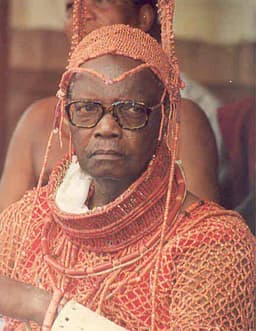
Oba Erediauwa
Emperor · Modern
44.7Total
Basic Information
Born
1792
1923
Died
1862
—
Era
Modern
Modern
Nationality
Paraguay
Benin Kingdom
Occupation
Emperor
Emperor
Civilization
Western
Other
Score Comparison
Military (10%)
50.0
14.2
Political (20%)
78.0
40.8
Influence (20%)
50.2
54.1
Legacy (20%)
42.5
43.3
Leadership (15%)
80.0
64.0
Strategy (15%)
45.0
31.7
TOTAL
56.4
44.7
Carlos Antonio Lopez — Complete Timeline
1841 AD
Became Consul of ParaguayPolitical Action◆ Major
After Francia's death, L
SuccessionPresidencyReform
Impact: nationalconstructive
1842 AD
Abolished slavery in ParaguayReform◆ Major
López issued a decree abolishing slavery in Paraguay, freeing all slaves without compensation to owners. This was one of the earliest abolition acts in the Americas, though it was partly motivated by the need for labor and military conscription.
AbolitionHuman RightsSocial Reform
Impact: nationalprogressive
1845 AD
Opened Paraguay to foreign tradeReform◆ Major
López ended Francia's isolationist policies by opening Paraguay's ports to foreign trade, signing commercial treaties with Britain, France, and the United States. This stimulated economic growth and modernization but increased foreign influence.
Trade LiberalizationEconomic ReformModernization
Impact: nationalprogressive
1850 AD
Modernized Paraguayan militaryReform◆ Major
López imported European weapons, hired foreign military advisors, and expanded the army to over 30,000 men. He also built a shipyard and arsenal, making Paraguay the most militarized state in the region.
Military Build-upModernizationNational Defense
Impact: regional
1862 AD
Died in officeOther◆ Major
López died of natural causes on September 10, 1862, after 21 years in power. He was succeeded by his son Francisco Solano López. His modernization policies left Paraguay economically developed but heavily armed and diplomatically isolated.
DeathSuccessionLegacy
Impact: national
Oba Erediauwa — Complete Timeline
1960 AD
Appointed Federal Permanent SecretaryPolitical Action◆ Major
Oba Erediauwa served as a federal permanent secretary in the Nigerian civil service, a high-ranking administrative role. This position placed him at the center of government operations during Nigeria's early independence period, before he ascended to the throne.
Nigerian Civil ServiceGovernment Administration
Impact: national
1979 AD
Established the Benin Traditional CouncilReform
Upon his coronation, Oba Erediauwa formalized the Benin Traditional Council as the primary institution for traditional governance. The council advises on customary law, chieftaincy matters, and cultural festivals, reinforcing the Oba's role in modern Nigeria.
Traditional GovernanceInstitutional Reform
Impact: regionalconstructive
Coronation as Oba of BeninPolitical Action◆ Major
Erediauwa was crowned the 38th Oba of Benin, succeeding his father Oba Akenzua II. As Oba, he became the ceremonial and spiritual leader of the Edo people, presiding over the Benin Traditional Council and upholding the kingdom's customs.
Benin KingdomCoronationTraditional Ruler
Impact: regionalconstructive
1997 AD
Published 'Benin: A Kingdom in Transition'Cultural
Oba Erediauwa authored a book documenting Benin's history, culture, and challenges of modernization. The work provides an insider perspective on the kingdom's traditions and its adaptation to post-colonial Nigeria, serving as a reference for scholars.
LiteratureBenin HistoryCultural Preservation
Impact: regionalconstructive
2000 AD
Advocated for Return of Benin BronzesPolitical Action◆ Major
Oba Erediauwa publicly called for the repatriation of the Benin Bronzes, looted by British forces in 1897. He engaged in diplomatic efforts with museums and governments, raising international awareness about the cultural artifacts' significance to Benin heritage.
RepatriationCultural HeritageBenin Bronzes
Impact: globalconstructive
This comparison has not been analyzed yet.
One-time AI generation (~1 minute). Scores and timeline are already available below.
Rankings
🥇
Carlos Antonio LopezLeader
Mil: 50.0Pol: 78.0Inf: 50.2
56.4
🥈
Oba Erediauwa
Mil: 14.2Pol: 40.8Inf: 54.1
44.7
+11.7 behind
How This Comparison Works
Algorithm
Each figure is scored on 6 dimensions (0—100 scale) based on structured historical data: Military (10%), Political (20%), Influence (20%), Legacy (20%), Leadership (15%), Strategy (15%). The weighted total produces the final ranking.
Data Sources
Scores are computed from structured sub-indicators in the database. Scale factors adjust for era (Ancient ×0.85, Modern ×1.0) and civilization size (Eastern ×1.05, Other ×0.80) to account for differences in population and military scale.
Maximum 3 Figures
Comparisons are limited to 2—3 figures to ensure readability and statistical meaningfulness.
Error Margins
±5 points per dimension — Sub-scores are derived from historical records with inherent uncertainty. Two figures within 5 points on a dimension should be considered roughly equivalent in that area.
Total Score Accuracy
±3 points overall — The weighted combination of 6 dimensions produces a total score with approximately ±3 points of uncertainty. Differences of less than 3 points are not statistically significant— the figures are effectively tied.
Known Limitations
- Historical records are incomplete and uneven across civilizations
- Figures from oral-tradition societies may be underrepresented
- Occupation labels can misclassify multi-role figures
- Scores measure capability and impact, not moral character
- Quantitative scoring is a comparison tool, not absolute truth
Capability Radar
Military (10%) — Battles & Warfare
Battles
15
7
Win Rate
20
8
Expansion
20
12
Political (20%) — Governance & Reform
Reform
75
30
Diplomacy
60
35
Economy
80
30
Influence (20%) — Cultural & Global Reach
Cultural
30
45
Global
20
20
Legacy (20%) — Historical Impact
Historical
40
40
Longevity
25
30
Leadership (15%) — Power & Stability
Tenure
70
40
Stability
65
35
Strategy (15%) — Tactics & Innovation
Strategy
30
17
Tactics
25
21
Reform
45
19
Similar Comparisons
Comments & Discussion
No comments yet. Be the first to share your thoughts!