Loading...
Carlos Antonio Lopez vs Hong Taiji
Hong Taiji leads by 21.9 pts · 2 figures compared
…
Carlos Antonio Lopez
Emperor · Modern
56.4Total
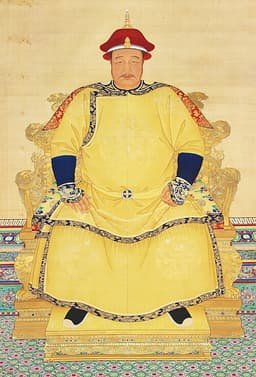
Hong Taiji
Emperor · Modern
78.3Total
Basic Information
Born
1792
1592
Died
1862
1643
Era
Modern
Modern
Nationality
Paraguay
China
Occupation
Emperor
Emperor
Civilization
Western
Eastern
Score Comparison
Military (10%)
50.0
85.0
Political (20%)
78.0
82.0
Influence (20%)
50.2
88.0
Legacy (20%)
42.5
65.0
Leadership (15%)
80.0
78.0
Strategy (15%)
45.0
76.0
TOTAL
56.4
78.3
Carlos Antonio Lopez — Complete Timeline
1841 AD
Became Consul of ParaguayPolitical Action◆ Major
After Francia's death, L
SuccessionPresidencyReform
Impact: nationalconstructive
1842 AD
Abolished slavery in ParaguayReform◆ Major
López issued a decree abolishing slavery in Paraguay, freeing all slaves without compensation to owners. This was one of the earliest abolition acts in the Americas, though it was partly motivated by the need for labor and military conscription.
AbolitionHuman RightsSocial Reform
Impact: nationalprogressive
1845 AD
Opened Paraguay to foreign tradeReform◆ Major
López ended Francia's isolationist policies by opening Paraguay's ports to foreign trade, signing commercial treaties with Britain, France, and the United States. This stimulated economic growth and modernization but increased foreign influence.
Trade LiberalizationEconomic ReformModernization
Impact: nationalprogressive
1850 AD
Modernized Paraguayan militaryReform◆ Major
López imported European weapons, hired foreign military advisors, and expanded the army to over 30,000 men. He also built a shipyard and arsenal, making Paraguay the most militarized state in the region.
Military Build-upModernizationNational Defense
Impact: regional
1862 AD
Died in officeOther◆ Major
López died of natural causes on September 10, 1862, after 21 years in power. He was succeeded by his son Francisco Solano López. His modernization policies left Paraguay economically developed but heavily armed and diplomatically isolated.
DeathSuccessionLegacy
Impact: national
Hong Taiji — Complete Timeline
1631 AD
Adoption of Chinese-style governmentReform◆ Major
Hong Taiji established a Chinese-style bureaucracy, including the Six Ministries and a Hanlin Academy. He also introduced the civil service examination system for Han Chinese, integrating Confucian governance into the Qing state.
Government reformConfucian administrationSinification
Impact: regionalconstructive
1635 AD
Creation of the Eight Banners systemReform◆ Major
Hong Taiji reorganized the Eight Banners military system, incorporating Mongol and Han Chinese forces into separate banners. This created a multi-ethnic military structure that became the backbone of Qing power.
Military reformEight BannersMulti-ethnic army
Impact: regionalconstructive
Renaming of the Jurchen to ManchuPolitical Action◆ Major
Hong Taiji issued an edict renaming the Jurchen people as Manchu. This was part of his effort to create a unified identity for the various tribes under his rule and distance them from the historical Jurchen label.
Ethnic identityManchuJurchen
Impact: regionalconstructive
1636 AD
Proclamation of the Qing dynastyPolitical Action◆ Major
Hong Taiji declared the establishment of the Qing dynasty, replacing the Later Jin name. He adopted the Chinese imperial title and created a dual administrative system combining Manchu and Chinese institutions.
Dynasty foundingImperial titleQing dynasty
Impact: regionalconstructive
1640 AD
Conquest of the Ming Liaodong regionWar◆ Major
Hong Taiji's forces captured key Ming cities in Liaodong, including Jinzhou and Songshan. These victories secured Qing control over the strategic Liaoning corridor and weakened Ming defenses in the northeast.
Territorial expansionMing-Qing WarLiaodong
Impact: regional
Expert Analysis
Origins
Carlos Antonio López was born on November 4, 1787, in Asunción, Paraguay, to a wealthy Spanish colonial family. He studied at the Royal and Pontifical University of Córdoba in Argentina, earning a degree in law. His early career involved legal and administrative roles under the dictatorship of José Gaspar Rodríguez de Francia, whom he later succeeded. In contrast, Hong Taiji was born on November 28, 1592, in the Jianzhou Jurchen tribe (modern Manchuria) as the eighth son of Nurhaci, the unifier of the Jurchen tribes. He received a Confucian education and military training from a young age, preparing him for leadership in the emerging Later Jin state.
Rise to Power
López rose to power after Francia's death in 1840. He was appointed Consul alongside Mariano Roque Alonso but quickly sidelined his co-consul. In 1844, a new constitution made him president for life, effectively a dictator. He consolidated power by suppressing opposition and centralizing authority. Hong Taiji, meanwhile, ascended to the throne in 1626 after his father Nurhaci's death. He immediately faced challenges from rival Jurchen leaders but skillfully navigated them, executing or demoting opponents. He expanded the Later Jin state, renamed it Qing in 1636, and proclaimed himself emperor, adopting Chinese imperial titles.
Leadership & Governance
López's leadership was pragmatic and modernizing. He opened Paraguay to foreign trade, signing treaties with Britain (1853), France (1853), and the United States (1859). He abolished slavery in 1842, one of the earliest acts in the Americas, freeing all slaves without compensation. He modernized the military by importing European weapons and hiring foreign advisors, expanding the army to over 30,000 men. He also built a shipyard and arsenal. However, his rule was authoritarian, with no free press or political opposition. In contrast, Hong Taiji's governance was transformative. He reorganized the Eight Banners system to include Mongol and Han Chinese forces, creating a multi-ethnic military structure. He adopted Chinese-style bureaucracy, establishing the Six Ministries and a Hanlin Academy, and introduced civil service examinations. He also renamed the Jurchen to Manchu in 1635, fostering a unified identity. His leadership was strategic, blending Jurchen military traditions with Chinese administrative practices.
Triumph & Tragedy
López's greatest triumph was modernizing Paraguay: he built infrastructure (roads, telegraphs), expanded education, and strengthened the economy. Abolishing slavery was a significant moral achievement. However, his failure was the lack of sustainable institutions; his death led to the disastrous Paraguayan War under his son, Francisco Solano López, which devastated the country. Hong Taiji's triumphs include founding the Qing dynasty and conquering the Ming Liaodong region (capturing Jinzhou and Songshan in 1641-1642), setting the stage for Qing conquest of China. He also successfully integrated diverse ethnic groups into his empire. His tragedy was dying young at age 50 in 1643, just before the final conquest of Ming China, which was completed by his son, the Shunzhi Emperor. He also faced internal revolts from Mongols and Koreans, which he suppressed with force.
Character & Destiny
López was cautious and pragmatic, focusing on gradual modernization rather than rapid change. His character was authoritarian but reform-minded, earning him the title "The Dictator" but also respect for his achievements. His destiny was tied to Paraguay's isolation; his policies ended isolation but left the country vulnerable. Hong Taiji was ambitious and strategic, with a vision of a multi-ethnic Chinese dynasty. He was ruthless when necessary but also open to Han Chinese advisors. His destiny was to lay the foundation for the Qing dynasty, which ruled China for nearly 300 years. Historical assessments: López scored 78.0 in political skill and 80.0 in leadership, while Hong Taiji scored 82.0 and 78.0 respectively.
Legacy
López's legacy is mixed: he is remembered as a modernizer who brought Paraguay into the 19th century, but his authoritarian rule and the subsequent war tarnish his image. His abolition of slavery is a notable achievement. In Paraguay, he is considered a national hero. Hong Taiji's legacy is profound: he founded the Qing dynasty, created the Manchu identity, and established the administrative and military systems that enabled the Qing to rule China. His reforms influenced Chinese governance for centuries. He scored 65.0 in legacy vs López's 42.5.
Conclusion
Hong Taiji had a greater and more lasting impact on world history. His founding of the Qing dynasty and integration of diverse peoples created an empire that shaped China and East Asia for centuries. López, while significant for Paraguay, had a more limited regional influence. Hong Taiji's total score of 78.3 far exceeds López's 56.4, with particular strengths in military (85.0 vs 50.0), influence (88.0 vs 50.2), and strategy (76.0 vs 45.0). While López's reforms were impressive for a small nation, Hong Taiji's achievements were on a continental scale, making him the more consequential figure.
Rankings
🥇
Hong TaijiLeader
Mil: 85.0Pol: 82.0Inf: 88.0
78.3
🥈
Carlos Antonio Lopez
Mil: 50.0Pol: 78.0Inf: 50.2
56.4
+21.9 behind
How This Comparison Works
Algorithm
Each figure is scored on 6 dimensions (0—100 scale) based on structured historical data: Military (10%), Political (20%), Influence (20%), Legacy (20%), Leadership (15%), Strategy (15%). The weighted total produces the final ranking.
Data Sources
Scores are computed from structured sub-indicators in the database. Scale factors adjust for era (Ancient ×0.85, Modern ×1.0) and civilization size (Eastern ×1.05, Other ×0.80) to account for differences in population and military scale.
Maximum 3 Figures
Comparisons are limited to 2—3 figures to ensure readability and statistical meaningfulness.
Error Margins
±5 points per dimension — Sub-scores are derived from historical records with inherent uncertainty. Two figures within 5 points on a dimension should be considered roughly equivalent in that area.
Total Score Accuracy
±3 points overall — The weighted combination of 6 dimensions produces a total score with approximately ±3 points of uncertainty. Differences of less than 3 points are not statistically significant— the figures are effectively tied.
Known Limitations
- Historical records are incomplete and uneven across civilizations
- Figures from oral-tradition societies may be underrepresented
- Occupation labels can misclassify multi-role figures
- Scores measure capability and impact, not moral character
- Quantitative scoring is a comparison tool, not absolute truth
Capability Radar
Military (10%) — Battles & Warfare
Battles
15
85
Win Rate
20
80
Expansion
20
90
Political (20%) — Governance & Reform
Reform
75
90
Diplomacy
60
85
Economy
80
80
Influence (20%) — Cultural & Global Reach
Cultural
30
80
Global
20
75
Legacy (20%) — Historical Impact
Historical
40
85
Longevity
25
80
Leadership (15%) — Power & Stability
Tenure
70
75
Stability
65
70
Strategy (15%) — Tactics & Innovation
Strategy
30
90
Tactics
25
85
Reform
45
90
Similar Comparisons
Comments & Discussion
No comments yet. Be the first to share your thoughts!