Loading...
Carlos Manuel de Cespedes vs Julius Caesar
Julius Caesar leads by 27.1 pts · 2 figures compared
…
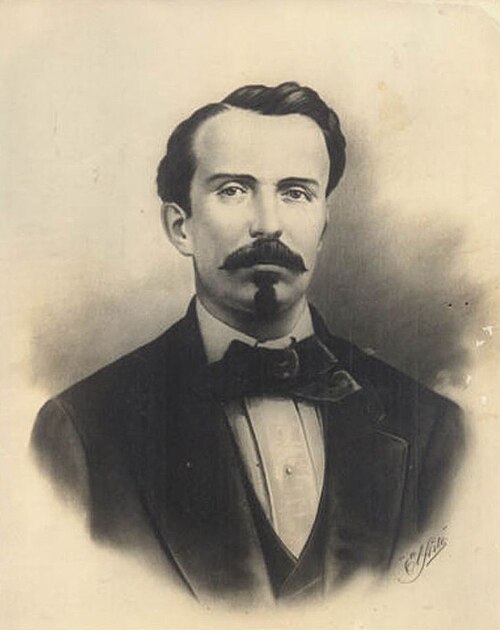
Carlos Manuel de Cespedes
Revolutionary · Modern
56.2Total
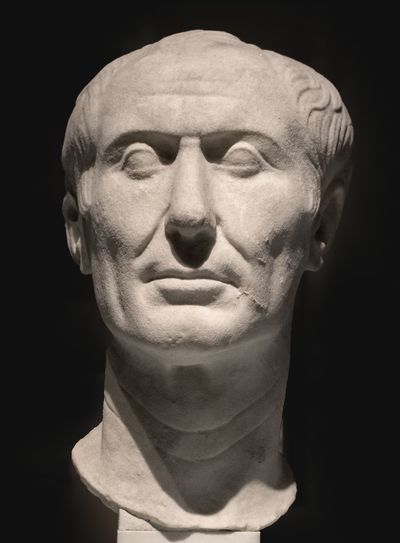
Julius Caesar
General · Ancient
83.3Total
Basic Information
Born
1819
-100
Died
1874
-44
Era
Modern
Ancient
Nationality
Cuba
Roman Republic
Occupation
Revolutionary
General
Civilization
Western
Western
Score Comparison
Military (10%)
34.0
88.0
Political (20%)
53.3
78.0
Influence (20%)
72.8
85.0
Legacy (20%)
68.9
82.0
Leadership (15%)
43.4
82.0
Strategy (15%)
48.6
88.0
TOTAL
56.2
83.3
Rankings
🥇
Julius CaesarLeader
Mil: 88.0Pol: 78.0Inf: 85.0
83.3
🥈
Carlos Manuel de Cespedes
Mil: 34.0Pol: 53.3Inf: 72.8
56.2
+27.1 behind
How This Comparison Works
Algorithm
Each figure is scored on 6 dimensions (0—100 scale) based on structured historical data: Military (10%), Political (20%), Influence (20%), Legacy (20%), Leadership (15%), Strategy (15%). The weighted total produces the final ranking.
Data Sources
Scores are computed from structured sub-indicators in the database. Scale factors adjust for era (Ancient ×0.85, Modern ×1.0) and civilization size (Eastern ×1.05, Other ×0.80) to account for differences in population and military scale.
Maximum 3 Figures
Comparisons are limited to 2—3 figures to ensure readability and statistical meaningfulness.
Error Margins
±5 points per dimension — Sub-scores are derived from historical records with inherent uncertainty. Two figures within 5 points on a dimension should be considered roughly equivalent in that area.
Total Score Accuracy
±3 points overall — The weighted combination of 6 dimensions produces a total score with approximately ±3 points of uncertainty. Differences of less than 3 points are not statistically significant— the figures are effectively tied.
Known Limitations
- Historical records are incomplete and uneven across civilizations
- Figures from oral-tradition societies may be underrepresented
- Occupation labels can misclassify multi-role figures
- Scores measure capability and impact, not moral character
- Quantitative scoring is a comparison tool, not absolute truth
Capability Radar
Military (10%) — Battles & Warfare
Battles
30
95
Win Rate
25
92
Expansion
10
97
Political (20%) — Governance & Reform
Reform
40
90
Diplomacy
25
85
Economy
15
82
Influence (20%) — Cultural & Global Reach
Cultural
60
88
Global
50
94
Legacy (20%) — Historical Impact
Historical
65
95
Longevity
55
96
Leadership (15%) — Power & Stability
Tenure
30
75
Stability
10
60
Strategy (15%) — Tactics & Innovation
Strategy
25
94
Tactics
20
96
Reform
15
88
Expert Analysis
carlos-manuel-de-cespedes-vs-julius-caesar
# The Conqueror and the Liberator: Two Paths from the Rubicon to Yara
On a January morning in 49 BCE, Julius Caesar stood at the banks of a small river in northern Italy, the Rubicon, and made a decision that would shatter centuries of republican tradition. He crossed with his legions, declaring war on the Senate. Eighteen centuries later, on October 10, 1868, a Cuban planter named Carlos Manuel de Céspedes stood on his sugar plantation, La Demajagua, and rang a bell to summon his slaves and workers. He declared Cuba's independence from Spain, then freed his own slaves and invited them to fight. Both men began revolutions. One became the father of an empire; the other, the father of a nation that would wait decades more for its birth. What separates a conqueror from a liberator? The answer lies not just in their actions, but in the worlds that shaped them.
Origins
Julius Caesar was born into the patrician class of Rome, but his family was not wealthy. The Roman Republic of the 1st century BCE was a cauldron of ambition, corruption, and civil strife. Caesar grew up amid the rivalry of Marius and Sulla, learning that power came not from birth alone but from military glory, political alliances, and sheer audacity. His uncle Marius had been a populist general; Sulla had marched on Rome itself. Caesar absorbed the lesson: the Republic was dying, and the man who could command armies and win the loyalty of the people might remake the state.
Céspedes was born in 1819 in the Spanish colony of Cuba, into a wealthy landowning family. He studied law in Spain and traveled through Europe, absorbing the liberal ideas of the Enlightenment. He returned to Cuba a reformer, but found a colony ruled by a decaying Spanish empire, dependent on slavery and plantation agriculture. His world was smaller than Caesar's—a single island rather than a Mediterranean—but no less volatile. Cuba's Creole elite wanted autonomy, not revolution; the enslaved masses wanted freedom. Céspedes, a man of property and principle, had to navigate these contradictions.
Rise to Power
Caesar’s ascent was a masterclass in strategic patience. He served as a military tribune, then a quaestor in Spain, then aedile in Rome, where he spent lavishly on games to win the crowd. He formed the First Triumvirate with Pompey and Crassus, an alliance that gave him command of Gaul. From 58 to 50 BCE, Caesar conquered vast territories, fought the Helvetii, the Belgae, and the Gallic chieftain Vercingetorix at Alesia. His *Commentaries* turned war into propaganda. He was not just a general; he was a writer shaping his own legend.
Céspedes rose differently. He was not a soldier by training but a lawyer and a planter. His turning point came in 1868, when the Spanish government refused reforms and a new governor threatened to crack down on dissent. Céspedes, then 49, had the choice to remain a loyal subject or to gamble everything. On October 10, he issued the Grito de Yara—a declaration of independence from his own sugar mill. He freed his slaves, a radical act in a slave-based economy, and called for a war of liberation. He had no army, no treasury, only a handful of followers and a conviction that the moment had come.
Leadership & Governance
Caesar’s military genius is beyond dispute. He commanded with speed, flexibility, and a personal courage that inspired his legions. At the Battle of Alesia, he besieged a Gallic army while simultaneously defending against a massive relief force—a feat of engineering and tactics that remains a classic of military history. Politically, he was even more astute. After crossing the Rubicon, he pursued a policy of clemency, pardoning his enemies to win their loyalty. As dictator, he reformed the calendar, granted citizenship to provincials, and launched public works. But he concentrated too much power in himself. He accepted the title of dictator for life, and this, more than any policy, sealed his fate.
Céspedes was not a great general. His military score of 34 reflects a man who struggled to command in the field. The Ten Years' War (1868–1878) that he started was a guerrilla struggle, fought in jungles and sugar fields, with few set battles. Céspedes’s leadership was political: he was elected President of the Republic in Arms in 1869 by the Assembly of Guáimaro. He tried to create a government-in-exile, balancing the demands of radical abolitionists, moderate Creoles, and military commanders. But he lacked Caesar’s ruthlessness. He refused to centralize power or purge his rivals, and the war dragged on without a decisive strategy.
Triumph & Tragedy
Caesar’s greatest moment was his triumph: the conquest of Gaul, the defeat of Pompey at Pharsalus, and his return to Rome as master of the known world. He was at the peak of human achievement. His tragedy came on the Ides of March, 44 BCE, when a conspiracy of senators, many of whom he had pardoned, stabbed him to death in the Senate chamber. He fell at the foot of a statue of Pompey, the man he had defeated. His murder did not save the Republic; it unleashed a civil war that ended with his adopted heir, Octavian, becoming Augustus, the first Roman emperor.
Céspedes’s triumph was the Grito de Yara itself—a declaration that Cuba existed as a nation. But his tragedy unfolded slowly. In 1873, the rebel assembly deposed him as president, citing disagreements over military strategy and his alleged authoritarian tendencies. He was effectively exiled within the rebel camp. In February 1874, Spanish troops caught him in a skirmish. He refused to surrender, drew his pistol, and was killed. He died not in a Senate chamber, but in a Cuban forest, almost alone.
Character & Destiny
Caesar was driven by a relentless ambition that he called *dignitas*—personal honor and standing. He believed he was destined to rule, and his self-confidence was so immense that he ignored warnings of the conspiracy. "The die is cast," he said at the Rubicon; "Let the dice fly high," he said before Pharsalus. He was a gambler, but a calculating one. His tragedy was that he could not imagine any force strong enough to stop him.
Céspedes was driven by principle. He was a man of the Enlightenment, who believed in liberty and self-determination. He freed his slaves not for tactical gain but because he thought it was right. His character was noble but inflexible. He could not compromise with the Spanish, nor could he fully command his own followers. He died because he refused to be captured—a martyr's death, not a conqueror's.
Legacy
Caesar’s legacy is immeasurable. His name became a title—Kaiser, Tsar—and his calendar is still used. His writings shaped military education for two millennia. He transformed the Roman world, for better and worse, and his assassination became the template for political murder. But he also destroyed the Republic, and his memory is haunted by that cost.
Céspedes’s legacy is more modest but no less profound. He is the Father of the Cuban Nation, a symbol of the struggle for independence. His Grito de Yara is celebrated as Cuba's Independence Day. But he did not live to see freedom. Cuba remained a Spanish colony until 1898, then became a U.S. protectorate, and later a communist state. Céspedes’s dream of a free, liberal Cuba was never fully realized. His legacy is one of aspiration—a nation that could have been, rather than what was.
Conclusion
The conqueror and the liberator both crossed lines that could not be uncrossed. Caesar crossed the Rubicon and changed the world; Céspedes rang a bell and changed a nation. One succeeded in everything except his own survival; the other failed in almost everything except his own ideals. Their scores—83 for Caesar, 56 for Céspedes—measure historical impact, but they do not measure the human weight of their choices. Caesar gave the world an empire; Céspedes gave Cuba a dream. Which is greater? The answer depends on whether you measure in centuries or in souls.
Carlos Manuel de Cespedes — Complete Timeline
1868 AD
Grito de Yara (1868)Political Action
Carlos Manuel de C
IndependenceRevolutionTen Years' War
Impact: nationalprogressive
1869 AD
President of the Republic in Arms (1869)Political Action◆ Major
Céspedes was elected President of the Republic of Cuba in Arms by the Assembly of Guáimaro. He led the rebel government during the early years of the Ten Years' War, advocating for independence and the abolition of slavery. His leadership was marked by internal divisions.
PresidencyRebel GovernmentWar
Impact: national
1873 AD
Deposed and Killed (1873-1874)Political Action◆ Major
Céspedes was deposed as president by the rebel assembly in 1873 due to disagreements over military strategy and political direction. He was killed in a skirmish with Spanish troops in 1874. His death made him a martyr for Cuban independence.
DepositionDeathMartyr
Impact: nationaltragic
Similar Comparisons
Comments & Discussion
No comments yet. Be the first to share your thoughts!