Loading...
Julius Caesar vs Pascal Lissouba
Julius Caesar leads by 37.7 pts · 2 figures compared
…

Julius Caesar
General · Ancient
82.8Total
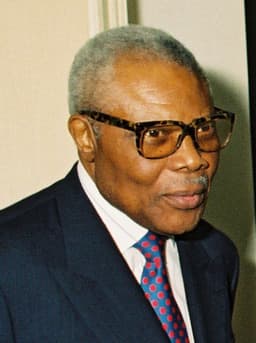
Pascal Lissouba
Politician · Modern
45.1Total
Basic Information
Born
-100
1931
Died
-44
—
Era
Ancient
Modern
Nationality
Roman Republic
Congo-Brazzaville
Occupation
General
Politician
Civilization
Western
Other
Score Comparison
Military (10%)
88.0
50.0
Political (20%)
78.0
39.4
Influence (20%)
85.0
47.1
Legacy (20%)
82.0
37.5
Leadership (15%)
80.0
58.8
Strategy (15%)
85.0
42.5
TOTAL
82.8
45.1
Julius Caesar — Complete Timeline
58 BC
Gallic WarsWar◆ Major
Caesar, as proconsul of Gaul, launched a series of campaigns that conquered all of Gaul (modern France, Belgium, and parts of Switzerland). He fought numerous battles, including against the Helvetii, the Belgae, and the Gallic chieftain Vercingetorix. The wars brought immense wealth and a loyal army to Caesar.
Gallic WarsConquestRoman Expansion
Impact: regional
49 BC
Crossing the RubiconPolitical Action◆ Major
Caesar led Legio XIII across the Rubicon River into Italy, defying the Roman Senate's order to disband his army. This act triggered a civil war against Pompey and the Optimates, ultimately leading to Caesar's dictatorship and the end of the Roman Republic.
Roman Civil WarEnd of RepublicPower Struggle
Impact: global
48 BC
Battle of PharsalusWar◆ Major
Caesar's outnumbered army defeated the larger forces of Pompey the Great at Pharsalus in Greece. Caesar's tactical use of a reserve line to counter Pompey's cavalry charge proved decisive. Pompey fled to Egypt, where he was assassinated, leaving Caesar as the undisputed master of the Roman world.
Roman Civil WarBattleDecisive Victory
Impact: regional
44 BC
Appointment as Dictator for LifePolitical Action◆ Major
The Roman Senate appointed Caesar dictator perpetuo (dictator for life), granting him unprecedented personal power. This move concentrated military, legislative, and judicial authority in one person, effectively ending the Roman Republic's traditional system of checks and balances and alarming many senators.
DictatorshipEnd of RepublicPower Consolidation
Impact: regionaldestructive
Assassination on the Ides of MarchPolitical Action◆ Major
A group of Roman senators, led by Marcus Junius Brutus and Gaius Cassius Longinus, stabbed Caesar to death at a meeting of the Senate in the Theatre of Pompey. The assassination was intended to restore the Republic, but instead triggered another civil war that led to the rise of the Roman Empire.
AssassinationRoman PoliticsEnd of Republic
Impact: globaldestructive
Pascal Lissouba — Complete Timeline
1992 AD
Elected President of Congo-BrazzavillePolitical Action◆ Major
Lissouba won the first multi-party presidential election in Congo-Brazzaville since independence, defeating Denis Sassou-Nguesso. His victory marked a transition from Marxist one-party rule to democratic governance.
ElectionDemocracyCongo-Brazzaville
Impact: nationalprogressive
1997 AD
Overthrown in Civil WarWar◆ Major
Lissouba was overthrown by forces loyal to Denis Sassou-Nguesso during the Republic of Congo Civil War. The conflict involved ethnic militias and foreign intervention, resulting in Sassou-Nguesso's return to power.
Civil WarCoupCongo-Brazzaville
Impact: nationaldestructive
Expert Analysis
julius-caesar-vs-pascal-lissouba
# The Crossing and the Fall
On a January night in 49 BCE, Julius Caesar stood at the banks of the Rubicon River in northern Italy. The narrow stream was not a military obstacle—it was a threshold. To cross it with his army was to declare war on the Roman Republic itself. He paused, then uttered the famous words, *“Alea iacta est”*—the die is cast. Two thousand years later and half a world away, another leader faced a different kind of crossing. In 1997, Pascal Lissouba, the first democratically elected president of the Republic of the Congo, watched as armed militias closed in on his capital, Brazzaville. He had no army to cross a river with. He had only a telephone, a plane ticket, and the bitter knowledge that his democratic experiment was about to end in blood. One man carved his name into the bedrock of Western civilization; the other vanished into the margins of history. What separates them is not merely time or geography, but the entire architecture of power in which they operated.
Origins
Julius Caesar was born into the patrician Julian clan, a family with ancient lineage but modest political influence in the late Republic. Rome in the first century BCE was a world of ruthless ambition, where senatorial competition, military command, and populist politics were the currencies of power. Caesar grew up amid civil wars and the collapse of republican norms—his uncle Marius had been a populist strongman, his enemy Sulla a dictator. From his youth, Caesar learned that in Rome, glory and survival were won on the battlefield and in the Forum.
Pascal Lissouba was born in 1931 in Tsinguidi, a village in what was then French Equatorial Africa. He came of age under colonial rule, studied agronomy in France, and returned to a Congo that gained independence in 1960. His world was one of fragile post-colonial states, Cold War patronage, and ethnic rivalries. Where Caesar inherited a civilization in crisis, Lissouba inherited a country with no tradition of democratic governance, a weak economy dependent on oil, and a political system where loyalty was often measured by ethnicity and armed force.
Rise to Power
Caesar’s ascent was methodical and audacious. He climbed the *cursus honorum*—the ladder of Roman magistracies—through a combination of family connections, military service, and populist reforms. His governorship of Gaul from 58 to 50 BCE was the turning point. Through eight years of brutal campaigns, he conquered a vast territory, amassed immense wealth, and forged a loyal army that would follow him anywhere. The Gallic Wars made him a legend and a threat.
Lissouba’s rise was gentler but no less improbable. A scientist by training, he served as prime minister in the 1960s under Congo’s first president, then spent years in exile after a military coup. When the Cold War ended and pressure for democracy swept Africa, he returned. In 1992, he won the first multiparty presidential election in Congo-Brazzaville since independence, defeating the long-serving dictator Denis Sassou-Nguesso. It was a moment of hope—a peaceful transfer of power in a region scarred by coups.
Leadership & Governance
Caesar governed as a revolutionary reformer. As dictator, he overhauled the calendar, extended Roman citizenship to provincial elites, reformed debt laws, and launched massive public works. His military genius was inseparable from his political vision: he understood that empire required not just conquest but integration. Yet his rule was also autocratic. He centralized power, packed the Senate with his supporters, and accepted the title of dictator for life. He believed that only strong, personal leadership could save Rome from its own chaos.
Lissouba attempted democratic governance in a country with no democratic infrastructure. He faced a fractured parliament, a hostile military that still answered to his predecessor, and an economy devastated by falling oil prices. His political score of 54.1 reflects a leader who was more idealistic than pragmatic. He tried to build coalitions, negotiate with warlords, and hold elections—but in a state where the army and militias held the real power, his tools were inadequate. His leadership score of 75.9 suggests genuine skill, but it was skill applied to a system that could not support it.
Triumph & Tragedy
Caesar’s greatest triumph was not Gaul but the civil war that followed his crossing of the Rubicon. He defeated Pompey’s forces across Greece, Egypt, and Africa, emerging as the undisputed master of the Roman world. His tragedy was the Ides of March, 44 BCE, when sixty senators stabbed him to death in the Curia of Pompey. He had centralized power but failed to build a lasting political structure that could survive without him. His assassination plunged Rome into another round of civil wars.
Lissouba’s triumph was his election itself—a rare moment of democratic promise in Central Africa. His tragedy was the civil war of 1997. Sassou-Nguesso, backed by Angolan troops and French interests, launched a military campaign to retake power. Lissouba’s forces were outmatched. He fled into exile, never to return. His presidency lasted just five years. Where Caesar died on the Senate floor, Lissouba died in obscurity—his exact date of death is unknown, left blank in the historical record.
Character & Destiny
Caesar was defined by audacity, charm, and a cold calculation of risk. He gambled everything on the Rubicon because he understood that in Rome, hesitation was death. His personality—ambitious, generous to allies, ruthless to enemies—matched the demands of his era. He shaped his destiny as much as it shaped him.
Lissouba was a different kind of man: a scientist, a democrat, a negotiator. He believed that institutions could replace bullets, that elections could settle disputes. In a different time or place, he might have succeeded. But in 1990s Congo, where oil wealth and ethnic armies determined power, his character was a liability. He tried to play by rules that did not exist.
Legacy
Caesar’s legacy is overwhelming. His name became synonymous with imperial rule—*Kaiser*, *Tsar*. His military campaigns are studied in war colleges. The calendar he reformed is still used. He transformed Rome from a republic into an empire, for better and worse. His legacy score of 82.0 reflects a figure who reshaped the world.
Lissouba’s legacy score of 48.9 is a measure of erasure. He is remembered, if at all, as a footnote—the first democrat who failed. Yet his story carries its own lesson: that democracy cannot be imposed by goodwill alone. It requires institutions, armies, and a balance of power. In his failure, he reveals the brutal reality that Caesar understood so well: that history belongs to those who cross rivers, not those who wait for the tide to turn.
Conclusion
Standing at the Rubicon, Caesar knew that the act of crossing would define him. He was right. Lissouba, standing at the edge of his own abyss, knew something else: that some rivers are uncrossable. The difference between them is not talent or courage—it is the difference between a world built for conquerors and a world that devours them. Caesar built an empire on the bones of a republic. Lissouba tried to build a republic on the bones of an empire. Both were destroyed by their choices—but only one left a world that remembered his name.
Rankings
🥇
Julius CaesarLeader
Mil: 88.0Pol: 78.0Inf: 85.0
82.8
🥈
Pascal Lissouba
Mil: 50.0Pol: 39.4Inf: 47.1
45.1
+37.7 behind
How This Comparison Works
Algorithm
Each figure is scored on 6 dimensions (0—100 scale) based on structured historical data: Military (10%), Political (20%), Influence (20%), Legacy (20%), Leadership (15%), Strategy (15%). The weighted total produces the final ranking.
Data Sources
Scores are computed from structured sub-indicators in the database. Scale factors adjust for era (Ancient ×0.85, Modern ×1.0) and civilization size (Eastern ×1.05, Other ×0.80) to account for differences in population and military scale.
Maximum 3 Figures
Comparisons are limited to 2—3 figures to ensure readability and statistical meaningfulness.
Error Margins
±5 points per dimension — Sub-scores are derived from historical records with inherent uncertainty. Two figures within 5 points on a dimension should be considered roughly equivalent in that area.
Total Score Accuracy
±3 points overall — The weighted combination of 6 dimensions produces a total score with approximately ±3 points of uncertainty. Differences of less than 3 points are not statistically significant— the figures are effectively tied.
Known Limitations
- Historical records are incomplete and uneven across civilizations
- Figures from oral-tradition societies may be underrepresented
- Occupation labels can misclassify multi-role figures
- Scores measure capability and impact, not moral character
- Quantitative scoring is a comparison tool, not absolute truth
Capability Radar
Military (10%) — Battles & Warfare
Battles
95
23
Win Rate
92
25
Expansion
97
27
Political (20%) — Governance & Reform
Reform
90
35
Diplomacy
85
30
Economy
82
25
Influence (20%) — Cultural & Global Reach
Cultural
88
10
Global
94
10
Legacy (20%) — Historical Impact
Historical
95
15
Longevity
96
10
Leadership (15%) — Power & Stability
Tenure
75
40
Stability
60
15
Strategy (15%) — Tactics & Innovation
Strategy
94
30
Tactics
96
31
Reform
88
36
Similar Comparisons
Comments & Discussion
Conquistador_Critic6/17/2026
This comparison is absurd. Caesar wasn't just some "crossing a river" guy—he spent a decade conquering Gaul, writing the definitive account of ancient warfare, and fundamentally restructuring Roman governance. Lissouba? He was a catastrophic leader who triggered a civil war through incompetence and electoral fraud. One man changed the Western world forever; the other couldn't even hold onto a small African country for a full term. History isn't about "architecture of power"—it's about actual ach
数据侦探6/17/2026
把两位穿越河流的场景并列纯属强行对比。凯撒跨过卢比孔时带着战无不胜的军团,身后是高卢的千万战利品和政治资本;利苏巴跨出刚果时,连自己的总统卫队都控制不了。统计一下:凯撒统治了罗马5年多,利苏巴只撑了4年就垮台。更关键的是,凯撒面临的是派系斗争,利苏巴面对的是全副武装的军阀。把一位古代超级大国领袖和一位后殖民时代小国短命总统放在一起比较,有点幽默但并不深刻。
Classics_Scholar6/17/2026
The Rubicon crossing is embedded in our literary consciousness through Lucan's epic *Pharsalia* and Plutarch's dramatic biography. "Alea iacta est" carries mythical weight precisely because Caesar understood he was performing for posterity. Lissouba's flight from Brazzaville, by contrast, was captured by no poet, no philosopher, no historian of note. But that's not Lissouba's failure—it's ours. We privilege the narratives of victors who controlled their own storytelling. Caesar wrote *Commentari
历史发烧友6/17/2026
我翻过利苏巴的资料,发现他其实是个受过法国教育的生物化学博士,而不是普通的军阀政客。他1992年赢得选举是靠联合左翼和地区势力,但1993年西方石油谈判失败后,刚果石油收入骤降50%,经济崩盘直接导致内战。凯撒过河前有充足的后勤和政治准备,利苏巴呢?他面对的是被法国和安哥拉武装干预的复杂局面,而他没有凯撒那样可以指挥的忠诚军队。这种比较纯属事后诸葛亮式的历史精英主义。
Revisionist_Critic6/17/2026
Let's stop romanticizing Caesar's "genius." He was a debt-ridden aristocrat who gambled on civil war because he faced prosecution for corruption. The Rubicon crossing wasn't some heroic threshold moment—it was a desperate act by a man who knew he'd lose everything if he stayed within the law. L