Loading...
Carlos Pellegrini vs Maximilien Robespierre
Maximilien Robespierre leads by 5.8 pts · 2 figures compared
…

Carlos Pellegrini
Politician · Modern
57.4Total
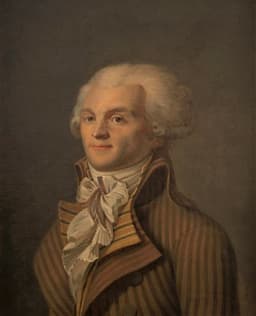
Maximilien Robespierre
Politician · Modern
63.2Total
Basic Information
Born
1846
1758
Died
1906
1794
Era
Modern
Modern
Nationality
Argentina
France
Occupation
Politician
Politician
Civilization
Western
Western
Score Comparison
Military (10%)
49.0
11.7
Political (20%)
72.0
68.0
Influence (20%)
54.1
82.0
Legacy (20%)
48.3
72.0
Leadership (15%)
78.0
67.0
Strategy (15%)
44.0
32.7
TOTAL
57.4
63.2
Carlos Pellegrini — Complete Timeline
1890 AD
Became President of Argentina after Juárez Celman's resignationPolitical Action
Pellegrini assumed the presidency after the resignation of Miguel Ju
PresidencyCrisisSuccession
Impact: nationalconstructive
1891 AD
Implemented economic stabilization measuresReform◆ Major
Pellegrini's government negotiated a moratorium on foreign debt payments, reorganized the banking system, and restored confidence in the peso. His policies helped Argentina recover from the Baring Crisis and avoid default.
Economic ReformDebtStabilization
Impact: nationalconstructive
Founded the National Bank of ArgentinaReform◆ Major
Pellegrini oversaw the creation of the Banco de la Naci
BankingFinanceInstitution
Impact: nationalconstructive
Maximilien Robespierre — Complete Timeline
1789 AD
Election to the Estates-GeneralPolitical Action◆ Major
Robespierre was elected as a deputy of the Third Estate for Artois to the Estates-General. He quickly became a leading voice for radical reforms, advocating for universal male suffrage and the rights of the common people.
French RevolutionEstates-GeneralThird Estate
Impact: nationalprogressive
1793 AD
Establishment of the Reign of TerrorPolitical Action
As a leading member of the Committee of Public Safety, Robespierre oversaw the Reign of Terror, a period of mass executions of perceived enemies of the revolution. Over 16,000 people were guillotined, including former allies like Danton.
Reign of TerrorCommittee of Public SafetyGuillotine
Impact: nationaldestructive
1794 AD
Abolition of Slavery in French ColoniesReform◆ Major
Robespierre and the National Convention voted to abolish slavery in all French colonies, a landmark decree influenced by the Haitian Revolution. This was the first abolition of slavery by a major European power, though later reversed by Napoleon.
AbolitionSlaveryFrench Colonies
Impact: globalprogressive
Cult of the Supreme BeingCultural◆ Major
Robespierre inaugurated the Cult of the Supreme Being as a state religion, replacing Catholicism and atheism. The festival in Paris promoted deism and civic virtue, but was criticized as an attempt to impose his personal beliefs.
ReligionDeismFrench Revolution
Impact: national
Execution of Maximilien RobespierrePolitical Action
Robespierre was arrested and executed by guillotine without trial after the Thermidorian Reaction. His death ended the Reign of Terror and marked a conservative turn in the French Revolution.
Thermidorian ReactionExecutionEnd of Terror
Impact: nationaltragic
Expert Analysis
Origins
Carlos Pellegrini (1846–1906) was born in Buenos Aires to a Swiss father and Argentine mother. He studied law at the University of Buenos Aires, graduating in 1869. His early career included journalism and teaching, and he entered politics as a member of the National Autonomist Party. Pellegrini's formative years were shaped by Argentina's rapid modernization and political consolidation under President Julio Argentino Roca.
Maximilien Robespierre (1758–1794) was born in Arras, France, to a lawyer father and a mother who died when he was young. He studied at the Lycée Louis-le-Grand in Paris, graduating in law. Robespierre was influenced by Enlightenment philosophers like Rousseau and became a lawyer in Arras. His early career was marked by a reputation for defending the poor and advocating for legal reforms.
Rise to Power
Pellegrini rose through the ranks of the National Autonomist Party, serving as Minister of War under President Roca (1880–1886) and later as Vice President under Miguel Juárez Celman. His key turning point came in 1890 when Juárez Celman resigned amid the economic crisis known as the Panic of 1890. Pellegrini assumed the presidency on August 6, 1890, tasked with stabilizing the nation.
Robespierre's rise began with his election to the Estates-General in 1789 as a deputy of the Third Estate. He quickly became a leading voice in the National Constituent Assembly, advocating for universal suffrage and radical reforms. His influence grew within the Jacobin Club, and by 1793 he was a key member of the Committee of Public Safety, effectively leading the revolutionary government during the Reign of Terror.
Leadership & Governance
Pellegrini's leadership focused on economic stabilization. He negotiated a moratorium on foreign debt payments, reorganized the banking system, and restored confidence in the peso. He founded the Banco de la Nación Argentina in 1891 to provide credit and stabilize the financial system. His governance was pragmatic, seeking to restore order and confidence through financial discipline. Pellegrini scored 78.0 in leadership, reflecting his effective crisis management.
Robespierre's governance was ideologically driven. He championed the Reign of Terror, executing perceived enemies of the revolution, including King Louis XVI and thousands of others. He introduced the Cult of the Supreme Being to replace Christianity and promoted radical social reforms like the abolition of slavery in French colonies. His leadership score of 67.0 reflects his ability to mobilize support but also his rigidity. Robespierre's political score of 68.0 is slightly lower than Pellegrini's 72.0, indicating Pellegrini's more effective political maneuvering.
Triumph & Tragedy
Pellegrini's greatest success was stabilizing Argentina's economy after the 1890 crisis, setting the stage for future growth. He founded the Banco de la Nación, which remains a key institution. His failure was that his policies favored the elite and did not address long-term structural issues, leading to continued instability later. Pellegrini's legacy score of 48.3 reflects his limited long-term impact.
Robespierre's triumphs include the abolition of slavery in French colonies and the expansion of democratic ideals. His tragedy was the Reign of Terror, which resulted in over 16,000 executions and ultimately led to his own downfall. His influence score of 82.0 is high, but his strategy score of 32.7 indicates poor long-term planning. Robespierre's total score of 63.2 exceeds Pellegrini's 57.4.
Character & Destiny
Pellegrini was pragmatic, cautious, and focused on financial stability. He was willing to compromise to achieve his goals, which helped him navigate the crisis. His character led to short-term success but limited transformative impact.
Robespierre was idealistic, uncompromising, and driven by a vision of a virtuous republic. His rigidity made him effective in revolutionary times but also led to his isolation and execution. The Thermidorian Reaction in July 1794 ended his life and his regime.
Legacy
Pellegrini is remembered as a stabilizing figure in Argentine history, but his legacy is overshadowed by later leaders. The Banco de la Nación remains a key institution. His impact is localized to Argentina's economic history.
Robespierre's legacy is global: he symbolizes both the promises and perils of revolution. His advocacy for universal suffrage and abolition of slavery influenced later democratic movements. However, he is also associated with state terror. His influence score of 82.0 reflects his enduring impact on political thought.
Conclusion
Maximilien Robespierre had a greater impact than Carlos Pellegrini. Robespierre's total score of 63.2 surpasses Pellegrini's 57.4, and his influence and legacy scores are significantly higher. While Pellegrini stabilized Argentina's economy, his effects were contained to a single country and era. Robespierre's ideas and actions reshaped modern political discourse, for better or worse. The data supports that Robespierre's impact is more profound and lasting, despite his catastrophic failures.
Rankings
🥇
Maximilien RobespierreLeader
Mil: 11.7Pol: 68.0Inf: 82.0
63.2
🥈
Carlos Pellegrini
Mil: 49.0Pol: 72.0Inf: 54.1
57.4
+5.8 behind
How This Comparison Works
Algorithm
Each figure is scored on 6 dimensions (0—100 scale) based on structured historical data: Military (10%), Political (20%), Influence (20%), Legacy (20%), Leadership (15%), Strategy (15%). The weighted total produces the final ranking.
Data Sources
Scores are computed from structured sub-indicators in the database. Scale factors adjust for era (Ancient ×0.85, Modern ×1.0) and civilization size (Eastern ×1.05, Other ×0.80) to account for differences in population and military scale.
Maximum 3 Figures
Comparisons are limited to 2—3 figures to ensure readability and statistical meaningfulness.
Error Margins
±5 points per dimension — Sub-scores are derived from historical records with inherent uncertainty. Two figures within 5 points on a dimension should be considered roughly equivalent in that area.
Total Score Accuracy
±3 points overall — The weighted combination of 6 dimensions produces a total score with approximately ±3 points of uncertainty. Differences of less than 3 points are not statistically significant— the figures are effectively tied.
Known Limitations
- Historical records are incomplete and uneven across civilizations
- Figures from oral-tradition societies may be underrepresented
- Occupation labels can misclassify multi-role figures
- Scores measure capability and impact, not moral character
- Quantitative scoring is a comparison tool, not absolute truth
Capability Radar
Military (10%) — Battles & Warfare
Battles
29
22
Win Rate
30
24
Expansion
37
28
Political (20%) — Governance & Reform
Reform
75
85
Diplomacy
70
40
Economy
80
30
Influence (20%) — Cultural & Global Reach
Cultural
30
70
Global
35
70
Legacy (20%) — Historical Impact
Historical
50
85
Longevity
40
75
Leadership (15%) — Power & Stability
Tenure
65
60
Stability
75
10
Strategy (15%) — Tactics & Innovation
Strategy
40
29
Tactics
42
34
Reform
45
40
Similar Comparisons
Comments & Discussion
No comments yet. Be the first to share your thoughts!