Loading...
Laisenia Qarase vs Maximilien Robespierre
Maximilien Robespierre leads by 19.0 pts · 2 figures compared
…

Laisenia Qarase
Politician · Modern
44.2Total
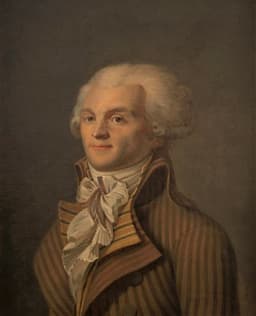
Maximilien Robespierre
Politician · Modern
63.2Total
Basic Information
Born
1941
1758
Died
—
1794
Era
Modern
Modern
Nationality
Fiji
France
Occupation
Politician
Politician
Civilization
Other
Western
Score Comparison
Military (10%)
50.0
11.7
Political (20%)
37.9
68.0
Influence (20%)
47.9
82.0
Legacy (20%)
36.7
72.0
Leadership (15%)
55.3
67.0
Strategy (15%)
41.2
32.7
TOTAL
44.2
63.2
Laisenia Qarase — Complete Timeline
2000 AD
Became Prime Minister of FijiPolitical Action◆ Major
Qarase was appointed Prime Minister by President Josefa Iloilo after the 2000 coup, leading an interim government. He later won the 2001 election as leader of the United Fiji Party.
Prime MinisterInterim GovernmentElection
Impact: national
2001 AD
Promotion of affirmative action for indigenous FijiansReform◆ Major
Qarase's government implemented policies favoring indigenous Fijians in land rights, education, and business, which were criticized by Indo-Fijians as discriminatory.
Affirmative ActionEthnic PolicyIndigenous Rights
Impact: nationaldestructive
2006 AD
Deposed in the 2006 Fijian coup d'étatPolitical Action◆ Major
Qarase was overthrown in a military coup led by Commodore Frank Bainimarama, who accused his government of corruption and ethnic bias. Qarase was forced to resign and went into exile.
CoupMilitaryExile
Impact: nationaltragic
Maximilien Robespierre — Complete Timeline
1789 AD
Election to the Estates-GeneralPolitical Action◆ Major
Robespierre was elected as a deputy of the Third Estate for Artois to the Estates-General. He quickly became a leading voice for radical reforms, advocating for universal male suffrage and the rights of the common people.
French RevolutionEstates-GeneralThird Estate
Impact: nationalprogressive
1793 AD
Establishment of the Reign of TerrorPolitical Action
As a leading member of the Committee of Public Safety, Robespierre oversaw the Reign of Terror, a period of mass executions of perceived enemies of the revolution. Over 16,000 people were guillotined, including former allies like Danton.
Reign of TerrorCommittee of Public SafetyGuillotine
Impact: nationaldestructive
1794 AD
Abolition of Slavery in French ColoniesReform◆ Major
Robespierre and the National Convention voted to abolish slavery in all French colonies, a landmark decree influenced by the Haitian Revolution. This was the first abolition of slavery by a major European power, though later reversed by Napoleon.
AbolitionSlaveryFrench Colonies
Impact: globalprogressive
Cult of the Supreme BeingCultural◆ Major
Robespierre inaugurated the Cult of the Supreme Being as a state religion, replacing Catholicism and atheism. The festival in Paris promoted deism and civic virtue, but was criticized as an attempt to impose his personal beliefs.
ReligionDeismFrench Revolution
Impact: national
Execution of Maximilien RobespierrePolitical Action
Robespierre was arrested and executed by guillotine without trial after the Thermidorian Reaction. His death ended the Reign of Terror and marked a conservative turn in the French Revolution.
Thermidorian ReactionExecutionEnd of Terror
Impact: nationaltragic
Expert Analysis
Origins
Laisenia Qarase was born in 1941 in the village of Mavua, Fiji, into a family of indigenous Fijian farmers. He attended local schools and later earned a degree in economics from the University of Auckland. His early career was in the civil service, where he worked in the Ministry of Fijian Affairs, gaining insight into land rights and ethnic policies. In contrast, Maximilien Robespierre was born in 1758 in Arras, France, to a lawyer father and a mother who died when he was young. He studied law at the University of Paris, became a lawyer, and was influenced by Enlightenment thinkers like Rousseau. Robespierre's early legal career focused on defending the poor, which shaped his radical politics.
Rise to Power
Qarase rose to prominence after the 2000 Fijian coup d'état, when George Speight overthrew the elected government. Qarase was appointed Prime Minister by President Josefa Iloilo in July 2000 to lead an interim government. He subsequently won the 2001 election as leader of the United Fiji Party, consolidating power through a coalition with indigenous Fijian nationalist parties. Robespierre's rise came through the Estates-General of 1789, where he was elected as a deputy for the Third Estate. He gained fame for his radical speeches against the monarchy and for universal suffrage. By 1793, he became a leading member of the Committee of Public Safety, effectively ruling France during the Reign of Terror.
Leadership & Governance
Qarase's leadership focused on affirmative action for indigenous Fijians, including land rights, education quotas, and business preferences. His government passed the Reconciliation, Tolerance, and Unity Bill in 2005, which aimed to grant amnesty to coup perpetrators, sparking controversy. He scored 55.3 in leadership and 41.2 in strategy. Robespierre, scoring 67.0 in leadership, governed through the Committee of Public Safety, implementing the Reign of Terror to suppress counter-revolutionaries. He passed the Law of Suspects in 1793, leading to mass arrests and executions. He also promoted the Cult of the Supreme Being and abolished slavery in French colonies in 1794. Both leaders used state power to enforce ideological goals, but Robespierre's methods were far more radical and violent.
Triumph & Tragedy
Qarase's greatest success was stabilizing Fiji after the 2000 coup and winning two elections, maintaining indigenous Fijian political dominance. However, his failure was his inability to prevent the 2006 coup, where he was deposed by Commodore Frank Bainimarama, who accused him of corruption and ethnic bias. Qarase's policies deepened ethnic divisions, leading to his military ouster. Robespierre's triumph was his role in the French Revolution's radical phase, including the abolition of slavery and the establishment of universal male suffrage. His tragedy was the Reign of Terror itself, which executed over 16,000 people, including former allies like Danton. He was eventually executed in July 1794 during the Thermidorian Reaction, ending his influence. Robespierre's military score of 11.7 reflects his lack of direct military command, while Qarase scored 50.0 due to his involvement in post-coup military negotiations.
Character & Destiny
Qarase was a cautious, consensus-driven leader who prioritized indigenous Fijian interests but underestimated military opposition. His character, focused on ethnic politics, led to his downfall when the military saw him as divisive. Robespierre was an uncompromising idealist, known as "The Incorruptible," who believed in virtue through terror. His rigid adherence to revolutionary purity made him enemies, leading to his arrest and execution. Both leaders' fates were shaped by their inability to adapt: Qarase to military power, Robespierre to political moderation. Robespierre scores 82.0 in influence, far exceeding Qarase's 47.9, due to his global impact on revolutionary thought.
Legacy
Qarase's legacy is mixed: he is remembered for promoting indigenous rights but also for ethnic polarization that led to political instability. His affirmative action policies were largely reversed after the 2006 coup. Robespierre's legacy is monumental: he is a symbol of revolutionary idealism and terror, influencing later communist and socialist movements. His abolition of slavery and advocacy for universal suffrage are celebrated, but his Reign of Terror is a cautionary tale. Robespierre scores 72.0 in legacy, while Qarase scores 36.7. Robespierre's impact on political thought and human rights debates endures globally, while Qarase's influence is limited to Fiji.
Conclusion
Maximilien Robespierre had greater impact than Laisenia Qarase, as reflected in his total score of 63.2 vs Qarase's 44.2. Robespierre's role in the French Revolution shaped modern democracy, human rights, and revolutionary politics worldwide. Qarase's influence, while significant in Fiji, did not transcend national borders. The score gap of 19.0 points underscores Robespierre's superior political, influence, and legacy scores. Though both leaders faced tragic ends, Robespierre's ideas continue to inspire and caution, making him the more consequential figure.
Rankings
🥇
Maximilien RobespierreLeader
Mil: 11.7Pol: 68.0Inf: 82.0
63.2
🥈
Laisenia Qarase
Mil: 50.0Pol: 37.9Inf: 47.9
44.2
+19.0 behind
How This Comparison Works
Algorithm
Each figure is scored on 6 dimensions (0—100 scale) based on structured historical data: Military (10%), Political (20%), Influence (20%), Legacy (20%), Leadership (15%), Strategy (15%). The weighted total produces the final ranking.
Data Sources
Scores are computed from structured sub-indicators in the database. Scale factors adjust for era (Ancient ×0.85, Modern ×1.0) and civilization size (Eastern ×1.05, Other ×0.80) to account for differences in population and military scale.
Maximum 3 Figures
Comparisons are limited to 2—3 figures to ensure readability and statistical meaningfulness.
Error Margins
±5 points per dimension — Sub-scores are derived from historical records with inherent uncertainty. Two figures within 5 points on a dimension should be considered roughly equivalent in that area.
Total Score Accuracy
±3 points overall — The weighted combination of 6 dimensions produces a total score with approximately ±3 points of uncertainty. Differences of less than 3 points are not statistically significant— the figures are effectively tied.
Known Limitations
- Historical records are incomplete and uneven across civilizations
- Figures from oral-tradition societies may be underrepresented
- Occupation labels can misclassify multi-role figures
- Scores measure capability and impact, not moral character
- Quantitative scoring is a comparison tool, not absolute truth
Capability Radar
Military (10%) — Battles & Warfare
Battles
24
22
Win Rate
24
24
Expansion
30
28
Political (20%) — Governance & Reform
Reform
30
85
Diplomacy
25
40
Economy
30
30
Influence (20%) — Cultural & Global Reach
Cultural
15
70
Global
10
70
Legacy (20%) — Historical Impact
Historical
20
85
Longevity
10
75
Leadership (15%) — Power & Stability
Tenure
40
60
Stability
10
10
Strategy (15%) — Tactics & Innovation
Strategy
31
29
Tactics
36
34
Reform
37
40
Similar Comparisons
Comments & Discussion
No comments yet. Be the first to share your thoughts!