Loading...
Casimir III the Great vs Shah Rukh
Casimir III the Great leads by 0.7 pts · 2 figures compared
…
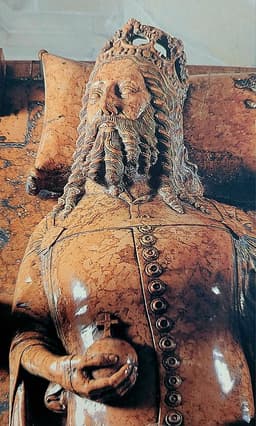
Casimir III the Great
Emperor · Medieval
60.2Total
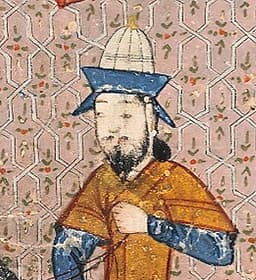
Shah Rukh
Emperor · Medieval
59.5Total
Basic Information
Born
1310
1377
Died
1370
1447
Era
Medieval
Medieval
Nationality
Poland
Timurid Empire
Occupation
Emperor
Emperor
Civilization
Western
Middle Eastern
Score Comparison
Military (10%)
40.0
65.0
Political (20%)
70.3
70.0
Influence (20%)
56.7
65.0
Legacy (20%)
55.0
40.0
Leadership (15%)
78.0
72.0
Strategy (15%)
60.0
55.0
TOTAL
60.2
59.5
Casimir III the Great — Complete Timeline
1333 AD
Construction of Wawel CastleCultural
Casimir III initiated the reconstruction of Wawel Castle in Krakow in Gothic style, replacing earlier Romanesque structures. The castle became the royal residence and a symbol of Polish statehood, embodying the king's building program that left Poland 'in stone'.
ArchitectureRoyal PatronageCultural Heritage
Impact: nationalconstructive
1340 AD
Annexation of Red RutheniaWar◆ Major
Following the death of Boles
ExpansionTerritorial GainEastern Europe
Impact: regionalconstructive
1343 AD
Peace of KaliszPolitical Action◆ Major
Casimir III signed the Peace of Kalisz with the Teutonic Order, renouncing Polish claims to Pomerelia and Che
Teutonic OrderDiplomacyTerritorial Settlement
Impact: nationalconstructive
1347 AD
Codification of LawsReform◆ Major
Casimir III issued the Statutes of Wi
Legal ReformAdministrationJustice
Impact: nationalprogressive
1364 AD
Foundation of the University of KrakowCultural
Casimir III established the University of Krakow (later Jagiellonian University), the second university in Central Europe after Prague. The institution became a major center of learning, though it declined after Casimir's death until revived in the 15th century.
EducationRenaissanceCulture
Impact: regionalprogressive
Congress of KrakowPolitical Action◆ Major
Casimir III hosted the Congress of Krakow, a meeting of European monarchs including Holy Roman Emperor Charles IV, King Louis I of Hungary, and King Valdemar IV of Denmark. The congress discussed peace and cooperation, enhancing Poland's prestige.
DiplomacyInternational RelationsPrestige
Impact: regionalconstructive
Shah Rukh — Complete Timeline
1409 AD
Accession to the Timurid ThronePolitical Action
After Tamerlane's death and a period of civil war, Shah Rukh emerged as the ruler of the Timurid Empire, based in Herat. He defeated his rivals, including his nephew Khalil Sultan, and consolidated control over Persia and Central Asia.
SuccessionTimurid EmpireHerat
Impact: regional
1410 AD
Patronage of the Timurid RenaissanceCultural◆ Major
Shah Rukh patronized the arts, architecture, and literature, making Herat a center of the Timurid Renaissance. He commissioned the construction of mosques, madrasas, and libraries, and supported artists like the miniaturist Kamal-ud-din Behzad.
CulturePatronageTimurid Renaissance
Impact: regionalconstructive
1415 AD
Restoration of the Silk Road TradePolitical Action
Shah Rukh reestablished diplomatic and trade relations with Ming China, sending embassies and restoring the Silk Road. This facilitated cultural and economic exchange between the Timurid Empire and East Asia.
TradeSilk RoadMing China
Impact: globalconstructive
1420 AD
Campaigns against the Qara QoyunluWar
Shah Rukh led multiple campaigns against the Qara Qoyunlu (Black Sheep Turkomans) in western Persia and Iraq. He defeated them at the Battle of Alashkert in 1421, but the conflict continued intermittently, draining Timurid resources.
WarQara QoyunluPersia
Impact: regional
1447 AD
Death and SuccessionPolitical Action◆ Major
Shah Rukh died in 1447, leading to a succession struggle among his sons, including Ulugh Beg. His death marked the beginning of the decline of the Timurid Empire, which fragmented into smaller states.
DeathSuccessionTimurid Decline
Impact: regionaltragic
Expert Analysis
Origins
Casimir III the Great was born in 1310 in Kowal, Poland, the son of Władysław I the Elbow-high and Jadwiga of Kalisz. He inherited a fragmented kingdom plagued by internal divisions and external threats, with a weak economy and sparse population. His education was typical for a medieval prince, focusing on chivalry, Latin, and governance. In contrast, Shah Rukh was born in 1377 in Samarkand, the fourth son of Timur (Tamerlane) and a mother of noble lineage. Growing up in the shadow of his father's vast conquests, he was trained in military tactics and administration, but his path to power was obstructed by Timur's preference for other sons. His early years were marked by campaigns under Timur, including the invasion of India in 1398. Both rulers emerged from difficult childhoods—Casimir in a kingdom on the brink, Shah Rukh as a lesser son of a conqueror.
Rise to Power
Casimir III ascended the throne in 1333 after his father's death, inheriting a kingdom with a population of about 1.5 million and a treasury that was nearly empty. His first major act was to secure peace with the Teutonic Order through the Treaty of Kalisz in 1343, sacrificing claims to Pomerelia to focus on internal consolidation. He also negotiated with Bohemia and Hungary, stabilizing borders. His rise was less about military conquest and more about diplomatic maneuvering. Shah Rukh's rise was bloodier. After Timur's death in 1405, a civil war erupted among his sons and grandsons. Shah Rukh, based in Herat, defeated his rival Khalil Sultan in 1405 and gradually asserted control over Persia and Transoxiana. By 1409, he had consolidated power, making Herat his capital. His military score of 65.0 reflects his success in these campaigns, compared to Casimir's 40.0.
Leadership & Governance
Casimir III's leadership style was reformist and administrative. He codified laws through the Statutes of Wiślica (1347) and Piotrków (1356), unifying legal systems in Greater and Lesser Poland. He founded the University of Krakow in 1364, the second in Central Europe, to train administrators and clergy. He also built over 30 castles and fortified cities, earning the epithet 'found Poland in wood and left in stone.' His political score of 70.3 reflects his ability to centralize power. Shah Rukh's governance was centered on cultural patronage and religious tolerance. He promoted the Timurid Renaissance, attracting scholars like the historian Hafiz-i Abru and the astronomer Ulugh Beg (his son). He restored the Silk Road trade by sending embassies to Ming China, boosting commerce. However, his reliance on a decentralized system of regional governors led to internal strife after his death. His leadership score of 72.0 is slightly lower than Casimir's 78.0.
Triumph & Tragedy
Casimir's greatest triumph was the annexation of Red Ruthenia (Galicia-Volhynia) in 1340-1366, expanding Poland's territory and wealth. He also secured the Polish throne for his nephew Louis I of Hungary through the Treaty of Buda (1355), ensuring a peaceful succession. His tragedy was the lack of a legitimate male heir—his daughters died young or were married off, leading to the end of the Piast dynasty. Shah Rukh's triumph was the cultural flourishing of Herat, which became a center of art and science. He also defeated the Qara Qoyunlu at the Battle of Alashkert (1421), securing western Persia. His tragedy was the assassination of his son Ulugh Beg by his own son Abd al-Latif in 1449, which plunged the empire into chaos. Shah Rukh's legacy score of 40.0 is lower than Casimir's 55.0, as his empire fragmented quickly.
Character & Destiny
Casimir III was pragmatic and cautious, avoiding major wars and focusing on internal development. He was known for his diplomatic skill and his ability to balance the interests of nobles, clergy, and towns. His character shaped a destiny of peaceful expansion and institutional building. Shah Rukh was more artistic and tolerant, but also indecisive in later years. He relied on his wife Gawhar Shad, a powerful patron of architecture. His character fostered a cultural renaissance but also allowed factionalism to grow. Historians assess Casimir as one of Poland's greatest kings, while Shah Rukh is seen as a capable ruler who preserved his father's legacy but lacked the ambition to expand it.
Legacy
Casimir III's legacy is foundational for Poland: his legal codes influenced Polish law for centuries, and the University of Krakow became a hub of learning. He is the only Polish king to be called 'the Great,' and his reign marked the end of the Piast dynasty but the beginning of Poland's golden age under the Jagiellons. Shah Rukh's legacy is tied to the Timurid Renaissance, which influenced the Mughal Empire in India and Safavid Persia. The Herat school of miniature painting and architecture set standards for Islamic art. However, his political legacy was short-lived; the Timurid Empire collapsed within decades of his death. Casimir's influence score of 56.7 is only slightly above Shah Rukh's 65.0, but his long-term impact on Poland's national identity is undeniable.
Conclusion
While both rulers achieved notable successes in their respective spheres, Casimir III the Great had a greater and more enduring impact on his nation's development. His total score of 60.2 vs. Shah Rukh's 59.5 reflects this narrow margin. Casimir's institutional reforms—legal codification, university foundation, and castle building—created a stable framework for Poland's future growth. Shah Rukh's cultural patronage was impressive but did not prevent the rapid decline of his empire. Casimir's leadership score of 78.0, compared to 72.0 for Shah Rukh, underscores his effectiveness. Therefore, Casimir III the Great is the more significant historical figure in terms of lasting influence.
Rankings
🥇
Casimir III the GreatLeader
Mil: 40.0Pol: 70.3Inf: 56.7
60.2
🥈
Shah Rukh
Mil: 65.0Pol: 70.0Inf: 65.0
59.5
+0.7 behind
How This Comparison Works
Algorithm
Each figure is scored on 6 dimensions (0—100 scale) based on structured historical data: Military (10%), Political (20%), Influence (20%), Legacy (20%), Leadership (15%), Strategy (15%). The weighted total produces the final ranking.
Data Sources
Scores are computed from structured sub-indicators in the database. Scale factors adjust for era (Ancient ×0.85, Modern ×1.0) and civilization size (Eastern ×1.05, Other ×0.80) to account for differences in population and military scale.
Maximum 3 Figures
Comparisons are limited to 2—3 figures to ensure readability and statistical meaningfulness.
Error Margins
±5 points per dimension — Sub-scores are derived from historical records with inherent uncertainty. Two figures within 5 points on a dimension should be considered roughly equivalent in that area.
Total Score Accuracy
±3 points overall — The weighted combination of 6 dimensions produces a total score with approximately ±3 points of uncertainty. Differences of less than 3 points are not statistically significant— the figures are effectively tied.
Known Limitations
- Historical records are incomplete and uneven across civilizations
- Figures from oral-tradition societies may be underrepresented
- Occupation labels can misclassify multi-role figures
- Scores measure capability and impact, not moral character
- Quantitative scoring is a comparison tool, not absolute truth
Capability Radar
Military (10%) — Battles & Warfare
Battles
30
65
Win Rate
35
70
Expansion
45
60
Political (20%) — Governance & Reform
Reform
90
75
Diplomacy
80
80
Economy
85
80
Influence (20%) — Cultural & Global Reach
Cultural
70
85
Global
55
70
Legacy (20%) — Historical Impact
Historical
75
80
Longevity
70
75
Leadership (15%) — Power & Stability
Tenure
85
85
Stability
75
85
Strategy (15%) — Tactics & Innovation
Strategy
40
75
Tactics
25
60
Reform
60
55
Similar Comparisons
Comments & Discussion
No comments yet. Be the first to share your thoughts!