Loading...
Cassander vs Menkaure
Cassander leads by 7.0 pts · 2 figures compared
…
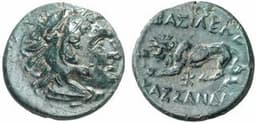
Cassander
Emperor · Ancient
49.7Total

Menkaure
Emperor · Ancient
42.7Total
Basic Information
Born
-355
-2532
Died
-297
-2503
Era
Ancient
Ancient
Nationality
Macedon
Egypt
Occupation
Emperor
Emperor
Civilization
Western
Middle Eastern
Score Comparison
Military (10%)
47.5
36.4
Political (20%)
54.7
27.9
Influence (20%)
46.3
51.0
Legacy (20%)
38.3
44.2
Leadership (15%)
64.0
36.7
Strategy (15%)
60.0
55.2
TOTAL
49.7
42.7
Cassander — Complete Timeline
316 BC
Foundation of CassandreiaCultural
Cassander founded the city of Cassandreia on the site of the destroyed city of Potidaea in Chalcidice. The city became a major urban center in Macedonia and served as a symbol of his power and Hellenistic patronage.
MacedonCity FoundationHellenistic
constructive
Rebuilding of ThebesCultural
Cassander ordered the rebuilding of Thebes, which had been destroyed by Alexander the Great in 335 BC. This act was intended to gain favor with the Greek city-states and to counter the legacy of Alexander, but it also demonstrated Cassander's political ambitions.
MacedonGreeceReconstruction
Impact: regionalconstructive
309 BC
Execution of Alexander IV and RoxanaPolitical Action◆ Major
Cassander ordered the murder of Alexander IV, the son of Alexander the Great, and his mother Roxana. This act eliminated the last Argead heirs and allowed Cassander to claim the throne of Macedonia, though he faced opposition from other Diadochi.
DiadochiMacedonDynastic Murder
Impact: regionaldestructive
301 BC
Battle of IpsusWar◆ Major
Cassander participated in the coalition against Antigonus I at Ipsus. His forces contributed to the victory, but he did not gain significant territory. The battle secured his position in Macedonia and Greece, though he died a few years later.
DiadochiBattleMacedon
Impact: regional
Menkaure — Complete Timeline
2530 BC
Construction of the Third Pyramid at GizaCultural◆ Major
Menkaure built the third and smallest pyramid at Giza, standing 65 meters tall. The pyramid complex includes three subsidiary pyramids and a mortuary temple, and its construction marked the end of the major pyramid-building era at Giza.
PyramidArchitectureGiza
Impact: regionalconstructive
Expert Analysis
Origins
Cassander (c. 350-297 BCE) was the son of Antipater, a trusted general of Philip II and regent of Macedonia after Alexander's death. Born into the Macedonian court, Cassander was educated alongside royalty, but he was overshadowed by his father's authority. He served as Antipater's envoy to Babylon, where he clashed with Alexander's regent Perdiccas, sparking a lifelong hatred of the Argead dynasty. Menkaure (c. 2532-2503 BCE) was a pharaoh of the Fourth Dynasty of Egypt, son of Pharaoh Khafre and grandson of Khufu. He inherited a stable, prosperous kingdom at the height of the Old Kingdom. His early life was steeped in religious and administrative training, preparing him for rule in a society obsessed with the afterlife.
Rise to Power
Cassander's rise began after his father's death in 319 BCE, when he defied the new regent Polyperchon. He allied with Antigonus and Ptolemy, securing control of Macedonia by 317 BCE. His key turning point was the execution of Alexander IV and Roxana in 309 BCE, which removed the last Argead heirs and allowed him to claim the throne. He founded the city of Cassandreia in 316 BCE, consolidating his power in northern Greece. Menkaure ascended to the throne around 2532 BCE following his father Khafre's death. As the fourth ruler of the Fourth Dynasty, he inherited a centralized state with a strong bureaucracy. His rise was peaceful, with no recorded opposition, as the pharaoh's divine status ensured smooth succession.
Leadership & Governance
Cassander ruled Macedonia with a blend of pragmatism and ruthlessness. He rebuilt Thebes (316 BCE), destroyed by Alexander, to gain Greek favor, but he also suppressed revolts with force. His governance focused on consolidating power: he founded cities, controlled the army, and eliminated rivals. His political score of 54.7 reflects his ability to navigate the chaotic Diadochi wars, but his military score of 47.5 indicates limited battlefield success. Menkaure's rule was typical of Old Kingdom pharaohs: he was a divine king who maintained order (ma'at) through religious rituals and monumental construction. His leadership score of 36.7 is low by modern metrics, but in his context, he effectively managed resources for pyramid building. He governed through a vizier and provincial officials, focusing on stability rather than expansion.
Triumph & Tragedy
Cassander's greatest triumph was eliminating the Argead dynasty and securing the Macedonian throne. He also successfully participated in the Battle of Ipsus (301 BCE), where the coalition defeated Antigonus. However, his legacy is tainted by the murders of Alexander IV and Roxana, which history condemns as a betrayal of Alexander's lineage. His failure to expand Macedonia's territory left it weakened after his death. Menkaure's triumph was the construction of his pyramid at Giza, a masterpiece of engineering. His pyramid complex includes three subsidiary pyramids and a mortuary temple, showcasing his devotion to the gods. However, his pyramid is the smallest of the three, often seen as a decline from Khufu's and Khafre's. His reign was brief (c. 18-22 years), and no major military or political achievements are recorded.
Character & Destiny
Cassander was ambitious, calculating, and ruthless. He harbored a deep hatred for Alexander's legacy, which drove his actions. His decision to execute Alexander IV was a strategic move to legitimize his rule, but it also earned him historical infamy. He was a skilled politician but a mediocre general. His character shaped his fate: he died of natural causes in 297 BCE, but his dynasty quickly crumbled after his death. Menkaure was a traditionalist, focused on religious piety and monumental building. He was not a warrior or innovator; his destiny was to maintain the status quo. His pyramid, though smaller, is noted for its exquisite granite casing, reflecting a taste for quality over size. He died before his pyramid was fully completed, and his successor Shepseskaf finished it.
Legacy
Cassander's legacy is mixed: he eliminated the Argeads but failed to establish a lasting dynasty. His city Cassandreia survived, but his political influence scored 46.3, limited by the rise of Antigonus and Seleucus. He is remembered as a villain in Alexander's story. Menkaure's legacy is his pyramid, a symbol of ancient Egypt's grandeur. Despite its smaller size, it remains a key part of the Giza complex, attracting millions of visitors. His influence score of 51.0 reflects his contribution to Egyptian civilization, but his legacy score of 44.2 is modest due to the lack of other achievements.
Conclusion
Cassander had a greater historical impact than Menkaure, as evidenced by his total score of 49.7 versus 42.7. Cassander's actions directly shaped the Hellenistic period by extinguishing Alexander's line and securing his own rule. Menkaure, while culturally significant, was a minor pharaoh whose legacy is overshadowed by his predecessors. Cassander's political maneuvering and ruthlessness had more immediate geopolitical consequences, even if his reputation suffered. Therefore, Cassander emerges as the more influential figure.
Rankings
🥇
CassanderLeader
Mil: 47.5Pol: 54.7Inf: 46.3
49.7
🥈
Menkaure
Mil: 36.4Pol: 27.9Inf: 51.0
42.7
+7.0 behind
How This Comparison Works
Algorithm
Each figure is scored on 6 dimensions (0—100 scale) based on structured historical data: Military (10%), Political (20%), Influence (20%), Legacy (20%), Leadership (15%), Strategy (15%). The weighted total produces the final ranking.
Data Sources
Scores are computed from structured sub-indicators in the database. Scale factors adjust for era (Ancient ×0.85, Modern ×1.0) and civilization size (Eastern ×1.05, Other ×0.80) to account for differences in population and military scale.
Maximum 3 Figures
Comparisons are limited to 2—3 figures to ensure readability and statistical meaningfulness.
Error Margins
±5 points per dimension — Sub-scores are derived from historical records with inherent uncertainty. Two figures within 5 points on a dimension should be considered roughly equivalent in that area.
Total Score Accuracy
±3 points overall — The weighted combination of 6 dimensions produces a total score with approximately ±3 points of uncertainty. Differences of less than 3 points are not statistically significant— the figures are effectively tied.
Known Limitations
- Historical records are incomplete and uneven across civilizations
- Figures from oral-tradition societies may be underrepresented
- Occupation labels can misclassify multi-role figures
- Scores measure capability and impact, not moral character
- Quantitative scoring is a comparison tool, not absolute truth
Capability Radar
Military (10%) — Battles & Warfare
Battles
55
40
Win Rate
50
39
Expansion
40
44
Political (20%) — Governance & Reform
Reform
40
10
Diplomacy
55
15
Economy
45
20
Influence (20%) — Cultural & Global Reach
Cultural
20
35
Global
15
30
Legacy (20%) — Historical Impact
Historical
30
40
Longevity
20
45
Leadership (15%) — Power & Stability
Tenure
60
18
Stability
35
25
Strategy (15%) — Tactics & Innovation
Strategy
50
46
Tactics
45
48
Reform
30
56
Similar Comparisons
Comments & Discussion
No comments yet. Be the first to share your thoughts!