Loading...
This comparison has not been analyzed yet.
One-time AI generation (~1 minute). Scores and timeline are already available below.
Catherine Cornaro vs Louis of Nevers
Catherine Cornaro leads by 2.2 pts · 2 figures compared
…

Catherine Cornaro
Emperor · Medieval
38.2Total
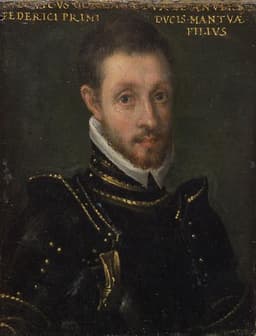
Louis of Nevers
Emperor · Medieval
36.0Total
Basic Information
Born
1454
1304
Died
1510
1346
Era
Medieval
Medieval
Nationality
Cyprus
Flanders
Occupation
Emperor
Emperor
Civilization
Western
Western
Score Comparison
Military (10%)
16.6
14.9
Political (20%)
27.9
30.7
Influence (20%)
48.6
45.5
Legacy (20%)
37.5
35.8
Leadership (15%)
44.5
33.6
Strategy (15%)
41.7
45.0
TOTAL
38.2
36.0
Catherine Cornaro — Complete Timeline
1472 AD
Marriage to James II of CyprusPolitical Action◆ Major
Catherine Cornaro married King James II of Cyprus in a Venetian-brokered alliance. The marriage was intended to strengthen Venetian influence over Cyprus and secure the island's loyalty to Venice.
DiplomacyAlliance
Impact: regional
1473 AD
Regency after James II's deathPolitical Action◆ Major
After James II's sudden death, Catherine Cornaro became regent for her unborn child. She ruled Cyprus as queen regent, but faced challenges from Cypriot nobles and Venetian interests seeking control.
RegencyPower Struggle
Impact: national
1489 AD
Cession of Cyprus to VenicePolitical Action
Catherine Cornaro abdicated the throne of Cyprus and formally ceded the island to the Republic of Venice. She was forced to relinquish her crown under Venetian pressure, ending the Kingdom of Cyprus as an independent state.
AbdicationEnd of KingdomVenetian Rule
Impact: regionaltragic
Louis of Nevers — Complete Timeline
1322 AD
Accession as Count of FlandersPolitical Action◆ Major
Louis of Nevers inherited the County of Flanders upon the death of his grandfather, Robert III. His succession was contested by his father's claims, but he secured the title through French support, aligning Flanders closely with the French crown.
SuccessionFlandersFrench Alliance
Impact: regional
1328 AD
Suppression of the Flemish RevoltWar◆ Major
Louis of Nevers, with French military aid, crushed a major peasant and urban revolt in Flanders led by Nicolaas Zannekin. The revolt was sparked by his pro-French policies and tax burdens, and its suppression solidified his rule but alienated many Flemings.
RevoltFlandersFrench Intervention
Impact: regionaldestructive
1346 AD
Battle of CrécyWar◆ Major
Louis of Nevers, Count of Flanders, fought on the French side against the English army of Edward III. He was killed during the battle, which ended in a decisive English victory and marked the beginning of the Hundred Years' War's first phase.
Hundred Years' WarBattleDeath
Impact: regionaltragic
This comparison has not been analyzed yet.
One-time AI generation (~1 minute). Scores and timeline are already available below.
Rankings
🥇
Catherine CornaroLeader
Mil: 16.6Pol: 27.9Inf: 48.6
38.2
🥈
Louis of Nevers
Mil: 14.9Pol: 30.7Inf: 45.5
36.0
+2.2 behind
How This Comparison Works
Algorithm
Each figure is scored on 6 dimensions (0—100 scale) based on structured historical data: Military (10%), Political (20%), Influence (20%), Legacy (20%), Leadership (15%), Strategy (15%). The weighted total produces the final ranking.
Data Sources
Scores are computed from structured sub-indicators in the database. Scale factors adjust for era (Ancient ×0.85, Modern ×1.0) and civilization size (Eastern ×1.05, Other ×0.80) to account for differences in population and military scale.
Maximum 3 Figures
Comparisons are limited to 2—3 figures to ensure readability and statistical meaningfulness.
Error Margins
±5 points per dimension — Sub-scores are derived from historical records with inherent uncertainty. Two figures within 5 points on a dimension should be considered roughly equivalent in that area.
Total Score Accuracy
±3 points overall — The weighted combination of 6 dimensions produces a total score with approximately ±3 points of uncertainty. Differences of less than 3 points are not statistically significant— the figures are effectively tied.
Known Limitations
- Historical records are incomplete and uneven across civilizations
- Figures from oral-tradition societies may be underrepresented
- Occupation labels can misclassify multi-role figures
- Scores measure capability and impact, not moral character
- Quantitative scoring is a comparison tool, not absolute truth
Capability Radar
Military (10%) — Battles & Warfare
Battles
6
10
Win Rate
8
5
Expansion
14
5
Political (20%) — Governance & Reform
Reform
10
10
Diplomacy
25
15
Economy
10
10
Influence (20%) — Cultural & Global Reach
Cultural
20
5
Global
10
5
Legacy (20%) — Historical Impact
Historical
15
10
Longevity
10
5
Leadership (15%) — Power & Stability
Tenure
15
20
Stability
5
10
Strategy (15%) — Tactics & Innovation
Strategy
16
5
Tactics
16
5
Reform
19
5
Similar Comparisons
Comments & Discussion
No comments yet. Be the first to share your thoughts!