Loading...
Louis of Nevers vs Louis VII of France
Louis VII of France leads by 10.0 pts · 2 figures compared
…
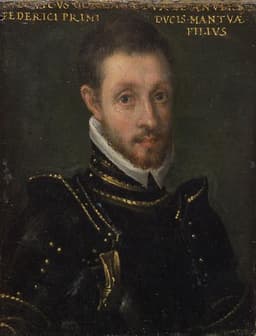
Louis of Nevers
Emperor · Medieval
36.0Total
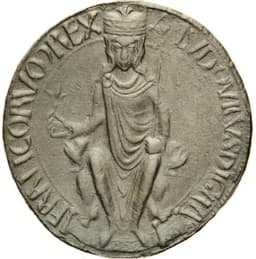
Louis VII of France
Emperor · Medieval
46.0Total
Basic Information
Born
1304
1120
Died
1346
1180
Era
Medieval
Medieval
Nationality
Flanders
France
Occupation
Emperor
Emperor
Civilization
Western
Western
Score Comparison
Military (10%)
14.9
25.9
Political (20%)
30.7
37.9
Influence (20%)
45.5
51.8
Legacy (20%)
35.8
45.0
Leadership (15%)
33.6
64.0
Strategy (15%)
45.0
39.6
TOTAL
36.0
46.0
Louis of Nevers — Complete Timeline
1322 AD
Accession as Count of FlandersPolitical Action◆ Major
Louis of Nevers inherited the County of Flanders upon the death of his grandfather, Robert III. His succession was contested by his father's claims, but he secured the title through French support, aligning Flanders closely with the French crown.
SuccessionFlandersFrench Alliance
Impact: regional
1328 AD
Suppression of the Flemish RevoltWar◆ Major
Louis of Nevers, with French military aid, crushed a major peasant and urban revolt in Flanders led by Nicolaas Zannekin. The revolt was sparked by his pro-French policies and tax burdens, and its suppression solidified his rule but alienated many Flemings.
RevoltFlandersFrench Intervention
Impact: regionaldestructive
1346 AD
Battle of CrécyWar◆ Major
Louis of Nevers, Count of Flanders, fought on the French side against the English army of Edward III. He was killed during the battle, which ended in a decisive English victory and marked the beginning of the Hundred Years' War's first phase.
Hundred Years' WarBattleDeath
Impact: regionaltragic
Louis VII of France — Complete Timeline
1137 AD
Reign as King of the FranksPolitical Action◆ Major
Louis VII succeeded his father Louis VI as King of the Franks. His reign was marked by the expansion of royal territory through marriage to Eleanor of Aquitaine, but also by conflicts with the Church and nobles.
KingshipCapetianReign
Impact: national
1147 AD
Second CrusadeWar◆ Major
Louis VII led the Second Crusade with his wife Eleanor of Aquitaine and the German king Conrad III. The crusade was a failure, with the army suffering heavy losses in Anatolia and failing to capture Damascus. The campaign damaged Louis's prestige.
CrusadeWarFailure
Impact: globaltragic
1152 AD
Conflict with Henry II of EnglandWar◆ Major
After Eleanor of Aquitaine married Henry II of England, Louis VII fought a series of wars against Henry over control of French territories. The conflicts were inconclusive, but they established the rivalry between the Capetian and Plantagenet dynasties.
WarPlantagenetTerritorial Conflict
Impact: regional
Divorce from Eleanor of AquitainePolitical Action◆ Major
Louis VII's marriage to Eleanor of Aquitaine was annulled on grounds of consanguinity. Eleanor then married Henry II of England, bringing the vast Duchy of Aquitaine under English control and leading to centuries of conflict between France and England.
DivorceAquitaineAnglo-French Conflict
Impact: globaltragic
1179 AD
Coronation of Philip II AugustusPolitical Action
Louis VII had his son Philip II Augustus crowned as co-king to ensure the succession. This act strengthened the Capetian dynasty and ensured a smooth transition of power after Louis's death.
CoronationSuccessionCapetian
Impact: nationalconstructive
Expert Analysis
Origins
Louis of Nevers (c. 1304–1346) was born into the House of Dampierre, the ruling dynasty of Flanders. He was the son of Louis I, Count of Nevers, and Jeanne of Rethel. His early life was shaped by the complex feudal politics of the Low Countries, where the counts of Flanders often clashed with both the French crown and their own urban communes. His grandfather, Robert III of Flanders, had fought against French encroachment, but Louis himself would become a loyal French vassal.
Louis VII of France (1120–1180) was born as the second son of King Louis VI of France and Adelaide of Maurienne. Initially destined for the Church, he was educated at the Abbey of Saint-Denis, but after the death of his older brother Philip in 1131, he became heir to the throne. He was crowned co-king in 1131 and succeeded his father in 1137. His upbringing in a religious environment gave him a pious character that influenced his reign.
Rise to Power
Louis of Nevers inherited the County of Flanders in 1322 upon the death of his grandfather, Robert III. His father, Louis I of Nevers, had predeceased Robert, but his claim was contested by his uncle, Robert of Cassel. With support from the French king Charles IV, Louis secured his position. However, his pro-French policies and heavy taxation provoked a major revolt in 1323–1328, led by Nicolaas Zannekin. Louis fled to France and returned with a French army, crushing the rebels at the Battle of Cassel in 1328. This victory solidified his rule but alienated him from the Flemish populace.
Louis VII became king at age 17 after his father's death in 1137. His rise was smooth due to the Capetian tradition of crowning heirs during the father's lifetime. Shortly after his accession, he married Eleanor of Aquitaine, the heiress of the vast Duchy of Aquitaine, dramatically expanding royal domains. This marriage was a major political coup, but it also set the stage for future conflicts.
Leadership & Governance
Louis of Nevers governed Flanders as a loyal vassal of France, often prioritizing French interests over those of his own subjects. He relied on French military support to suppress internal dissent, as seen in the 1328 revolt. His governance was autocratic and unpopular; he imposed heavy taxes to fund his court and military campaigns. He had little regard for the traditional privileges of Flemish towns, which led to constant tension. His leadership style was reactive rather than visionary, focused on maintaining his position through external backing.
Louis VII's leadership was marked by piety and a cautious approach to governance. He expanded royal authority through marriage and diplomacy rather than warfare. His divorce from Eleanor of Aquitaine in 1152 was a major blunder, as she married Henry II of England, handing over the vast Aquitaine territories and sparking decades of conflict. However, he managed to secure the succession by having his son Philip II Augustus crowned in 1179, ensuring dynastic stability. His reign saw the gradual consolidation of royal power, though he was often outmaneuvered by Henry II.
Triumph & Tragedy
Louis of Nevers' greatest triumph was surviving the 1323–1328 revolt and reasserting comital authority with French help. His suppression of the rebellion at Cassel demonstrated his ability to marshal external force. However, his greatest tragedy was his death at the Battle of Crécy in 1346, where he fought for the French and was killed. His death left Flanders in turmoil, as his son was a minor, and the county became a battleground in the Hundred Years' War. His total score of 36.0 reflects his limited military and political acumen.
Louis VII's triumph was the expansion of the royal domain through his marriage to Eleanor, though this was later reversed. His participation in the Second Crusade (1147–1149) was a failure; his army suffered heavy losses and the expedition achieved nothing. His divorce from Eleanor was a personal and political disaster, as it strengthened the English king. However, his long reign (43 years) allowed the Capetian dynasty to stabilize, and his son Philip II would become one of France's greatest kings. His total score of 46.0 indicates a more balanced ruler.
Character & Destiny
Louis of Nevers was a loyal but unimaginative ruler, dependent on French support. His character was that of a feudal lord who saw Flanders as a possession rather than a community. His decisions alienated the Flemish towns, leading to revolt. His fate was sealed at Crécy, where he died a soldier's death in a battle that was not his own. Historians often dismiss him as a minor figure, overshadowed by the larger conflict.
Louis VII was deeply religious, earning the nickname "the Pious." His piety influenced his decision to go on crusade and his reluctance to engage in aggressive warfare. His personality was cautious and perhaps indecisive, which led to the loss of Aquitaine. Yet his commitment to the dynasty ensured a smooth transition to his son. He is remembered as a competent but not brilliant king, a transitional figure between the early Capetians and the great Philip II.
Legacy
Louis of Nevers' legacy is minimal. He is primarily remembered for his death at Crécy, a symbol of the Flemish nobility's sacrifice for France. His reign did not produce lasting institutions or reforms. In Flanders, he is seen as a French puppet who neglected local interests. His military score of 14.9 and political score of 30.7 indicate a failure in both domains.
Louis VII's legacy is more significant. He contributed to the growth of the French monarchy, particularly through the coronation of his son. The loss of Aquitaine set the stage for the Hundred Years' War, but his reign saw the consolidation of royal authority. He is remembered as a crusader king and a builder of churches. His influence score of 51.8 and legacy score of 45.0 reflect his lasting impact on French history.
Conclusion
Louis VII of France had a greater impact than Louis of Nevers. With a total score of 46.0 compared to 36.0, Louis VII's reign strengthened the Capetian dynasty and set the stage for the rise of Philip Augustus. While his crusade failed and his divorce cost him dearly, his long reign provided stability. Louis of Nevers, despite his high birth, died as a minor figure in a major battle, leaving no lasting mark. The 10-point gap in scores reflects this disparity. Louis VII's influence on French history far outweighs the brief and troubled rule of the Flemish count.
Rankings
🥇
Louis VII of FranceLeader
Mil: 25.9Pol: 37.9Inf: 51.8
46.0
🥈
Louis of Nevers
Mil: 14.9Pol: 30.7Inf: 45.5
36.0
+10.0 behind
How This Comparison Works
Algorithm
Each figure is scored on 6 dimensions (0—100 scale) based on structured historical data: Military (10%), Political (20%), Influence (20%), Legacy (20%), Leadership (15%), Strategy (15%). The weighted total produces the final ranking.
Data Sources
Scores are computed from structured sub-indicators in the database. Scale factors adjust for era (Ancient ×0.85, Modern ×1.0) and civilization size (Eastern ×1.05, Other ×0.80) to account for differences in population and military scale.
Maximum 3 Figures
Comparisons are limited to 2—3 figures to ensure readability and statistical meaningfulness.
Error Margins
±5 points per dimension — Sub-scores are derived from historical records with inherent uncertainty. Two figures within 5 points on a dimension should be considered roughly equivalent in that area.
Total Score Accuracy
±3 points overall — The weighted combination of 6 dimensions produces a total score with approximately ±3 points of uncertainty. Differences of less than 3 points are not statistically significant— the figures are effectively tied.
Known Limitations
- Historical records are incomplete and uneven across civilizations
- Figures from oral-tradition societies may be underrepresented
- Occupation labels can misclassify multi-role figures
- Scores measure capability and impact, not moral character
- Quantitative scoring is a comparison tool, not absolute truth
Capability Radar
Military (10%) — Battles & Warfare
Battles
10
15
Win Rate
5
20
Expansion
5
5
Political (20%) — Governance & Reform
Reform
10
30
Diplomacy
15
40
Economy
10
30
Influence (20%) — Cultural & Global Reach
Cultural
5
30
Global
5
20
Legacy (20%) — Historical Impact
Historical
10
40
Longevity
5
30
Leadership (15%) — Power & Stability
Tenure
20
60
Stability
10
35
Strategy (15%) — Tactics & Innovation
Strategy
5
10
Tactics
5
10
Reform
5
5
Similar Comparisons
Comments & Discussion
No comments yet. Be the first to share your thoughts!