Loading...
Cato the Elder vs Julius Caesar
Julius Caesar leads by 19.8 pts · 2 figures compared
…
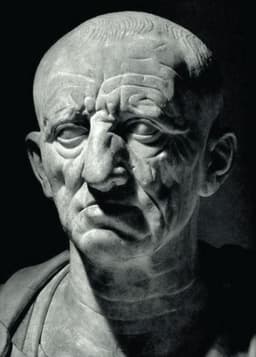
Cato the Elder
Politician · Ancient
63.0Total

Julius Caesar
General · Ancient
82.8Total
Basic Information
Born
-234
-100
Died
-149
-44
Era
Ancient
Ancient
Nationality
Roman Republic
Roman Republic
Occupation
Politician
General
Civilization
Western
Western
Score Comparison
Military (10%)
45.0
88.0
Political (20%)
55.0
78.0
Influence (20%)
68.0
85.0
Legacy (20%)
68.0
82.0
Leadership (15%)
72.0
80.0
Strategy (15%)
54.3
85.0
TOTAL
63.0
82.8
Cato the Elder — Complete Timeline
195 BC
Consulship and Campaign in SpainWar
Cato served as consul and led a campaign in Hispania Citerior, suppressing a rebellion. He used harsh tactics, including mass executions, to pacify the region, and later boasted of his victories in his writings.
Military campaignSpanish wars
Impact: regionaldestructive
184 BC
Censorship and Moral ReformsReform◆ Major
Cato the Elder served as censor, implementing strict moral reforms to combat luxury and corruption. He expelled senators for immorality, taxed luxury goods, and promoted traditional Roman values, earning the nickname 'Censorius'.
CensorshipMoral reform
Impact: nationalconstructive
168 BC
Publication of 'Origines'Cultural◆ Major
Cato wrote 'Origines', the first history of Rome in Latin. The work covered the founding of Rome and the early Republic, emphasizing Roman virtues and the importance of agriculture, and influenced later Roman historiography.
LiteratureHistoriography
Impact: nationalconstructive
155 BC
Opposition to HellenizationPolitical Action
Cato opposed the influence of Greek culture on Rome, arguing it undermined Roman values. He led a campaign to expel Greek philosophers from Rome and promoted traditional Roman education and customs.
Cultural conflictConservatism
Impact: national
153 BC
Campaign for the Destruction of CarthagePolitical Action◆ Major
Cato ended every speech in the Senate with 'Carthago delenda est' (Carthage must be destroyed). His persistent advocacy for war against Carthage influenced Roman policy and contributed to the outbreak of the Third Punic War.
Foreign policyImperialism
Impact: globaldestructive
Julius Caesar — Complete Timeline
58 BC
Gallic WarsWar◆ Major
Caesar, as proconsul of Gaul, launched a series of campaigns that conquered all of Gaul (modern France, Belgium, and parts of Switzerland). He fought numerous battles, including against the Helvetii, the Belgae, and the Gallic chieftain Vercingetorix. The wars brought immense wealth and a loyal army to Caesar.
Gallic WarsConquestRoman Expansion
Impact: regional
49 BC
Crossing the RubiconPolitical Action◆ Major
Caesar led Legio XIII across the Rubicon River into Italy, defying the Roman Senate's order to disband his army. This act triggered a civil war against Pompey and the Optimates, ultimately leading to Caesar's dictatorship and the end of the Roman Republic.
Roman Civil WarEnd of RepublicPower Struggle
Impact: global
48 BC
Battle of PharsalusWar◆ Major
Caesar's outnumbered army defeated the larger forces of Pompey the Great at Pharsalus in Greece. Caesar's tactical use of a reserve line to counter Pompey's cavalry charge proved decisive. Pompey fled to Egypt, where he was assassinated, leaving Caesar as the undisputed master of the Roman world.
Roman Civil WarBattleDecisive Victory
Impact: regional
44 BC
Appointment as Dictator for LifePolitical Action◆ Major
The Roman Senate appointed Caesar dictator perpetuo (dictator for life), granting him unprecedented personal power. This move concentrated military, legislative, and judicial authority in one person, effectively ending the Roman Republic's traditional system of checks and balances and alarming many senators.
DictatorshipEnd of RepublicPower Consolidation
Impact: regionaldestructive
Assassination on the Ides of MarchPolitical Action◆ Major
A group of Roman senators, led by Marcus Junius Brutus and Gaius Cassius Longinus, stabbed Caesar to death at a meeting of the Senate in the Theatre of Pompey. The assassination was intended to restore the Republic, but instead triggered another civil war that led to the rise of the Roman Empire.
AssassinationRoman PoliticsEnd of Republic
Impact: globaldestructive
Expert Analysis
cato-the-elder-vs-julius-caesar
# The Two Romes: Caesar and Cato, and the Clash That Shaped an Empire
On a winter morning in 44 BCE, Julius Caesar walked into the Senate chamber, his toga stained with the blood of twenty-three stab wounds. He had conquered Gaul, crossed the Rubicon, and made himself dictator for life. Yet in that moment, the Republic he had bent to his will struck back with a violence that would echo through millennia. A century earlier, another Roman had stood before the same Senate, a gaunt, stern-faced man who ended every speech with a single, obsessive phrase: “Carthage must be destroyed.” Cato the Elder never held supreme power, never commanded legions across continents, never saw his face stamped on coins. But his words outlasted his bones, and his moral absolutism defined a Rome that Caesar would ultimately bury. How did two men, both products of the same Republic, come to represent such radically different destinies—one a conqueror who remade the world in his image, the other a censor who tried to freeze Rome in amber?
Origins
Cato the Elder was born in 234 BCE, in the hard years between the First and Second Punic Wars, when Rome was still a struggling republic of farmers and soldiers. His family were plebeians from Tusculum, a town known for its rugged simplicity. Cato inherited no fortune, no political connections—only a fierce pride in what he called “the old ways.” He rose through sheer will, his speeches filled with contempt for luxury, Greek philosophy, and any man who shaved his beard too often. His world was one of discipline, austerity, and a belief that Rome’s strength lay in its soil and its swords, not its libraries.
Julius Caesar, born in 100 BCE, entered a very different Rome. The Republic was already creaking under the weight of its conquests. Caesar’s family, the Julii, claimed descent from the goddess Venus, but they were politically marginal. His father died when Caesar was sixteen, leaving him to navigate a world of civil wars, street violence, and crumbling traditions. Where Cato saw a sacred Republic worth preserving, Caesar saw a system ripe for mastery. His youth was spent dodging assassins, bribing officials, and learning that power flowed not from virtue but from audacity.
Rise to Power
Cato’s path was the traditional *cursus honorum*—the ladder of Roman offices, each step earned through service and reputation. He became consul in 195 BCE, then censor in 184 BCE, the moral watchdog of Rome. His campaign in Spain was brutal and efficient, but his real weapon was his tongue. He expelled senators for corruption, taxed luxury goods to death, and wrote the first history of Rome in Latin—*Origines*—to ensure that Roman youth learned their own traditions, not Greek myths. His power came from his incorruptibility, or at least the appearance of it.
Caesar’s rise was anything but traditional. He borrowed vast sums to stage games and bribe voters, then fled Rome to avoid his creditors. He served as governor in Spain, where he conquered tribes and minted his own coins. In 60 BCE, he formed the First Triumvirate with Pompey and Crassus—an illegal alliance that bypassed the Senate entirely. Then came Gaul: eight years of war, a million dead, and a personal army loyal to Caesar alone. When the Senate ordered him to disband his legions, he crossed the Rubicon River in 49 BCE, triggering a civil war that ended with him as dictator for life.
Leadership & Governance
Cato governed through fear of shame. As censor, he expelled a senator for kissing his wife in public—too much affection, he argued, was a sign of moral decay. He taxed jewelry, banned imported wine, and pushed laws against women owning property. His reforms were reactionary, aimed at freezing a society that was already changing. He was a brilliant politician in the narrow sense: he knew how to shame, how to delay, how to kill a bill with a speech. But he had no vision for Rome’s future. His strategy was simple: “Carthage must be destroyed.” He repeated it until the Third Punic War finally erased the city in 146 BCE, three years after his death.
Caesar governed through audacity and efficiency. He reformed the calendar, granting Rome the Julian calendar that would last 1,600 years. He granted citizenship to Gauls and Spaniards, expanding Rome’s base of power. He built public works, redistributed land to veterans, and centralized tax collection. His military genius was undeniable: at the Siege of Alesia (52 BCE), he built a double wall around the Gallic fortress, trapping both the defenders and a relief army, then defeated both. He wrote his own commentaries, shaping how history would remember him. But his governance was also ruthless: he crushed the Senate’s authority, packed it with his supporters, and accepted the title *dictator perpetuo*—dictator for life.
Triumph & Tragedy
Cato’s greatest triumph was his censorship, where he reshaped Roman morals for a generation. His tragedy was that he succeeded only in delaying the inevitable. He died in 149 BCE, having seen Carthage burned but also having witnessed the first cracks in the Republic—the Gracchi brothers, land reforms, popular unrest. He could not stop the tide of empire; he only made it angrier.
Caesar’s triumph was absolute: he conquered Gaul, defeated Pompey, and stood alone atop the world. His tragedy was the Ides of March, 44 BCE, when senators he had pardoned—including his friend Brutus—stabbed him to death in the Senate chamber. He fell at the base of a statue of Pompey, his blood pooling on the floor. The Republic he had strangled was not resurrected; it was replaced by his grandnephew Octavian, who became Augustus, the first emperor.
Character & Destiny
Cato was a man of principle, but his principles were rigid. He opposed Hellenization because he feared that Greek philosophy would soften Roman resolve. He expelled Greek philosophers from Rome in 155 BCE, calling them corrupters of youth. His personality was a fortress: no humor, no flexibility, no forgiveness. He could not adapt, and so the Republic he loved adapted without him, growing ever more corrupt and ever more dependent on strongmen like Caesar.
Caesar was a man of appetite and calculation. He slept with the wives of his enemies, pardoned his rivals, and knew exactly when to be merciful and when to be brutal. He was a gambler who understood that in politics, the most dangerous move is to do nothing. His personality was a weapon: charming, ruthless, and endlessly adaptable. He saw that the Republic was a corpse and decided to be the one to bury it—and to inherit its wealth.
Legacy
Cato’s legacy is the ghost of a lost Republic. His phrase “Carthage must be destroyed” became a byword for relentless advocacy. His *Origines* founded Roman historiography. He is remembered as the archetype of the stern, incorruptible censor—a figure that later Romans, and later republicans, would invoke when they wanted to recall a purer age. His influence score of 73.2 and legacy score of 82.0 reflect a man who shaped Roman culture without ever holding supreme power.
Caesar’s legacy is the Roman Empire itself. Every emperor after him took his name—Caesar became a title, from Kaiser to Tsar. His military campaigns, his reforms, his assassination, and his adoption of Octavian set the template for imperial rule. His influence score of 85.0 and legacy score of 82.0 barely capture the scale: he is one of the most recognizable figures in world history, a symbol of ambition, genius, and the price of absolute power.
Conclusion
Cato and Caesar were both Romans, but they lived in different Romes. Cato’s Rome was a small, frightened republic fighting for survival against Carthage; Caesar’s Rome was an empire struggling with its own success. Cato tried to preserve a world that was already dying; Caesar built a world that would last a thousand years. In the end, the Senate that stabbed Caesar was full of men who admired Cato—but they could not bring back his Republic. They only made room for Augustus. The lesson is as old as politics itself: the man who says “no” can inspire, but the man who says “yes” to power will always win.
Rankings
🥇
Julius CaesarLeader
Mil: 88.0Pol: 78.0Inf: 85.0
82.8
🥈
Cato the Elder
Mil: 45.0Pol: 55.0Inf: 68.0
63.0
+19.8 behind
How This Comparison Works
Algorithm
Each figure is scored on 6 dimensions (0—100 scale) based on structured historical data: Military (10%), Political (20%), Influence (20%), Legacy (20%), Leadership (15%), Strategy (15%). The weighted total produces the final ranking.
Data Sources
Scores are computed from structured sub-indicators in the database. Scale factors adjust for era (Ancient ×0.85, Modern ×1.0) and civilization size (Eastern ×1.05, Other ×0.80) to account for differences in population and military scale.
Maximum 3 Figures
Comparisons are limited to 2—3 figures to ensure readability and statistical meaningfulness.
Error Margins
±5 points per dimension — Sub-scores are derived from historical records with inherent uncertainty. Two figures within 5 points on a dimension should be considered roughly equivalent in that area.
Total Score Accuracy
±3 points overall — The weighted combination of 6 dimensions produces a total score with approximately ±3 points of uncertainty. Differences of less than 3 points are not statistically significant— the figures are effectively tied.
Known Limitations
- Historical records are incomplete and uneven across civilizations
- Figures from oral-tradition societies may be underrepresented
- Occupation labels can misclassify multi-role figures
- Scores measure capability and impact, not moral character
- Quantitative scoring is a comparison tool, not absolute truth
Capability Radar
Military (10%) — Battles & Warfare
Battles
10
95
Win Rate
10
92
Expansion
10
97
Political (20%) — Governance & Reform
Reform
70
90
Diplomacy
60
85
Economy
70
82
Influence (20%) — Cultural & Global Reach
Cultural
70
88
Global
60
94
Legacy (20%) — Historical Impact
Historical
70
95
Longevity
70
96
Leadership (15%) — Power & Stability
Tenure
60
75
Stability
60
60
Strategy (15%) — Tactics & Innovation
Strategy
10
94
Tactics
10
96
Reform
10
88
Similar Comparisons
Comments & Discussion
CATO'S GHOST6/17/2026
Cato didn't just lose to Caesar—he lost because his vision was a mausoleum. "Carthage delenda est" wasn't strategy; it was paranoia dressed as virtue. While Caesar understood that empire required assimilation, not annihilation, Cato wanted Rome to remain a rustic village with a spear. His moral purity won him admiration, but it was Caesar who fed the provinces, built infrastructure, and made Rome last. Cato preserved a corpse; Caesar planted a seed.
严苛的守墓人6/17/2026
卡图说“迦太基必须毁灭”时,他真正想毁灭的是变革本身。他恨希腊哲学,恨奢侈品,恨一切让罗马变强却“不纯”的东西。但历史从不奖励道德洁癖——凯撒渡过卢比孔河时,带来的是面包、道路和公民权。卡图幻想冻结时间,凯撒却知道帝国需要呼吸。谁才是真正的罗马人?答案是:那个让罗马活下来的,而不是把它做成木乃伊的。
SWORD OVER SENATE6/17/2026
The real tragedy isn't that Caesar died—it's that Cato's ghost won the propaganda war. Caesar crossed the Rubicon because the Senate gave him no legal path to power. That's not tyranny; that's a broken system. Cato the Younger, his ideological heir, literally read Plato's "Phaedo" before disemboweling himself. That's not martyrdom—that's a philosopher cosplaying as a soldier. Caesar at least knew politics was about feeding people, not reciting Greek poetry while bleeding out.
数据怀疑派6/17/2026
比较两人军事实力根本不公平:卡图打了一辈子仗,对手是汉尼拔的弟弟哈斯德鲁巴;凯撒在高卢打的是部落民兵。但我要问一个数字问题:卡图卸任执政官时,国库充实了多少?凯撒卸任高卢总督时,他欠了多少债?前者留下纪律,后者留下赤字。凯撒的“仁慈”是用别人的钱买的,卡图的节俭却用自己家产示范。谁对罗马更负责任?账单不说谎。