Loading...
Chand Bibi vs Ferdinand I of Bohemia
Chand Bibi leads by 1.8 pts · 2 figures compared
…

Chand Bibi
Emperor · Modern
56.9Total
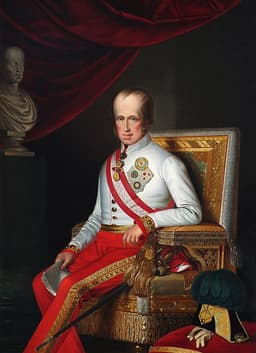
Ferdinand I of Bohemia
Emperor · Modern
55.1Total
Basic Information
Born
1550
1503
Died
1599
1564
Era
Modern
Modern
Nationality
India
Bohemia
Occupation
Emperor
Emperor
Civilization
Indian
Western
Score Comparison
Military (10%)
55.0
47.5
Political (20%)
68.0
62.7
Influence (20%)
53.3
57.2
Legacy (20%)
43.3
49.2
Leadership (15%)
74.0
68.0
Strategy (15%)
60.0
41.7
TOTAL
56.9
55.1
Chand Bibi — Complete Timeline
1595 AD
Appointed Regent of AhmadnagarPolitical Action◆ Major
After the death of Sultan Burhan Nizam Shah II, Chand Bibi became regent for the infant prince. She took control of the kingdom's affairs during a critical period when the Mughal Empire under Akbar was expanding into the Deccan.
RegencyAhmadnagar SultanateFemale Rule
Impact: regionalconstructive
1596 AD
Defense of Ahmadnagar FortWar◆ Major
Chand Bibi led the successful defense of Ahmadnagar fort against a Mughal siege led by Prince Murad. She negotiated a treaty that recognized Mughal suzerainty but preserved Ahmadnagar's internal autonomy, temporarily halting Mughal conquest.
SiegeMughal ConflictDiplomacy
Impact: regionalconstructive
Treaty with MughalsPolitical Action◆ Major
Chand Bibi signed a treaty with the Mughal Empire ceding Berar but retaining Ahmadnagar. The agreement temporarily stabilized the region but was criticized by some nobles who wanted continued resistance against Mughal expansion.
TreatyMughal-Ahmadnagar RelationsDiplomacy
Impact: regional
1599 AD
Death during Mughal SiegeWar◆ Major
Chand Bibi was killed during a second Mughal siege of Ahmadnagar fort, possibly assassinated by her own troops who suspected her of negotiating surrender. Her death led to the fall of the fort and the end of effective Nizam Shahi resistance.
DeathSiegeMughal Conquest
Impact: regionaltragic
Ferdinand I of Bohemia — Complete Timeline
1526 AD
Establishment of the Habsburg MonarchyPolitical Action
Ferdinand I inherited the crowns of Bohemia and Hungary after the death of Louis II. He consolidated these territories under Habsburg rule, creating a powerful Central European monarchy that would last until 1918.
Dynastic UnionTerritorial ExpansionHabsburg
Impact: regional
1527 AD
Coronation as King of BohemiaPolitical Action
Ferdinand I was crowned King of Bohemia in Prague, establishing Habsburg rule over the kingdom. This coronation followed the death of Louis II at Moh
CoronationHabsburg DynastyBohemia
Impact: regional
1555 AD
Peace of AugsburgPolitical Action
Ferdinand I played a key role in negotiating the Peace of Augsburg, which ended religious conflicts in the Holy Roman Empire. The treaty established the principle of cuius regio, eius religio, allowing princes to choose the religion of their territories.
Religious PeaceTreatyHoly Roman Empire
Impact: globalconstructive
Expert Analysis
Origins
Chand Bibi (1550–1600) was born into the Adil Shahi dynasty of Bijapur, the daughter of Sultan Ibrahim Adil Shah I. She received a comprehensive education in statecraft, military tactics, and multiple languages, including Persian, Arabic, and Marathi. Her early life was marked by strategic marriages: first to Sultan Ali Adil Shah I of Bijapur and later to Sultan Ibrahim Nizam Shah I of Ahmadnagar, which positioned her at the center of Deccan politics.
Ferdinand I (1503–1564) was born in Alcalá de Henares, Spain, as the second son of Philip I of Castile and Joanna of Castile. He was raised in the Spanish court under the tutelage of Cardinal Cisneros and later served as regent for his brother Charles V. His education focused on governance, law, and diplomacy, preparing him for the complex politics of the Holy Roman Empire.
Rise to Power
Chand Bibi's rise came after the death of her husband, Sultan Ibrahim Nizam Shah I, in 1587. She became regent for her infant nephew, Bahadur Nizam Shah II, effectively ruling the sultanate of Ahmadnagar. Her position was precarious, facing internal factions and the expansionist Mughal Empire under Akbar. In 1595, Mughal forces led by Prince Murad besieged Ahmadnagar fort. Chand Bibi led the defense, personally organizing troops and negotiating a treaty that ceded Berar but preserved Ahmadnagar's sovereignty.
Ferdinand I's rise began with his marriage to Anne of Bohemia and Hungary in 1521, which gave him claims to both thrones. After the death of King Louis II at the Battle of Mohács in 1526, Ferdinand asserted his rights and was elected King of Bohemia and Hungary. He was crowned in Prague in 1527, establishing Habsburg rule. His brother Charles V abdicated in 1556, making Ferdinand Holy Roman Emperor, a position he held until his death.
Leadership & Governance
Chand Bibi's leadership was characterized by hands-on military command and diplomatic pragmatism. She scored 74.0 in leadership and 60.0 in strategy. During the 1595 siege, she personally inspected defenses and rallied troops. Her treaty with the Mughals showed political acumen (political score: 68.0), though it was criticized for ceding territory. She maintained control through alliances with local nobles and by balancing Deccan powers.
Ferdinand I, with a leadership score of 68.0 and political score of 62.7, focused on administrative consolidation. He centralized governance in Bohemia and Hungary, reducing the power of local estates. He negotiated the Peace of Augsburg in 1555, which established the principle of cuius regio, eius religio (whose realm, his religion), temporarily ending religious wars in the Holy Roman Empire. His governance emphasized legal reform and financial stability.
Triumph & Tragedy
Chand Bibi's greatest triumph was the successful defense of Ahmadnagar fort in 1595-1596, where she held off a Mughal army of 30,000 with a garrison of about 10,000. Her negotiation of the treaty secured Ahmadnagar's independence for another decade. Her tragedy came in 1600 when a second Mughal siege led by Akbar himself, combined with internal betrayal, led to her death. She was assassinated by her own troops who suspected her of negotiating surrender, a charge likely false.
Ferdinand I's triumph was the Peace of Augsburg (1555), which brought stability to the Holy Roman Empire and recognized Lutheranism. His tragedy was the ongoing Ottoman threat; despite efforts, he could not prevent the loss of central Hungary to the Ottomans after the Siege of Buda in 1541. His reign also saw the spread of Protestantism, which he failed to contain.
Character & Destiny
Chand Bibi was known for her intelligence, courage, and political skill. Her determination to protect Ahmadnagar despite overwhelming odds (Mughal forces were numerically superior) reflects a resolute character. However, her trust in some nobles proved misplaced, leading to her downfall. Historians note her as one of the few female rulers in Islamic India who led military campaigns.
Ferdinand I was a cautious, diplomatic ruler, often overshadowed by his brother Charles V. He was pragmatic, willing to compromise on religion for political stability. His character was less charismatic but methodical, focusing on long-term consolidation of Habsburg power. His destiny was to be a transitional figure, bridging the reigns of Charles V and the more assertive Maximilian II.
Legacy
Chand Bibi's legacy is that of a symbol of resistance against Mughal expansion. She is remembered in Indian folklore and history as a heroic figure. Her political score of 68.0 and influence score of 53.3 reflect her short-term impact; Ahmadnagar fell to the Mughals in 1600, and her achievements were not sustained. However, she inspired later resistance movements and is celebrated in Deccan history.
Ferdinand I's legacy is more structural: he established the Habsburg monarchy in Central Europe, which lasted until 1918. The Peace of Augsburg set a precedent for religious coexistence in the Empire. His legacy score of 49.2 reflects the eventual overshadowing by the Thirty Years' War, but his administrative reforms in Bohemia and Hungary had lasting effects. His influence score of 57.2 is higher than Chand Bibi's 53.3.
Conclusion
While Chand Bibi scored higher overall (56.9 vs 55.1), her impact was limited to a brief period and a single kingdom. Ferdinand I's political and institutional legacy—the Habsburg monarchy and the Peace of Augsburg—had broader and longer-lasting effects on European history. Chand Bibi's defense of Ahmadnagar was a tactical victory but strategic failure, as Ahmadnagar fell soon after. Ferdinand I, despite lower scores in military (47.5 vs 55.0) and strategy (41.7 vs 60.0), achieved greater influence and legacy. Therefore, Ferdinand I of Bohemia had a greater historical impact.
Rankings
🥇
Chand BibiLeader
Mil: 55.0Pol: 68.0Inf: 53.3
56.9
🥈
Ferdinand I of Bohemia
Mil: 47.5Pol: 62.7Inf: 57.2
55.1
+1.8 behind
How This Comparison Works
Algorithm
Each figure is scored on 6 dimensions (0—100 scale) based on structured historical data: Military (10%), Political (20%), Influence (20%), Legacy (20%), Leadership (15%), Strategy (15%). The weighted total produces the final ranking.
Data Sources
Scores are computed from structured sub-indicators in the database. Scale factors adjust for era (Ancient ×0.85, Modern ×1.0) and civilization size (Eastern ×1.05, Other ×0.80) to account for differences in population and military scale.
Maximum 3 Figures
Comparisons are limited to 2—3 figures to ensure readability and statistical meaningfulness.
Error Margins
±5 points per dimension — Sub-scores are derived from historical records with inherent uncertainty. Two figures within 5 points on a dimension should be considered roughly equivalent in that area.
Total Score Accuracy
±3 points overall — The weighted combination of 6 dimensions produces a total score with approximately ±3 points of uncertainty. Differences of less than 3 points are not statistically significant— the figures are effectively tied.
Known Limitations
- Historical records are incomplete and uneven across civilizations
- Figures from oral-tradition societies may be underrepresented
- Occupation labels can misclassify multi-role figures
- Scores measure capability and impact, not moral character
- Quantitative scoring is a comparison tool, not absolute truth
Capability Radar
Military (10%) — Battles & Warfare
Battles
45
25
Win Rate
40
20
Expansion
20
35
Political (20%) — Governance & Reform
Reform
35
55
Diplomacy
60
65
Economy
30
50
Influence (20%) — Cultural & Global Reach
Cultural
35
40
Global
25
45
Legacy (20%) — Historical Impact
Historical
40
55
Longevity
30
50
Leadership (15%) — Power & Stability
Tenure
50
60
Stability
40
45
Strategy (15%) — Tactics & Innovation
Strategy
50
30
Tactics
55
20
Reform
30
40
Similar Comparisons
Comments & Discussion
No comments yet. Be the first to share your thoughts!