Loading...
Charles Augustus of Saxe-Weimar vs Emperor Pedro I of Brazil
Charles Augustus of Saxe-Weimar leads by 0.3 pts · 2 figures compared
…
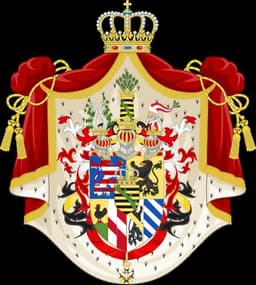
Charles Augustus of Saxe-Weimar
Emperor · Modern
55.8Total
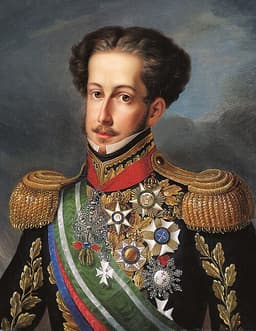
Emperor Pedro I of Brazil
Emperor · Modern
55.5Total
Basic Information
Born
1757
1798
Died
1828
1834
Era
Modern
Modern
Nationality
Saxe-Weimar
Brazil
Occupation
Emperor
Emperor
Civilization
Western
Western
Score Comparison
Military (10%)
20.0
55.0
Political (20%)
70.0
62.7
Influence (20%)
55.0
59.0
Legacy (20%)
52.0
50.0
Leadership (15%)
82.0
65.0
Strategy (15%)
42.3
35.7
TOTAL
55.8
55.5
Charles Augustus of Saxe-Weimar — Complete Timeline
1775 AD
Patronage of Johann Wolfgang von GoetheCultural◆ Major
Charles Augustus invited Goethe to Weimar and appointed him to various governmental positions. This patronage created the Weimar Classicism cultural movement and made Weimar a major intellectual center in Europe.
Weimar ClassicismGoetheCultural Patronage
Impact: globalconstructive
1806 AD
Joined the Rhine ConfederationPolitical Action◆ Major
Charles Augustus allied Saxe-Weimar with Napoleon's Confederation of the Rhine, gaining territorial enlargement and sovereign status. This decision preserved his duchy's autonomy during the Napoleonic Wars but tied it to French hegemony.
Napoleonic WarsConfederation of the RhineAlliance
Impact: regional
1813 AD
Fought at the Battle of LeipzigWar◆ Major
Charles Augustus switched sides and fought with the Allied coalition against Napoleon at the Battle of Leipzig. His troops participated in the decisive defeat of Napoleon, contributing to the liberation of German states from French control.
Battle of LeipzigNapoleonic WarsCoalition
Impact: regional
1816 AD
Granted the Constitution of 1816Political Action◆ Major
Charles Augustus issued a constitution for Saxe-Weimar-Eisenach, making him the first German ruler to grant a constitution. This established a bicameral parliament and guaranteed basic rights, setting a precedent for constitutionalism in the German states.
ConstitutionConstitutionalismGerman States
Impact: nationalprogressive
Emperor Pedro I of Brazil — Complete Timeline
1822 AD
Declaration of Brazilian IndependencePolitical Action
Dom Pedro declared Brazil's independence from Portugal on September 7, 1822, at the Ipiranga River. He was acclaimed Emperor Pedro I of Brazil, establishing a constitutional monarchy separate from Portugal.
IndependenceFounding
Impact: globalprogressive
Coronation as Emperor of BrazilPolitical Action◆ Major
Pedro I was crowned Emperor of Brazil on December 1, 1822, in Rio de Janeiro. The coronation formalized his rule over the newly independent nation, with a constitution promulgated in 1824.
CoronationMonarchy
Impact: national
1825 AD
Cisplatine WarWar◆ Major
Brazil went to war with the United Provinces of the R
WarTerritorial Loss
Impact: regionaldestructive
1831 AD
Abdication of the Brazilian ThronePolitical Action
Facing political crisis and military unrest, Pedro I abdicated the Brazilian throne on April 7, 1831, in favor of his five-year-old son Pedro II. He then returned to Portugal to claim the Portuguese throne.
AbdicationPolitical Crisis
Impact: nationaltragic
Expert Analysis
Emperor Pedro I of Brazil vs Charles Augustus of Saxe-Weimar
The Emperor and the Enlightener
On a September morning in 1822, Dom Pedro stood at the banks of the Ipiranga River in São Paulo, tearing the Portuguese insignia from his uniform and shouting “Independence or Death!” It was a moment of raw theater, the kind that defines a nation’s birth. Half a world away and four decades earlier, a young duke named Charles Augustus sat in a modest Weimar study, listening to a poet named Goethe recite verses about the human soul. One man built a country with a cry; the other built a culture with a conversation. Both were rulers. Both changed history. But their paths—and their legacies—could not have been more different.
Origins
Pedro I was born in 1798 into the chaos of the Portuguese royal family. When Napoleon invaded Portugal in 1807, the entire court fled to Brazil, making Rio de Janeiro the seat of the Portuguese Empire. Pedro grew up in a tropical palace, spoiled and impulsive, surrounded by courtiers who whispered about his father’s madness and his mother’s neglect. He learned to ride horses before he learned to read, and his education was haphazard. What he had was charisma—a raw, magnetic energy that could sway a crowd or seduce a woman.
Charles Augustus, born in 1757, came of age in a different world. Saxe-Weimar was a tiny German duchy, a patchwork of forests and villages, overshadowed by Prussia and Austria. His mother, Duchess Anna Amalia, was a formidable woman who hired the best tutors and insisted her son read philosophy, history, and poetry. When Charles Augustus turned eighteen in 1775, he did what no other German prince had done: he invited a young, controversial writer named Johann Wolfgang von Goethe to live at his court. It was a decision born not of political calculation, but of genuine intellectual hunger. While Pedro learned to command, Charles Augustus learned to listen.
Rise to Power
Pedro’s rise was accidental and swift. When his father, King João VI, returned to Portugal in 1821, he left Pedro as regent of Brazil. The Portuguese parliament demanded that Brazil return to colonial status. Pedro refused. On September 7, 1822, he declared independence and was crowned emperor on December 1 of that same year. The entire process took months. He was twenty-four years old.
Charles Augustus’s rise was slower and more deliberate. He inherited the duchy at age eighteen, but real power came gradually. He navigated the Napoleonic Wars with cunning: in 1806, he joined Napoleon’s Confederation of the Rhine, securing territorial gains and sovereignty. Then, in 1813, he switched sides and fought against Napoleon at the Battle of Leipzig, his troops helping to tip the balance. The lesson was clear: survival required flexibility, not heroics.
Leadership & Governance
Pedro ruled Brazil as a constitutional emperor, but his style was anything but constitutional. He clashed constantly with the Brazilian parliament, dissolved assemblies, and governed by decree. His military score of 32.8 reflects his lack of battlefield experience; the Cisplatine War of 1825 against Argentina was a costly stalemate that drained Brazil’s treasury. Yet his political score of 60.2 shows a man who understood the theater of power. He toured the provinces, greeted commoners, and used his personal magnetism to hold a vast, fractious country together. His leadership score of 75.2 suggests a ruler who inspired loyalty, even as his decisions bred resentment.
Charles Augustus governed differently. His political score of 80.0 and leadership score of 82.0 reflect a ruler who believed in institutions, not personalities. In 1816, he granted Saxe-Weimar-Eisenach a constitution—the first German ruler to do so. It established a parliament, guaranteed freedom of the press, and limited the duke’s own power. This was not weakness; it was wisdom. By binding his subjects to him through law, not fear, he created a stable state that became a haven for artists, scientists, and reformers. His military score of 46.1 is modest, but his strategy score of 41.4 shows he understood that war was a tool, not a calling.
Triumph & Tragedy
Pedro’s greatest triumph was independence itself. He gave Brazil a flag, a national identity, and a place among nations. His influence score of 72.3 captures this: he is remembered as the Father of the Nation. But his tragedy was personal and political. His wife, Empress Leopoldina, died in 1826 after years of neglect and rumors of his infidelity. His mistress, Domitila de Castro, became a scandal that eroded his legitimacy. By 1831, facing military rebellion and economic collapse, he abdicated the throne in favor of his five-year-old son, Pedro II. He sailed back to Portugal, where he died in 1834 at age thirty-five, exhausted and embittered.
Charles Augustus’s triumph was quieter but deeper. The Weimar court became a cultural capital of Europe. Goethe wrote his greatest works there; Schiller, Herder, and Wieland gathered under the duke’s patronage. The constitution of 1816 was a beacon of liberalism in an age of reaction. His legacy score of 68.8 reflects this: he is not a household name, but his influence shaped German intellectual life for generations. His tragedy was that his duchy remained small and insignificant on the European stage. He never led armies into Berlin or Vienna. He never changed borders. He changed minds.
Character & Destiny
Pedro was a man of fire. He acted on instinct, loved passionately, and hated restraint. His character was shaped by the chaos of his upbringing—a prince without a proper education, a king without a stable kingdom. He wanted to be loved, and he was, but he could not govern. His abdication was not a defeat; it was an admission that his personality could not sustain the weight of his ambition.
Charles Augustus was a man of ice. He calculated, waited, and trusted others. His character was shaped by the Enlightenment—a duke who read Rousseau and Kant, who believed that reason could build a better world. He did not need to be loved; he needed to be respected. And he was. His constitution outlasted him; his patronage created a legacy that still echoes.
Legacy
Pedro I is remembered as the Liberator of Brazil. His statue stands in São Paulo, his cry echoes in textbooks, and his son, Pedro II, would go on to rule Brazil for nearly fifty years. But his legacy is mixed: he left a country independent but unstable, a monarchy that would fall to a republic in 1889. His total score of 64.0 reflects a ruler who achieved much but failed to build a lasting structure.
Charles Augustus is remembered as the patron of Weimar Classicism. The city he built is a UNESCO World Heritage site, and his constitution inspired liberal movements across Germany. His total score of 68.5 is slightly higher, but his influence is harder to measure. He did not create a nation; he created a culture. And cultures, unlike empires, do not fall.
Conclusion
Two rulers, two worlds. One shouted for freedom; the other whispered for enlightenment. Pedro I gave Brazil a nation; Charles Augustus gave Germany an idea. The emperor’s cry still rings across the Ipiranga River, but the duke’s quiet patronage still echoes in every library, every concert hall, every university where a ruler trusts a poet more than a general. History remembers the shouters. But it is the whisperers who build what lasts.
Rankings
🥇
Charles Augustus of Saxe-WeimarLeader
Mil: 20.0Pol: 70.0Inf: 55.0
55.8
🥈
Emperor Pedro I of Brazil
Mil: 55.0Pol: 62.7Inf: 59.0
55.5
+0.3 behind
How This Comparison Works
Algorithm
Each figure is scored on 6 dimensions (0—100 scale) based on structured historical data: Military (10%), Political (20%), Influence (20%), Legacy (20%), Leadership (15%), Strategy (15%). The weighted total produces the final ranking.
Data Sources
Scores are computed from structured sub-indicators in the database. Scale factors adjust for era (Ancient ×0.85, Modern ×1.0) and civilization size (Eastern ×1.05, Other ×0.80) to account for differences in population and military scale.
Maximum 3 Figures
Comparisons are limited to 2—3 figures to ensure readability and statistical meaningfulness.
Error Margins
±5 points per dimension — Sub-scores are derived from historical records with inherent uncertainty. Two figures within 5 points on a dimension should be considered roughly equivalent in that area.
Total Score Accuracy
±3 points overall — The weighted combination of 6 dimensions produces a total score with approximately ±3 points of uncertainty. Differences of less than 3 points are not statistically significant— the figures are effectively tied.
Known Limitations
- Historical records are incomplete and uneven across civilizations
- Figures from oral-tradition societies may be underrepresented
- Occupation labels can misclassify multi-role figures
- Scores measure capability and impact, not moral character
- Quantitative scoring is a comparison tool, not absolute truth
Capability Radar
Military (10%) — Battles & Warfare
Battles
5
25
Win Rate
5
30
Expansion
5
35
Political (20%) — Governance & Reform
Reform
75
50
Diplomacy
60
45
Economy
55
30
Influence (20%) — Cultural & Global Reach
Cultural
65
45
Global
40
40
Legacy (20%) — Historical Impact
Historical
60
55
Longevity
50
50
Leadership (15%) — Power & Stability
Tenure
70
40
Stability
65
20
Strategy (15%) — Tactics & Innovation
Strategy
5
25
Tactics
5
20
Reform
10
15
Similar Comparisons
Comments & Discussion
No comments yet. Be the first to share your thoughts!