Loading...
Charles IX of Sweden vs Oscar II
Charles IX of Sweden leads by 5.2 pts · 2 figures compared
…
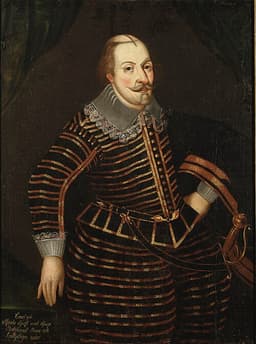
Charles IX of Sweden
Emperor · Modern
52.7Total

Oscar II
Emperor · Modern
47.5Total
Basic Information
Born
1550
1829
Died
1611
1907
Era
Modern
Modern
Nationality
Sweden
Sweden
Occupation
Emperor
Emperor
Civilization
Western
Western
Score Comparison
Military (10%)
10.0
25.9
Political (20%)
68.0
46.6
Influence (20%)
53.3
49.4
Legacy (20%)
47.5
39.2
Leadership (15%)
74.0
65.0
Strategy (15%)
51.7
60.0
TOTAL
52.7
47.5
Charles IX of Sweden — Complete Timeline
1599 AD
Regency of Charles IXPolitical Action
Charles IX, then Duke of S
RegencyRebellionSigismund
Impact: national
1600 AD
War against Poland (Polish–Swedish War)War◆ Major
Charles IX launched a war against Poland to claim the Swedish throne from Sigismund III. The war included the Battle of Kircholm (1605), a major Polish victory, and continued intermittently until 1629.
Polish-Swedish WarDynastic Conflict
Impact: regional
1604 AD
Coronation of Charles IXPolitical Action◆ Major
Charles IX was formally crowned King of Sweden after the Riksdag declared Sigismund deposed. His coronation solidified the Vasa dynasty's break with Poland and established a Protestant, anti-Catholic policy.
CoronationSuccession
Impact: national
1611 AD
War against Denmark (Kalmar War)War◆ Major
Charles IX initiated the Kalmar War against Denmark-Norway over control of the Baltic Sea. The war ended in 1613 with the Treaty of Kn
Kalmar WarDenmarkBaltic
Impact: regionaldestructive
Founding of the Swedish East India CompanyPolitical Action
Charles IX granted a charter for the Swedish East India Company, though it was not fully realized until later. This initiative aimed to expand Swedish trade and influence in Asia.
TradeEast India CompanyColonialism
Impact: nationalconstructive
Oscar II — Complete Timeline
1880 AD
Patronage of the arts and sciencesCultural
Oscar II was a noted patron of the arts and sciences. He supported the Swedish Academy, the Royal Swedish Academy of Sciences, and various cultural institutions. He also personally funded expeditions, such as the Vega Expedition, which completed the first navigation of the Northeast Passage.
SwedenCultureSciencePatronage
Impact: nationalconstructive
1901 AD
Defense reform and military modernizationReform◆ Major
Oscar II oversaw a major reform of the Swedish military, introducing universal conscription and modernizing the army and navy. This was in response to the changing geopolitical situation in Europe and aimed at maintaining Sweden's neutrality and defense capabilities.
SwedenMilitaryConscriptionReform
Impact: nationalconstructive
1905 AD
Dissolution of the union with NorwayPolitical Action
Oscar II was the last king of the united kingdoms of Sweden and Norway. After a political crisis, the Norwegian parliament unilaterally declared the dissolution of the union. Oscar II accepted the separation peacefully, abdicating his claim to the Norwegian throne and recognizing Norway's independence.
SwedenNorwayUnionIndependence
Impact: regional
Expert Analysis
Origins
Charles IX was born on October 4, 1550, as the third son of King Gustav I Vasa and his second wife, Margaret Leijonhufvud. His early life was overshadowed by his father's death in 1560 and the reigns of his older brothers, Eric XIV and John III. Charles received a thorough education in statecraft and military affairs, but his path to power was blocked by the succession. He became Duke of Södermanland in 1560, ruling his duchy with considerable autonomy. His formative experiences included participating in the rebellions against Eric XIV and later John III, which taught him the value of political maneuvering and military force.
Oscar II was born on January 21, 1829, in Stockholm, as the third son of King Oscar I and Queen Josephine. His early life was one of privilege but also of relative obscurity, as he was not expected to become king. He studied at Uppsala University and entered the Swedish Navy, reaching the rank of rear admiral. His education focused on liberal arts and sciences, reflecting the enlightened ideals of his father. His formative experiences included serving as a naval officer and engaging in diplomatic missions, which shaped his diplomatic and cultural interests.
Rise to Power
Charles IX's rise to power was marked by conflict. After the death of John III in 1592, his son Sigismund III Vasa, already King of Poland, inherited the Swedish throne. Charles, as Duke, opposed Sigismund's Catholic faith and autocratic tendencies. In 1593, Charles convened the Uppsala Synod, which reaffirmed Lutheranism as the state religion. He then led a rebellion against Sigismund, culminating in the Battle of Stångebro in 1598, where Sigismund's forces were defeated. The Riksdag deposed Sigismund in 1599, and Charles became regent. He was formally crowned King Charles IX in 1607, after years of effective rule.
Oscar II ascended to the throne on September 18, 1872, upon the death of his brother King Charles XV. Unlike Charles IX, his rise was peaceful and constitutional. He inherited a stable but evolving monarchy, where the king's power had been curtailed by the 1866 parliamentary reform. Oscar II was a constitutional monarch, and his role was largely ceremonial and diplomatic. His challenge was to maintain the union with Norway, which had been established in 1814.
Leadership & Governance
Charles IX ruled with an iron fist, centralizing authority and strengthening the monarchy. He implemented religious uniformity, persecuting Catholics and promoting Lutheranism. He also reformed the administration, increasing the efficiency of tax collection and military organization. His governance was marked by constant warfare, including the Polish–Swedish War (1600–1629) and the Kalmar War (1611–1613). He scored 74.0 in leadership and 51.7 in strategy, reflecting his aggressive but sometimes overambitious military campaigns.
Oscar II was a constitutional monarch who favored diplomacy over conflict. He presided over a period of industrialization and social reform in Sweden. His leadership style was conciliatory, aiming to preserve the union with Norway through negotiation. He scored 65.0 in leadership and 60.0 in strategy, indicating a more measured approach. However, his inability to prevent the dissolution of the union in 1905 was a significant failure. He also championed defense modernization, introducing universal conscription in 1901.
Triumph & Tragedy
Charles IX's greatest triumph was securing the Swedish throne for the Vasa dynasty and laying the foundations for Sweden's rise as a great power. His military campaigns, though often costly, expanded Swedish influence in the Baltic. His greatest tragedy was the disastrous Kalmar War, which ended with the Treaty of Knäred in 1613, forcing Sweden to pay a ransom for the fortress of Älvsborg. He also failed to decisively defeat Poland, leaving the conflict to his son Gustavus Adolphus.
Oscar II's triumphs include his patronage of the arts and sciences, which enhanced Sweden's cultural prestige. He supported explorer Adolf Erik Nordenskiöld and writer August Strindberg. His tragedy was the dissolution of the union with Norway in 1905, which he was powerless to prevent. The loss of Norway was a blow to Swedish prestige. He also faced criticism for his conservative stance on suffrage reform, which delayed democratization.
Character & Destiny
Charles IX was determined, ruthless, and pragmatic. He was known for his temper and his willingness to use force to achieve his goals. His character shaped Sweden's destiny by steering it toward absolutism and imperial expansion. Historians note his role in establishing the Vasa dynasty's autocratic tradition. His score of 68.0 in political acumen reflects his skill in navigating the treacherous politics of his time.
Oscar II was cultured, diplomatic, and progressive in some areas but conservative in others. He valued stability and tradition, which made him reluctant to embrace full democracy. His character led to a peaceful but ultimately weakened monarchy. His political score of 46.6 indicates his limited influence in a constitutional era. He is often remembered as a symbol of the old regime, gracefully accepting the end of the union.
Legacy
Charles IX's legacy is his role as the father of Gustavus Adolphus and the builder of the Swedish Empire. His reign set the stage for Sweden's Golden Age. He scored 47.5 in legacy, reflecting his indirect but crucial impact. The Swedish East India Company, though not fully realized until later, was his idea. His religious policies solidified Lutheranism in Sweden.
Oscar II's legacy is more symbolic. He was the last king of the united kingdoms, and his reign marked the end of an era. He scored 39.2 in legacy. His patronage of culture left a mark on Swedish arts and sciences. The defense reforms he oversaw modernized the military, but his overall impact on Sweden's political development was limited.
Conclusion
Charles IX had a greater impact on Sweden's history than Oscar II. His total score of 52.7 versus Oscar II's 47.5 reflects his more significant role in shaping Sweden's destiny. Charles IX's aggressive expansionism and centralization created the conditions for Sweden's emergence as a European power. Oscar II, while a capable constitutional monarch, presided over a period of decline in royal power and the loss of Norway. Charles IX's legacy, though mixed, is foundational, while Oscar II's is transitional. Thus, Charles IX is the more consequential figure in Swedish history.
Rankings
🥇
Charles IX of SwedenLeader
Mil: 10.0Pol: 68.0Inf: 53.3
52.7
🥈
Oscar II
Mil: 25.9Pol: 46.6Inf: 49.4
47.5
+5.2 behind
How This Comparison Works
Algorithm
Each figure is scored on 6 dimensions (0—100 scale) based on structured historical data: Military (10%), Political (20%), Influence (20%), Legacy (20%), Leadership (15%), Strategy (15%). The weighted total produces the final ranking.
Data Sources
Scores are computed from structured sub-indicators in the database. Scale factors adjust for era (Ancient ×0.85, Modern ×1.0) and civilization size (Eastern ×1.05, Other ×0.80) to account for differences in population and military scale.
Maximum 3 Figures
Comparisons are limited to 2—3 figures to ensure readability and statistical meaningfulness.
Error Margins
±5 points per dimension — Sub-scores are derived from historical records with inherent uncertainty. Two figures within 5 points on a dimension should be considered roughly equivalent in that area.
Total Score Accuracy
±3 points overall — The weighted combination of 6 dimensions produces a total score with approximately ±3 points of uncertainty. Differences of less than 3 points are not statistically significant— the figures are effectively tied.
Known Limitations
- Historical records are incomplete and uneven across civilizations
- Figures from oral-tradition societies may be underrepresented
- Occupation labels can misclassify multi-role figures
- Scores measure capability and impact, not moral character
- Quantitative scoring is a comparison tool, not absolute truth
Capability Radar
Military (10%) — Battles & Warfare
Battles
45
34
Win Rate
40
37
Expansion
45
44
Political (20%) — Governance & Reform
Reform
60
30
Diplomacy
40
40
Economy
50
30
Influence (20%) — Cultural & Global Reach
Cultural
30
20
Global
30
15
Legacy (20%) — Historical Impact
Historical
45
25
Longevity
40
20
Leadership (15%) — Power & Stability
Tenure
55
35
Stability
30
45
Strategy (15%) — Tactics & Innovation
Strategy
40
46
Tactics
35
50
Reform
50
51
Similar Comparisons
Comments & Discussion
No comments yet. Be the first to share your thoughts!