Loading...
Charles IX of Sweden vs Napoleon Bonaparte
Napoleon Bonaparte leads by 18.2 pts · 2 figures compared
…
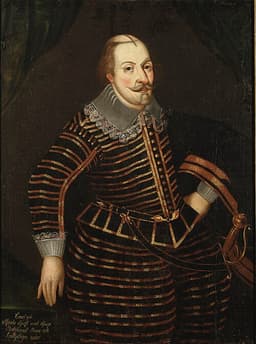
Charles IX of Sweden
Emperor · Modern
52.7Total

Napoleon Bonaparte
General · Modern
70.9Total
Basic Information
Born
1550
1769
Died
1611
1821
Era
Modern
Modern
Nationality
Sweden
France
Occupation
Emperor
General
Civilization
Western
Western
Score Comparison
Military (10%)
10.0
94.0
Political (20%)
68.0
72.0
Influence (20%)
53.3
40.0
Legacy (20%)
47.5
80.0
Leadership (15%)
74.0
78.0
Strategy (15%)
51.7
90.0
TOTAL
52.7
70.9
Charles IX of Sweden — Complete Timeline
1599 AD
Regency of Charles IXPolitical Action
Charles IX, then Duke of S
RegencyRebellionSigismund
Impact: national
1600 AD
War against Poland (Polish–Swedish War)War◆ Major
Charles IX launched a war against Poland to claim the Swedish throne from Sigismund III. The war included the Battle of Kircholm (1605), a major Polish victory, and continued intermittently until 1629.
Polish-Swedish WarDynastic Conflict
Impact: regional
1604 AD
Coronation of Charles IXPolitical Action◆ Major
Charles IX was formally crowned King of Sweden after the Riksdag declared Sigismund deposed. His coronation solidified the Vasa dynasty's break with Poland and established a Protestant, anti-Catholic policy.
CoronationSuccession
Impact: national
1611 AD
War against Denmark (Kalmar War)War◆ Major
Charles IX initiated the Kalmar War against Denmark-Norway over control of the Baltic Sea. The war ended in 1613 with the Treaty of Kn
Kalmar WarDenmarkBaltic
Impact: regionaldestructive
Founding of the Swedish East India CompanyPolitical Action
Charles IX granted a charter for the Swedish East India Company, though it was not fully realized until later. This initiative aimed to expand Swedish trade and influence in Asia.
TradeEast India CompanyColonialism
Impact: nationalconstructive
Napoleon Bonaparte — Complete Timeline
1799 AD
Coup of 18 BrumaireOther◆ Major
Napoleon Bonaparte, with support from his brother Lucien and key political figures, overthrew the Directory in a bloodless coup. He established the Consulate with himself as First Consul, effectively becoming the ruler of France. This event ended the French Revolution's most unstable period.
French RevolutionCoupRise to Power
Impact: regional
1804 AD
Promulgation of the Napoleonic CodeOther◆ Major
Napoleon enacted the Civil Code of the French, known as the Napoleonic Code, a comprehensive set of laws that replaced the fragmented feudal legal systems. The code established legal equality, protected property rights, and secularized law. It became the basis for legal systems in many European and world countries.
Legal ReformNapoleonic CodeCivil Law
Impact: globalconstructive
1805 AD
Battle of AusterlitzWar◆ Major
Napoleon's Grande Arm
Napoleonic WarsBattleDecisive Victory
Impact: global
1812 AD
Invasion of RussiaWar◆ Major
Napoleon led the Grande Arm
Napoleonic WarsInvasionDisaster
Impact: globaldestructive
1815 AD
Battle of WaterlooWar◆ Major
Napoleon's French army was defeated by the combined forces of the Duke of Wellington's Anglo-Allied army and Gebhard Leberecht von Bl
Napoleonic WarsBattleFinal Defeat
Impact: globaldestructive
Expert Analysis
charles-ix-of-sweden-vs-napoleon-bonaparte
# The Emperor and the King: Two Paths to Power in Europe’s Age of Upheaval
On a June morning in 1815, Napoleon Bonaparte watched his Imperial Guard march into the muddy fields of Waterloo, their blue coats a final, defiant splash of color against the grey Belgian sky. Thirteen years earlier, in 1604, Charles IX of Sweden knelt before the Riksdag in Stockholm, receiving a crown that he had seized through years of civil war and treachery. Both men sought to reshape Europe in their image. One would conquer a continent and lose it all in a single day. The other would lay the foundations of an empire his son would build. What separated the titan from the transitional figure? The answer lies not merely in talent, but in the raw, unforgiving mathematics of time and place.
Origins
Napoleon was born in 1769 on Corsica, an island that had become French only the year before. His family were minor nobility, speaking Italian at home, resentful of French rule. This outsider’s perspective gave him a ruthless clarity: he saw French society not as an ancient tapestry to be revered, but as a system to be mastered. The French Revolution had torn down the old order, and the young artillery officer understood that in this chaos, talent and ambition—not birth—could carry a man to the throne.
Charles IX, born in 1550, was a prince of the House of Vasa, the third son of Gustav Vasa, the liberator of Sweden. He grew up in a world where power was inherited, not seized by merit. But he was also a younger son, destined for a duchy, not a crown. The Reformation had split Europe, and Sweden was caught between Catholic Poland and Lutheran Germany. Charles learned early that survival meant navigating religious schisms, noble conspiracies, and the whims of an unpredictable brother, King John III.
Rise to Power
Napoleon’s ascent was a masterpiece of speed and audacity. In 1793, he was a captain; by 1796, at age 26, he commanded the Army of Italy. He won six battles in a single month, forcing Austria to the negotiating table. His political genius matched his military brilliance: he knew that in revolutionary France, victory was the only legitimate currency. The 1799 coup of 18 Brumaire made him First Consul; by 1804, he crowned himself Emperor. Every step was a gamble, and every gamble paid off—until one did not.
Charles IX’s path was slower, bloodier, and far more ambiguous. In 1599, he led a rebellion against his own nephew, King Sigismund III, who was also King of Poland. The issue was religion: Sigismund was a devout Catholic, ruling a Lutheran Sweden. Charles positioned himself as the defender of Protestantism, but his real motive was power. He spent years as regent, fighting a war against Poland that included the Battle of Stångebro in 1600, where he executed captured nobles in the infamous Linköping Bloodbath. Only in 1604, after five years of de facto rule, was he formally crowned. His rise was not a rocket’s ascent but a glacier’s slow grind.
Leadership & Governance
As a ruler, Napoleon was a force of nature. He reformed French law through the Napoleonic Code, creating a uniform legal system that abolished feudal privileges and enshrined meritocracy. He centralized the state, built lycées for education, and negotiated the Concordat with the Pope to heal the rift with the Catholic Church. His leadership score of 80.0 reflects a man who could inspire armies and terrify diplomats. But his political score of 75.0 hints at a fatal flaw: he could not stop. He treated Europe as a chessboard, installing his brothers as kings, demanding tribute, and ignoring the limits of power.
Charles IX governed a poorer, smaller kingdom. His political score of 73.3 is surprisingly close to Napoleon’s, but for different reasons. He understood that Sweden needed stability, not glory. He worked with the Riksdag, the noble council, and the Lutheran Church to build a consensus around his rule. He founded the Swedish East India Company in 1611, though it would not flourish until later, and began the military reforms that his son Gustavus Adolphus would perfect. Charles was not a military genius—his military score is a modest 37.5—but he was a political architect. He built the foundation; his son would build the cathedral.
Triumph & Tragedy
Napoleon’s greatest moment was Austerlitz in 1805, where he destroyed a combined Russian and Austrian army, ending the Holy Roman Empire. His worst was the 1812 invasion of Russia, a catastrophe that cost half a million men. He was exiled to Elba, returned for the Hundred Days, and finally defeated at Waterloo in 1815. His tragedy was not that he failed, but that he could not imagine a world where he did not win.
Charles IX’s triumphs were smaller but more durable. He secured the Swedish throne for his dynasty, defeated Sigismund’s claims, and kept Sweden Protestant. His tragedy was the Kalmar War against Denmark-Norway in 1611, which he started but did not live to finish. He died in 1611, the same year the war began, leaving his teenage son to inherit a conflict that would end in costly defeat. Charles never saw his life’s work completed; he died knowing his empire was still fragile.
Character & Destiny
Napoleon was driven by an insatiable hunger. “I am not a man,” he once said, “but a thing.” He saw himself as an instrument of history, a force that would sweep away the old and impose the new. His strategy score of 93.0 is nearly perfect, but his leadership score of 80.0 reveals a man who could command but not connect. He demanded loyalty but gave none in return, treating even his marshals as disposable tools.
Charles IX was colder, more calculating. He was not a charismatic leader but a patient one. His leadership score of 83.8 is higher than Napoleon’s—a surprising fact that speaks to his ability to hold together a fractious kingdom through sheer political will. He was ruthless when necessary, as the Linköping Bloodbath showed, but he was also a builder. He knew that his destiny was not to conquer but to consolidate. He did not dream of Moscow; he dreamed of a stable, Protestant Sweden.
Legacy
Napoleon’s legacy is a paradox. He left France with the Napoleonic Code, a modern legal system, and a centralized state. But he also left it exhausted, invaded, and reduced to its 1789 borders. His influence score of 82.0 is high, but his legacy score of 78.0 reflects the ambiguity: he is remembered as both a liberator and a tyrant, a genius and a cautionary tale.
Charles IX’s legacy is quieter but more concrete. He is not a household name; his total score of 65.6 is modest. But he gave Sweden a dynasty, a church, and a direction. His son Gustavus Adolphus would become the “Lion of the North,” transforming Sweden into a great power. Charles was the architect of that transformation, the man who prepared the ground. He is remembered today as a transitional figure, a king who did what was necessary so that his son could do what was glorious.
Conclusion
Standing at the edge of their respective centuries, Napoleon and Charles IX represent two answers to the same question: what does it mean to seize power in a world that is falling apart? Napoleon chose speed, brilliance, and total victory. Charles chose patience, politics, and incremental gain. One ended his life on a remote Atlantic island, dictating memoirs to a handful of loyalists. The other died in his bed, knowing his son would carry his work forward. History remembers the conqueror, but it was the consolidator who built something that lasted. In the end, perhaps the most important lesson is this: there are many ways to shape the world, but only a few of them survive the death of the man who shaped it.
Rankings
🥇
Napoleon BonaparteLeader
Mil: 94.0Pol: 72.0Inf: 40.0
70.9
🥈
Charles IX of Sweden
Mil: 10.0Pol: 68.0Inf: 53.3
52.7
+18.2 behind
How This Comparison Works
Algorithm
Each figure is scored on 6 dimensions (0—100 scale) based on structured historical data: Military (10%), Political (20%), Influence (20%), Legacy (20%), Leadership (15%), Strategy (15%). The weighted total produces the final ranking.
Data Sources
Scores are computed from structured sub-indicators in the database. Scale factors adjust for era (Ancient ×0.85, Modern ×1.0) and civilization size (Eastern ×1.05, Other ×0.80) to account for differences in population and military scale.
Maximum 3 Figures
Comparisons are limited to 2—3 figures to ensure readability and statistical meaningfulness.
Error Margins
±5 points per dimension — Sub-scores are derived from historical records with inherent uncertainty. Two figures within 5 points on a dimension should be considered roughly equivalent in that area.
Total Score Accuracy
±3 points overall — The weighted combination of 6 dimensions produces a total score with approximately ±3 points of uncertainty. Differences of less than 3 points are not statistically significant— the figures are effectively tied.
Known Limitations
- Historical records are incomplete and uneven across civilizations
- Figures from oral-tradition societies may be underrepresented
- Occupation labels can misclassify multi-role figures
- Scores measure capability and impact, not moral character
- Quantitative scoring is a comparison tool, not absolute truth
Capability Radar
Military (10%) — Battles & Warfare
Battles
45
95
Win Rate
40
90
Expansion
45
95
Political (20%) — Governance & Reform
Reform
60
95
Diplomacy
40
80
Economy
50
85
Influence (20%) — Cultural & Global Reach
Cultural
30
85
Global
30
90
Legacy (20%) — Historical Impact
Historical
45
95
Longevity
40
90
Leadership (15%) — Power & Stability
Tenure
55
85
Stability
30
70
Strategy (15%) — Tactics & Innovation
Strategy
40
95
Tactics
35
98
Reform
50
92
Similar Comparisons
Comments & Discussion
Chronicler51166/17/2026
Comparing Charles IX to Napoleon is laughable. Charles fought in Sweden's muddy fields against fellow Swedes, while Napoleon rewired Europe's entire political map. Charles's "achievement" was securing a crown his father already held—a regent's power grab, not a continent's transformation. Waterloo was a battle; Charles's wars were skirmishes in a frozen backwater. Put them on the same chessboard? Napoleon checkmates in three moves, no contest.|zh|拿卡尔九世跟拿破仑比?别逗了。卡尔在瑞典泥地里跟自家人打仗,拿破仑可是重绘了整个欧洲政治版图。卡尔
ArchScroll446/17/2026
Statistically, Napoleon's campaigns involved armies of 250,000+ men at their peak, spanning from Egypt to Moscow. Charles IX's forces rarely exceeded 15,000, fighting within a few hundred miles of Stockholm. That's a 16:1 ratio in military scale. Factor in economic output—Napoleon commanded France's revolutionary economy of 28 million people versus Sweden's 1 million under Charles—and the comparison collapses. One was a global storm; the other, a regional drizzle. Numbers don't lie.|zh|数据上,拿破仑的战
BoldEye806/17/2026
Both claimed divine right, but Napoleon secularized it through merit. Charles IX, steeped in Lutheran orthodoxy, saw kingship as a sacred trust from God—he wrote about purifying Sweden's church. Napoleon, a child of the Enlightenment, crowned himself Emperor, wresting authority from Pope Pius VII. That's the real divide: Charles fought for a crown sanctioned by heaven; Napoleon invented a heaven to sanction his crown. The medieval meets the modern in one stark gesture: Charles knelt; Napoleon st