Loading...
Charles IX of Sweden vs Rajinder Singh of Patiala
Charles IX of Sweden leads by 9.9 pts · 2 figures compared
…
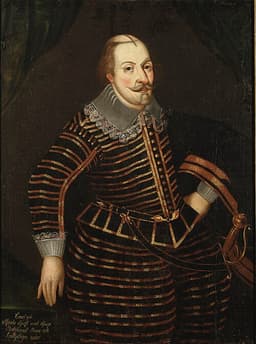
Charles IX of Sweden
Emperor · Modern
52.7Total

Rajinder Singh of Patiala
Emperor · Modern
42.8Total
Basic Information
Born
1550
1872
Died
1611
1900
Era
Modern
Modern
Nationality
Sweden
India
Occupation
Emperor
Emperor
Civilization
Western
Indian
Score Comparison
Military (10%)
10.0
20.0
Political (20%)
68.0
30.8
Influence (20%)
53.3
50.2
Legacy (20%)
47.5
37.5
Leadership (15%)
74.0
58.8
Strategy (15%)
51.7
54.3
TOTAL
52.7
42.8
Charles IX of Sweden — Complete Timeline
1599 AD
Regency of Charles IXPolitical Action
Charles IX, then Duke of S
RegencyRebellionSigismund
Impact: national
1600 AD
War against Poland (Polish–Swedish War)War◆ Major
Charles IX launched a war against Poland to claim the Swedish throne from Sigismund III. The war included the Battle of Kircholm (1605), a major Polish victory, and continued intermittently until 1629.
Polish-Swedish WarDynastic Conflict
Impact: regional
1604 AD
Coronation of Charles IXPolitical Action◆ Major
Charles IX was formally crowned King of Sweden after the Riksdag declared Sigismund deposed. His coronation solidified the Vasa dynasty's break with Poland and established a Protestant, anti-Catholic policy.
CoronationSuccession
Impact: national
1611 AD
War against Denmark (Kalmar War)War◆ Major
Charles IX initiated the Kalmar War against Denmark-Norway over control of the Baltic Sea. The war ended in 1613 with the Treaty of Kn
Kalmar WarDenmarkBaltic
Impact: regionaldestructive
Founding of the Swedish East India CompanyPolitical Action
Charles IX granted a charter for the Swedish East India Company, though it was not fully realized until later. This initiative aimed to expand Swedish trade and influence in Asia.
TradeEast India CompanyColonialism
Impact: nationalconstructive
Rajinder Singh of Patiala — Complete Timeline
1876 AD
Accession to the throne of PatialaPolitical Action◆ Major
Rajinder Singh became Maharaja of Patiala at age four after the death of his father Maharaja Mahendra Singh. A regency council governed until he came of age in 1890. His reign was marked by lavish spending and patronage of the arts.
AccessionPatialaMinor Ruler
Impact: national
1890 AD
Construction of Moti Bagh PalaceCultural◆ Major
Rajinder Singh commissioned the construction of the Moti Bagh Palace in Patiala, a sprawling complex blending Mughal and European architectural styles. The palace became a symbol of his extravagant lifestyle and the wealth of the Patiala state.
ArchitecturePatialaPalace
Impact: regionalconstructive
Patronage of the Patiala GharanaCultural
Rajinder Singh became a major patron of the Patiala gharana of Hindustani classical music, supporting musicians like Ustad Bade Ghulam Ali Khan. His court became a center for music and dance, contributing to the preservation and development of North Indian classical traditions.
MusicPatronagePatiala Gharana
Impact: regionalconstructive
1895 AD
Extravagant expenditure and debt accumulationOther◆ Major
Rajinder Singh's lavish spending on palaces, jewelry, and entertainment led to severe financial strain on the Patiala state. By the late 1890s, the state accumulated significant debt, prompting British intervention to impose financial controls.
FinanceDebtExtravagance
Impact: nationaldestructive
1900 AD
Death at age 28Other◆ Major
Rajinder Singh died suddenly at the age of 28, reportedly from a fever. His early death left the Patiala state in financial disarray and led to a succession crisis, with his infant son Bhupinder Singh becoming maharaja under a regency.
DeathSuccessionPatiala
Impact: nationaltragic
Expert Analysis
Origins
Charles IX of Sweden was born on October 4, 1550, as the third son of King Gustav I Vasa and his second wife, Margaret Leijonhufvud. He was raised in the Swedish court, receiving a Protestant education that shaped his anti-Catholic stance. His older brothers, Eric XIV and John III, ruled before him, leaving Charles to carve his own path as Duke of Södermanland. Unlike them, Charles was pragmatic and politically astute, but lacked martial prowess.
Rajinder Singh was born on April 25, 1872, into the Sikh ruling dynasty of Patiala, a princely state in British India. His father, Maharaja Mahendra Singh, died when Rajinder was only four, making him a child ruler. He was educated under British tutelage and by Indian scholars, but his upbringing was marked by luxury and privilege. His early exposure to wealth and power, without the discipline of a stable family, contributed to his later extravagance.
Rise to Power
Charles IX rose to power through political maneuvering and rebellion. In 1593, he led the Riksdag (parliament) to depose his Catholic nephew Sigismund III Vasa, who was also King of Poland. Charles assumed regency in 1595, effectively ruling Sweden. He was formally crowned king in 1604 after the Riksdag declared Sigismund deposed. His rise was marked by the brutal suppression of opposition, including the execution of nobles at the Linköping Bloodbath (1600).
Rajinder Singh became Maharaja at age four, with a regency council governing until he came of age in 1890. His accession was smooth, as the British recognized him as the rightful heir. However, his power was limited by British suzerainty and the council's decisions. Upon assuming full powers, he quickly asserted his authority but focused more on personal indulgence than statecraft.
Leadership & Governance
Charles IX governed with a focus on centralizing power and promoting Lutheranism. He strengthened the Riksdag's role and reduced the nobility's influence. His economic policies aimed at self-sufficiency, including founding the Swedish East India Company (though it failed). In foreign policy, he engaged in costly wars against Poland and Denmark. His leadership score of 74.0 reflects his effective consolidation of royal authority, but his military score of 10.0 indicates his lack of battlefield success.
Rajinder Singh's governance was characterized by neglect and extravagance. He delegated administration to ministers while he indulged in lavish parties, hunting, and building projects. He commissioned the Moti Bagh Palace, a blend of Mughal and European styles, which drained state finances. His political score of 30.8 reflects his failure to manage the state's resources. He accumulated massive debt, forcing the British to intervene in 1898 to stabilize Patiala's finances.
Triumph & Tragedy
Charles IX's greatest triumph was securing the Swedish throne for his branch of the Vasa dynasty, paving the way for his son Gustavus Adolphus. His regency and kingship established a strong Protestant state. His tragedy was his military failures: the Battle of Kircholm (1605) against Poland was a disaster, and the Kalmar War (1611-1613) against Denmark ended with Sweden losing territory and paying a ransom. He died in 1611, leaving a war-weary nation.
Rajinder Singh's triumph was his patronage of the Patiala Gharana of Hindustani classical music, supporting musicians like Ustad Bade Ghulam Ali Khan. This cultural legacy endured. His tragedy was his financial irresponsibility and early death at age 28. He left Patiala in debt and political instability, requiring British oversight. His extravagance overshadowed any positive contributions.
Character & Destiny
Charles IX was pragmatic, ruthless, and determined. He was willing to execute opponents to secure his rule. His character shaped his destiny: his political cunning allowed him to seize power, but his lack of military skill led to defeats. Historians note his harshness but also his administrative reforms. He died relatively young (61), possibly from overwork.
Rajinder Singh was flamboyant, pleasure-seeking, and irresponsible. His love for luxury and entertainment led to financial ruin. His character was shaped by his upbringing as a pampered prince. His early death prevented any chance of reform. He is remembered as a symbol of princely decadence.
Legacy
Charles IX's legacy is as the founder of Sweden's rise as a great power. His son Gustavus Adolphus built upon his father's political and religious foundations. The Vasa dynasty continued until 1654. His influence score of 53.3 reflects his role in shaping Sweden's Protestant identity and centralizing the state. However, his military failures limited his direct impact.
Rajinder Singh's legacy is mixed. He is remembered for his architectural contributions, like Moti Bagh Palace, and his patronage of music. But his financial mismanagement is a cautionary tale. His legacy score of 37.5 shows limited lasting impact. Patiala recovered under his successors, but his reign was a setback.
Conclusion
Charles IX of Sweden had a greater impact than Rajinder Singh of Patiala. With a total score of 52.7 against 42.8, Charles's political maneuvering secured a dynasty that would dominate Europe. Rajinder's extravagance left no lasting political or military achievements. While Charles's wars were costly, they set the stage for Sweden's golden age. Rajinder's reign was a period of decline for Patiala. Thus, Charles IX's historical significance outweighs Rajinder Singh's.
Rankings
🥇
Charles IX of SwedenLeader
Mil: 10.0Pol: 68.0Inf: 53.3
52.7
🥈
Rajinder Singh of Patiala
Mil: 20.0Pol: 30.8Inf: 50.2
42.8
+9.9 behind
How This Comparison Works
Algorithm
Each figure is scored on 6 dimensions (0—100 scale) based on structured historical data: Military (10%), Political (20%), Influence (20%), Legacy (20%), Leadership (15%), Strategy (15%). The weighted total produces the final ranking.
Data Sources
Scores are computed from structured sub-indicators in the database. Scale factors adjust for era (Ancient ×0.85, Modern ×1.0) and civilization size (Eastern ×1.05, Other ×0.80) to account for differences in population and military scale.
Maximum 3 Figures
Comparisons are limited to 2—3 figures to ensure readability and statistical meaningfulness.
Error Margins
±5 points per dimension — Sub-scores are derived from historical records with inherent uncertainty. Two figures within 5 points on a dimension should be considered roughly equivalent in that area.
Total Score Accuracy
±3 points overall — The weighted combination of 6 dimensions produces a total score with approximately ±3 points of uncertainty. Differences of less than 3 points are not statistically significant— the figures are effectively tied.
Known Limitations
- Historical records are incomplete and uneven across civilizations
- Figures from oral-tradition societies may be underrepresented
- Occupation labels can misclassify multi-role figures
- Scores measure capability and impact, not moral character
- Quantitative scoring is a comparison tool, not absolute truth
Capability Radar
Military (10%) — Battles & Warfare
Battles
45
5
Win Rate
40
5
Expansion
45
5
Political (20%) — Governance & Reform
Reform
60
10
Diplomacy
40
20
Economy
50
15
Influence (20%) — Cultural & Global Reach
Cultural
30
30
Global
30
10
Legacy (20%) — Historical Impact
Historical
45
20
Longevity
40
15
Leadership (15%) — Power & Stability
Tenure
55
30
Stability
30
25
Strategy (15%) — Tactics & Innovation
Strategy
40
5
Tactics
35
5
Reform
50
5
Similar Comparisons
Comments & Discussion
No comments yet. Be the first to share your thoughts!