Loading...
This comparison has not been analyzed yet.
One-time AI generation (~1 minute). Scores and timeline are already available below.
Charles Napier vs Shunroku Hata
Charles Napier leads by 2.5 pts · 2 figures compared
…

Charles Napier
General · Modern
53.6Total
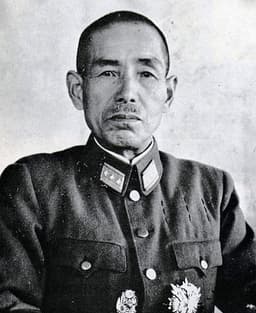
Shunroku Hata
General · Modern
51.1Total
Basic Information
Born
1786
1879
Died
1860
1962
Era
Modern
Modern
Nationality
United Kingdom
Japan
Occupation
General
General
Civilization
Western
Eastern
Score Comparison
Military (10%)
60.0
47.5
Political (20%)
43.7
39.4
Influence (20%)
54.9
55.7
Legacy (20%)
46.7
43.3
Leadership (15%)
64.5
64.5
Strategy (15%)
60.0
60.0
TOTAL
53.6
51.1
Charles Napier — Complete Timeline
1843 AD
Conquest of SindhWar◆ Major
Napier commanded British forces in the conquest of Sindh (now in Pakistan). He defeated the Baloch amirs at the Battle of Miani and the Battle of Hyderabad, annexing the region to British India. His victory was controversial.
British IndiaConquestSindh
Impact: regionaldestructive
Battle of MianiWar◆ Major
Napier's 2,800-strong force defeated a 30,000-strong Baloch army at Miani. The battle was a decisive British victory, leading to the annexation of Sindh. Napier's famous dispatch 'Peccavi' (I have sinned) was a pun on the event.
British IndiaBattleAnnexation
Impact: regionaldestructive
Governor of SindhPolitical Action◆ Major
Napier was appointed Governor of Sindh after its conquest. He implemented administrative reforms, suppressed banditry, and began infrastructure projects. His rule was firm but effective, though criticized for its harshness.
British IndiaGovernorAdministration
Impact: regional
Shunroku Hata — Complete Timeline
1941 AD
Commanded the Japanese Expeditionary Army in ChinaWar◆ Major
Hata commanded the Japanese Expeditionary Army in China, overseeing operations against Chinese forces and the occupation of large areas. His command was responsible for the implementation of the Three Alls Policy (kill all, burn all, loot all) in some regions.
Second Sino-Japanese WarWorld War IIChina
Impact: regionaldestructive
1944 AD
Appointed Inspector General of Military TrainingPolitical Action
Hata was appointed Inspector General of Military Training, one of the highest positions in the Japanese Army. He was responsible for training and doctrine, but the position had limited operational influence as Japan faced military defeats.
Japanese ArmyWorld War IITraining
Impact: national
1948 AD
Sentenced to Life Imprisonment for War CrimesPolitical Action◆ Major
Hata was tried by the International Military Tribunal for the Far East for war crimes, including the Nanking Massacre and other atrocities. He was found guilty and sentenced to life imprisonment, but was paroled in 1955.
War Crimes TrialTokyo TribunalWorld War II
Impact: global
This comparison has not been analyzed yet.
One-time AI generation (~1 minute). Scores and timeline are already available below.
Rankings
🥇
Charles NapierLeader
Mil: 60.0Pol: 43.7Inf: 54.9
53.6
🥈
Shunroku Hata
Mil: 47.5Pol: 39.4Inf: 55.7
51.1
+2.5 behind
How This Comparison Works
Algorithm
Each figure is scored on 6 dimensions (0—100 scale) based on structured historical data: Military (10%), Political (20%), Influence (20%), Legacy (20%), Leadership (15%), Strategy (15%). The weighted total produces the final ranking.
Data Sources
Scores are computed from structured sub-indicators in the database. Scale factors adjust for era (Ancient ×0.85, Modern ×1.0) and civilization size (Eastern ×1.05, Other ×0.80) to account for differences in population and military scale.
Maximum 3 Figures
Comparisons are limited to 2—3 figures to ensure readability and statistical meaningfulness.
Error Margins
±5 points per dimension — Sub-scores are derived from historical records with inherent uncertainty. Two figures within 5 points on a dimension should be considered roughly equivalent in that area.
Total Score Accuracy
±3 points overall — The weighted combination of 6 dimensions produces a total score with approximately ±3 points of uncertainty. Differences of less than 3 points are not statistically significant— the figures are effectively tied.
Known Limitations
- Historical records are incomplete and uneven across civilizations
- Figures from oral-tradition societies may be underrepresented
- Occupation labels can misclassify multi-role figures
- Scores measure capability and impact, not moral character
- Quantitative scoring is a comparison tool, not absolute truth
Capability Radar
Military (10%) — Battles & Warfare
Battles
45
55
Win Rate
60
50
Expansion
55
40
Political (20%) — Governance & Reform
Reform
35
25
Diplomacy
30
30
Economy
25
20
Influence (20%) — Cultural & Global Reach
Cultural
25
20
Global
35
25
Legacy (20%) — Historical Impact
Historical
40
30
Longevity
30
20
Leadership (15%) — Power & Stability
Tenure
40
45
Stability
30
25
Strategy (15%) — Tactics & Innovation
Strategy
50
50
Tactics
55
45
Reform
30
30
Similar Comparisons
Comments & Discussion
No comments yet. Be the first to share your thoughts!