Loading...
Michel Ney vs Shunroku Hata
Michel Ney leads by 3.8 pts · 2 figures compared
…

Michel Ney
General · Modern
54.9Total
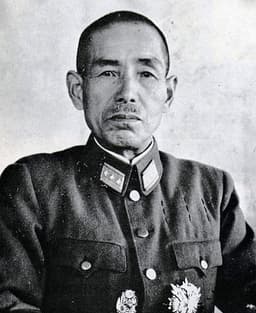
Shunroku Hata
General · Modern
51.1Total
Basic Information
Born
1769
1879
Died
1815
1962
Era
Modern
Modern
Nationality
France
Japan
Occupation
General
General
Civilization
Western
Eastern
Score Comparison
Military (10%)
74.7
47.5
Political (20%)
35.1
39.4
Influence (20%)
58.3
55.7
Legacy (20%)
58.0
43.3
Leadership (15%)
54.2
64.5
Strategy (15%)
50.0
60.0
TOTAL
54.9
51.1
Michel Ney — Complete Timeline
1805 AD
Battle of ElchingenWar◆ Major
Ney's corps stormed the abbey of Elchingen, capturing the Austrian bridgehead. This action trapped General Mack's army in Ulm, leading to the surrender of 30,000 Austrians. Ney was later made Duke of Elchingen for this victory.
Napoleonic WarsBattleUlm Campaign
Impact: regional
1812 AD
Battle of BorodinoWar◆ Major
Ney commanded the III Corps in the center, leading repeated assaults on the Russian fortifications. He was wounded but refused to leave the field. His corps suffered 50% casualties, but he held the line. This battle was the bloodiest of the Napoleonic Wars.
Napoleonic WarsBattleRussian Campaign
Impact: regional
Commanded the rearguard during the retreat from RussiaWar◆ Major
Ney commanded the rearguard of the Grande Arm
Napoleonic WarsRetreatHeroism
Impact: regional
1815 AD
Battle of WaterlooWar
Ney commanded the left wing of the French army at Waterloo. He led the cavalry charges against the British squares, losing thousands of men. His failure to capture Hougoumont and his premature cavalry attacks contributed to Napoleon's defeat. This was his final battle.
Napoleonic WarsBattleDefeat
Impact: global
Arrested and executed for treasonPolitical Action◆ Major
After Waterloo, Ney was arrested by the Bourbon government and tried for treason for joining Napoleon during the Hundred Days. He was convicted by the Chamber of Peers and executed by firing squad in the Luxembourg Garden. His execution made him a martyr for Bonapartists.
ExecutionTreasonHundred Days
Impact: nationaltragic
Shunroku Hata — Complete Timeline
1941 AD
Commanded the Japanese Expeditionary Army in ChinaWar◆ Major
Hata commanded the Japanese Expeditionary Army in China, overseeing operations against Chinese forces and the occupation of large areas. His command was responsible for the implementation of the Three Alls Policy (kill all, burn all, loot all) in some regions.
Second Sino-Japanese WarWorld War IIChina
Impact: regionaldestructive
1944 AD
Appointed Inspector General of Military TrainingPolitical Action
Hata was appointed Inspector General of Military Training, one of the highest positions in the Japanese Army. He was responsible for training and doctrine, but the position had limited operational influence as Japan faced military defeats.
Japanese ArmyWorld War IITraining
Impact: national
1948 AD
Sentenced to Life Imprisonment for War CrimesPolitical Action◆ Major
Hata was tried by the International Military Tribunal for the Far East for war crimes, including the Nanking Massacre and other atrocities. He was found guilty and sentenced to life imprisonment, but was paroled in 1955.
War Crimes TrialTokyo TribunalWorld War II
Impact: global
Expert Analysis
Origins
Michel Ney was born in 1769 in Saarlouis, then part of the French province of Lorraine. His father was a cooper, and Ney received little formal education. He began his military career as a hussar in 1787, rising through the ranks during the French Revolutionary Wars. His early experiences in the chaotic battles of the Revolution forged his aggressive style.
Shunroku Hata was born in 1879 in Fukushima, Japan, into a military family. His father was a general. He attended the Imperial Japanese Army Academy and later the Army War College, graduating at the top of his class. His career was shaped by the Meiji Restoration's emphasis on modernization and imperial expansion.
Rise to Power
Ney's rise was rapid during the Revolutionary Wars. He was promoted to general of division by 1799 at age 30. His decisive actions at the Battle of Elchingen in 1805, where he stormed the abbey and captured the Austrian bridgehead, earned him the title Duke of Elchingen from Napoleon. This victory trapped General Mack's army, leading to the surrender of 30,000 Austrians at Ulm. Ney became one of Napoleon's most trusted marshals.
Hata's rise was more bureaucratic. He served as a military attaché in Germany before World War I, then held key staff positions. He became a general in 1934 and was appointed Inspector General of Military Training in 1936, one of the highest positions in the Japanese Army. He commanded the Japanese Expeditionary Army in China from 1938 to 1940, overseeing operations against Chinese forces and the occupation of large areas. His command involved the use of chemical weapons and brutal tactics.
Leadership & Governance
Ney led from the front, personally leading cavalry charges at Waterloo. His leadership score of 54.2 reflects his inspirational but reckless style. At Borodino in 1812, he commanded the III Corps in repeated assaults on Russian fortifications, was wounded but refused to leave the field. However, his governance was weak; he had little political acumen and was easily swayed by Napoleon's charisma.
Hata's leadership score of 64.5 is higher, reflecting his administrative capabilities. He was a competent organizer and trainer, but his governance in China was marked by harsh policies and lack of restraint. He was responsible for training and doctrine, yet his command oversaw atrocities including the Nanking Massacre of 1937-1938, though he was not directly involved in that specific event. His political score of 39.4 reflects his inability to navigate the complex factionalism of the Japanese military.
Triumph & Tragedy
Ney's greatest triumphs include the Battle of Elchingen (1805) and his command of the rearguard during the retreat from Russia in 1812. At Elchingen, his tactical skill destroyed an Austrian corps. During the retreat from Moscow, he fought repeated actions, losing most of his men but preserving the army's core. His greatest tragedy was Waterloo (1815). He led massive cavalry charges against British squares without infantry support, losing thousands of men in futile attacks. After Napoleon's defeat, he was arrested, tried for treason, and executed by firing squad on December 7, 1815.
Hata's triumph was his role in the early Japanese victories in China, occupying large territories. However, his tragedy was his conviction for war crimes. He was sentenced to life imprisonment by the International Military Tribunal for the Far East in 1948 for failing to prevent atrocities, including the Nanking Massacre. He was paroled in 1955 and died in 1962. His military score of 47.5 reflects his mixed record.
Character & Destiny
Ney was known as "the bravest of the brave" for his fearlessness. His character was impulsive and loyal to Napoleon. At Waterloo, his decision to lead unsupported cavalry charges revealed his tactical inflexibility. His destiny was sealed by his loyalty: he joined Napoleon during the Hundred Days and was executed by the Bourbons. His total score of 54.9 is slightly higher than Hata's 51.1.
Hata was a product of the Imperial Japanese system, disciplined and obedient. He followed orders but showed little moral courage. His character was bureaucratic; he did not challenge the militarist policies that led to atrocities. His destiny was to be a symbol of Japanese war guilt, receiving a life sentence.
Legacy
Ney's legacy is that of a heroic but flawed commander. His name is engraved on the Arc de Triomphe in Paris. He is remembered for his bravery and his tragic end. His influence score of 58.3 reflects his enduring mythic status in French military history. However, his military score of 74.7 is higher than Hata's 47.5.
Hata's legacy is tainted by war crimes. He is remembered as a commander who failed to prevent atrocities. His influence score of 55.7 is slightly lower than Ney's 58.3. He is studied as an example of the failures of the Japanese military hierarchy. His legacy score of 43.3 is low, reflecting his negative historical assessment.
Conclusion
Michel Ney had a greater impact than Shunroku Hata. Ney's military score of 74.7 is significantly higher than Hata's 47.5, and his total score of 54.9 edges out Hata's 51.1. Ney's actions at Elchingen and his rearguard command were tactically significant, and his story embodies the drama of the Napoleonic Wars. Hata, while a competent administrator, oversaw brutal occupation policies and was convicted for war crimes. Ney's legacy, though tragic, is more influential and positively remembered. Clear stance: Ney's impact on military history and popular imagination far exceeds Hata's.
Rankings
🥇
Michel NeyLeader
Mil: 74.7Pol: 35.1Inf: 58.3
54.9
🥈
Shunroku Hata
Mil: 47.5Pol: 39.4Inf: 55.7
51.1
+3.8 behind
How This Comparison Works
Algorithm
Each figure is scored on 6 dimensions (0—100 scale) based on structured historical data: Military (10%), Political (20%), Influence (20%), Legacy (20%), Leadership (15%), Strategy (15%). The weighted total produces the final ranking.
Data Sources
Scores are computed from structured sub-indicators in the database. Scale factors adjust for era (Ancient ×0.85, Modern ×1.0) and civilization size (Eastern ×1.05, Other ×0.80) to account for differences in population and military scale.
Maximum 3 Figures
Comparisons are limited to 2—3 figures to ensure readability and statistical meaningfulness.
Error Margins
±5 points per dimension — Sub-scores are derived from historical records with inherent uncertainty. Two figures within 5 points on a dimension should be considered roughly equivalent in that area.
Total Score Accuracy
±3 points overall — The weighted combination of 6 dimensions produces a total score with approximately ±3 points of uncertainty. Differences of less than 3 points are not statistically significant— the figures are effectively tied.
Known Limitations
- Historical records are incomplete and uneven across civilizations
- Figures from oral-tradition societies may be underrepresented
- Occupation labels can misclassify multi-role figures
- Scores measure capability and impact, not moral character
- Quantitative scoring is a comparison tool, not absolute truth
Capability Radar
Military (10%) — Battles & Warfare
Battles
75
55
Win Rate
65
50
Expansion
70
40
Political (20%) — Governance & Reform
Reform
20
25
Diplomacy
30
30
Economy
10
20
Influence (20%) — Cultural & Global Reach
Cultural
55
20
Global
55
25
Legacy (20%) — Historical Impact
Historical
65
30
Longevity
50
20
Leadership (15%) — Power & Stability
Tenure
40
45
Stability
15
25
Strategy (15%) — Tactics & Innovation
Strategy
60
50
Tactics
80
45
Reform
30
30
Similar Comparisons
Comments & Discussion
No comments yet. Be the first to share your thoughts!