Loading...
Charles of Valois vs Yuan Chonghuan
Yuan Chonghuan leads by 15.2 pts · 2 figures compared
…

Charles of Valois
General · Medieval
44.5Total
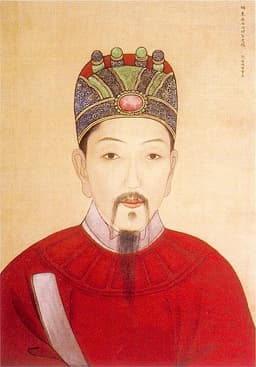
Yuan Chonghuan
General · Medieval
59.7Total
Basic Information
Born
1270
1584
Died
1325
1630
Era
Medieval
Medieval
Nationality
France
China
Occupation
General
General
Civilization
Western
Eastern
Score Comparison
Military (10%)
25.0
70.0
Political (20%)
27.9
68.0
Influence (20%)
49.4
53.3
Legacy (20%)
47.5
50.0
Leadership (15%)
50.7
61.1
Strategy (15%)
60.0
75.0
TOTAL
44.5
59.7
Charles of Valois — Complete Timeline
1285 AD
Founding of the House of ValoisPolitical Action◆ Major
Charles of Valois, younger brother of King Philip IV, was granted the County of Valois by his father Philip III. This established the cadet branch of the Capetian dynasty that would later ascend to the French throne as the House of Valois in 1328.
DynastyValoisCapetian
Impact: nationalconstructive
1301 AD
Campaign in Italy for the PapacyWar
Charles of Valois led a French army into Italy at the request of Pope Boniface VIII to support the Guelph faction in Florence and to pacify the Papal States. His intervention failed to achieve lasting results and he withdrew in 1302.
Italian CampaignPapacyGuelph
Impact: regional
1308 AD
Claim to the Byzantine ThronePolitical Action
Charles of Valois, through his marriage to Catherine of Courtenay, claimed the title of Latin Emperor of Constantinople. He organized a crusade to reclaim the Byzantine throne, but the expedition never materialized due to lack of funds and political opposition.
CrusadeByzantine EmpireClaimant
Impact: regional
Yuan Chonghuan — Complete Timeline
1626 AD
Defense of NingyuanWar
Yuan Chonghuan, as commander of Ningyuan, successfully defended the city against a large Manchu army led by Nurhaci. The victory was a rare Ming success and marked the first major defeat for the Manchu leader.
Ming-Manchu WarDefenseNingyuan
Impact: nationalconstructive
1627 AD
Battle of Ningyuan-JinzhouWar◆ Major
Yuan Chonghuan again defended Ningyuan and nearby Jinzhou against a Manchu attack led by Hong Taiji. The Ming forces held their positions, inflicting heavy casualties on the Manchus and securing a second major victory.
Ming-Manchu WarBattleVictory
Impact: nationalconstructive
1629 AD
Execution of Mao WenlongPolitical Action◆ Major
Yuan Chonghuan executed the Ming general Mao Wenlong on charges of insubordination and collusion with the Manchus. This act removed a powerful but unreliable commander but also created enemies at court.
ExecutionMilitary CommandMing Dynasty
Impact: nationaldestructive
1630 AD
Arrest and execution by the Ming courtPolitical Action
Yuan Chonghuan was arrested on charges of treason after the Manchus bypassed his defenses and raided Beijing. He was executed by lingchi (slow slicing) in the marketplace, a punishment that shocked the empire.
ExecutionTreasonMing Dynasty
Impact: nationaltragic
Expert Analysis
Origins
Charles of Valois was born in 1270 as the third son of King Philip III of France. His father granted him the County of Valois in 1285, establishing the cadet branch that would later produce the Valois dynasty. Charles received a typical aristocratic education focused on chivalry and military arts. His marriage to Margaret of Anjou in 1290 connected him to the Angevin power network in Italy and the Mediterranean.
Yuan Chonghuan was born in 1584 in Dongguan, Guangdong province, during the late Ming dynasty. He passed the imperial civil service examination in 1619, becoming a jinshi (presented scholar). Unlike Charles, Yuan was a scholar-official with no initial military background. His early career was in the Ministry of War, where he volunteered to serve in the Liaodong frontier against the rising Manchu threat.
Rise to Power
Charles of Valois rose primarily through family connections. As brother of King Philip IV, he was entrusted with diplomatic and military missions. In 1301, Pope Boniface VIII requested French intervention in Italy to support the Guelph faction. Charles led an army into Italy, capturing Florence and imposing a peace. However, his political ambitions often exceeded his military capabilities. He claimed the Latin Empire of Constantinople through his second marriage to Catherine of Courtenay in 1302, organizing a crusade that never materialized.
Yuan Chonghuan rose through merit in a time of crisis. In 1622, he inspected the frontier and proposed fortifying Ningyuan, a strategic city in Liaoning. Despite opposition, he was appointed commander of Ningyuan in 1623. His decisive moment came in 1626 when he defeated a massive Manchu army led by Nurhaci at the Battle of Ningyuan. This victory made him a national hero and earned him the title of Grand Coordinator of Liaodong. He scored 60.0 in strategy, reflecting his innovative use of cannons and fortifications.
Leadership & Governance
Charles of Valois governed as a feudal lord, relying on personal loyalty and dynastic connections. His leadership style was reactive and often indecisive. In Italy, he failed to consolidate gains, withdrawing after short-term successes. His claim to the Byzantine throne was never pursued effectively, and his crusade plans collapsed. Politically, he scored 27.9, indicating weak governance abilities.
Yuan Chonghuan governed with discipline and innovation. He implemented the "guarding the pass and defending the wild" strategy, using fortified cities and artillery to counter Manchu cavalry. He built a network of forts, trained troops, and enforced strict discipline. However, his political score of 68.0 reflects his inability to navigate court intrigues. He alienated powerful eunuchs and generals, leading to his downfall. His execution of Mao Wenlong in 1629 removed a potential ally and weakened the defense network.
Triumph & Tragedy
Charles of Valois's greatest triumph was founding the House of Valois, which ruled France from 1328 to 1589. His son, Philip VI, became the first Valois king. However, his military campaigns were largely failures. His Italian expedition achieved temporary success but no lasting impact. His crusade plans never left the planning stage. His total score of 44.5 reflects limited achievements.
Yuan Chonghuan's triumph was the defense of Ningyuan in 1626 and again in 1627, where he inflicted heavy casualties on the Manchus. These victories prolonged the Ming dynasty's survival. However, his tragedy was his execution by lingchi (slow slicing) in 1630 on false charges of treason. The Manchus, led by Hong Taiji, had bypassed his defenses and raided Beijing, leading to his scapegoating. His death demoralized the Ming army and contributed to the dynasty's collapse in 1644.
Character & Destiny
Charles of Valois was ambitious but lacked strategic depth. His political score of 27.9 indicates poor decision-making. He overreached without the resources to back his claims. His destiny was tied to his brother's reign; he never achieved independent power. His legacy rests on his descendants rather than his own actions.
Yuan Chonghuan was principled and courageous but politically naive. His military score of 70.0 reflects his tactical brilliance, but his political score of 68.0 was insufficient to survive the treacherous Ming court. His character—honest, blunt, and uncompromising—made him enemies. His fate was sealed by the combination of Manchu trickery (spreading rumors of collusion) and the Ming emperor's paranoia.
Legacy
Charles of Valois's legacy is indirect: the Valois dynasty that ruled France for over 250 years. His name is remembered only in historical context. His influence score of 49.4 reflects this limited personal impact.
Yuan Chonghuan's legacy is more profound. He is revered in China as a patriotic martyr. His tactics influenced later Chinese military thinking. The Ming dynasty's fall is often linked to his wrongful execution. His story is taught in Chinese schools and has been featured in films and novels. His influence score of 53.3 is higher than Charles's, but still moderate due to his limited time in command.
Conclusion
Yuan Chonghuan had greater impact than Charles of Valois. His military achievements (70.0 vs 25.0) directly affected the course of Chinese history, while Charles's contributions were dynastic and indirect. Yuan's defense of Ningyuan delayed the Manchu conquest, and his execution became a symbol of Ming corruption. Charles, despite founding a royal house, never commanded significant influence himself. The score gap of 15.2 points reflects this: Yuan Chonghuan's total of 59.7 versus Charles's 44.5. In a direct comparison, Yuan's concrete military and political actions outweigh Charles's dynastic legacy.
Rankings
🥇
Yuan ChonghuanLeader
Mil: 70.0Pol: 68.0Inf: 53.3
59.7
🥈
Charles of Valois
Mil: 25.0Pol: 27.9Inf: 49.4
44.5
+15.2 behind
How This Comparison Works
Algorithm
Each figure is scored on 6 dimensions (0—100 scale) based on structured historical data: Military (10%), Political (20%), Influence (20%), Legacy (20%), Leadership (15%), Strategy (15%). The weighted total produces the final ranking.
Data Sources
Scores are computed from structured sub-indicators in the database. Scale factors adjust for era (Ancient ×0.85, Modern ×1.0) and civilization size (Eastern ×1.05, Other ×0.80) to account for differences in population and military scale.
Maximum 3 Figures
Comparisons are limited to 2—3 figures to ensure readability and statistical meaningfulness.
Error Margins
±5 points per dimension — Sub-scores are derived from historical records with inherent uncertainty. Two figures within 5 points on a dimension should be considered roughly equivalent in that area.
Total Score Accuracy
±3 points overall — The weighted combination of 6 dimensions produces a total score with approximately ±3 points of uncertainty. Differences of less than 3 points are not statistically significant— the figures are effectively tied.
Known Limitations
- Historical records are incomplete and uneven across civilizations
- Figures from oral-tradition societies may be underrepresented
- Occupation labels can misclassify multi-role figures
- Scores measure capability and impact, not moral character
- Quantitative scoring is a comparison tool, not absolute truth
Capability Radar
Military (10%) — Battles & Warfare
Battles
35
75
Win Rate
30
70
Expansion
20
10
Political (20%) — Governance & Reform
Reform
15
50
Diplomacy
45
60
Economy
20
45
Influence (20%) — Cultural & Global Reach
Cultural
35
50
Global
30
40
Legacy (20%) — Historical Impact
Historical
50
65
Longevity
55
55
Leadership (15%) — Power & Stability
Tenure
40
55
Stability
30
30
Strategy (15%) — Tactics & Innovation
Strategy
30
75
Tactics
25
80
Reform
10
60
Similar Comparisons
Comments & Discussion
No comments yet. Be the first to share your thoughts!