Loading...
El Cid vs Yuan Chonghuan
Yuan Chonghuan leads by 5.8 pts · 2 figures compared
…

El Cid
General · Medieval
53.9Total
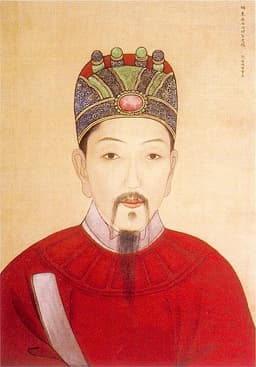
Yuan Chonghuan
General · Medieval
59.7Total
Basic Information
Born
1043
1584
Died
1099
1630
Era
Medieval
Medieval
Nationality
Castile
China
Occupation
General
General
Civilization
Western
Eastern
Score Comparison
Military (10%)
74.7
70.0
Political (20%)
35.1
68.0
Influence (20%)
55.0
53.3
Legacy (20%)
52.0
50.0
Leadership (15%)
57.6
61.1
Strategy (15%)
58.0
75.0
TOTAL
53.9
59.7
El Cid — Complete Timeline
1081 AD
Exile from CastilePolitical Action◆ Major
El Cid was exiled from Castile by King Alfonso VI after leading an unauthorized raid into the Taifa of Toledo. He then offered his services as a mercenary to the Muslim Taifa of Zaragoza, fighting against both Christian and Muslim enemies.
Medieval IberiaExileMercenary
Impact: regionaltragic
1094 AD
Conquest of ValenciaWar◆ Major
El Cid captured the city of Valencia from the Almoravids after a long siege. He established himself as ruler of Valencia, governing the city until his death in 1099, and became a symbol of Christian resistance in the Reconquista.
ReconquistaValenciaConquest
Impact: regionalconstructive
Battle of CuarteWar◆ Major
El Cid defeated an Almoravid army at the Battle of Cuarte, securing his control over Valencia. This victory demonstrated his military prowess and ability to defend his newly conquered territory against superior forces.
ReconquistaBattleValencia
Impact: regionalconstructive
1099 AD
Death and legendOther◆ Major
El Cid died in Valencia in July 1099. After his death, his wife Jimena defended the city for three years before it fell to the Almoravids. El Cid's life became the subject of the epic poem 'Cantar de mio Cid', cementing his status as a national hero.
Medieval IberiaDeathLegend
Impact: regionaltragic
Yuan Chonghuan — Complete Timeline
1626 AD
Defense of NingyuanWar
Yuan Chonghuan, as commander of Ningyuan, successfully defended the city against a large Manchu army led by Nurhaci. The victory was a rare Ming success and marked the first major defeat for the Manchu leader.
Ming-Manchu WarDefenseNingyuan
Impact: nationalconstructive
1627 AD
Battle of Ningyuan-JinzhouWar◆ Major
Yuan Chonghuan again defended Ningyuan and nearby Jinzhou against a Manchu attack led by Hong Taiji. The Ming forces held their positions, inflicting heavy casualties on the Manchus and securing a second major victory.
Ming-Manchu WarBattleVictory
Impact: nationalconstructive
1629 AD
Execution of Mao WenlongPolitical Action◆ Major
Yuan Chonghuan executed the Ming general Mao Wenlong on charges of insubordination and collusion with the Manchus. This act removed a powerful but unreliable commander but also created enemies at court.
ExecutionMilitary CommandMing Dynasty
Impact: nationaldestructive
1630 AD
Arrest and execution by the Ming courtPolitical Action
Yuan Chonghuan was arrested on charges of treason after the Manchus bypassed his defenses and raided Beijing. He was executed by lingchi (slow slicing) in the marketplace, a punishment that shocked the empire.
ExecutionTreasonMing Dynasty
Impact: nationaltragic
Expert Analysis
Origins
Rodrigo Díaz de Vivar, known as El Cid, was born around 1043 in Vivar, near Burgos, Castile. He came from a minor noble family; his father was a vassal of King Ferdinand I. Raised at the court of Ferdinand's son Sancho II, he received training in arms and governance. After Sancho's death in 1072, he served the new king Alfonso VI, but his independent actions led to exile in 1081.
Yuan Chonghuan was born in 1584 in Dongguan, Guangdong, China, during the late Ming dynasty. He came from a scholarly family and passed the imperial examinations in 1619, earning a jinshi degree. He served as a magistrate in Fujian before being assigned to the northeastern frontier in 1622, where he began his military career.
Rise to Power
El Cid's rise came through military service under King Sancho II, leading campaigns against rival Christian kingdoms and Muslim taifas. After Sancho's death, he remained a key commander for Alfonso VI, but his unauthorized raid into Toledo led to exile. Rather than fading, he offered his services to the Muslim taifa of Zaragoza, gaining reputation as a mercenary. His greatest leap came in 1094 when he captured Valencia from the Almoravids, establishing his own principality.
Yuan Chonghuan rose through the civil bureaucracy but was thrust into military command during the Ming-Manchu wars. In 1626, as commander of Ningyuan, he faced the Manchu leader Nurhaci. His defensive strategy, using European-style cannons, repelled the Manchu assault—a rare Ming victory. This earned him promotion to governor of Liaodong. In 1627, he again defended Ningyuan and Jinzhou against Hong Taiji, solidifying his reputation.
Leadership & Governance
El Cid ruled Valencia pragmatically, governing both Christians and Muslims. He tolerated local Muslim customs and allowed mosques to remain, ensuring stability. His leadership was personal and charismatic, relying on loyalty from his followers rather than institutional structures. He minted coins in his own name, acting as an independent prince. However, his governance was short-lived; after his death, Valencia fell in 1102.
Yuan Chonghuan led with strict discipline and strategic foresight. He fortified Ningyuan with advanced artillery and organized a professional defense. He executed Mao Wenlong, a rogue general, to centralize command—a controversial decision that weakened Ming defenses. His approach was bureaucratic and top-down, typical of Ming civil officials. He clashed with the eunuch faction at court, which undermined his support.
Triumph & Tragedy
El Cid's greatest triumph was capturing and holding Valencia from 1094 to 1099. His victory at the Battle of Cuarte in 1094 broke an Almoravid siege, securing his rule. His tragedy: after his death, his wife Jimena held Valencia for three years, but the city fell, and his legacy became legend. He failed to establish a lasting dynasty or state.
Yuan Chonghuan's triumph was the defense of Ningyuan in 1626, where he killed Nurhaci (the Manchu founder) according to some accounts. His strategy score of 75.0 reflects his tactical skill. His tragedy: in 1629, the Manchus bypassed his defenses to raid Beijing. Accused of treason by political rivals, he was executed by slow slicing (lingchi) in 1630. His death demoralized the Ming military and contributed to the dynasty's collapse.
Character & Destiny
El Cid was pragmatic and adaptable, serving both Christian and Muslim rulers. His character—ambitious, loyal to his own code—led him to defy Alfonso and seek personal glory. Yet his charisma and military prowess (74.7) enabled him to rise from exile to ruler. His destiny was shaped by the fluid politics of 11th-century Spain.
Yuan Chonghuan was principled and rigid, a Confucian official who believed in order. His political score (68.0) suggests he was adept at navigating court intrigue, but his execution of Mao Wenlong and his blunt memorials alienated allies. His character—uncompromising and proud—made him a scapegoat. His fate was sealed by the paranoid Ming court.
Legacy
El Cid became Spain's national hero, immortalized in the epic "Cantar de Mio Cid." His legend influenced the Reconquista narrative, though his historical impact was limited. His legacy score of 52.0 reflects this myth-making. Yuan Chonghuan's legacy is more ambiguous: in China, he is remembered as a loyal general wrongfully executed, a symbol of Ming corruption. His military innovations influenced later defenses, but his death hastened the Ming fall.
Conclusion
While El Cid's story is more romantic, Yuan Chonghuan had greater practical impact. His defense of Ningyuan delayed the Manchu conquest and his strategy (75.0) outperformed El Cid's (58.0). Yuan's total score (59.7) edges El Cid's (53.9). Yuan's actions directly affected the fate of the Ming dynasty, whereas El Cid's conquest was ephemeral. Thus, Yuan Chonghuan emerges as the more significant historical figure.
Rankings
🥇
Yuan ChonghuanLeader
Mil: 70.0Pol: 68.0Inf: 53.3
59.7
🥈
El Cid
Mil: 74.7Pol: 35.1Inf: 55.0
53.9
+5.8 behind
How This Comparison Works
Algorithm
Each figure is scored on 6 dimensions (0—100 scale) based on structured historical data: Military (10%), Political (20%), Influence (20%), Legacy (20%), Leadership (15%), Strategy (15%). The weighted total produces the final ranking.
Data Sources
Scores are computed from structured sub-indicators in the database. Scale factors adjust for era (Ancient ×0.85, Modern ×1.0) and civilization size (Eastern ×1.05, Other ×0.80) to account for differences in population and military scale.
Maximum 3 Figures
Comparisons are limited to 2—3 figures to ensure readability and statistical meaningfulness.
Error Margins
±5 points per dimension — Sub-scores are derived from historical records with inherent uncertainty. Two figures within 5 points on a dimension should be considered roughly equivalent in that area.
Total Score Accuracy
±3 points overall — The weighted combination of 6 dimensions produces a total score with approximately ±3 points of uncertainty. Differences of less than 3 points are not statistically significant— the figures are effectively tied.
Known Limitations
- Historical records are incomplete and uneven across civilizations
- Figures from oral-tradition societies may be underrepresented
- Occupation labels can misclassify multi-role figures
- Scores measure capability and impact, not moral character
- Quantitative scoring is a comparison tool, not absolute truth
Capability Radar
Military (10%) — Battles & Warfare
Battles
65
75
Win Rate
70
70
Expansion
55
10
Political (20%) — Governance & Reform
Reform
20
50
Diplomacy
55
60
Economy
30
45
Influence (20%) — Cultural & Global Reach
Cultural
75
50
Global
55
40
Legacy (20%) — Historical Impact
Historical
70
65
Longevity
70
55
Leadership (15%) — Power & Stability
Tenure
45
55
Stability
35
30
Strategy (15%) — Tactics & Innovation
Strategy
68
75
Tactics
72
80
Reform
25
60
Similar Comparisons
Comments & Discussion
No comments yet. Be the first to share your thoughts!