Loading...
Charles V of France vs Louis VII of France
Charles V of France leads by 13.9 pts · 2 figures compared
…

Charles V of France
Emperor · Medieval
59.9Total
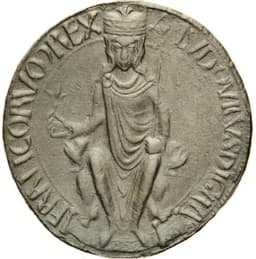
Louis VII of France
Emperor · Medieval
46.0Total
Basic Information
Born
1338
1120
Died
1380
1180
Era
Medieval
Medieval
Nationality
France
France
Occupation
Emperor
Emperor
Civilization
Western
Western
Score Comparison
Military (10%)
55.0
25.9
Political (20%)
59.3
37.9
Influence (20%)
61.0
51.8
Legacy (20%)
56.0
45.0
Leadership (15%)
72.0
64.0
Strategy (15%)
55.0
39.6
TOTAL
59.9
46.0
Charles V of France — Complete Timeline
1364 AD
Reforms of the Royal AdministrationReform◆ Major
Charles V reorganized the French royal administration, establishing a more efficient tax system and a standing army. He appointed capable officials and strengthened the monarchy's control over finances. These reforms provided the resources needed to recover from the Hundred Years' War.
AdministrationTaxationArmy
Impact: nationalconstructive
1368 AD
Establishment of the Royal LibraryCultural
Charles V founded the Royal Library in the Louvre, collecting over 900 manuscripts. He patronized scholars and translators, making works available in French. This library became the foundation of the Biblioth
LibraryPatronageManuscripts
Impact: nationalconstructive
1369 AD
Recovery of Territories from EnglandWar◆ Major
Charles V launched a series of military campaigns under Bertrand du Guesclin to reclaim lands lost to England. Using a strategy of avoiding pitched battles, the French gradually recaptured most of the territories ceded at Br
ReconquestHundred Years' WarDu Guesclin
Impact: regionalconstructive
1370 AD
Construction of the BastilleCultural
Charles V ordered the construction of the Bastille fortress in Paris to protect the city and serve as a royal residence. The fortress later became a symbol of royal authority and a prison. It was a key element of Charles's fortification of Paris.
FortressParisArchitecture
Louis VII of France — Complete Timeline
1137 AD
Reign as King of the FranksPolitical Action◆ Major
Louis VII succeeded his father Louis VI as King of the Franks. His reign was marked by the expansion of royal territory through marriage to Eleanor of Aquitaine, but also by conflicts with the Church and nobles.
KingshipCapetianReign
Impact: national
1147 AD
Second CrusadeWar◆ Major
Louis VII led the Second Crusade with his wife Eleanor of Aquitaine and the German king Conrad III. The crusade was a failure, with the army suffering heavy losses in Anatolia and failing to capture Damascus. The campaign damaged Louis's prestige.
CrusadeWarFailure
Impact: globaltragic
1152 AD
Conflict with Henry II of EnglandWar◆ Major
After Eleanor of Aquitaine married Henry II of England, Louis VII fought a series of wars against Henry over control of French territories. The conflicts were inconclusive, but they established the rivalry between the Capetian and Plantagenet dynasties.
WarPlantagenetTerritorial Conflict
Impact: regional
Divorce from Eleanor of AquitainePolitical Action◆ Major
Louis VII's marriage to Eleanor of Aquitaine was annulled on grounds of consanguinity. Eleanor then married Henry II of England, bringing the vast Duchy of Aquitaine under English control and leading to centuries of conflict between France and England.
DivorceAquitaineAnglo-French Conflict
Impact: globaltragic
1179 AD
Coronation of Philip II AugustusPolitical Action
Louis VII had his son Philip II Augustus crowned as co-king to ensure the succession. This act strengthened the Capetian dynasty and ensured a smooth transition of power after Louis's death.
CoronationSuccessionCapetian
Impact: nationalconstructive
Expert Analysis
Origins
Charles V of France, born in 1338 at Vincennes, was the eldest son of King John II and Bonne of Luxembourg. His upbringing amidst the Hundred Years' War and the captivity of his father after the Battle of Poitiers (1356) shaped his cautious, administrative approach. Charles was known for his intellectual bent, studying Latin, philosophy, and law, earning the epithet "the Wise." His early regency during his father's imprisonment forced him to deal with revolts like the Jacquerie and the Parisian uprising led by Étienne Marcel.
Louis VII, born in 1120, was the second son of King Louis VI and Adelaide of Maurienne. Originally destined for the Church, he was educated at the Abbey of Saint-Denis, becoming literate and devout. His older brother Philip's death in 1131 made him heir, and he was crowned co-king in 1137. His early reign was dominated by his marriage to Eleanor of Aquitaine, which brought vast territories to the crown.
Rise to Power
Charles V became regent in 1356 when his father was captured at Poitiers. He faced the Peasant Revolt (Jacquerie) and the revolt of Étienne Marcel, which he suppressed by 1358. He negotiated the Treaty of Brétigny (1360) to secure his father's release, but the terms were harsh. Upon becoming king in 1364, he focused on rebuilding the kingdom. His appointment of Bertrand du Guesclin as Constable in 1370 marked a turning point, as du Guesclin pursued a strategy of avoiding pitched battles.
Louis VII became king in 1137 upon his father's death. His early reign was promising, but his participation in the Second Crusade (1147-1149) proved disastrous. The crusade failed due to poor planning and leadership, and his relationship with Eleanor soured. After the crusade, their marriage was annulled in 1152, and Eleanor married Henry II of England, bringing Aquitaine to the English crown. This loss defined Louis's reign, leading to decades of conflict.
Leadership & Governance
Charles V was a meticulous administrator. He reorganized the royal council, improved tax collection through the taille and aides, and created a standing army. He patronized scholars, founded the Royal Library at the Louvre, and commissioned translations of classical works. His military strategy, relying on du Guesclin's Fabian tactics, avoided major battles but chipped away at English holdings. By his death in 1380, he had recovered most of the territory lost since 1337, including Poitou, Saintonge, and the Limousin.
Louis VII was a pious king but indecisive. He relied on advisors like Suger of Saint-Denis, but his governance was reactive. His divorce from Eleanor was a major blunder, as it cost him half of France. He spent much of his reign fighting Henry II, but with little success. His military score of 25.9 reflects his poor generalship. He did ensure the Capetian succession by having his son Philip II Augustus crowned co-king in 1179, which stabilized the dynasty.
Triumph & Tragedy
Charles V's greatest triumph was the recovery of French territories, increasing royal control from a small area to most of the south and west. He also stabilized the currency and administration. His tragedy was that his reforms were undone by his son Charles VI's madness, leading to renewed civil war and English resurgence. His score of 59.9 reflects his moderate overall impact.
Louis VII's greatest triumph was the expansion of royal territory through his marriage to Eleanor, but this was short-lived. His tragedy was the divorce that handed Aquitaine to England, leading to centuries of conflict. His crusade failure and inability to counter Henry II left his reign as one of stagnation. His score of 46.0 places him among the less effective French kings.
Character & Destiny
Charles V was cautious, intellectual, and strategic. He preferred diplomacy and law to warfare. His character shaped a reign of recovery rather than conquest. He was known for his wisdom but also his physical frailty (he died of a lingering illness at 42). His decisions were calculated, and he left a strengthened monarchy.
Louis VII was devout, but indecisive and impulsive. His decision to go on crusade and then divorce Eleanor were driven by personal piety and emotion rather than political calculation. His character led to strategic errors that weakened France. He was overshadowed by his more capable son, Philip Augustus.
Legacy
Charles V is remembered as a wise restorer of royal authority. His administrative reforms influenced later French governance. The Bastille, originally a fortress he built, became a symbol of royal power. The Royal Library he founded evolved into the Bibliothèque nationale de France.
Louis VII's legacy is mixed. He is often seen as a weak king who lost Aquitaine. However, his son Philip II Augustus built on his achievements to become one of France's greatest kings. The Capetian dynasty's continuity was ensured by his foresight in crowning his son.
Conclusion
Charles V had a greater impact on France. With a total score of 59.9 against Louis VII's 46.0, Charles's reforms and territorial recoveries were more substantial. While Louis's loss of Aquitaine was a major setback, Charles's administrative and military strategies laid the groundwork for future French success. Charles V is clearly the more effective king, despite his short reign.
Rankings
🥇
Charles V of FranceLeader
Mil: 55.0Pol: 59.3Inf: 61.0
59.9
🥈
Louis VII of France
Mil: 25.9Pol: 37.9Inf: 51.8
46.0
+13.9 behind
How This Comparison Works
Algorithm
Each figure is scored on 6 dimensions (0—100 scale) based on structured historical data: Military (10%), Political (20%), Influence (20%), Legacy (20%), Leadership (15%), Strategy (15%). The weighted total produces the final ranking.
Data Sources
Scores are computed from structured sub-indicators in the database. Scale factors adjust for era (Ancient ×0.85, Modern ×1.0) and civilization size (Eastern ×1.05, Other ×0.80) to account for differences in population and military scale.
Maximum 3 Figures
Comparisons are limited to 2—3 figures to ensure readability and statistical meaningfulness.
Error Margins
±5 points per dimension — Sub-scores are derived from historical records with inherent uncertainty. Two figures within 5 points on a dimension should be considered roughly equivalent in that area.
Total Score Accuracy
±3 points overall — The weighted combination of 6 dimensions produces a total score with approximately ±3 points of uncertainty. Differences of less than 3 points are not statistically significant— the figures are effectively tied.
Known Limitations
- Historical records are incomplete and uneven across civilizations
- Figures from oral-tradition societies may be underrepresented
- Occupation labels can misclassify multi-role figures
- Scores measure capability and impact, not moral character
- Quantitative scoring is a comparison tool, not absolute truth
Capability Radar
Military (10%) — Battles & Warfare
Battles
45
15
Win Rate
60
20
Expansion
40
5
Political (20%) — Governance & Reform
Reform
80
30
Diplomacy
75
40
Economy
70
30
Influence (20%) — Cultural & Global Reach
Cultural
55
30
Global
40
20
Legacy (20%) — Historical Impact
Historical
60
40
Longevity
50
30
Leadership (15%) — Power & Stability
Tenure
65
60
Stability
75
35
Strategy (15%) — Tactics & Innovation
Strategy
75
10
Tactics
55
10
Reform
70
5
Similar Comparisons
Comments & Discussion
No comments yet. Be the first to share your thoughts!