Loading...
Louis VII of France vs Napoleon Bonaparte
Napoleon Bonaparte leads by 24.9 pts · 2 figures compared
…
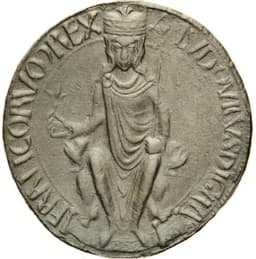
Louis VII of France
Emperor · Medieval
46.0Total

Napoleon Bonaparte
General · Modern
70.9Total
Basic Information
Born
1120
1769
Died
1180
1821
Era
Medieval
Modern
Nationality
France
France
Occupation
Emperor
General
Civilization
Western
Western
Score Comparison
Military (10%)
25.9
94.0
Political (20%)
37.9
72.0
Influence (20%)
51.8
40.0
Legacy (20%)
45.0
80.0
Leadership (15%)
64.0
78.0
Strategy (15%)
39.6
90.0
TOTAL
46.0
70.9
Louis VII of France — Complete Timeline
1137 AD
Reign as King of the FranksPolitical Action◆ Major
Louis VII succeeded his father Louis VI as King of the Franks. His reign was marked by the expansion of royal territory through marriage to Eleanor of Aquitaine, but also by conflicts with the Church and nobles.
KingshipCapetianReign
Impact: national
1147 AD
Second CrusadeWar◆ Major
Louis VII led the Second Crusade with his wife Eleanor of Aquitaine and the German king Conrad III. The crusade was a failure, with the army suffering heavy losses in Anatolia and failing to capture Damascus. The campaign damaged Louis's prestige.
CrusadeWarFailure
Impact: globaltragic
1152 AD
Conflict with Henry II of EnglandWar◆ Major
After Eleanor of Aquitaine married Henry II of England, Louis VII fought a series of wars against Henry over control of French territories. The conflicts were inconclusive, but they established the rivalry between the Capetian and Plantagenet dynasties.
WarPlantagenetTerritorial Conflict
Impact: regional
Divorce from Eleanor of AquitainePolitical Action◆ Major
Louis VII's marriage to Eleanor of Aquitaine was annulled on grounds of consanguinity. Eleanor then married Henry II of England, bringing the vast Duchy of Aquitaine under English control and leading to centuries of conflict between France and England.
DivorceAquitaineAnglo-French Conflict
Impact: globaltragic
1179 AD
Coronation of Philip II AugustusPolitical Action
Louis VII had his son Philip II Augustus crowned as co-king to ensure the succession. This act strengthened the Capetian dynasty and ensured a smooth transition of power after Louis's death.
CoronationSuccessionCapetian
Impact: nationalconstructive
Napoleon Bonaparte — Complete Timeline
1799 AD
Coup of 18 BrumaireOther◆ Major
Napoleon Bonaparte, with support from his brother Lucien and key political figures, overthrew the Directory in a bloodless coup. He established the Consulate with himself as First Consul, effectively becoming the ruler of France. This event ended the French Revolution's most unstable period.
French RevolutionCoupRise to Power
Impact: regional
1804 AD
Promulgation of the Napoleonic CodeOther◆ Major
Napoleon enacted the Civil Code of the French, known as the Napoleonic Code, a comprehensive set of laws that replaced the fragmented feudal legal systems. The code established legal equality, protected property rights, and secularized law. It became the basis for legal systems in many European and world countries.
Legal ReformNapoleonic CodeCivil Law
Impact: globalconstructive
1805 AD
Battle of AusterlitzWar◆ Major
Napoleon's Grande Arm
Napoleonic WarsBattleDecisive Victory
Impact: global
1812 AD
Invasion of RussiaWar◆ Major
Napoleon led the Grande Arm
Napoleonic WarsInvasionDisaster
Impact: globaldestructive
1815 AD
Battle of WaterlooWar◆ Major
Napoleon's French army was defeated by the combined forces of the Duke of Wellington's Anglo-Allied army and Gebhard Leberecht von Bl
Napoleonic WarsBattleFinal Defeat
Impact: globaldestructive
Expert Analysis
louis-vii-of-france-vs-napoleon-bonaparte
### The King Who Lost and the Emperor Who Conquered: Louis VII and Napoleon
In the winter of 1147, a pious but ill-suited king trudged through the snows of Anatolia, his army decimated by starvation and ambush. Seven centuries later, another French ruler stood atop the Alps, pointing toward the plains of Italy, his troops electrified by his presence. Both men wore the crown of France. Both sought to shape the destiny of Europe. One returned home in failure, his wife and reputation gone. The other returned as a legend, his name etched into history. How did two rulers from the same nation diverge so vastly? The answer lies not in their shared bloodlines, but in the chasm of time, temperament, and the very nature of power itself.
### Origins
Louis VII was born into a world of feudal fragments in 1120, when France was less a kingdom than a patchwork of quarrelsome dukes and counts. His father, Louis VI, the Fat, had spent his reign battering castle walls to assert royal authority. Young Louis was raised in the shadow of the abbey, educated by monks, and imbued with a deep, unyielding piety. He was a man of the cloister thrust onto a throne, more comfortable with prayer than with a sword.
Napoleon Bonaparte, born in 1769 on the Mediterranean island of Corsica, inherited a very different France. The old order had been shattered by revolution. A boy of modest noble lineage, he was a scholarship student at military academies on the mainland, a solitary and ambitious outsider who devoured books on artillery and history. Where Louis was shaped by the sacred, Napoleon was forged by the secular: the Enlightenment, the chaos of the Terror, and the raw, unfiltered ambition of a world where a man could rise by talent alone.
### Rise to Power
Louis VII’s path was one of inheritance. In 1137, at the age of seventeen, he was crowned King of the Franks. His early reign was defined not by conquest but by consolidation, a slow, careful dance of marriage and diplomacy. His greatest stroke of fortune was his marriage to Eleanor of Aquitaine, the most eligible heiress in Europe, which brought the vast duchy of Aquitaine under the crown. His power was given to him; he had merely to hold it.
Napoleon’s rise was a rocket of will. He emerged from the siege of Toulon in 1793 as a young artillery officer whose brilliant tactics broke a British blockade. By 1796, he was commanding the Army of Italy, a ragtag force he transformed into a conquering machine. He did not inherit power; he seized it. The coup of 18 Brumaire in 1799 made him First Consul, and by 1804, he crowned himself Emperor in Notre-Dame, taking the crown from the Pope’s hands and placing it on his own head. It was a gesture Louis VII could never have imagined, let alone dared.
### Leadership & Governance
Louis VII ruled as a medieval king, his authority circumscribed by the church and powerful vassals. His military score of 14.0 reflects his disastrous leadership of the Second Crusade in 1147, a campaign he joined out of religious fervor rather than strategic sense. He was a poor commander, his army shattered by the Turks, and his failure alienated his queen. Politically, he scored a modest 68.2, managing to expand royal territory through cunning and patience, but his greatest act—the annulment of his marriage to Eleanor in 1152—was a catastrophe. She married Henry II of England, handing over Aquitaine and igniting a conflict that would burn for centuries.
Napoleon governed with a different ruthlessness. His military score of 94.0 and strategy of 93.0 speak to a mind that saw battle as a chessboard. He won at Austerlitz in 1805, crushing the Austrian and Russian empires in a single day. He reformed France from within: the Napoleonic Code standardized law, the Bank of France stabilized the currency, and the lycées educated a new elite. His political score of 75.0 reflects a man who was a brilliant administrator but a poor diplomat, demanding total submission from Europe’s monarchs, which ultimately united them against him.
### Triumph & Tragedy
Louis VII’s greatest moment was perhaps his quietest: the coronation of his son, Philip II Augustus, in 1179. It was a defensive act, ensuring the Capetian dynasty would survive. His tragedy was the Second Crusade, a holy war that became a personal and political ruin. He returned to France with his army destroyed and his marriage broken, a king humbled by forces he could neither command nor comprehend.
Napoleon’s triumph was the sun of Austerlitz, where he lured the allies onto frozen lakes and shattered them with cannon fire. His tragedy was the snow of Russia in 1812. He marched 600,000 men into the East; fewer than 100,000 returned. It was a hubris of such scale that it defied reason. He was exiled to Elba, escaped, and met his final defeat at Waterloo in 1815, a battle he might have won if his generals had arrived on time. He died in 1821 on the remote island of Saint Helena, alone.
### Character & Destiny
Louis VII was a man of faith and caution. His piety made him a poor warrior; his indecision cost him a queen. He was reactive, not proactive, his destiny shaped by the limits of his age. He could not imagine a France united under a single will, because the tools—the bureaucracy, the standing army, the national spirit—did not yet exist.
Napoleon was a man of ambition and calculation. He believed he could shape history with his own hands. “Impossible,” he once said, “is a word to be found only in the dictionary of fools.” His character was his destiny: the restless energy that conquered Europe was the same force that overreached. He could not stop, and so he fell.
### Legacy
Louis VII is remembered dimly, a footnote in the rise of the Capetian dynasty. His legacy score of 59.5 reflects a king who preserved the crown but lost the future. He is the man who lost Eleanor, and with her, a kingdom.
Napoleon’s legacy is a contradiction—82.4 total, a score that captures his military genius and political failure. He is remembered as a tyrant and a reformer, a conqueror who spread the ideals of the French Revolution even as he crushed them under his boot. His legal code endures. His name is a byword for ambition.
### Conclusion
Standing in the winter of 1147, Louis VII watched his crusade collapse. Standing in the spring of 1800, Napoleon crossed the Alps. One king prayed for salvation; one emperor demanded victory. Both were French. Both sought glory. But one was a prisoner of his time, the other a man who tried to break time itself. In the end, history judges not by effort but by outcome. Louis VII survived, but he did not conquer. Napoleon conquered, but he did not last. The difference between them is the difference between a man who inherits a crown and a man who makes one.
Rankings
🥇
Napoleon BonaparteLeader
Mil: 94.0Pol: 72.0Inf: 40.0
70.9
🥈
Louis VII of France
Mil: 25.9Pol: 37.9Inf: 51.8
46.0
+24.9 behind
How This Comparison Works
Algorithm
Each figure is scored on 6 dimensions (0—100 scale) based on structured historical data: Military (10%), Political (20%), Influence (20%), Legacy (20%), Leadership (15%), Strategy (15%). The weighted total produces the final ranking.
Data Sources
Scores are computed from structured sub-indicators in the database. Scale factors adjust for era (Ancient ×0.85, Modern ×1.0) and civilization size (Eastern ×1.05, Other ×0.80) to account for differences in population and military scale.
Maximum 3 Figures
Comparisons are limited to 2—3 figures to ensure readability and statistical meaningfulness.
Error Margins
±5 points per dimension — Sub-scores are derived from historical records with inherent uncertainty. Two figures within 5 points on a dimension should be considered roughly equivalent in that area.
Total Score Accuracy
±3 points overall — The weighted combination of 6 dimensions produces a total score with approximately ±3 points of uncertainty. Differences of less than 3 points are not statistically significant— the figures are effectively tied.
Known Limitations
- Historical records are incomplete and uneven across civilizations
- Figures from oral-tradition societies may be underrepresented
- Occupation labels can misclassify multi-role figures
- Scores measure capability and impact, not moral character
- Quantitative scoring is a comparison tool, not absolute truth
Capability Radar
Military (10%) — Battles & Warfare
Battles
15
95
Win Rate
20
90
Expansion
5
95
Political (20%) — Governance & Reform
Reform
30
95
Diplomacy
40
80
Economy
30
85
Influence (20%) — Cultural & Global Reach
Cultural
30
85
Global
20
90
Legacy (20%) — Historical Impact
Historical
40
95
Longevity
30
90
Leadership (15%) — Power & Stability
Tenure
60
85
Stability
35
70
Strategy (15%) — Tactics & Innovation
Strategy
10
95
Tactics
10
98
Reform
5
92
Similar Comparisons
Comments & Discussion
MarshalScope6/17/2026
Calling this a "comparison" is like comparing a butter knife to a broadsword. Louis VII was a medieval monk in a crown, literally caught in the snows of Anatolia during the Second Crusade with an army that starved because he couldn't make a tactical decision. Napoleon, by 1800, had already crossed the Alps and smashed Austria at Marengo. One commanded chaos; the other commanded destiny. There's no lesson here—just a royal embarrassment versus a military genius.
炮火清醒师6/17/2026
这对比纯属欺负老实人。路易七世连埃莉诺这样的女人都留不住,更别提“战略”二字。他打十字军时,安条克就被敌军围困,他却听了修道院那帮人的话,错过所有反击机会。拿破仑在同样年纪已经打赢洛迪桥会战,一个人拿旗冲桥,士兵都看傻了。一个是靠祷告过日子,一个是靠子弹和铁腕谱写历史。差距是文明的断层,不是个人的高低。
HeresiesUntold6/17/2026
Let's not pretend Napoleon wasn't a disaster for France in the long run. Louis VII lost a crusade and a queen, sure, but at least he didn't sacrifice a million men for Moscow. Napoleon's 1812 campaign killed over 400,000 French soldiers in five months—more than the entire population of Paris at the time. For what? A snow-covered corpse pile. Louis was mediocre; Napoleon was megalomaniacal. History just loves winners with better press agents.
典章判官6/17/2026
从制度演变角度看,拿破仑才是真正的“毒药换汤”。他继承了革命留下的中央集权机器,本质上是用军功贵族取代了封建领主,对普通人来说换汤不换药。路易七世扩张了王室领地、收紧了王权,尽管缓慢,却为后来的腓力二世铺路。拿破仑的帝国只撑了十五年,路易的王朝则延续了数个世纪。短命的大征服者,不如长跑的修修补补者。务实才配得上历史,戏剧仅供观赏。
CorsicanGhost6/17/2026
You miss the core point: Louis VII's failure was institutional—feudal France had no logistics, no unified command, just knights doing whatever they wanted. Napoleon built the Grande Armée with corps system, staff officers, and centralized supply. That's not temperament; that's revolution. Louis never stood a chance because his toolkit was a relic from 500 years prior. Napoleon didn't just win—he redefined how war works. The 'chasm of time' isn't poetic; it's a goddamn canyon of military science.
史海投石6/17/2026
看这种“两王遥对”的分析,总有人要替路易喊冤。他根本没有拿破仑那样的革命红利和民族主义脚本。路易七世面对的是贵族会议和教皇