Loading...
Charles VI vs Mary I of England
Charles VI leads by 5.3 pts · 2 figures compared
…
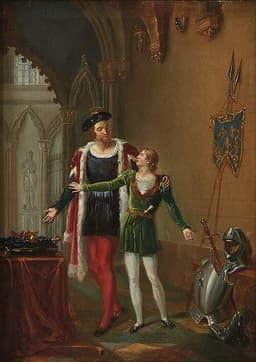
Charles VI
Emperor · Modern
50.0Total

Mary I of England
Emperor · Modern
44.7Total
Basic Information
Born
1685
1516
Died
1740
1558
Era
Modern
Modern
Nationality
Holy Roman Empire
England
Occupation
Emperor
Emperor
Civilization
Western
Western
Score Comparison
Military (10%)
50.0
20.0
Political (20%)
45.0
33.6
Influence (20%)
54.9
54.9
Legacy (20%)
49.2
45.0
Leadership (15%)
53.2
48.4
Strategy (15%)
42.3
54.3
TOTAL
50.0
44.7
Charles VI — Complete Timeline
1713 AD
Issued the Pragmatic SanctionPolitical Action
Charles VI issued the Pragmatic Sanction, a legal instrument to ensure that the Habsburg hereditary lands could be inherited by a female heir (his daughter Maria Theresa) in the absence of a male son. He spent decades securing recognition from European powers, but it failed to prevent the War of the Austrian Succession.
Pragmatic SanctionSuccessionHabsburg
Impact: global
1739 AD
Treaty of BelgradePolitical Action◆ Major
Charles VI's forces, after a disastrous war with the Ottoman Empire, signed the Treaty of Belgrade. The treaty ceded Belgrade and northern Serbia to the Ottomans, reversing the gains of the Treaty of Passarowitz and weakening Habsburg influence in the Balkans.
Ottoman WarTreatyTerritorial Loss
Impact: regionaldestructive
1740 AD
War of the Austrian SuccessionWar◆ Major
Charles VI's death in 1740 triggered the War of the Austrian Succession, as Prussia, France, and Bavaria challenged Maria Theresa's inheritance. The war, lasting until 1748, resulted in the loss of Silesia to Prussia but confirmed Maria Theresa's rule in most Habsburg lands.
War of the Austrian SuccessionMaria TheresaSilesia
Impact: global
Mary I of England — Complete Timeline
1553 AD
Repeal of Protestant LegislationReform◆ Major
Mary I's government repealed the Protestant laws of Edward VI, restoring Catholic doctrine and practices. This included the revival of the Mass and the authority of the Pope in England.
ReformationCatholicRestoration
Impact: national
Accession of Mary IPolitical Action
Mary I became queen of England after deposing Lady Jane Grey. Her accession marked a return to Catholic rule and the reversal of Protestant reforms enacted under Edward VI.
SuccessionCatholicRestoration
Impact: national
1554 AD
Marriage to Philip II of SpainPolitical Action◆ Major
Mary I married Philip II of Spain, a Catholic alliance that was unpopular in England. The marriage did not produce an heir and led to English involvement in Spanish wars, including the loss of Calais.
MarriageSpainAlliance
Impact: regional
1555 AD
Execution of Protestants (Marian Persecutions)Political Action◆ Major
Mary I oversaw the execution of nearly 300 Protestants for heresy, including Thomas Cranmer, Hugh Latimer, and Nicholas Ridley. These burnings earned her the nickname 'Bloody Mary' and deepened religious divisions.
PersecutionHeresyProtestant
Impact: nationaldestructive
1558 AD
Loss of CalaisWar◆ Major
French forces captured Calais, the last English possession in France, during Mary I's reign. This loss was a major blow to English prestige and contributed to the unpopularity of her Spanish alliance.
Territorial LossFranceDefeat
Impact: regionaldestructive
Expert Analysis
Origins
Charles VI (1685-1740) was the second son of Holy Roman Emperor Leopold I and Eleonore Magdalene of Neuburg. Born into the powerful Habsburg dynasty, he was originally destined for the Spanish throne but became heir to the Austrian Habsburg lands after his brother Joseph I died. His education emphasized statecraft and military command, but he lacked the strategic vision of his predecessors.
Mary I (1516-1558) was the only surviving child of Henry VIII and Catherine of Aragon. Her early life was marked by her father's annulment of her mother's marriage, which declared her illegitimate. She was raised as a devout Catholic, isolated from court, and her experiences ingrained a fierce loyalty to Rome and a deep resentment of Protestant reforms.
Rise to Power
Charles VI's rise came through the death of his brother Joseph I in 1711, making him the Habsburg claimant. He was elected Holy Roman Emperor in 1711, inheriting a vast but fragmented empire. His primary goal became ensuring the succession of his daughter Maria Theresa, leading to the Pragmatic Sanction of 1713, a legal document that would allow female inheritance. He spent decades negotiating with European powers to accept it, but at great cost: concessions to Prussia, Bavaria, and Saxony weakened Habsburg influence.
Mary I's path to power was more dramatic. After Edward VI's death in 1553, the Protestant Lady Jane Grey was proclaimed queen, but Mary rallied support in East Anglia and marched on London. Her popular support, due to sympathy for her mother's treatment and opposition to the Protestant regime, led to Jane's deposition. Mary was crowned in October 1553, the first queen regnant of England.
Leadership & Governance
Charles VI's leadership was characterized by a legalistic approach to governance. He prioritized the Pragmatic Sanction above all else, sacrificing foreign policy and military strength to gain recognition. His rule saw the Habsburg monarchy's decline: military defeats against the Ottoman Empire (Treaty of Belgrade, 1739) and the loss of territories like Serbia. He scored 53.2 in leadership but only 42.3 in strategy, reflecting his inability to adapt.
Mary I's governance was driven by religious restoration. She reversed Edward VI's Protestant legislation, reinstated Catholic Mass, and reconciled with the Papacy. However, her marriage to Philip II of Spain (1554) was unpopular and dragged England into a costly war with France. Her domestic policy focused on persecuting Protestants: nearly 300 were executed, earning her the epithet "Bloody Mary." Her political score is 33.6, indicating poor decision-making.
Triumph & Tragedy
Charles VI's greatest triumph was securing the Pragmatic Sanction's acceptance by most European powers before his death, ensuring Maria Theresa's inheritance—though it immediately triggered the War of the Austrian Succession. His tragedy was that his single-minded focus on succession undermined Habsburg military and diplomatic strength. He died in 1740, unaware that his life's work would be challenged.
Mary I's triumph was her successful accession and initial popularity, as well as restoring Catholicism in England. However, her tragedies include the loss of Calais (1558) to the French, a humiliating blow to English prestige, and her failure to produce an heir, leaving the throne to her Protestant half-sister Elizabeth. The Marian persecutions also tarnished her legacy.
Character & Destiny
Charles VI was methodical and stubborn, traits that helped him achieve the Pragmatic Sanction but blinded him to broader strategic needs. He trusted diplomacy over military strength, leading to a weakened empire. Historical assessments note his lack of charisma compared to earlier Habsburgs.
Mary I was devout and courageous but inflexible. Her traumatic youth made her determined to restore Catholicism, but she lacked political pragmatism. Her marriage to Philip II was a strategic blunder, and her persecution of Protestants alienated many subjects. Historians view her as a tragic figure whose reign was a failed counter-reformation.
Legacy
Charles VI's legacy is mixed: the Pragmatic Sanction preserved Habsburg lands for his daughter, but his policies contributed to the Austrian Succession war. However, the Habsburg monarchy survived, and his daughter Maria Theresa became one of its greatest rulers. His total score of 50.0 reflects a moderate impact.
Mary I's legacy is overwhelmingly negative: "Bloody Mary" is remembered for religious persecution and the loss of Calais. Her attempt to reverse Protestantism failed, and Elizabeth I's reign solidified the Church of England. Her total score of 44.7 is lower, but her influence score of 54.9 ties with Charles VI, indicating her reign's symbolic importance.
Conclusion
While both rulers faced challenges, Charles VI's impact on European history is greater. His Pragmatic Sanction shaped the War of the Austrian Succession and the rise of Prussia, and his dynasty continued to influence Europe for centuries. Mary I's reign was a short-lived reaction that ultimately failed. Charles VI's total score of 50.0 exceeds Mary's 44.7, and his strategic legacy—though flawed—had longer-lasting consequences. The Habsburg emperor, despite his limitations, outranks the Tudor queen in historical significance.
Rankings
🥇
Charles VILeader
Mil: 50.0Pol: 45.0Inf: 54.9
50.0
🥈
Mary I of England
Mil: 20.0Pol: 33.6Inf: 54.9
44.7
+5.3 behind
How This Comparison Works
Algorithm
Each figure is scored on 6 dimensions (0—100 scale) based on structured historical data: Military (10%), Political (20%), Influence (20%), Legacy (20%), Leadership (15%), Strategy (15%). The weighted total produces the final ranking.
Data Sources
Scores are computed from structured sub-indicators in the database. Scale factors adjust for era (Ancient ×0.85, Modern ×1.0) and civilization size (Eastern ×1.05, Other ×0.80) to account for differences in population and military scale.
Maximum 3 Figures
Comparisons are limited to 2—3 figures to ensure readability and statistical meaningfulness.
Error Margins
±5 points per dimension — Sub-scores are derived from historical records with inherent uncertainty. Two figures within 5 points on a dimension should be considered roughly equivalent in that area.
Total Score Accuracy
±3 points overall — The weighted combination of 6 dimensions produces a total score with approximately ±3 points of uncertainty. Differences of less than 3 points are not statistically significant— the figures are effectively tied.
Known Limitations
- Historical records are incomplete and uneven across civilizations
- Figures from oral-tradition societies may be underrepresented
- Occupation labels can misclassify multi-role figures
- Scores measure capability and impact, not moral character
- Quantitative scoring is a comparison tool, not absolute truth
Capability Radar
Military (10%) — Battles & Warfare
Battles
20
5
Win Rate
15
5
Expansion
10
5
Political (20%) — Governance & Reform
Reform
60
20
Diplomacy
65
20
Economy
40
15
Influence (20%) — Cultural & Global Reach
Cultural
30
40
Global
40
30
Legacy (20%) — Historical Impact
Historical
55
50
Longevity
50
30
Leadership (15%) — Power & Stability
Tenure
70
30
Stability
30
10
Strategy (15%) — Tactics & Innovation
Strategy
15
5
Tactics
10
5
Reform
10
5
Similar Comparisons
Comments & Discussion
No comments yet. Be the first to share your thoughts!