Loading...
Mary I of England vs Takht Singh of Jodhpur
Takht Singh of Jodhpur leads by 0.6 pts · 2 figures compared
…

Mary I of England
Emperor · Modern
44.7Total
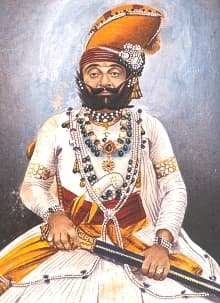
Takht Singh of Jodhpur
Emperor · Modern
45.3Total
Basic Information
Born
1516
1819
Died
1558
1873
Era
Modern
Modern
Nationality
England
India
Occupation
Emperor
Emperor
Civilization
Western
Indian
Score Comparison
Military (10%)
20.0
21.2
Political (20%)
33.6
45.1
Influence (20%)
54.9
48.6
Legacy (20%)
45.0
40.0
Leadership (15%)
48.4
65.0
Strategy (15%)
54.3
45.0
TOTAL
44.7
45.3
Mary I of England — Complete Timeline
1553 AD
Repeal of Protestant LegislationReform◆ Major
Mary I's government repealed the Protestant laws of Edward VI, restoring Catholic doctrine and practices. This included the revival of the Mass and the authority of the Pope in England.
ReformationCatholicRestoration
Impact: national
Accession of Mary IPolitical Action
Mary I became queen of England after deposing Lady Jane Grey. Her accession marked a return to Catholic rule and the reversal of Protestant reforms enacted under Edward VI.
SuccessionCatholicRestoration
Impact: national
1554 AD
Marriage to Philip II of SpainPolitical Action◆ Major
Mary I married Philip II of Spain, a Catholic alliance that was unpopular in England. The marriage did not produce an heir and led to English involvement in Spanish wars, including the loss of Calais.
MarriageSpainAlliance
Impact: regional
1555 AD
Execution of Protestants (Marian Persecutions)Political Action◆ Major
Mary I oversaw the execution of nearly 300 Protestants for heresy, including Thomas Cranmer, Hugh Latimer, and Nicholas Ridley. These burnings earned her the nickname 'Bloody Mary' and deepened religious divisions.
PersecutionHeresyProtestant
Impact: nationaldestructive
1558 AD
Loss of CalaisWar◆ Major
French forces captured Calais, the last English possession in France, during Mary I's reign. This loss was a major blow to English prestige and contributed to the unpopularity of her Spanish alliance.
Territorial LossFranceDefeat
Impact: regionaldestructive
Takht Singh of Jodhpur — Complete Timeline
1843 AD
Accession to the Throne of JodhpurPolitical Action◆ Major
Takht Singh became Maharaja of Jodhpur after the death of his predecessor, Maharaja Man Singh. His accession was supported by the British, who sought a ruler favorable to their interests in the region.
SuccessionJodhpurBritish Influence
Impact: regional
Alignment with the British East India CompanyPolitical Action◆ Major
Takht Singh signed a treaty with the British East India Company, aligning Jodhpur with British interests. He agreed to provide military support and accept British suzerainty in exchange for protection and recognition of his rule.
TreatyBritish AlliancePrincely State
Impact: regional
1850 AD
Suppression of the Thakur RebellionWar
Takht Singh suppressed a rebellion by Thakurs (nobles) who opposed his rule and British influence. With British military assistance, he defeated the rebels and consolidated his authority, though the rebellion highlighted tensions within the state.
RebellionNobilityBritish Support
Impact: regional
Expert Analysis
Origins
Mary I of England was born on February 18, 1516, the only surviving child of Henry VIII and Catherine of Aragon. She was raised as a devout Catholic, receiving a humanist education from scholars like Juan Luis Vives. Her parents' divorce and her father's break with Rome deeply affected her, creating a lifelong commitment to Catholicism. Takht Singh of Jodhpur was born in 1819 into the Rathore dynasty of Marwar. He was the son of Maharaja Man Singh's younger brother, and his early life was spent in the court of Jodhpur, where he was trained in administration and military skills. His upbringing was shaped by the Maratha and British conflicts that defined 19th-century India.
Rise to Power
Mary I's rise to power was dramatic. After the death of Edward VI in 1553, a Protestant faction attempted to place Lady Jane Grey on the throne. Mary gathered support in East Anglia and marched to London, deposing Jane after nine days. She was crowned on October 1, 1553, as the first queen regnant of England. Takht Singh's accession was more straightforward. When Maharaja Man Singh died in 1843 without a direct heir, the British East India Company supported Takht Singh as the next ruler. He ascended the throne on February 11, 1843, under British supervision, which ensured his loyalty to colonial interests.
Leadership & Governance
Mary I's leadership focused on restoring Catholicism. She repealed Protestant legislation, revived heresy laws, and married Philip II of Spain in 1554. Her governance was authoritarian and religiously driven, leading to the Marian Persecutions, where nearly 300 Protestants were executed by burning. Her political score of 33.6 reflects her inability to manage Parliament and public opinion effectively. Takht Singh, scoring 45.1 in political acumen, governed Jodhpur as a British ally. He signed a treaty in 1843 that ceded control of foreign policy and military to the British, while maintaining internal autonomy. He suppressed the Thakur Rebellion in 1844 with British help, centralizing power and reducing noble influence. His leadership score of 65.0 indicates effective management of internal stability, though at the cost of sovereignty.
Triumph & Tragedy
Mary I's greatest triumph was her initial successful accession and the restoration of Catholic worship. However, her greatest tragedy was the loss of Calais to France in 1558, which ended English continental possessions and damaged her prestige. The Marian Persecutions also created a lasting negative legacy, earning her the epithet 'Bloody Mary.' Takht Singh's triumph was maintaining Jodhpur's autonomy within the British Raj, avoiding annexation like Awadh. His tragedy was the erosion of princely independence; his alignment with the British made Jodhpur a subordinate state, and his rule saw increased British interference in succession and administration.
Character & Destiny
Mary I was stubborn and devout, driven by a mission to return England to Catholicism. Her decision to marry Philip II of Spain was unpopular and led to involvement in Spanish wars. Her inability to produce an heir sealed the succession for her Protestant sister Elizabeth. Historians assess her as a ruler whose religious zeal overshadowed political pragmatism. Takht Singh was pragmatic and cautious, prioritizing stability over independence. His cooperation with the British ensured his reign was peaceful but subservient. He is often seen as a collaborator who secured his position at the expense of Jodhpur's autonomy.
Legacy
Mary I's legacy is overwhelmingly negative in English history, symbolized by the burnings at Smithfield. However, her reign demonstrated the limits of religious coercion and strengthened the Protestant cause. Her total score is 44.7. Takht Singh's legacy is mixed in Indian history: he maintained Jodhpur's existence but at the cost of becoming a British client. His total score of 45.3 edges higher. The British system of indirect rule that he embraced lasted until 1947. His influence score of 48.6 reflects his role in stabilizing Jodhpur within the colonial framework.
Conclusion
Comparing Mary I and Takht Singh reveals different types of impact. Mary I, scoring 44.7, attempted a religious revolution that failed and left a bloody reputation. Takht Singh, scoring 45.3, successfully preserved his dynasty through collaboration, but his legacy is one of subordination. While Takht Singh has a slightly higher total score, Mary I's impact on English religious identity and the global perception of Catholic persecution is more enduring. However, in terms of effective governance and leadership, Takht Singh's 65.0 leadership score surpasses Mary's 48.4. On balance, Takht Singh achieved greater stability and political success within his context, making his overall impact more positive for his realm. Mary I's reign was a tragic failure in both policy and legacy.
Rankings
🥇
Takht Singh of JodhpurLeader
Mil: 21.2Pol: 45.1Inf: 48.6
45.3
🥈
Mary I of England
Mil: 20.0Pol: 33.6Inf: 54.9
44.7
+0.6 behind
How This Comparison Works
Algorithm
Each figure is scored on 6 dimensions (0—100 scale) based on structured historical data: Military (10%), Political (20%), Influence (20%), Legacy (20%), Leadership (15%), Strategy (15%). The weighted total produces the final ranking.
Data Sources
Scores are computed from structured sub-indicators in the database. Scale factors adjust for era (Ancient ×0.85, Modern ×1.0) and civilization size (Eastern ×1.05, Other ×0.80) to account for differences in population and military scale.
Maximum 3 Figures
Comparisons are limited to 2—3 figures to ensure readability and statistical meaningfulness.
Error Margins
±5 points per dimension — Sub-scores are derived from historical records with inherent uncertainty. Two figures within 5 points on a dimension should be considered roughly equivalent in that area.
Total Score Accuracy
±3 points overall — The weighted combination of 6 dimensions produces a total score with approximately ±3 points of uncertainty. Differences of less than 3 points are not statistically significant— the figures are effectively tied.
Known Limitations
- Historical records are incomplete and uneven across civilizations
- Figures from oral-tradition societies may be underrepresented
- Occupation labels can misclassify multi-role figures
- Scores measure capability and impact, not moral character
- Quantitative scoring is a comparison tool, not absolute truth
Capability Radar
Military (10%) — Battles & Warfare
Battles
5
10
Win Rate
5
10
Expansion
5
10
Political (20%) — Governance & Reform
Reform
20
30
Diplomacy
20
50
Economy
15
30
Influence (20%) — Cultural & Global Reach
Cultural
40
20
Global
30
10
Legacy (20%) — Historical Impact
Historical
50
20
Longevity
30
20
Leadership (15%) — Power & Stability
Tenure
30
40
Stability
10
40
Strategy (15%) — Tactics & Innovation
Strategy
5
10
Tactics
5
10
Reform
5
10
Similar Comparisons
Comments & Discussion
No comments yet. Be the first to share your thoughts!