Loading...
This comparison has not been analyzed yet.
One-time AI generation (~1 minute). Scores and timeline are already available below.
Charles XI of Sweden vs Henri Christophe
Henri Christophe leads by 0.2 pts · 2 figures compared
…

Charles XI of Sweden
Emperor · Modern
59.0Total
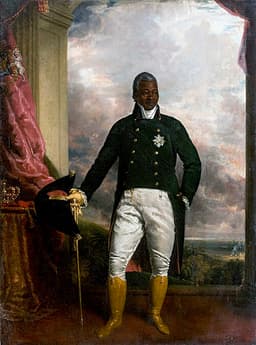
Henri Christophe
Emperor · Modern
59.2Total
Basic Information
Born
1655
1767
Died
1697
1820
Era
Modern
Modern
Nationality
Sweden
Haiti
Occupation
Emperor
Emperor
Civilization
Western
Other
Score Comparison
Military (10%)
55.0
72.5
Political (20%)
70.3
59.3
Influence (20%)
55.7
58.3
Legacy (20%)
49.2
56.0
Leadership (15%)
78.0
53.2
Strategy (15%)
50.0
65.4
TOTAL
59.0
59.2
Charles XI of Sweden — Complete Timeline
1675 AD
Scanian WarWar◆ Major
Charles XI led Sweden in the Scanian War against Denmark-Norway and Brandenburg. The war included the Swedish victory at the Battle of Lund in 1676, the bloodiest battle in Scandinavian history. The war ended with the Treaty of Lund in 1679, which restored the status quo but confirmed Sweden's dominance in the Baltic.
SwedenDenmarkScanian WarBattle of Lund
Impact: regional
1680 AD
Reduction of the nobilityReform◆ Major
Charles XI implemented the Great Reduction, a policy of reclaiming crown lands and estates that had been granted to the nobility. This drastically reduced the economic and political power of the aristocracy, strengthened the royal treasury, and laid the foundation for absolute monarchy in Sweden.
SwedenAbsolutismNobilityLand Reform
Impact: nationalconstructive
1682 AD
Reorganization of the Swedish armyReform◆ Major
Charles XI introduced the allotment system (indelningsverket), a permanent military organization where each province was responsible for equipping and supporting a regiment. This created a well-trained, national standing army that was self-sustaining in peacetime and became the backbone of Sweden's military power in the Great Northern War.
SwedenMilitary ReformArmy
Impact: nationalconstructive
1693 AD
Declaration of absolute monarchyPolitical Action
The Riksdag of the Estates formally declared Charles XI an absolute monarch, stating that the king was responsible to God alone for his actions. This legalized the de facto absolute power he had already established, making Sweden one of the most centralized absolute monarchies in Europe.
SwedenAbsolutismConstitution
Impact: national
Henri Christophe — Complete Timeline
1805 AD
Construction of the Citadelle LaferrièreCultural◆ Major
Christophe ordered the construction of the Citadelle Laferri
FortressArchitectureIndependence
Impact: nationalconstructive
1811 AD
Proclaimed King of HaitiPolitical Action◆ Major
Henri Christophe proclaimed himself King Henri I of Haiti, establishing a constitutional monarchy in the northern part of the country. He created a nobility and implemented a feudal system of labor.
MonarchyHaitiConstitution
Impact: national
1820 AD
Suicide by GunshotOther◆ Major
Facing a rebellion and paralysis from a stroke, Henri Christophe shot himself with a silver bullet. His death ended the Kingdom of Haiti, and the country was reunified under Jean-Pierre Boyer.
SuicideRebellionEnd of Kingdom
Impact: nationaltragic
This comparison has not been analyzed yet.
One-time AI generation (~1 minute). Scores and timeline are already available below.
Rankings
🥇
Henri ChristopheLeader
Mil: 72.5Pol: 59.3Inf: 58.3
59.2
🥈
Charles XI of Sweden
Mil: 55.0Pol: 70.3Inf: 55.7
59.0
+0.2 behind
How This Comparison Works
Algorithm
Each figure is scored on 6 dimensions (0—100 scale) based on structured historical data: Military (10%), Political (20%), Influence (20%), Legacy (20%), Leadership (15%), Strategy (15%). The weighted total produces the final ranking.
Data Sources
Scores are computed from structured sub-indicators in the database. Scale factors adjust for era (Ancient ×0.85, Modern ×1.0) and civilization size (Eastern ×1.05, Other ×0.80) to account for differences in population and military scale.
Maximum 3 Figures
Comparisons are limited to 2—3 figures to ensure readability and statistical meaningfulness.
Error Margins
±5 points per dimension — Sub-scores are derived from historical records with inherent uncertainty. Two figures within 5 points on a dimension should be considered roughly equivalent in that area.
Total Score Accuracy
±3 points overall — The weighted combination of 6 dimensions produces a total score with approximately ±3 points of uncertainty. Differences of less than 3 points are not statistically significant— the figures are effectively tied.
Known Limitations
- Historical records are incomplete and uneven across civilizations
- Figures from oral-tradition societies may be underrepresented
- Occupation labels can misclassify multi-role figures
- Scores measure capability and impact, not moral character
- Quantitative scoring is a comparison tool, not absolute truth
Capability Radar
Military (10%) — Battles & Warfare
Battles
45
65
Win Rate
60
60
Expansion
40
55
Political (20%) — Governance & Reform
Reform
85
75
Diplomacy
60
50
Economy
80
70
Influence (20%) — Cultural & Global Reach
Cultural
40
65
Global
35
55
Legacy (20%) — Historical Impact
Historical
55
70
Longevity
50
60
Leadership (15%) — Power & Stability
Tenure
70
60
Stability
75
40
Strategy (15%) — Tactics & Innovation
Strategy
55
75
Tactics
50
70
Reform
75
80
Similar Comparisons
Comments & Discussion
No comments yet. Be the first to share your thoughts!