Loading...
Charles XII of Sweden vs Julius Caesar
Julius Caesar leads by 26.2 pts · 2 figures compared
…
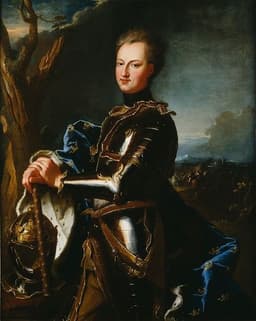
Charles XII of Sweden
General · Modern
56.6Total

Julius Caesar
General · Ancient
82.8Total
Basic Information
Born
1682
-100
Died
1718
-44
Era
Modern
Ancient
Nationality
Sweden
Roman Republic
Occupation
General
General
Civilization
Western
Western
Score Comparison
Military (10%)
78.0
88.0
Political (20%)
39.4
78.0
Influence (20%)
56.7
85.0
Legacy (20%)
52.0
82.0
Leadership (15%)
68.0
80.0
Strategy (15%)
55.0
85.0
TOTAL
56.6
82.8
Charles XII of Sweden — Complete Timeline
1700 AD
Battle of NarvaWar◆ Major
Charles XII led a Swedish army of 8,000 to defeat a Russian force of 37,000 besieging Narva. The victory established his reputation as a military prodigy and temporarily halted Russian expansion in the Baltic.
Great Northern WarBattleSwedish Empire
Impact: regional
1706 AD
Invasion of SaxonyWar◆ Major
Charles XII invaded Saxony and forced Elector Augustus II to renounce his claim to the Polish throne through the Treaty of Altranst
Great Northern WarPolandSaxony
Impact: regional
1709 AD
Battle of PoltavaWar
Charles XII's Swedish army was decisively defeated by Peter the Great's Russian forces at Poltava. Charles fled to the Ottoman Empire, and the battle marked the end of Sweden's status as a great power and the rise of Russia.
Great Northern WarBattleSwedish Decline
Impact: globaldestructive
1718 AD
Siege of FredrikstenWar◆ Major
Charles XII was killed by a bullet to the head while besieging the Norwegian fortress of Fredriksten. His death ended the Great Northern War and led to the collapse of the Swedish Empire, with territories ceded to Russia.
DeathSiegeNorway
Impact: regionaltragic
Julius Caesar — Complete Timeline
58 BC
Gallic WarsWar◆ Major
Caesar, as proconsul of Gaul, launched a series of campaigns that conquered all of Gaul (modern France, Belgium, and parts of Switzerland). He fought numerous battles, including against the Helvetii, the Belgae, and the Gallic chieftain Vercingetorix. The wars brought immense wealth and a loyal army to Caesar.
Gallic WarsConquestRoman Expansion
Impact: regional
49 BC
Crossing the RubiconPolitical Action◆ Major
Caesar led Legio XIII across the Rubicon River into Italy, defying the Roman Senate's order to disband his army. This act triggered a civil war against Pompey and the Optimates, ultimately leading to Caesar's dictatorship and the end of the Roman Republic.
Roman Civil WarEnd of RepublicPower Struggle
Impact: global
48 BC
Battle of PharsalusWar◆ Major
Caesar's outnumbered army defeated the larger forces of Pompey the Great at Pharsalus in Greece. Caesar's tactical use of a reserve line to counter Pompey's cavalry charge proved decisive. Pompey fled to Egypt, where he was assassinated, leaving Caesar as the undisputed master of the Roman world.
Roman Civil WarBattleDecisive Victory
Impact: regional
44 BC
Appointment as Dictator for LifePolitical Action◆ Major
The Roman Senate appointed Caesar dictator perpetuo (dictator for life), granting him unprecedented personal power. This move concentrated military, legislative, and judicial authority in one person, effectively ending the Roman Republic's traditional system of checks and balances and alarming many senators.
DictatorshipEnd of RepublicPower Consolidation
Impact: regionaldestructive
Assassination on the Ides of MarchPolitical Action◆ Major
A group of Roman senators, led by Marcus Junius Brutus and Gaius Cassius Longinus, stabbed Caesar to death at a meeting of the Senate in the Theatre of Pompey. The assassination was intended to restore the Republic, but instead triggered another civil war that led to the rise of the Roman Empire.
AssassinationRoman PoliticsEnd of Republic
Impact: globaldestructive
Expert Analysis
charles-xii-of-sweden-vs-julius-caesar
# The Conqueror's Gambit: Caesar and Charles XII
On a January morning in 49 BCE, Julius Caesar stood at the banks of the Rubicon River, a small stream separating his province of Gaul from Italy proper. He paused, weighing the fate of the Roman Republic. "The die is cast," he reportedly declared, and led his legion across. Nearly 1,750 years later, in the winter of 1700, an eighteen-year-old king named Charles XII of Sweden galloped through a blizzard at Narva, leading 8,000 men against a Russian army of 37,000. Both men were military prodigies who gambled everything on audacity. But where Caesar died by the dagger of betrayal, Charles perished by a bullet to the skull. Why did one conqueror build an empire while the other built a legend?
Origins
Caesar was born into the patrician Julian clan in 100 BCE, a family of ancient prestige but modest wealth in a Republic already cracking under the weight of its own ambition. His uncle by marriage was Gaius Marius, the populist general who had reformed the Roman army. Caesar grew up amidst civil wars, learning that power flowed not from law but from legions. He was captured by pirates as a young man, laughed at their ransom demand, and later crucified them—a preview of the ruthless calculation that would define him.
Charles XII was born in 1682 into the Swedish Empire, a northern power that had risen meteorically under his grandfather, Gustavus Adolphus. He was educated as a Renaissance prince, fluent in multiple languages and trained in philosophy, but his true classroom was the battlefield. When his father died in 1697, Charles inherited a throne surrounded by enemies—Russia, Denmark, and Saxony-Poland, all eager to dismantle Swedish dominance. He was fifteen years old, and his first act was to refuse a coronation oath, signaling that he alone would rule.
Rise to Power
Caesar's path was a long, deliberate climb through the Republic's ladder: military tribune, quaestor, aedile, pontifex maximus, praetor, and finally governor of Gaul. Each step was a calculated wager. He borrowed fortunes to fund spectacles for the Roman mob, outmaneuvered rivals like Cato and Cicero, and forged the First Triumvirate with Pompey and Crassus. His conquest of Gaul from 58 to 50 BCE was not just a war—it was a machine for generating wealth, fame, and a loyal army. When the Senate ordered him to disband his legions, he refused, and the Rubicon crossing turned a political crisis into a civil war.
Charles's rise was instant and violent. At eighteen, he faced a triple invasion of his kingdom. He struck first at Denmark, landing a force near Copenhagen and forcing the Danish king to sue for peace within weeks. Then, in November 1700, he marched east to Narva, where the Russian army under Peter the Great had besieged a Swedish fortress. In a driving snowstorm, Charles led a bayonet charge that shattered the Russian lines. The victory was so complete that Peter fled the field. Charles had crushed his enemies with a single campaign—but he had also learned a dangerous lesson: that audacity alone could defeat any odds.
Leadership & Governance
Caesar governed as a master of human nature. He granted citizenship to Gauls, reformed the calendar, stabilized the economy, and pardoned his enemies—until they plotted again. His military genius lay in speed and logistics. He once wrote, "I came, I saw, I conquered," and he meant it. At the Battle of Alesia in 52 BCE, he built a double ring of fortifications to besiege a Gallic army while simultaneously defending against a relief force. It was a feat of engineering and nerve that still stuns military historians. But Caesar also understood that war was a means to political ends. He used his victories to secure power, not just glory.
Charles XII was the opposite: a soldier first, a king second. He slept on the ground with his men, ate their rations, and led charges personally. After Narva, he invaded Saxony and forced Augustus II to renounce the Polish throne in 1706, but he refused to negotiate a lasting peace. He saw war not as policy but as destiny. His strategy was relentless offense, but he never built alliances or secured his gains. When he invaded Russia in 1708, he ignored Peter's scorched-earth tactics and marched deeper into the frozen wilderness. The result was Poltava in 1709, where his exhausted, outnumbered army was crushed. Charles fled to the Ottoman Empire, where he spent five years as a king without a kingdom.
Triumph & Tragedy
Caesar's greatest triumph was his dictatorship. He reformed Rome's debt laws, resettled veterans, and planned public works that would outlast him. But his tragedy was the Ides of March in 44 BCE, when a conspiracy of senators—many of them men he had pardoned—stabbed him to death. His last words, according to tradition, were "Et tu, Brute?" The tragedy was not his death but the civil wars that followed, which ended the Republic he had tried to reshape.
Charles's triumph was pure martial glory. At Narva, he achieved a victory ratio—eight thousand against thirty-seven thousand—that seemed almost mythical. His tragedy was that he never knew when to stop. He died in 1718 at the Siege of Fredriksten, struck by a bullet while inspecting trenches. The shot may have come from an enemy musket or an assassin's pistol, but the result was the same: Sweden's empire collapsed, and Charles became a cautionary tale about brilliance without balance.
Character & Destiny
Caesar was a pragmatist who knew that power required patience. He could be ruthless—he ordered the massacre of 400,000 Gauls at Avaricum—but he also understood mercy as a tool. His affair with Cleopatra was as much about Egyptian grain as love. He believed in his own star, but he also believed in winning.
Charles was a zealot. He refused to drink alcohol, never married, and saw himself as God's warrior. He once said, "I have resolved never to start an unjust war, but never to end a just one except by defeating my enemies." That inflexibility made him a legend and a failure. He could not compromise, and so he lost everything.
Legacy
Caesar's legacy is the Roman Empire. His name became a title—Kaiser, Tsar—and his writings, like *The Gallic Wars*, shaped military strategy for two millennia. He transformed the West not just through conquest but through the idea that one man could reshape history.
Charles XII left a different mark. He became a symbol of Swedish national pride, a warrior-king who defied the odds. But his legacy is also a warning: that courage without strategy, and war without diplomacy, leads to ruin. His scores—military 79.6, political 48.1—tell the story. He was a brilliant general and a catastrophic ruler.
Conclusion
Standing at the Rubicon, Caesar knew that crossing meant civil war, and he crossed anyway. Charles, charging into the snow at Narva, knew only that the enemy was there. Both men lived by the sword, but only one understood that the sword must serve a purpose beyond itself. In the end, Caesar built an empire that lasted centuries. Charles built a monument to courage that crumbled in a generation. The difference was not talent—it was wisdom. And wisdom, as both men learned too late, is the hardest conquest of all.
Rankings
🥇
Julius CaesarLeader
Mil: 88.0Pol: 78.0Inf: 85.0
82.8
🥈
Charles XII of Sweden
Mil: 78.0Pol: 39.4Inf: 56.7
56.6
+26.2 behind
How This Comparison Works
Algorithm
Each figure is scored on 6 dimensions (0—100 scale) based on structured historical data: Military (10%), Political (20%), Influence (20%), Legacy (20%), Leadership (15%), Strategy (15%). The weighted total produces the final ranking.
Data Sources
Scores are computed from structured sub-indicators in the database. Scale factors adjust for era (Ancient ×0.85, Modern ×1.0) and civilization size (Eastern ×1.05, Other ×0.80) to account for differences in population and military scale.
Maximum 3 Figures
Comparisons are limited to 2—3 figures to ensure readability and statistical meaningfulness.
Error Margins
±5 points per dimension — Sub-scores are derived from historical records with inherent uncertainty. Two figures within 5 points on a dimension should be considered roughly equivalent in that area.
Total Score Accuracy
±3 points overall — The weighted combination of 6 dimensions produces a total score with approximately ±3 points of uncertainty. Differences of less than 3 points are not statistically significant— the figures are effectively tied.
Known Limitations
- Historical records are incomplete and uneven across civilizations
- Figures from oral-tradition societies may be underrepresented
- Occupation labels can misclassify multi-role figures
- Scores measure capability and impact, not moral character
- Quantitative scoring is a comparison tool, not absolute truth
Capability Radar
Military (10%) — Battles & Warfare
Battles
85
95
Win Rate
75
92
Expansion
65
97
Political (20%) — Governance & Reform
Reform
30
90
Diplomacy
20
85
Economy
25
82
Influence (20%) — Cultural & Global Reach
Cultural
50
88
Global
45
94
Legacy (20%) — Historical Impact
Historical
65
95
Longevity
55
96
Leadership (15%) — Power & Stability
Tenure
60
75
Stability
15
60
Strategy (15%) — Tactics & Innovation
Strategy
70
94
Tactics
90
96
Reform
40
88
Similar Comparisons
Comments & Discussion
RUBICON ROULETTE6/17/2026
Caesar's gamble at the Rubicon was calculated rebellion with a political safety net—he knew his legions loved him more than Pompey's did. Charles at Narva? Pure teenage suicide. He attacked 4.6-to-1 odds in a blizzard with exhausted troops. Caesar would have waited for spring reinforcements or bribed Russian officers. Charles didn't know when to fold; Caesar never held a bad hand unless he could bluff through.
维京狂王6/17/2026
拿凯撒比查理十二?简直侮辱凯撒的战略智商。纳尔瓦战役根本是俄国人自己犯蠢——沙皇跑了,军队没统一指挥,德国军官在关键时刻叛变。查理十二碰上了史上最菜的俄军,然后吹了一辈子。反观凯撒在高卢打了八年硬仗,击败过维钦托利这种真天才。查理十二连彼得大帝都打不过,最后死在挪威一个无名碉堡的流弹下。
DATA DEVIL6/17/2026
Let's talk logistics: Caesar's army in Gaul averaged 50,000 men with supply lines stretching 500 miles. Charles invaded Russia with 44,000—and lost 35,000 to starvation before Poltava. That's a 79% attrition rate from logistics alone. Caesar fed his men across the Alps through winter; Charles burned Ukrainian farmland for spite. One understood war is 90% accounting; the other thought it was 100% testosterone.
历史裁判员6/17/2026
两人最关键的差异是政治手腕。凯撒知道什么时候当独裁官,什么时候穿平民托加袍,甚至给刺杀他的布鲁图斯留了遗产。查理十二呢?流亡土耳其五年,拒绝回国谈判,硬把瑞典从帝国拖成二流国家。一个死在元老院后留下帝国,一个死在战壕后留下破产账单。谁更会打仗?但战争从来不只是打仗。
WIDTH MATTERS6/17/2026
Caesar's crossing-the-Rubicon story is a propaganda gem. He violated the Republic's sacred law, then blamed it on fate. Charles XII at Narva? He literally charged into a blizzard screaming "God is with us!" while outnumbered 4:1. Caesar shaped his own myth; Charles let the snow do the storytelling. One died surrounded by senators he'd outmaneuvered for decades; the other died by a random bullet in a trench he probably shouldn't have been in.