Loading...
Charles XIII of Sweden vs Reza Shah Pahlavi
Reza Shah Pahlavi leads by 22.1 pts · 2 figures compared
…

Charles XIII of Sweden
Emperor · Modern
41.5Total
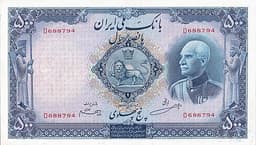
Reza Shah Pahlavi
Emperor · Modern
63.6Total
Basic Information
Born
1748
1878
Died
1818
1944
Era
Modern
Modern
Nationality
Sweden
Iran
Occupation
Emperor
Emperor
Civilization
Western
Middle Eastern
Score Comparison
Military (10%)
21.2
50.0
Political (20%)
37.9
72.0
Influence (20%)
47.1
72.0
Legacy (20%)
36.7
52.0
Leadership (15%)
55.3
72.0
Strategy (15%)
45.0
60.0
TOTAL
41.5
63.6
Charles XIII of Sweden — Complete Timeline
1809 AD
Loss of Finland to RussiaWar
Charles XIII, as regent and later king, oversaw the conclusion of the Finnish War against Russia. The Treaty of Fredrikshamn ceded Finland to Russia, ending centuries of Swedish rule over the region.
Finnish WarTerritorial LossRussia
Impact: regionaldestructive
Coronation of Charles XIIIPolitical Action◆ Major
Charles XIII was crowned King of Sweden after the deposition of Gustav IV Adolf. His coronation followed the adoption of the 1809 constitution, which established a balance of power between the king and the Riksdag.
CoronationConstitutionSuccession
Impact: national
1810 AD
Adoption of Jean-Baptiste Bernadotte as Crown PrincePolitical Action
Charles XIII, having no legitimate heirs, adopted the French Marshal Jean-Baptiste Bernadotte as his successor. Bernadotte became Crown Prince Charles John and effectively ruled Sweden, founding the Bernadotte dynasty.
SuccessionBernadotteDynasty
Impact: nationalconstructive
1814 AD
Union with NorwayPolitical Action◆ Major
Charles XIII, under the influence of Crown Prince Charles John, accepted the Treaty of Kiel and the Convention of Moss, which forced Norway into a personal union with Sweden. Charles XIII became King of Norway as Charles II.
UnionNorwayTreaty of Kiel
Impact: regionalconstructive
1818 AD
Death of Charles XIIIOther
Charles XIII died in Stockholm at age 69. His death ended the Holstein-Gottorp dynasty's rule in Sweden, as he was succeeded by his adopted son, Charles XIV John (Bernadotte).
DeathSuccession
Impact: national
Reza Shah Pahlavi — Complete Timeline
1921 AD
1921 Persian coup d'étatPolitical Action◆ Major
Reza Khan, a Cossack Brigade officer, led a coup that overthrew the Qajar government. He became Minister of War and later Prime Minister, using the military to consolidate power and suppress regional rebellions.
CoupQajarMilitary
Impact: national
1926 AD
Coronation as Reza Shah PahlaviPolitical Action◆ Major
Reza Khan crowned himself Reza Shah Pahlavi, founding the Pahlavi dynasty. He replaced the Qajar dynasty and began a program of rapid modernization, centralization, and secularization of Iran.
CoronationDynastyModernization
Impact: national
1938 AD
Trans-Iranian Railway completionOther◆ Major
Reza Shah oversaw the completion of the Trans-Iranian Railway, connecting the Caspian Sea to the Persian Gulf. The project was a major infrastructure achievement, facilitating trade and military transport, but was built with forced labor.
InfrastructureModernizationRailway
Impact: nationalconstructive
1941 AD
Forced abdication by Allied powersPolitical Action
Britain and the Soviet Union invaded Iran to secure oil fields and supply routes. Reza Shah refused to expel German nationals, leading to his forced abdication in favor of his son Mohammad Reza Pahlavi. He was exiled to South Africa.
World War IIInvasionExile
Impact: nationaltragic
Expert Analysis
Origins
Charles XIII of Sweden was born in 1748 into the Holstein-Gottorp dynasty. His father was King Adolf Frederick, and his mother was Louisa Ulrika of Prussia. Charles received a military education but was overshadowed by his older brother, King Gustav III. He served as regent during Gustav's absences and later during the minority of Gustav IV Adolf. His early life was marked by court intrigue and limited executive responsibility.
Reza Shah Pahlavi was born in 1878 in Alasht, Mazandaran, Iran, into a modest military family. His father, Abbas Ali Khan, was a military officer. Orphaned early, Reza joined the Persian Cossack Brigade at age 16, rising through the ranks. His formative experiences were shaped by Iran's weakness under the Qajar dynasty, foreign intervention, and the need for national revival.
Rise to Power
Charles XIII's rise was indirect. After the assassination of Gustav III in 1792, Charles became regent for his nephew Gustav IV Adolf. However, the regency was largely controlled by the noble faction led by Gustaf Adolf Reuterholm. Charles ascended the throne in 1809 after the deposition of Gustav IV Adolf following the disastrous Finnish War. The 1809 constitution limited his powers. His adoption of French Marshal Jean-Baptiste Bernadotte as crown prince in 1810 was a turning point, effectively transferring real power to Bernadotte.
Reza Shah's rise was swift and forceful. In 1921, he led the Persian Cossack Brigade in a coup d'état that toppled the Qajar government. He became Minister of War and later Prime Minister, consolidating power by suppressing rebellions and centralizing authority. In 1925, he crowned himself Reza Shah Pahlavi, founding a new dynasty. His military background scored 50.0, reflecting his ability to seize power through force.
Leadership & Governance
Charles XIII's leadership score of 55.3 reflects his role as a constitutional figurehead. He presided over the adoption of the 1809 constitution, which established a separation of powers but left real authority with the Riksdag and the crown prince. His governance was passive; he allowed Bernadotte to direct foreign policy, resulting in the union with Norway in 1814. Domestically, he initiated the construction of the Göta Canal to stimulate trade, but his reign was marked by economic stagnation.
Reza Shah's leadership score of 72.0 indicates a strong, authoritarian modernizer. He implemented sweeping reforms: secularized the legal system, established a modern education system, built the Trans-Iranian Railway (completed in 1938), and promoted industrialization. He forced women to unveil and replaced Islamic dress with Western attire. His rule was autocratic, suppressing dissent and tribal autonomy. His political score of 72.0 reflects his ability to centralize power.
Triumph & Tragedy
Charles XIII's greatest success was the peaceful union with Norway in 1814, achieved through diplomacy rather than war. He also oversaw the adoption of a modern constitution. However, his greatest failure was the loss of Finland to Russia in 1809, a national humiliation that ended Sweden's status as a great power. The Treaty of Fredrikshamn ceded Finland, reducing Sweden's territory by a third.
Reza Shah's triumphs include modernizing Iran's infrastructure, founding the Trans-Iranian Railway, and establishing the Pahlavi dynasty. He also reduced foreign influence, particularly British and Russian. However, his forced abdication in 1941 after the Anglo-Soviet invasion was a tragic end. His refusal to expel German nationals led to the invasion, and he was exiled to South Africa. His authoritarian methods alienated many Iranians, sowing seeds for future unrest.
Character & Destiny
Charles XIII was described as indecisive and easily influenced. His character led him to cede power to stronger personalities like Bernadotte. This passivity preserved his throne but limited his impact. His destiny was to be a transitional figure between dynasties.
Reza Shah was decisive, ambitious, and ruthless. His character drove him to modernize Iran rapidly, but his authoritarianism and disregard for democratic norms led to his downfall. He scored 72.0 in leadership but only 52.0 in legacy, indicating that his methods undermined long-term stability.
Legacy
Charles XIII's legacy is modest. He is remembered primarily as the last Holstein-Gottorp king and the adopter of the Bernadotte dynasty, which still rules Sweden. The 1809 constitution influenced Swedish governance until 1974. His influence score of 47.1 reflects limited enduring impact.
Reza Shah's legacy is more substantial but contested. His modernization efforts laid the foundation for modern Iran, but his authoritarianism and the Pahlavi dynasty's eventual overthrow in 1979 overshadow his achievements. The Trans-Iranian Railway remains a vital transport link. His legacy score of 52.0 reflects this mixed record.
Conclusion
Reza Shah Pahlavi had a greater impact on his nation's trajectory than Charles XIII of Sweden. Reza Shah's total score of 63.6 far exceeds Charles's 41.5. While Charles presided over a constitutional transition and the loss of Finland, Reza Shah fundamentally transformed Iran's infrastructure, society, and state structure. His military and political scores (50.0 and 72.0) demonstrate effective, if harsh, leadership. Charles's passive rule and reliance on others limited his legacy. Thus, Reza Shah is the more consequential figure.
Rankings
🥇
Reza Shah PahlaviLeader
Mil: 50.0Pol: 72.0Inf: 72.0
63.6
🥈
Charles XIII of Sweden
Mil: 21.2Pol: 37.9Inf: 47.1
41.5
+22.1 behind
How This Comparison Works
Algorithm
Each figure is scored on 6 dimensions (0—100 scale) based on structured historical data: Military (10%), Political (20%), Influence (20%), Legacy (20%), Leadership (15%), Strategy (15%). The weighted total produces the final ranking.
Data Sources
Scores are computed from structured sub-indicators in the database. Scale factors adjust for era (Ancient ×0.85, Modern ×1.0) and civilization size (Eastern ×1.05, Other ×0.80) to account for differences in population and military scale.
Maximum 3 Figures
Comparisons are limited to 2—3 figures to ensure readability and statistical meaningfulness.
Error Margins
±5 points per dimension — Sub-scores are derived from historical records with inherent uncertainty. Two figures within 5 points on a dimension should be considered roughly equivalent in that area.
Total Score Accuracy
±3 points overall — The weighted combination of 6 dimensions produces a total score with approximately ±3 points of uncertainty. Differences of less than 3 points are not statistically significant— the figures are effectively tied.
Known Limitations
- Historical records are incomplete and uneven across civilizations
- Figures from oral-tradition societies may be underrepresented
- Occupation labels can misclassify multi-role figures
- Scores measure capability and impact, not moral character
- Quantitative scoring is a comparison tool, not absolute truth
Capability Radar
Military (10%) — Battles & Warfare
Battles
10
20
Win Rate
10
30
Expansion
10
15
Political (20%) — Governance & Reform
Reform
20
85
Diplomacy
30
55
Economy
20
70
Influence (20%) — Cultural & Global Reach
Cultural
10
60
Global
10
55
Legacy (20%) — Historical Impact
Historical
20
65
Longevity
10
55
Leadership (15%) — Power & Stability
Tenure
30
60
Stability
20
50
Strategy (15%) — Tactics & Innovation
Strategy
10
40
Tactics
10
25
Reform
10
75
Similar Comparisons
Comments & Discussion
No comments yet. Be the first to share your thoughts!