Loading...
Franz Joseph I of Austria vs Reza Shah Pahlavi
Reza Shah Pahlavi leads by 13.3 pts · 2 figures compared
…

Franz Joseph I of Austria
Emperor · Modern
50.3Total
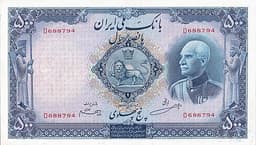
Reza Shah Pahlavi
Emperor · Modern
63.6Total
Basic Information
Born
1830
1878
Died
1916
1944
Era
Modern
Modern
Nationality
Austria
Iran
Occupation
Emperor
Emperor
Civilization
Western
Middle Eastern
Score Comparison
Military (10%)
25.9
50.0
Political (20%)
39.4
72.0
Influence (20%)
58.0
72.0
Legacy (20%)
56.0
52.0
Leadership (15%)
72.0
72.0
Strategy (15%)
25.0
60.0
TOTAL
50.3
63.6
Franz Joseph I of Austria — Complete Timeline
1867 AD
Ausgleich of 1867Political Action
Franz Joseph I agreed to the Austro-Hungarian Compromise, transforming the Austrian Empire into the dual monarchy of Austria-Hungary. Hungary gained equal status with Austria, with its own parliament and government, while Franz Joseph remained emperor and king.
CompromiseHungaryDual Monarchy
Impact: regionalconstructive
1889 AD
Death of Crown Prince RudolfOther◆ Major
Crown Prince Rudolf, Franz Joseph I's only son and heir, died in a murder-suicide at Mayerling. This personal tragedy left the succession uncertain and deeply affected Franz Joseph, who never fully recovered from the loss.
MayerlingSuccessionTragedy
Impact: nationaltragic
1908 AD
Annexation of Bosnia and HerzegovinaPolitical Action◆ Major
Franz Joseph I formally annexed Bosnia and Herzegovina, which had been under Austro-Hungarian administration since 1878. This action violated the Treaty of Berlin, angered Serbia and Russia, and increased tensions in the Balkans leading up to World War I.
BalkansAnnexationSerbia
Impact: regionaldestructive
1914 AD
Assassination of Archduke Franz FerdinandOther
Archduke Franz Ferdinand, heir to the Austro-Hungarian throne, was assassinated in Sarajevo by Gavrilo Princip, a Bosnian Serb nationalist. This event triggered the July Crisis and led to Franz Joseph I's declaration of war on Serbia, starting World War I.
World War IAssassinationJuly Crisis
Impact: globaltragic
Austro-Hungarian Ultimatum to SerbiaPolitical Action◆ Major
Franz Joseph I approved a harsh ultimatum to Serbia following the assassination of Franz Ferdinand. The ultimatum was designed to be rejected, leading to Austria-Hungary's declaration of war on Serbia on July 28, 1914, which escalated into World War I.
World War IUltimatumSerbia
Impact: globaldestructive
Reza Shah Pahlavi — Complete Timeline
1921 AD
1921 Persian coup d'étatPolitical Action◆ Major
Reza Khan, a Cossack Brigade officer, led a coup that overthrew the Qajar government. He became Minister of War and later Prime Minister, using the military to consolidate power and suppress regional rebellions.
CoupQajarMilitary
Impact: national
1926 AD
Coronation as Reza Shah PahlaviPolitical Action◆ Major
Reza Khan crowned himself Reza Shah Pahlavi, founding the Pahlavi dynasty. He replaced the Qajar dynasty and began a program of rapid modernization, centralization, and secularization of Iran.
CoronationDynastyModernization
Impact: national
1938 AD
Trans-Iranian Railway completionOther◆ Major
Reza Shah oversaw the completion of the Trans-Iranian Railway, connecting the Caspian Sea to the Persian Gulf. The project was a major infrastructure achievement, facilitating trade and military transport, but was built with forced labor.
InfrastructureModernizationRailway
Impact: nationalconstructive
1941 AD
Forced abdication by Allied powersPolitical Action
Britain and the Soviet Union invaded Iran to secure oil fields and supply routes. Reza Shah refused to expel German nationals, leading to his forced abdication in favor of his son Mohammad Reza Pahlavi. He was exiled to South Africa.
World War IIInvasionExile
Impact: nationaltragic
Expert Analysis
Origins
Franz Joseph I of Austria was born on August 18, 1830, into the Habsburg dynasty, one of Europe's most powerful royal families. He was the eldest son of Archduke Franz Karl and Princess Sophie of Bavaria. His upbringing was strictly conservative, emphasizing duty, hierarchy, and Catholic piety. He received military training and a broad education but was shielded from liberal ideas. In 1848, at age 18, he ascended the throne during the Revolutions of 1848, which shook the Austrian Empire.
Reza Shah Pahlavi was born on March 15, 1878, in Alasht, Iran, into a modest military family. His father, Abbas Ali Khan, was a military officer who died when Reza was young. He joined the Persian Cossack Brigade at age 16, rising through the ranks. His formative experiences were shaped by Iran's weakness under the Qajar dynasty, including foreign domination by Russia and Britain. He was self-educated, pragmatic, and deeply nationalistic.
Rise to Power
Franz Joseph became Emperor of Austria in December 1848 after his uncle Emperor Ferdinand I abdicated during the revolutions. With the help of Prime Minister Felix zu Schwarzenberg and the army, he crushed the Hungarian revolt in 1849 with Russian assistance. He restored absolutist rule, rejecting constitutional reforms. His early reign was marked by military defeats: the loss of Lombardy in 1859 and the Austro-Prussian War in 1866, which excluded Austria from German affairs. These setbacks forced him to compromise with Hungary in the Ausgleich of 1867, creating the dual monarchy of Austria-Hungary.
Reza Shah rose to power through the 1921 Persian coup d'état, where he, as a Cossack Brigade officer, marched on Tehran and seized control. He became Minister of War and then Prime Minister in 1923. In 1925, he engineered the deposition of the Qajar dynasty and crowned himself Reza Shah Pahlavi. His rise was swift, leveraging military force and popular desire for order and modernization. He crushed tribal revolts and centralized authority, eliminating rivals.
Leadership & Governance
Franz Joseph's leadership style was bureaucratic and rigid. He personally oversaw government affairs, relying on a network of officials and military officers. He was known for his sense of duty but lacked strategic vision. His governance was conservative, resisting political reforms. The Ausgleich of 1867 granted Hungary near-equal status, creating a complex dual system that often paralyzed decision-making. He opposed universal suffrage and nationalism, leading to ethnic tensions. His military decisions were often reactive; for instance, he approved the ultimatum to Serbia in 1914, triggering World War I, with a score of 25.0 in strategy.
Reza Shah was an authoritarian modernizer. He implemented sweeping reforms: secularizing the legal system, establishing a modern education system, and building infrastructure like the Trans-Iranian Railway (completed in 1938). He forced Western dress, banned the veil, and promoted Persian nationalism. His leadership was centralized and dictatorial, suppressing dissent through a secret police. He scored 72.0 in political and leadership categories. However, his land reforms were limited, and his focus on rapid modernization alienated traditionalists and the clergy.
Triumph & Tragedy
Franz Joseph's greatest triumph was maintaining the Habsburg Empire for 68 years despite numerous crises. The Ausgleich of 1867 stabilized relations with Hungary, allowing the empire to survive until 1918. His personal dedication was admired, but his greatest failure was the assassination of his heir Archduke Franz Ferdinand in 1914, which he handled poorly, leading to World War I. The war destroyed his empire, and he died in 1916 before the collapse. He also faced personal tragedies: the execution of his brother Maximilian in Mexico, the suicide of his son Crown Prince Rudolf at Mayerling in 1889, and the assassination of his wife Empress Elisabeth in 1898.
Reza Shah's triumphs include unifying Iran, ending foreign domination, and modernizing infrastructure. The Trans-Iranian Railway connected the Caspian Sea to the Persian Gulf, boosting trade and military mobility. He reduced British and Russian influence, but his greatest failure was his forced abdication in 1941 after the Anglo-Soviet invasion. His refusal to expel German nationals led to the occupation, and he was exiled to South Africa, where he died in 1944. His modernization efforts were interrupted, and his authoritarianism created opposition that resurfaced later.
Character & Destiny
Franz Joseph was stoic, disciplined, and conservative. He believed in divine right and duty, often prioritizing protocol over innovation. His character—resistant to change and slow to adapt—contributed to the empire's stagnation. Historians note his inability to grasp nationalist forces, scoring 58.0 in influence. His destiny was to preside over a declining empire, his personal tragedies mirroring the empire's fate.
Reza Shah was ambitious, pragmatic, and ruthless. His military background shaped his decisive, authoritarian approach. He was determined to modernize Iran at any cost, which brought progress but also alienation. His character—impatient with opposition and suspicious of foreign powers—led to his downfall when he misjudged the geopolitical situation in World War II. He scored 60.0 in strategy, but his legacy as a modernizer endured.
Legacy
Franz Joseph's legacy is tied to the end of the Habsburg Empire. His long reign is remembered for stability but also for missed opportunities. The dual monarchy's collapse after World War I led to the creation of independent nation-states. His name is associated with an era that vanished. He scored 56.0 in legacy, with limited enduring influence beyond historical memory.
Reza Shah's legacy is more tangible. The Pahlavi dynasty he founded lasted until 1979, and his modernization efforts laid the groundwork for modern Iran. The Trans-Iranian Railway remains a vital artery. His secular reforms and infrastructure projects had lasting impact, but his authoritarianism also contributed to the 1979 revolution. He scored 52.0 in legacy, slightly lower than Franz Joseph, but his influence on Iran's development was profound.
Conclusion
Reza Shah Pahlavi had a greater impact than Franz Joseph I of Austria. Despite ruling for only 16 years compared to Franz Joseph's 68, Reza Shah transformed Iran from a weak, feudal state into a modernizing nation. His total score of 63.6 exceeds Franz Joseph's 50.3 by 13.3 points, with higher marks in political (72.0 vs 39.4), influence (72.0 vs 58.0), and strategy (60.0 vs 25.0). Franz Joseph's long reign was marked by decline and stagnation, while Reza Shah's energetic reforms reshaped a country. The data supports that Reza Shah's leadership was more effective and his legacy more enduring.
Rankings
🥇
Reza Shah PahlaviLeader
Mil: 50.0Pol: 72.0Inf: 72.0
63.6
🥈
Franz Joseph I of Austria
Mil: 25.9Pol: 39.4Inf: 58.0
50.3
+13.3 behind
How This Comparison Works
Algorithm
Each figure is scored on 6 dimensions (0—100 scale) based on structured historical data: Military (10%), Political (20%), Influence (20%), Legacy (20%), Leadership (15%), Strategy (15%). The weighted total produces the final ranking.
Data Sources
Scores are computed from structured sub-indicators in the database. Scale factors adjust for era (Ancient ×0.85, Modern ×1.0) and civilization size (Eastern ×1.05, Other ×0.80) to account for differences in population and military scale.
Maximum 3 Figures
Comparisons are limited to 2—3 figures to ensure readability and statistical meaningfulness.
Error Margins
±5 points per dimension — Sub-scores are derived from historical records with inherent uncertainty. Two figures within 5 points on a dimension should be considered roughly equivalent in that area.
Total Score Accuracy
±3 points overall — The weighted combination of 6 dimensions produces a total score with approximately ±3 points of uncertainty. Differences of less than 3 points are not statistically significant— the figures are effectively tied.
Known Limitations
- Historical records are incomplete and uneven across civilizations
- Figures from oral-tradition societies may be underrepresented
- Occupation labels can misclassify multi-role figures
- Scores measure capability and impact, not moral character
- Quantitative scoring is a comparison tool, not absolute truth
Capability Radar
Military (10%) — Battles & Warfare
Battles
20
20
Win Rate
15
30
Expansion
5
15
Political (20%) — Governance & Reform
Reform
20
85
Diplomacy
30
55
Economy
25
70
Influence (20%) — Cultural & Global Reach
Cultural
40
60
Global
50
55
Legacy (20%) — Historical Impact
Historical
60
65
Longevity
70
55
Leadership (15%) — Power & Stability
Tenure
95
60
Stability
30
50
Strategy (15%) — Tactics & Innovation
Strategy
15
40
Tactics
10
25
Reform
25
75
Similar Comparisons
Comments & Discussion
No comments yet. Be the first to share your thoughts!