Loading...
Chen Cheng vs Walter Model
Chen Cheng leads by 1.2 pts · 2 figures compared
…

Chen Cheng
General · Modern
54.2Total
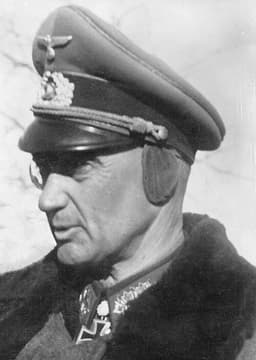
Walter Model
General · Modern
53.0Total
Basic Information
Born
1897
1891
Died
1965
1945
Era
Modern
Modern
Nationality
China
Germany
Occupation
General
General
Civilization
Eastern
Western
Score Comparison
Military (10%)
20.0
78.0
Political (20%)
68.0
27.9
Influence (20%)
54.9
58.0
Legacy (20%)
48.3
54.0
Leadership (15%)
68.0
36.9
Strategy (15%)
60.0
75.0
TOTAL
54.2
53.0
Chen Cheng — Complete Timeline
1933 AD
Led the Encirclement Campaigns against the CommunistsWar◆ Major
Chen Cheng commanded Nationalist forces in the Fifth Encirclement Campaign against the Chinese Communist Party's Jiangxi Soviet. His tactics, including blockhouses and economic blockade, forced the Communists to begin the Long March.
Chinese Civil WarEncirclement Campaign
Impact: nationaldestructive
1938 AD
Commander of the Battle of WuhanWar◆ Major
Chen Cheng commanded Chinese forces during the Battle of Wuhan, a major defensive campaign against the Japanese advance. Although Wuhan fell, the battle inflicted heavy casualties on Japanese forces and delayed their advance.
Second Sino-Japanese WarDefense
Impact: regional
1950 AD
Premier of the Republic of ChinaPolitical Action◆ Major
Chen Cheng was appointed Premier of the Republic of China (Taiwan) by President Chiang Kai-shek. He oversaw the government's relocation to Taiwan and implemented land reform and economic policies that stabilized the island.
GovernmentTaiwanReform
Impact: nationalconstructive
1954 AD
Vice President of the Republic of ChinaPolitical Action◆ Major
Chen Cheng was elected Vice President of the Republic of China, serving under President Chiang Kai-shek. He held this position until his death in 1965, playing a key role in Taiwan's governance and anti-communist policies.
GovernmentTaiwan
Impact: national
Walter Model — Complete Timeline
1941 AD
Commanded 9th Army in Operation BarbarossaWar◆ Major
Model commanded the 3rd Panzer Division and later the 9th Army during the invasion of the Soviet Union. He participated in the encirclement battles at Bialystok and Minsk, and later in the advance on Moscow. His aggressive tactics earned him a reputation as a defensive specialist.
World War IIOperation BarbarossaEastern Front
Impact: regionaldestructive
1942 AD
Defensive Victory at the Rzhev SalientWar◆ Major
Model commanded the 9th Army in the Rzhev salient, where he conducted a successful defensive battle against Soviet offensives. He used counterattacks and elastic defense to inflict heavy casualties on the Red Army, stabilizing the German line despite being outnumbered.
World War IIEastern FrontRzhev
Impact: regionaldestructive
1944 AD
Commanded Army Group B in Normandy and the Ruhr PocketWar
Model was transferred to the Western Front to command Army Group B after the Allied invasion of Normandy. He failed to stop the Allied breakout and was later encircled in the Ruhr Pocket in April 1945. Facing capture, he shot himself on April 21, 1945.
World War IIWestern FrontRuhr PocketSuicide
Impact: globaltragic
Appointed Commander of Army Group NorthPolitical Action◆ Major
Model was appointed commander of Army Group North in January 1944 after the Soviet Leningrad-Novgorod Offensive. He stabilized the front and prevented a complete collapse, earning Hitler's trust as a 'fireman' who could salvage desperate situations.
World War IIEastern FrontArmy Group North
Impact: regional
Expert Analysis
Origins
Chen Cheng was born on January 4, 1897, in Qingtian, Zhejiang Province, China, into a modest farming family. He entered the Baoding Military Academy in 1918, graduating in 1922. His early career was shaped by his loyalty to Chiang Kai-shek, whom he met during the Northern Expedition. Chen's background was firmly rooted in the Nationalist (KMT) military establishment, with no significant foreign education.
Walter Model was born on January 24, 1891, in Genthin, Prussia, to a middle-class family. He attended the Prussian Cadet Corps and was commissioned in 1910. Model served in World War I, earning the Iron Cross. He was a product of the Prussian military tradition, known for his aggressive tactics and later for his fanatical loyalty to Hitler. His early career was unremarkable until the rise of the Nazi regime.
Rise to Power
Chen Cheng rose rapidly through the KMT ranks due to his association with Chiang Kai-shek. He commanded the 11th Division during the Northern Expedition (1926-1928) and later led the 18th Army. His key turning point came in 1930 when he suppressed the Fujian Rebellion. By 1934, he was commanding the Fifth Encirclement Campaign against the Communists, where his use of blockhouses and economic pressure forced the Red Army into the Long March. This success cemented his position as Chiang's right-hand man.
Walter Model's rise was slower. He served as a staff officer in the interwar period, but his career accelerated after Hitler's rise. He commanded the 3rd Panzer Division during the invasion of France in 1940, earning promotion. His breakthrough came on the Eastern Front, where he commanded the 9th Army during Operation Barbarossa. His aggressive defense at the Rzhev salient in 1942-43 earned him Hitler's favor and the nickname "Hitler's Fireman" for his ability to stabilize crumbling fronts.
Leadership & Governance
Chen Cheng's leadership was characterized by political acumen and administrative efficiency rather than battlefield brilliance. As Premier of the Republic of China (1950-1954), he implemented land reforms and economic stabilization on Taiwan. He scored 68.0 in political skill and 68.0 in leadership, reflecting his ability to govern. However, his military score was only 20.0, indicating his limited direct combat command. He was a loyal executor of Chiang's policies, focusing on anti-communist ideology and building a stable KMT state.
Walter Model was a tactical master of defense, scoring 75.0 in strategy and 78.0 in military. He led from the front, often personally directing counterattacks. His leadership style was harsh; he demanded total commitment and executed deserters. He scored only 36.9 in leadership, reflecting his brutality and inability to inspire lasting loyalty. His governance approach was purely military, focusing on holding ground at all costs, often ignoring strategic realities.
Triumph & Tragedy
Chen Cheng's greatest success was overseeing the successful relocation of the KMT government to Taiwan after 1949, implementing land reform that boosted agricultural productivity and laid the foundation for Taiwan's economic growth. His greatest failure was his role in the Encirclement Campaigns, which, while temporarily defeating the Communists, failed to eradicate them, leading to the KMT's loss of mainland China. His political score of 68.0 reflects his effective governance, but his legacy is tied to the KMT's ultimate defeat.
Walter Model's greatest triumph was his defensive victory at the Rzhev salient, where he inflicted heavy casualties on Soviet forces and prevented a breakthrough. He also stabilized the front in the north in 1944. His tragedy was his failure in Normandy, where he could not stop the Allied advance. He was trapped in the Ruhr pocket in April 1945 and, refusing to surrender, shot himself on April 21, 1945. His military score of 78.0 is undermined by his political score of 27.9, as he lacked strategic vision and was complicit in Nazi crimes.
Character & Destiny
Chen Cheng was cautious, disciplined, and loyal. His character shaped his destiny as a secondary figure to Chiang Kai-shek, never achieving independent power. He was a competent administrator but lacked the charisma or ruthlessness to rise above his master. His scores reflect a balanced but unspectacular career (total 54.2). His destiny was to be a reliable steward of the KMT's rump state, but not a transformative leader.
Walter Model was aggressive, fanatical, and tactically brilliant. His character drove him to the forefront of defensive battles, but his blind loyalty to Hitler and refusal to retreat led to his demise. His total score of 53.0 is slightly lower than Chen's, but his military impact was more significant in the short term. His destiny was to be a tool of the Nazi regime, ultimately destroyed by its collapse.
Legacy
Chen Cheng's legacy is mixed. In Taiwan, he is remembered as a founding father of the island's development, with the Chen Cheng Memorial Hall in Taipei. His land reforms are credited with stabilizing Taiwan's economy. However, on the mainland, he is vilified as a KMT general who fought against the Communists. His influence score of 54.9 and legacy of 48.3 reflect this divided memory.
Walter Model's legacy is that of a skilled but ruthless commander. Historians note his tactical prowess but condemn his role in Nazi war crimes, including the execution of prisoners. His influence score of 58.0 is higher than Chen's, but his legacy score of 54.0 is tempered by his association with the Nazi regime. He is studied in military academies for his defensive operations, but not celebrated.
Conclusion
Chen Cheng had greater overall impact due to his political and administrative contributions to Taiwan's development, which shaped a nation's trajectory. His total score of 54.2 edges Model's 53.0, but more importantly, his governance reforms had lasting positive effects. Model's military brilliance, while striking, was ultimately in service of a losing cause and a criminal regime. Chen Cheng's legacy, though flawed, contributed to the creation of a stable, prosperous Taiwan. Therefore, Chen Cheng had the greater and more enduring impact.
Rankings
🥇
Chen ChengLeader
Mil: 20.0Pol: 68.0Inf: 54.9
54.2
🥈
Walter Model
Mil: 78.0Pol: 27.9Inf: 58.0
53.0
+1.2 behind
How This Comparison Works
Algorithm
Each figure is scored on 6 dimensions (0—100 scale) based on structured historical data: Military (10%), Political (20%), Influence (20%), Legacy (20%), Leadership (15%), Strategy (15%). The weighted total produces the final ranking.
Data Sources
Scores are computed from structured sub-indicators in the database. Scale factors adjust for era (Ancient ×0.85, Modern ×1.0) and civilization size (Eastern ×1.05, Other ×0.80) to account for differences in population and military scale.
Maximum 3 Figures
Comparisons are limited to 2—3 figures to ensure readability and statistical meaningfulness.
Error Margins
±5 points per dimension — Sub-scores are derived from historical records with inherent uncertainty. Two figures within 5 points on a dimension should be considered roughly equivalent in that area.
Total Score Accuracy
±3 points overall — The weighted combination of 6 dimensions produces a total score with approximately ±3 points of uncertainty. Differences of less than 3 points are not statistically significant— the figures are effectively tied.
Known Limitations
- Historical records are incomplete and uneven across civilizations
- Figures from oral-tradition societies may be underrepresented
- Occupation labels can misclassify multi-role figures
- Scores measure capability and impact, not moral character
- Quantitative scoring is a comparison tool, not absolute truth
Capability Radar
Military (10%) — Battles & Warfare
Battles
45
85
Win Rate
40
80
Expansion
30
60
Political (20%) — Governance & Reform
Reform
40
10
Diplomacy
50
15
Economy
45
10
Influence (20%) — Cultural & Global Reach
Cultural
30
30
Global
30
50
Legacy (20%) — Historical Impact
Historical
45
65
Longevity
35
40
Leadership (15%) — Power & Stability
Tenure
65
20
Stability
40
10
Strategy (15%) — Tactics & Innovation
Strategy
55
85
Tactics
50
90
Reform
35
70
Similar Comparisons
Comments & Discussion
No comments yet. Be the first to share your thoughts!