Loading...
Gaspard de Coligny vs Walter Model
Gaspard de Coligny leads by 5.3 pts · 2 figures compared
…
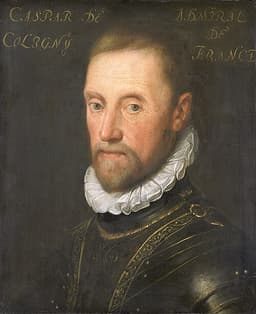
Gaspard de Coligny
General · Modern
58.3Total
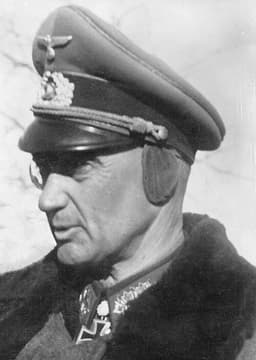
Walter Model
General · Modern
53.0Total
Basic Information
Born
1519
1891
Died
1572
1945
Era
Modern
Modern
Nationality
France
Germany
Occupation
General
General
Civilization
Western
Western
Score Comparison
Military (10%)
47.5
78.0
Political (20%)
68.0
27.9
Influence (20%)
62.0
58.0
Legacy (20%)
52.0
54.0
Leadership (15%)
65.7
36.9
Strategy (15%)
50.0
75.0
TOTAL
58.3
53.0
Gaspard de Coligny — Complete Timeline
1567 AD
Battle of Saint-DenisWar◆ Major
Gaspard de Coligny commanded Huguenot forces at the Battle of Saint-Denis against the royal army. The battle was indecisive, but the Huguenots failed to capture Paris. Coligny's leadership solidified his position as a key Huguenot military commander.
BattleWars of ReligionHuguenots
Impact: national
1570 AD
Peace of Saint-Germain-en-LayePolitical Action◆ Major
Coligny negotiated the Peace of Saint-Germain-en-Laye, which granted Huguenots limited religious freedom and control of several fortified towns. The peace allowed Coligny to return to court and gain influence over King Charles IX.
Peace TreatyReligious TolerationHuguenots
Impact: nationalconstructive
1572 AD
Assassination attempt on ColignyOther◆ Major
An assassination attempt was made on Gaspard de Coligny in Paris, allegedly ordered by Catherine de Medici and the Guise family. He was shot but survived. This attack set the stage for the St. Bartholomew's Day Massacre two days later.
Assassination AttemptSt. Bartholomew's DayHuguenots
Impact: nationaldestructive
St. Bartholomew's Day MassacreOther
Gaspard de Coligny was killed during the St. Bartholomew's Day Massacre, when Catholic mobs murdered Huguenots in Paris. His body was mutilated and thrown from a window. His death marked a turning point in the Wars of Religion.
MassacreDeathWars of Religion
Impact: nationaltragic
Walter Model — Complete Timeline
1941 AD
Commanded 9th Army in Operation BarbarossaWar◆ Major
Model commanded the 3rd Panzer Division and later the 9th Army during the invasion of the Soviet Union. He participated in the encirclement battles at Bialystok and Minsk, and later in the advance on Moscow. His aggressive tactics earned him a reputation as a defensive specialist.
World War IIOperation BarbarossaEastern Front
Impact: regionaldestructive
1942 AD
Defensive Victory at the Rzhev SalientWar◆ Major
Model commanded the 9th Army in the Rzhev salient, where he conducted a successful defensive battle against Soviet offensives. He used counterattacks and elastic defense to inflict heavy casualties on the Red Army, stabilizing the German line despite being outnumbered.
World War IIEastern FrontRzhev
Impact: regionaldestructive
1944 AD
Commanded Army Group B in Normandy and the Ruhr PocketWar
Model was transferred to the Western Front to command Army Group B after the Allied invasion of Normandy. He failed to stop the Allied breakout and was later encircled in the Ruhr Pocket in April 1945. Facing capture, he shot himself on April 21, 1945.
World War IIWestern FrontRuhr PocketSuicide
Impact: globaltragic
Appointed Commander of Army Group NorthPolitical Action◆ Major
Model was appointed commander of Army Group North in January 1944 after the Soviet Leningrad-Novgorod Offensive. He stabilized the front and prevented a complete collapse, earning Hitler's trust as a 'fireman' who could salvage desperate situations.
World War IIEastern FrontArmy Group North
Impact: regional
Expert Analysis
Origins
Gaspard de Coligny was born on February 16, 1519, in Châtillon-sur-Loing, France, into a noble family with strong military traditions. His father, Gaspard I de Coligny, served as Marshal of France. Coligny received a humanist education and early military training, becoming a close companion of the future King Henry II. He converted to Protestantism around 1558, influenced by his brother and the growing Huguenot movement.
Walter Model was born on January 24, 1891, in Genthin, Prussia, into a middle-class Lutheran family. His father was a music teacher. Model attended military school and joined the German Army in 1909. He served in World War I, earning the Iron Cross First Class. After the war, he remained in the Reichswehr, gaining a reputation as a dedicated and tactically skilled officer.
Rise to Power
Coligny rose through the French court under Henry II, becoming a colonel-general of infantry by 1547. He fought in the Italian Wars and was appointed Admiral of France in 1552. After Henry II's death, the religious wars began. Coligny emerged as a leader of the Huguenots, commanding forces at the Battle of Dreux (1562) and the Battle of Jarnac (1569). His negotiation of the Peace of Saint-Germain-en-Laye in 1570 was a political high point, granting Huguenots limited toleration.
Model's rise came during the Nazi era. He joined the NSDAP in 1934, which aided his career. He served as chief of staff of II Corps in the invasion of Poland (1939) and commanded the 3rd Panzer Division in the invasion of France (1940). His performance in Operation Barbarossa (1941) earned him promotion to command of the 9th Army. He became known as a defensive specialist after holding the Rzhev salient against Soviet offensives in 1942-43. Hitler appointed him to command Army Group North in 1944, then Army Group B in Normandy after D-Day.
Leadership & Governance
Coligny's leadership was characterized by diplomatic negotiation and religious conviction. He sought to secure Huguenot rights through political means, such as the Peace of Saint-Germain. As a military commander, he scored 50.0 in strategy and 47.5 in military, reflecting his mixed record. His governance was limited to areas under Huguenot control, where he enforced discipline but struggled with resources.
Model's leadership was aggressive and hands-on. He frequently visited front lines and made tactical decisions. He scored 75.0 in strategy and 78.0 in military, showing high tactical skill. However, his political naivety (score 27.9) led him to blindly follow Hitler's orders, even when disastrous. He used 'fire brigade' tactics to plug gaps but failed to challenge strategic errors. His governance style was authoritarian, demanding total obedience.
Triumph & Tragedy
Coligny's greatest triumph was the Peace of Saint-Germain-en-Laye (1570), which temporarily halted religious persecution. His tragedy was his assassination on August 24, 1572, which sparked the St. Bartholomew's Day Massacre, where thousands of Huguenots were killed. His body was mutilated, and his political gains were erased.
Model's triumphs include the defensive victory at the Rzhev salient (1942), where he repelled Soviet offensives with counterattacks. He also stabilized the front in Army Group North in 1944. His tragedy was the Ruhr Pocket in April 1945. Commanding Army Group B, he was encircled by Allied forces. Refusing to surrender, he shot himself on April 21, 1945, after disbanding his army. His loyalty to Hitler led to unnecessary destruction.
Character & Destiny
Coligny was principled and diplomatic, but his trust in Catherine de Medici proved fatal. He ignored warnings of an assassination plot, leading to his death. Historians note his integrity but also his political miscalculation. He scored 65.7 in leadership, reflecting his ability to inspire loyalty.
Model was ruthless and efficient, but his political subservience limited his effectiveness. He refused to question Hitler's orders, even when they led to disaster. His suicide in the Ruhr pocket was a final act of defiance, but also of despair. His leadership score of 36.9 reflects a lack of independent judgment.
Legacy
Coligny's legacy is as a martyr for Protestantism. His death catalyzed the St. Bartholomew's Day Massacre, a turning point in the French Wars of Religion. He is remembered as a symbol of religious tolerance. His influence score of 62.0 reflects his impact on French history.
Model's legacy is mixed. He is remembered as a skilled defensive commander but also as a Nazi loyalist. His tactics influenced post-war military doctrine, but his association with the regime tarnishes his reputation. He scored 54.0 in legacy, lower than Coligny.
Conclusion
Gaspard de Coligny had greater historical impact than Walter Model. Despite lower military scores (47.5 vs. 78.0), Coligny's political influence (68.0 vs. 27.9) and legacy (52.0 vs. 54.0) shaped the course of French history. His assassination triggered a massacre that changed religious dynamics in Europe. Model, while tactically superior, was ultimately a cog in a destructive machine, with no lasting positive impact. Coligny's total score of 58.3 versus Model's 53.0 reflects his broader significance. The Huguenot leader's struggle for religious freedom echoes more profoundly than the Nazi general's defensive battles.
Rankings
🥇
Gaspard de ColignyLeader
Mil: 47.5Pol: 68.0Inf: 62.0
58.3
🥈
Walter Model
Mil: 78.0Pol: 27.9Inf: 58.0
53.0
+5.3 behind
How This Comparison Works
Algorithm
Each figure is scored on 6 dimensions (0—100 scale) based on structured historical data: Military (10%), Political (20%), Influence (20%), Legacy (20%), Leadership (15%), Strategy (15%). The weighted total produces the final ranking.
Data Sources
Scores are computed from structured sub-indicators in the database. Scale factors adjust for era (Ancient ×0.85, Modern ×1.0) and civilization size (Eastern ×1.05, Other ×0.80) to account for differences in population and military scale.
Maximum 3 Figures
Comparisons are limited to 2—3 figures to ensure readability and statistical meaningfulness.
Error Margins
±5 points per dimension — Sub-scores are derived from historical records with inherent uncertainty. Two figures within 5 points on a dimension should be considered roughly equivalent in that area.
Total Score Accuracy
±3 points overall — The weighted combination of 6 dimensions produces a total score with approximately ±3 points of uncertainty. Differences of less than 3 points are not statistically significant— the figures are effectively tied.
Known Limitations
- Historical records are incomplete and uneven across civilizations
- Figures from oral-tradition societies may be underrepresented
- Occupation labels can misclassify multi-role figures
- Scores measure capability and impact, not moral character
- Quantitative scoring is a comparison tool, not absolute truth
Capability Radar
Military (10%) — Battles & Warfare
Battles
55
85
Win Rate
50
80
Expansion
30
60
Political (20%) — Governance & Reform
Reform
50
10
Diplomacy
55
15
Economy
30
10
Influence (20%) — Cultural & Global Reach
Cultural
45
30
Global
55
50
Legacy (20%) — Historical Impact
Historical
70
65
Longevity
60
40
Leadership (15%) — Power & Stability
Tenure
45
20
Stability
20
10
Strategy (15%) — Tactics & Innovation
Strategy
65
85
Tactics
60
90
Reform
40
70
Similar Comparisons
Comments & Discussion
No comments yet. Be the first to share your thoughts!