Loading...
Chen Yi vs Julius Caesar
Julius Caesar leads by 25.3 pts · 2 figures compared
…
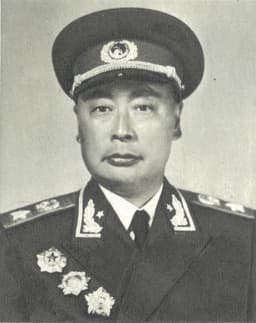
Chen Yi
General · Modern
57.5Total

Julius Caesar
General · Ancient
82.8Total
Basic Information
Born
1901
-100
Died
1972
-44
Era
Modern
Ancient
Nationality
China
Roman Republic
Occupation
General
General
Civilization
Eastern
Western
Score Comparison
Military (10%)
52.5
88.0
Political (20%)
68.0
78.0
Influence (20%)
57.2
85.0
Legacy (20%)
50.0
82.0
Leadership (15%)
62.0
80.0
Strategy (15%)
60.0
85.0
TOTAL
57.5
82.8
Chen Yi — Complete Timeline
1945 AD
Commander of the Third Field Army in the Chinese Civil WarWar◆ Major
Chen Yi commanded the Third Field Army, which played a key role in the Huaihai Campaign and the capture of Nanjing and Shanghai. His forces were instrumental in the Communist victory in eastern China.
Chinese Civil WarMilitary Campaign
Impact: nationaldestructive
1949 AD
First Mayor of Communist ShanghaiPolitical Action◆ Major
Chen Yi was appointed the first mayor of Shanghai after the Communist takeover. He oversaw the transition of China's largest city from Nationalist to Communist control, implementing economic stabilization and political consolidation.
GovernmentShanghaiCommunist China
Impact: nationalconstructive
1955 AD
Appointed Marshal of the People's Liberation ArmyPolitical Action◆ Major
Chen Yi was appointed as one of the ten marshals of the People's Liberation Army. This honor recognized his military leadership during the civil war and his role in the Communist victory.
Military HonorPLA
Impact: nationalconstructive
1958 AD
Minister of Foreign Affairs of the People's Republic of ChinaPolitical Action◆ Major
Chen Yi was appointed Minister of Foreign Affairs, serving until 1972. He represented China at international conferences, including the Geneva Conference on Laos, and advocated for the Bandung principles of non-alignment.
DiplomacyForeign Policy
Impact: global
Julius Caesar — Complete Timeline
58 BC
Gallic WarsWar◆ Major
Caesar, as proconsul of Gaul, launched a series of campaigns that conquered all of Gaul (modern France, Belgium, and parts of Switzerland). He fought numerous battles, including against the Helvetii, the Belgae, and the Gallic chieftain Vercingetorix. The wars brought immense wealth and a loyal army to Caesar.
Gallic WarsConquestRoman Expansion
Impact: regional
49 BC
Crossing the RubiconPolitical Action◆ Major
Caesar led Legio XIII across the Rubicon River into Italy, defying the Roman Senate's order to disband his army. This act triggered a civil war against Pompey and the Optimates, ultimately leading to Caesar's dictatorship and the end of the Roman Republic.
Roman Civil WarEnd of RepublicPower Struggle
Impact: global
48 BC
Battle of PharsalusWar◆ Major
Caesar's outnumbered army defeated the larger forces of Pompey the Great at Pharsalus in Greece. Caesar's tactical use of a reserve line to counter Pompey's cavalry charge proved decisive. Pompey fled to Egypt, where he was assassinated, leaving Caesar as the undisputed master of the Roman world.
Roman Civil WarBattleDecisive Victory
Impact: regional
44 BC
Appointment as Dictator for LifePolitical Action◆ Major
The Roman Senate appointed Caesar dictator perpetuo (dictator for life), granting him unprecedented personal power. This move concentrated military, legislative, and judicial authority in one person, effectively ending the Roman Republic's traditional system of checks and balances and alarming many senators.
DictatorshipEnd of RepublicPower Consolidation
Impact: regionaldestructive
Assassination on the Ides of MarchPolitical Action◆ Major
A group of Roman senators, led by Marcus Junius Brutus and Gaius Cassius Longinus, stabbed Caesar to death at a meeting of the Senate in the Theatre of Pompey. The assassination was intended to restore the Republic, but instead triggered another civil war that led to the rise of the Roman Empire.
AssassinationRoman PoliticsEnd of Republic
Impact: globaldestructive
Expert Analysis
chen-yi-vs-julius-caesar
# The General and the Marshal
On a winter morning in 49 BCE, a Roman general stood at the banks of a small river in northern Italy, the Rubicon. He knew that crossing meant civil war, that there would be no turning back. Two thousand years later, on a spring day in 1949, another general entered the smoldering streets of Shanghai, China’s largest city, knowing that he was not a conqueror but a caretaker. One man would die by the dagger; the other would die in his bed, a diplomat who had outlived his revolution. What separates these two fates? The answer lies not in the size of their armies but in the shape of their worlds.
Origins
Gaius Julius Caesar was born into the chaos of the Roman Republic’s final century. His family, the Julii, claimed descent from the goddess Venus, but they were patricians without power in an age when money and military might mattered more than blood. Caesar grew up amid street violence, senatorial bribery, and the ghost of his uncle Marius, a populist general whose reforms had unsettled the old order. The Republic was dying, and Caesar learned early that ambition required audacity.
Chen Yi was born in 1901, the year the Boxer Rebellion ended in humiliation for China. His family were minor landowners in Sichuan, a province battered by warlords, foreign concessions, and the slow collapse of the Qing Dynasty. As a young man, Chen studied in France, where he encountered Marxist ideas—not in a library, but in the factories and cafés of Paris. He returned to a China that was not a republic but a battlefield. Where Caesar inherited a crisis of overreach, Chen inherited a crisis of survival.
Rise to Power
Caesar’s path was one of calculated risk. He borrowed fortunes to buy popularity, served as governor in Spain, and formed the First Triumvirate with Pompey and Crassus—an alliance of convenience, not friendship. His great leap came in Gaul: eight years of relentless campaigning, from the Alps to the English Channel, that made him the richest and most feared commander in Rome. He wrote his own propaganda, the *Commentaries*, turning military dispatches into literature. When the Senate ordered him to disband his army, Caesar refused. The Rubicon was not a line; it was a verdict.
Chen Yi’s rise was slower and bloodier. He joined the Communist Party in 1923, survived the purges of the 1930s, and fought in the Long March—a retreat that killed nine out of ten who began it. By 1945, he commanded the Third Field Army, one of the main forces in the Chinese Civil War. His defining moment came in the Huaihai Campaign of 1948–49, a massive battle of encirclement that crushed the Nationalist defenses. Chen’s army then swept south, capturing Nanjing and Shanghai. He did not cross a river in defiance of law; he crossed it in service of a revolution.
Leadership & Governance
Caesar governed like a storm. As dictator, he reformed the calendar, granted citizenship to provincials, and launched public works that employed the poor. He was merciful to former enemies—too merciful, his critics said—and centralized power in ways that made the Senate obsolete. But his military genius was his undoing: he trusted his luck, and his luck ran out. He disbanded his bodyguard, ignored warnings, and walked into the Senate chamber on the Ides of March.
Chen Yi governed like a builder. As the first mayor of Communist Shanghai in 1949, he faced a city of six million people, rampant inflation, and a collapsing economy. His task was not conquest but consolidation: restore order, feed the hungry, and win the loyalty of a skeptical middle class. He did this with pragmatism, not terror. Later, as Foreign Minister from 1958 to 1972, he represented China at international conferences, defending the Cultural Revolution abroad while weathering its storms at home. He was appointed Marshal in 1955, a title that honored his past but did not define his future.
Triumph & Tragedy
Caesar’s greatest triumph was Gaul—a conquest that added a vast territory to the Roman world and made him a legend. His greatest tragedy was his assassination, a moment that has echoed through history as the archetype of betrayal. He died with twenty-three wounds, but his death did not restore the Republic; it unleashed a civil war that ended with his adopted heir, Octavian, becoming emperor.
Chen Yi’s greatest triumph was Shanghai. He took a city on the verge of collapse and made it work, proving that the Communist Party could govern, not just fight. His tragedy was more subtle: he lived long enough to see the revolution he had served turn inward. During the Cultural Revolution, he was criticized, humiliated, and sidelined. He died in 1972, a man who had outlived his era but not his dignity.
Character & Destiny
Caesar was driven by *dignitas*—a Latin word meaning personal prestige, honor, and status. He could not bear to be second to anyone. This hunger made him brilliant and reckless. He gambled on his own genius, and for a time, he won everything. But his character also blinded him: he assumed that his enemies would accept defeat, that his mercy would be reciprocated, that his luck would never fail.
Chen Yi was driven by duty. He was not a charismatic visionary like Mao or a ruthless tactician like Zhou Enlai. He was a soldier who became a diplomat, a fighter who learned to negotiate. His character was shaped by survival: he had seen too many comrades die to believe in invincibility. He understood that revolutions eat their children, and he tried to be the child who outlasted the meal.
Legacy
Caesar’s legacy is the Roman Empire. His name became a title—Kaiser, Tsar—that rulers would claim for two millennia. His reforms reshaped Europe, and his writings shaped Western literature. He is remembered as a genius and a tyrant, a liberator and a destroyer. His story is a warning about the price of ambition.
Chen Yi’s legacy is more modest but no less real. He helped build modern China, not by conquering it, but by managing its transition from chaos to order. He is remembered in Shanghai as a mayor who cared about the poor, and in Beijing as a marshal who understood that war is only the beginning. His name does not echo through the ages; it rests quietly in the records of a nation that survived against all odds.
Conclusion
Two generals, two rivers, two fates. Caesar crossed the Rubicon and changed the world, but he could not change himself. Chen Yi crossed the Yangtze and served a revolution that would eventually turn on him. One died because he trusted his enemies; the other died because he trusted his friends. Both understood that history is written by the victors, but only one learned that victory is never final. In the end, the difference between them is not the size of their armies or the scope of their conquests. It is the difference between a man who believed he was destiny and a man who believed he was part of something larger.
Rankings
🥇
Julius CaesarLeader
Mil: 88.0Pol: 78.0Inf: 85.0
82.8
🥈
Chen Yi
Mil: 52.5Pol: 68.0Inf: 57.2
57.5
+25.3 behind
How This Comparison Works
Algorithm
Each figure is scored on 6 dimensions (0—100 scale) based on structured historical data: Military (10%), Political (20%), Influence (20%), Legacy (20%), Leadership (15%), Strategy (15%). The weighted total produces the final ranking.
Data Sources
Scores are computed from structured sub-indicators in the database. Scale factors adjust for era (Ancient ×0.85, Modern ×1.0) and civilization size (Eastern ×1.05, Other ×0.80) to account for differences in population and military scale.
Maximum 3 Figures
Comparisons are limited to 2—3 figures to ensure readability and statistical meaningfulness.
Error Margins
±5 points per dimension — Sub-scores are derived from historical records with inherent uncertainty. Two figures within 5 points on a dimension should be considered roughly equivalent in that area.
Total Score Accuracy
±3 points overall — The weighted combination of 6 dimensions produces a total score with approximately ±3 points of uncertainty. Differences of less than 3 points are not statistically significant— the figures are effectively tied.
Known Limitations
- Historical records are incomplete and uneven across civilizations
- Figures from oral-tradition societies may be underrepresented
- Occupation labels can misclassify multi-role figures
- Scores measure capability and impact, not moral character
- Quantitative scoring is a comparison tool, not absolute truth
Capability Radar
Military (10%) — Battles & Warfare
Battles
55
95
Win Rate
60
92
Expansion
40
97
Political (20%) — Governance & Reform
Reform
50
90
Diplomacy
55
85
Economy
45
82
Influence (20%) — Cultural & Global Reach
Cultural
40
88
Global
35
94
Legacy (20%) — Historical Impact
Historical
50
95
Longevity
40
96
Leadership (15%) — Power & Stability
Tenure
60
75
Stability
50
60
Strategy (15%) — Tactics & Innovation
Strategy
55
94
Tactics
50
96
Reform
30
88
Similar Comparisons
Comments & Discussion
No comments yet. Be the first to share your thoughts!