Loading...
Chlothar II vs Li Zhu
Chlothar II leads by 2.4 pts · 2 figures compared
…
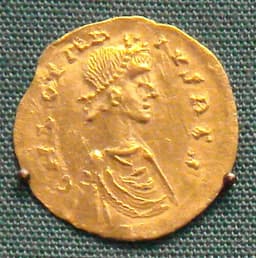
Chlothar II
Emperor · Medieval
52.6Total

Li Zhu
Emperor · Medieval
50.2Total
Basic Information
Born
584
892
Died
629
908
Era
Medieval
Medieval
Nationality
Frankish Empire
China
Occupation
Emperor
Emperor
Civilization
Western
Eastern
Score Comparison
Military (10%)
45.0
50.9
Political (20%)
54.7
39.4
Influence (20%)
51.8
60.0
Legacy (20%)
45.8
42.5
Leadership (15%)
74.0
45.0
Strategy (15%)
43.7
68.3
TOTAL
52.6
50.2
Chlothar II — Complete Timeline
613 AD
Battle of the AisneWar◆ Major
Chlothar II's forces defeated the combined armies of Brunhilda and Sigebert II near the Aisne River. The battle was decisive, leading to the collapse of Austrasian resistance and allowing Chlothar to reunite the Frankish kingdoms.
MerovingianBattleCivil War
Impact: regional
Reunification of the Frankish KingdomsPolitical Action
Chlothar II defeated Brunhilda and her grandson Sigebert II at the Battle of the Aisne, capturing and executing Brunhilda. He then united Neustria, Austrasia, and Burgundy under his sole rule, becoming the sole king of the Franks.
MerovingianUnificationBrunhilda
Impact: regional
Execution of BrunhildaPolitical Action◆ Major
After his victory, Chlothar II ordered the execution of Brunhilda, the aged queen of Austrasia. She was tortured for three days, then tied to a wild horse and dragged to her death. This act ended the long feud between the Neustrian and Austrasian branches.
MerovingianExecutionBrunhilda
Impact: regionaltragic
614 AD
Edict of ParisReform◆ Major
Chlothar II issued the Edict of Paris, a major reform that granted concessions to the nobility and the Church. It limited royal power by confirming the rights of bishops and nobles, and established that counts should be appointed from the local aristocracy.
MerovingianReformNobility
Impact: regionalconstructive
Li Zhu — Complete Timeline
907 AD
Forced Abdication by Zhu WenPolitical Action
Li Zhu (Tang Aidi) was compelled to abdicate the throne by the warlord Zhu Wen, who then proclaimed himself emperor of the Later Liang dynasty. This event formally ended the Tang dynasty after nearly 300 years of rule.
AbdicationEnd of TangFive Dynasties
Impact: nationaltragic
908 AD
Poisoned by Zhu Wen's OrdersPolitical Action◆ Major
After his abdication, the former emperor Li Zhu was poisoned on the orders of Zhu Wen, who feared that the young deposed emperor could become a rallying point for loyalist resistance. This act eliminated the last Tang claimant.
AssassinationTang DynastyZhu Wen
Impact: nationaltragic
Expert Analysis
Origins
Chlothar II was born in 584 AD, the son of Chilperic I and Fredegund. He was raised in Neustria, one of the Frankish subkingdoms, amidst constant civil war. His mother Fredegund was a powerful queen who fought to secure his inheritance. Chlothar became king of Neustria at the age of 13, but the kingdom was weak, overshadowed by Austrasia and Burgundy.
Li Zhu was born in 892 AD as the ninth son of Emperor Zhaozong of Tang. He was a child of a decaying dynasty, with regional warlords controlling most of China. In 904, at age 12, he was placed on the throne by the warlord Zhu Wen, who had murdered his father. Li Zhu was a puppet from the start, with no real authority.
Rise to Power
Chlothar II's rise came through military and political maneuvering. In 613, after the death of his enemy Theuderic II, Chlothar allied with the nobility of Austrasia and Burgundy against Brunhilda, Theuderic's grandmother. He defeated Brunhilda and her grandson Sigebert II at the Battle of the Aisne in 613. The victory was decisive: Brunhilda was captured and executed, and Chlothar united Neustria, Austrasia, and Burgundy under his rule. He became sole king of the Franks, a title not held since his grandfather Clotaire I.
Li Zhu's rise was entirely orchestrated by Zhu Wen. After Zhu Wen murdered Emperor Zhaozong, he forced Li Zhu onto the throne as a puppet. Li Zhu reigned for only three years (904-907) before Zhu Wen forced his abdication. The young emperor had no base of support and was a mere symbol.
Leadership & Governance
Chlothar II's governance is best exemplified by the Edict of Paris in 614. This major reform granted concessions to the nobility and the Church, limiting royal power but stabilizing the realm. It confirmed the rights of nobles and bishops, established a unified legal code, and curbed the king's ability to confiscate property arbitrarily. This pragmatic approach allowed Chlothar to maintain unity among the fractious Frankish nobles. His leadership scored 74.0, reflecting his ability to consolidate power through compromise.
Li Zhu had no opportunity to govern. His reign was dominated by Zhu Wen, who controlled the court and the army. Li Zhu's political score is 39.4, indicating his lack of agency. He was a figurehead, unable to issue reforms or lead effectively.
Triumph & Tragedy
Chlothar II's greatest triumph was the reunification of the Frankish kingdoms, which had been divided since the death of his grandfather. He achieved this through a combination of military victory and political acumen. The execution of Brunhilda ended the long-running feud between Neustria and Austrasia. However, his reign also saw the rise of the nobility's power, which weakened the monarchy in the long term. The Edict of Paris, while stabilizing, ceded royal authority to the aristocracy. His military score of 45.0 indicates limited martial success beyond the Battle of the Aisne.
Li Zhu's life was tragic from start to end. His only 'triumph' was surviving for three years as emperor, but his forced abdication in 907 ended the Tang dynasty, one of China's golden ages. He was poisoned on Zhu Wen's orders in 908 at age 16. His legacy score of 42.5 reflects his role as the last Tang emperor, but he had no positive achievements.
Character & Destiny
Chlothar II was a pragmatist, willing to compromise to maintain power. He was ruthless when necessary: Brunhilda's execution was brutal, but politically calculated. His leadership score of 74.0 suggests he was effective at managing alliances. However, his reliance on the nobility set a precedent that would lead to the decline of the Merovingian dynasty. His strategy score of 43.7 indicates he was not a brilliant military strategist but a political survivor.
Li Zhu was a victim of circumstance. He was young, inexperienced, and surrounded by enemies. His character is hard to assess, as he had no real decisions to make. His destiny was sealed by Zhu Wen's ambition. His strategy score of 68.3 is oddly high, perhaps reflecting his family's political maneuvering, but he himself had little control.
Legacy
Chlothar II's reunification of the Franks laid the groundwork for the later Merovingian kings, though the dynasty weakened under his successors. The Edict of Paris influenced medieval European governance by establishing a precedent for king-noble relations. His total score of 52.6 reflects a modest but significant impact.
Li Zhu's legacy is primarily negative: he symbolizes the end of the Tang dynasty. His abdication marked the beginning of the chaotic Five Dynasties and Ten Kingdoms period. However, he had no personal agency in this; the fall was due to decades of decline. His total score of 50.2 is slightly lower than Chlothar's.
Conclusion
Chlothar II had a greater impact than Li Zhu. While both were rulers of collapsing states, Chlothar actively shaped his kingdom's destiny through the Edict of Paris and reunification, even if short-term. Li Zhu was a passive figure whose only role was to be the last Tang emperor. Chlothar's political score of 54.7 and leadership of 74.0 contrast with Li Zhu's 39.4 and 45.0. The score gap of 2.4 points understates the difference in agency and effect. Chlothar II, despite his flaws, was a real ruler; Li Zhu was a pawn.
Rankings
🥇
Chlothar IILeader
Mil: 45.0Pol: 54.7Inf: 51.8
52.6
🥈
Li Zhu
Mil: 50.9Pol: 39.4Inf: 60.0
50.2
+2.4 behind
How This Comparison Works
Algorithm
Each figure is scored on 6 dimensions (0—100 scale) based on structured historical data: Military (10%), Political (20%), Influence (20%), Legacy (20%), Leadership (15%), Strategy (15%). The weighted total produces the final ranking.
Data Sources
Scores are computed from structured sub-indicators in the database. Scale factors adjust for era (Ancient ×0.85, Modern ×1.0) and civilization size (Eastern ×1.05, Other ×0.80) to account for differences in population and military scale.
Maximum 3 Figures
Comparisons are limited to 2—3 figures to ensure readability and statistical meaningfulness.
Error Margins
±5 points per dimension — Sub-scores are derived from historical records with inherent uncertainty. Two figures within 5 points on a dimension should be considered roughly equivalent in that area.
Total Score Accuracy
±3 points overall — The weighted combination of 6 dimensions produces a total score with approximately ±3 points of uncertainty. Differences of less than 3 points are not statistically significant— the figures are effectively tied.
Known Limitations
- Historical records are incomplete and uneven across civilizations
- Figures from oral-tradition societies may be underrepresented
- Occupation labels can misclassify multi-role figures
- Scores measure capability and impact, not moral character
- Quantitative scoring is a comparison tool, not absolute truth
Capability Radar
Military (10%) — Battles & Warfare
Battles
20
44
Win Rate
25
47
Expansion
40
50
Political (20%) — Governance & Reform
Reform
45
0
Diplomacy
55
5
Economy
40
0
Influence (20%) — Cultural & Global Reach
Cultural
30
0
Global
20
0
Legacy (20%) — Historical Impact
Historical
40
5
Longevity
35
0
Leadership (15%) — Power & Stability
Tenure
60
5
Stability
50
0
Strategy (15%) — Tactics & Innovation
Strategy
30
57
Tactics
15
59
Reform
10
58
Similar Comparisons
Comments & Discussion
No comments yet. Be the first to share your thoughts!