Loading...
Chlothar II vs Julius Caesar
Julius Caesar leads by 30.2 pts · 2 figures compared
…
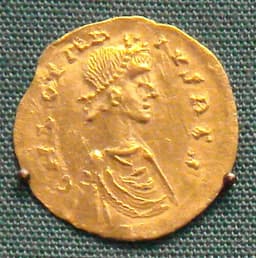
Chlothar II
Emperor · Medieval
52.6Total

Julius Caesar
General · Ancient
82.8Total
Basic Information
Born
584
-100
Died
629
-44
Era
Medieval
Ancient
Nationality
Frankish Empire
Roman Republic
Occupation
Emperor
General
Civilization
Western
Western
Score Comparison
Military (10%)
45.0
88.0
Political (20%)
54.7
78.0
Influence (20%)
51.8
85.0
Legacy (20%)
45.8
82.0
Leadership (15%)
74.0
80.0
Strategy (15%)
43.7
85.0
TOTAL
52.6
82.8
Chlothar II — Complete Timeline
613 AD
Battle of the AisneWar◆ Major
Chlothar II's forces defeated the combined armies of Brunhilda and Sigebert II near the Aisne River. The battle was decisive, leading to the collapse of Austrasian resistance and allowing Chlothar to reunite the Frankish kingdoms.
MerovingianBattleCivil War
Impact: regional
Reunification of the Frankish KingdomsPolitical Action
Chlothar II defeated Brunhilda and her grandson Sigebert II at the Battle of the Aisne, capturing and executing Brunhilda. He then united Neustria, Austrasia, and Burgundy under his sole rule, becoming the sole king of the Franks.
MerovingianUnificationBrunhilda
Impact: regional
Execution of BrunhildaPolitical Action◆ Major
After his victory, Chlothar II ordered the execution of Brunhilda, the aged queen of Austrasia. She was tortured for three days, then tied to a wild horse and dragged to her death. This act ended the long feud between the Neustrian and Austrasian branches.
MerovingianExecutionBrunhilda
Impact: regionaltragic
614 AD
Edict of ParisReform◆ Major
Chlothar II issued the Edict of Paris, a major reform that granted concessions to the nobility and the Church. It limited royal power by confirming the rights of bishops and nobles, and established that counts should be appointed from the local aristocracy.
MerovingianReformNobility
Impact: regionalconstructive
Julius Caesar — Complete Timeline
58 BC
Gallic WarsWar◆ Major
Caesar, as proconsul of Gaul, launched a series of campaigns that conquered all of Gaul (modern France, Belgium, and parts of Switzerland). He fought numerous battles, including against the Helvetii, the Belgae, and the Gallic chieftain Vercingetorix. The wars brought immense wealth and a loyal army to Caesar.
Gallic WarsConquestRoman Expansion
Impact: regional
49 BC
Crossing the RubiconPolitical Action◆ Major
Caesar led Legio XIII across the Rubicon River into Italy, defying the Roman Senate's order to disband his army. This act triggered a civil war against Pompey and the Optimates, ultimately leading to Caesar's dictatorship and the end of the Roman Republic.
Roman Civil WarEnd of RepublicPower Struggle
Impact: global
48 BC
Battle of PharsalusWar◆ Major
Caesar's outnumbered army defeated the larger forces of Pompey the Great at Pharsalus in Greece. Caesar's tactical use of a reserve line to counter Pompey's cavalry charge proved decisive. Pompey fled to Egypt, where he was assassinated, leaving Caesar as the undisputed master of the Roman world.
Roman Civil WarBattleDecisive Victory
Impact: regional
44 BC
Appointment as Dictator for LifePolitical Action◆ Major
The Roman Senate appointed Caesar dictator perpetuo (dictator for life), granting him unprecedented personal power. This move concentrated military, legislative, and judicial authority in one person, effectively ending the Roman Republic's traditional system of checks and balances and alarming many senators.
DictatorshipEnd of RepublicPower Consolidation
Impact: regionaldestructive
Assassination on the Ides of MarchPolitical Action◆ Major
A group of Roman senators, led by Marcus Junius Brutus and Gaius Cassius Longinus, stabbed Caesar to death at a meeting of the Senate in the Theatre of Pompey. The assassination was intended to restore the Republic, but instead triggered another civil war that led to the rise of the Roman Empire.
AssassinationRoman PoliticsEnd of Republic
Impact: globaldestructive
Expert Analysis
chlothar-ii-vs-julius-caesar
# The Emperor and the General: Two Paths to Power in a Violent Age
On a March morning in 44 BCE, Julius Caesar fell beneath the daggers of his closest allies in the Senate chamber of Rome. Less than seven centuries later, in the autumn of 613, an aged queen named Brunhilda was captured on a battlefield in what is now northern France, then dragged behind a wild horse until her body broke apart. Both deaths were political executions, but they marked opposite ends of a single question: What does it take to hold power in a world that wants to tear you apart?
Caesar and Chlothar II never met, could not have met—they lived six hundred years apart, separated by the fall of an empire and the rise of a new order. Yet their stories intertwine around a universal problem: how to rise, how to rule, and how to die. One man reshaped the Western world with a legion at his back and a pen in his hand. The other inherited a kingdom in chaos and spent his life trying to keep it from shattering.
Origins
Caesar was born into the patrician class of the Roman Republic in 100 BCE, a time when the old aristocratic order was cracking under the weight of its own ambition. His family was ancient but not wealthy, and he grew up watching men like Marius and Sulla turn the Republic into a battleground for personal power. From the start, Caesar understood that in Rome, survival meant performance. He cultivated allies, borrowed money he could not repay, and gambled everything on military glory.
Chlothar II was born in 584, the son of King Chilperic I of Neustria and his wife Fredegund. The Merovingian world was a different beast—no Senate, no written constitution, no pretense of republican virtue. Power was personal, violent, and inherited. Chlothar’s mother was a former servant who had clawed her way to the throne through murder and manipulation. His father was assassinated when Chlothar was still an infant. He grew up a child-king in a court where every nobleman was a potential enemy and every relative a rival.
The difference in their origins is not merely one of time but of structure. Caesar entered a world where power was theoretically shared but practically up for grabs. Chlothar entered a world where power was theoretically absolute but practically meaningless without the support of armed men. One man had to invent his own path; the other had to hold onto a path that others kept trying to block.
Rise to Power
Caesar’s ascent was a masterpiece of calculated risk. He served as a military tribune, then quaestor, then aedile, each step funded by borrowed money and secured by political alliances. His real breakthrough came in 58 BCE, when he secured command of the Roman provinces in Gaul. Over the next eight years, he conquered a territory larger than Italy itself, built a personal army that worshipped him, and returned to Rome with enough gold and glory to challenge the Senate itself. When the Senate ordered him to disband his army, he crossed the Rubicon River in 49 BCE—an act of open rebellion that started a civil war. By 45 BCE, he was dictator for life.
Chlothar’s rise was slower and more defensive. He became king of Neustria as an infant in 584, but real power eluded him for decades. The Merovingian kingdom was divided into Neustria, Austrasia, and Burgundy, each ruled by rival branches of his family. For years, the real power in Austrasia was Brunhilda, his grandmother’s bitter enemy, a woman who had survived her own husband’s assassination and ruled through her sons and grandsons. Chlothar waited. He built alliances with the nobility, cultivated the Church, and watched as Brunhilda’s ruthlessness alienated her own supporters. In 613, he struck. At the Battle of the Aisne, his forces defeated Brunhilda and her grandson Sigebert II. He captured the old queen and ordered her execution—a death so brutal it became legend.
The contrast is stark. Caesar seized power by breaking the rules of his world. Chlothar seized power by waiting for his enemies to break themselves.
Leadership & Governance
Caesar ruled as a reformer and a conqueror. He reorganized the Roman calendar, extended citizenship to provincial elites, launched public works projects, and centralized authority in his own hands. His military genius was undeniable—he won battles against overwhelming odds, inspired loyalty in men who had every reason to mutiny, and wrote about his campaigns with a clarity that still reads like a thriller. But his political wisdom was flawed. He pardoned his enemies, promoted talent over birth, and tried to govern Rome as if the old Republic could be gently eased into irrelevance. He underestimated how much the Senate hated him.
Chlothar ruled as a conciliator. In 614, one year after his triumph, he issued the Edict of Paris, a reform that granted significant concessions to the nobility and the Church. He limited the king’s power to tax, appoint bishops, and interfere with local governance. Where Caesar centralized, Chlothar decentralized. Where Caesar demanded loyalty, Chlothar bought it with compromise. His military score is low—28.7—and he fought no great campaigns like Caesar’s Gallic Wars. But his political score of 54.9 reflects a different kind of skill: the ability to hold together a kingdom by giving pieces of it away.
Triumph & Tragedy
Caesar’s greatest moment was also his most tragic. He had conquered Gaul, defeated Pompey, and stood at the peak of the world. But his triumph was hollow. On the Ides of March, 44 BCE, a conspiracy of senators—many of whom he had pardoned—stabbed him to death. His last words, according to tradition, were “Et tu, Brute?”—a cry of betrayal that echoes through history.
Chlothar’s triumph was the reunification of the Frankish kingdoms in 613. He ruled a united realm until his death in 629, a reign of sixteen years that brought stability after decades of civil war. But his tragedy was the same as his triumph: he held power by giving it away. The nobility he appeased grew stronger; the Church he courted grew independent. Within a generation after his death, the Merovingian kings would become figureheads, and real power would pass to the mayors of the palace.
Character & Destiny
Caesar was driven by a hunger that could not be satisfied. He wanted glory, power, and immortality—and he got all three, but at the cost of his life. His personality was magnetic, his ambition boundless, and his arrogance fatal. He believed he could charm or defeat anyone, and for a long time, he was right. But he could not see that the Republic he tried to save was already dead, and that his own success made its resurrection impossible.
Chlothar was driven by survival. He was not a conqueror or a visionary. He was a survivor in a world where survival required patience, cunning, and the willingness to compromise. His personality was cautious, his ambition measured, and his methods pragmatic. He did not try to reshape the world; he tried to keep it from collapsing around him. He succeeded, but his success was quiet, almost invisible.
Legacy
Caesar’s legacy is written in stone and blood. His name became a title—Caesar, Kaiser, Tsar. His reforms laid the foundation for the Roman Empire, which lasted another five centuries in the West and a thousand years in the East. His writings—the *Commentaries*—shaped Western military thought for two millennia. He is remembered as a genius, a tyrant, and a warning.
Chlothar’s legacy is quieter. The Edict of Paris influenced Frankish law for generations. His reunification of the Frankish kingdoms preserved a political unit that would eventually become France. But he is barely remembered outside academic circles. His total score of 59.6 reflects a life of competent mediocrity in an age of violence.
Conclusion
Caesar and Chlothar were both rulers, but they ruled in different worlds with different rules. Caesar’s world rewarded audacity; Chlothar’s rewarded patience. Caesar broke the mold; Chlothar filled it. One died at the height of his power, betrayed by friends. The other died in bed, having outlived his enemies. Which was the greater success? The answer depends on what you value: the glory that burns bright and brief, or the stability that endures in silence. History remembers Caesar. But Chlothar’s descendants—the kings of France—remembered him well enough to keep his kingdom whole.
Rankings
🥇
Julius CaesarLeader
Mil: 88.0Pol: 78.0Inf: 85.0
82.8
🥈
Chlothar II
Mil: 45.0Pol: 54.7Inf: 51.8
52.6
+30.2 behind
How This Comparison Works
Algorithm
Each figure is scored on 6 dimensions (0—100 scale) based on structured historical data: Military (10%), Political (20%), Influence (20%), Legacy (20%), Leadership (15%), Strategy (15%). The weighted total produces the final ranking.
Data Sources
Scores are computed from structured sub-indicators in the database. Scale factors adjust for era (Ancient ×0.85, Modern ×1.0) and civilization size (Eastern ×1.05, Other ×0.80) to account for differences in population and military scale.
Maximum 3 Figures
Comparisons are limited to 2—3 figures to ensure readability and statistical meaningfulness.
Error Margins
±5 points per dimension — Sub-scores are derived from historical records with inherent uncertainty. Two figures within 5 points on a dimension should be considered roughly equivalent in that area.
Total Score Accuracy
±3 points overall — The weighted combination of 6 dimensions produces a total score with approximately ±3 points of uncertainty. Differences of less than 3 points are not statistically significant— the figures are effectively tied.
Known Limitations
- Historical records are incomplete and uneven across civilizations
- Figures from oral-tradition societies may be underrepresented
- Occupation labels can misclassify multi-role figures
- Scores measure capability and impact, not moral character
- Quantitative scoring is a comparison tool, not absolute truth
Capability Radar
Military (10%) — Battles & Warfare
Battles
20
95
Win Rate
25
92
Expansion
40
97
Political (20%) — Governance & Reform
Reform
45
90
Diplomacy
55
85
Economy
40
82
Influence (20%) — Cultural & Global Reach
Cultural
30
88
Global
20
94
Legacy (20%) — Historical Impact
Historical
40
95
Longevity
35
96
Leadership (15%) — Power & Stability
Tenure
60
75
Stability
50
60
Strategy (15%) — Tactics & Innovation
Strategy
30
94
Tactics
15
96
Reform
10
88
Similar Comparisons
Comments & Discussion
No comments yet. Be the first to share your thoughts!