Loading...
Choi Kyu-hah vs Julius Caesar
Julius Caesar leads by 42.9 pts · 2 figures compared
…
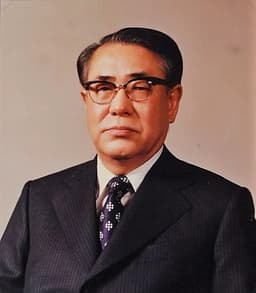
Choi Kyu-hah
Politician · Modern
39.9Total

Julius Caesar
General · Ancient
82.8Total
Basic Information
Born
1919
-100
Died
2006
-44
Era
Modern
Ancient
Nationality
South Korea
Roman Republic
Occupation
Politician
General
Civilization
Eastern
Western
Score Comparison
Military (10%)
14.2
88.0
Political (20%)
30.8
78.0
Influence (20%)
48.6
85.0
Legacy (20%)
39.2
82.0
Leadership (15%)
55.3
80.0
Strategy (15%)
35.8
85.0
TOTAL
39.9
82.8
Choi Kyu-hah — Complete Timeline
1979 AD
Appointment as Acting President after Park Chung-hee's AssassinationPolitical Action◆ Major
Choi Kyu-hah, as Prime Minister, became Acting President following the assassination of Park Chung-hee on October 26, 1979. He oversaw a brief period of political liberalization known as the 'Seoul Spring'.
SuccessionPark Chung-heePolitical Transition
Impact: national
Election as President of South KoreaPolitical Action◆ Major
Choi Kyu-hah was elected as the fourth President of South Korea in December 1979 under the Yushin Constitution. His presidency was marked by efforts to democratize, but he faced pressure from the military.
ElectionFourth RepublicDemocratization
Impact: national
1980 AD
Overthrow by Chun Doo-hwan's CoupPolitical Action◆ Major
Choi Kyu-hah was forced to resign on August 16, 1980, after General Chun Doo-hwan seized power through a military coup. This ended the brief democratic interlude and led to the establishment of the Fifth Republic under Chun.
Military CoupChun Doo-hwanEnd of Democracy
Impact: nationaldestructive
Julius Caesar — Complete Timeline
58 BC
Gallic WarsWar◆ Major
Caesar, as proconsul of Gaul, launched a series of campaigns that conquered all of Gaul (modern France, Belgium, and parts of Switzerland). He fought numerous battles, including against the Helvetii, the Belgae, and the Gallic chieftain Vercingetorix. The wars brought immense wealth and a loyal army to Caesar.
Gallic WarsConquestRoman Expansion
Impact: regional
49 BC
Crossing the RubiconPolitical Action◆ Major
Caesar led Legio XIII across the Rubicon River into Italy, defying the Roman Senate's order to disband his army. This act triggered a civil war against Pompey and the Optimates, ultimately leading to Caesar's dictatorship and the end of the Roman Republic.
Roman Civil WarEnd of RepublicPower Struggle
Impact: global
48 BC
Battle of PharsalusWar◆ Major
Caesar's outnumbered army defeated the larger forces of Pompey the Great at Pharsalus in Greece. Caesar's tactical use of a reserve line to counter Pompey's cavalry charge proved decisive. Pompey fled to Egypt, where he was assassinated, leaving Caesar as the undisputed master of the Roman world.
Roman Civil WarBattleDecisive Victory
Impact: regional
44 BC
Appointment as Dictator for LifePolitical Action◆ Major
The Roman Senate appointed Caesar dictator perpetuo (dictator for life), granting him unprecedented personal power. This move concentrated military, legislative, and judicial authority in one person, effectively ending the Roman Republic's traditional system of checks and balances and alarming many senators.
DictatorshipEnd of RepublicPower Consolidation
Impact: regionaldestructive
Assassination on the Ides of MarchPolitical Action◆ Major
A group of Roman senators, led by Marcus Junius Brutus and Gaius Cassius Longinus, stabbed Caesar to death at a meeting of the Senate in the Theatre of Pompey. The assassination was intended to restore the Republic, but instead triggered another civil war that led to the rise of the Roman Empire.
AssassinationRoman PoliticsEnd of Republic
Impact: globaldestructive
Expert Analysis
choi-kyu-hah-vs-julius-caesar
# The Rubicon and the Resignation: Two Men Who Crossed History's Threshold
On a cold January morning in 49 BCE, Julius Caesar stood at the banks of a small river in northern Italy. The Rubicon was little more than a stream, yet it marked the boundary between a general’s command and the sacred soil of Rome. To cross with an army was treason. Caesar hesitated, then spoke: “The die is cast.” He crossed, and the Republic trembled.
Two thousand years later, on an August night in 1980, another man sat alone in the Blue House in Seoul. Choi Kyu-hah had been president of South Korea for less than nine months. Outside, tanks rumbled. Inside, he held a pen over a resignation letter. He signed it without a word. No crossing, no casting. Just a quiet end to a brief, impossible reign.
What separates a man who changes the world from one who is crushed by it? The answer lies not merely in ambition, but in the currents of history that lift some and drown others.
Origins
Julius Caesar was born into the chaos of a dying republic. His family, the Julii, claimed descent from the goddess Venus, but they were no longer wealthy. Rome in the first century BCE was a place of violent politics, street gangs, and civil wars. Caesar’s uncle Marius had been a populist general; his enemy Sulla a dictator. From childhood, Caesar learned that power came from the sword, not the senate floor. He was raised in a world where a man either seized destiny or became its victim.
Choi Kyu-hah was born in 1919 in a small village in what is now South Korea, under Japanese colonial rule. His father was a local scholar. Korea had been a kingdom for centuries, then a Japanese colony, then a country split by war. Choi grew up in a world where survival meant obedience, not defiance. He studied in Japan, worked as a bureaucrat, and rose through the ranks of a government built by military strongmen. He learned that power came from the system, not from the man.
Rise to Power
Caesar’s path was a masterclass in calculated risk. He borrowed fortunes to fund festivals and bribes, winning popularity as a politician. He served as governor of a province in Spain, then formed the First Triumvirate with Pompey and Crassus. His crowning achievement came in Gaul: eight years of brutal war that conquered modern France and Belgium, brought him immense wealth, and forged a loyal army. When the Senate ordered him to disband his legions, he chose war instead.
Choi’s rise was quieter, a steady climb through the civil service. He served as foreign minister, then prime minister under Park Chung-hee, the military dictator who ruled South Korea for eighteen years. When Park was assassinated in October 1979 by his own intelligence chief, Choi became acting president by constitutional succession. He was not a revolutionary. He was an administrator who found himself holding a crown he never sought.
Leadership & Governance
Caesar governed like a storm. As dictator, he reformed the calendar (creating the Julian calendar still used today), granted citizenship to Gauls, launched massive building projects, and began land reforms that broke the power of the old aristocracy. He was a military genius who commanded his troops from the front, sharing their hardships. But he also centralized power ruthlessly, packed the Senate with his supporters, and accepted the title “dictator for life.” He believed that only one man could save Rome—and that man was himself.
Choi governed like a caretaker. He promised democratic reforms, lifted curfews, and released political prisoners. He tried to heal a country shattered by Park’s dictatorship. But the military saw him as weak. General Chun Doo-hwan, head of the army security command, staged a coup in December 1979, just two months after Choi took office. Choi did not fight. He did not call on the people. He tried to negotiate, to compromise, to find a middle path. In the face of bayonets, he offered paperwork.
Triumph & Tragedy
Caesar’s greatest moment was his triumph: the return to Rome after defeating Pompey, celebrated with grand processions, captured treasure, and the adoration of the mob. His tragedy came on the Ides of March, 44 BCE, when sixty senators stabbed him to death in the Senate chamber. He bled out at the foot of a statue of his old enemy Pompey. He had conquered the world but could not master the politics of peace.
Choi’s greatest moment was his election as president in December 1979, a brief hope that South Korea might transition to democracy. His tragedy came eight months later, when he signed his resignation under duress. He left office without a shot fired, without a speech, without a single loyalist raising a hand in his defense. He was replaced by Chun, whose military dictatorship would crush the Gwangju Uprising in blood. Choi lived quietly until 2006, a footnote in his nation’s history.
Character & Destiny
Caesar was audacity incarnate. He pardoned his enemies, seduced his allies’ wives, and gambled everything on his own brilliance. His personality drove him to cross every line, break every rule, and ultimately to die because he refused to see that even a dictator needs friends.
Choi was caution made flesh. He was a bureaucrat who believed in process, in law, in constitutional order. He did not understand that in a coup, the constitution is just paper. His personality drove him to wait, to hope, to negotiate—when the only language his opponents understood was force.
Legacy
Caesar’s legacy is the Roman Empire. His name became a title: Kaiser, Tsar, Caesar. He changed the course of Western civilization, and his assassination sparked another civil war that ended the Republic forever. He is remembered as a genius, a tyrant, and the man who made the world we know.
Choi’s legacy is a lesson in the limits of decency. He is remembered, if at all, as the man who tried to do the right thing in the wrong time. His brief presidency opened a door that was immediately slammed shut. It would take another decade and the 1987 June Democracy Movement before South Korea truly began its democratic transition.
Conclusion
History does not judge men by their intentions. It judges them by their actions—and by the forces that surround them. Caesar crossed the Rubicon because he understood that to hesitate was to die. Choi signed the resignation because he believed that to resist was to destroy. Both were right, in their own ways. But the world remembers the man who crossed the river, not the one who held the pen.
The die is cast. The letter is signed. And history moves on, indifferent to the men who try to stop it.
Rankings
🥇
Julius CaesarLeader
Mil: 88.0Pol: 78.0Inf: 85.0
82.8
🥈
Choi Kyu-hah
Mil: 14.2Pol: 30.8Inf: 48.6
39.9
+42.9 behind
How This Comparison Works
Algorithm
Each figure is scored on 6 dimensions (0—100 scale) based on structured historical data: Military (10%), Political (20%), Influence (20%), Legacy (20%), Leadership (15%), Strategy (15%). The weighted total produces the final ranking.
Data Sources
Scores are computed from structured sub-indicators in the database. Scale factors adjust for era (Ancient ×0.85, Modern ×1.0) and civilization size (Eastern ×1.05, Other ×0.80) to account for differences in population and military scale.
Maximum 3 Figures
Comparisons are limited to 2—3 figures to ensure readability and statistical meaningfulness.
Error Margins
±5 points per dimension — Sub-scores are derived from historical records with inherent uncertainty. Two figures within 5 points on a dimension should be considered roughly equivalent in that area.
Total Score Accuracy
±3 points overall — The weighted combination of 6 dimensions produces a total score with approximately ±3 points of uncertainty. Differences of less than 3 points are not statistically significant— the figures are effectively tied.
Known Limitations
- Historical records are incomplete and uneven across civilizations
- Figures from oral-tradition societies may be underrepresented
- Occupation labels can misclassify multi-role figures
- Scores measure capability and impact, not moral character
- Quantitative scoring is a comparison tool, not absolute truth
Capability Radar
Military (10%) — Battles & Warfare
Battles
13
95
Win Rate
19
92
Expansion
19
97
Political (20%) — Governance & Reform
Reform
15
90
Diplomacy
25
85
Economy
20
82
Influence (20%) — Cultural & Global Reach
Cultural
10
88
Global
10
94
Legacy (20%) — Historical Impact
Historical
15
95
Longevity
10
96
Leadership (15%) — Power & Stability
Tenure
20
75
Stability
30
60
Strategy (15%) — Tactics & Innovation
Strategy
22
94
Tactics
25
96
Reform
31
88
Similar Comparisons
Comments & Discussion
HISTORY'S GAMBLER6/17/2026
Caesar crossing the Rubicon wasn't some noble act of courage—it was a calculated gamble by a man who'd already cornered the military market. Compare Choi, who inherited a ticking time bomb after Park's assassination and faced General Chun's coup with zero army backing. Caesar had a legion; Choi had a legal clause. The "die" was never cast for Choi—it was loaded against him from the start.
青铜加图6/17/2026
拿恺撒的野心比崔圭夏的无能?恺撒在卢比孔河前犹豫时,手里握着高卢军团和十年战争经验。崔圭夏呢?1980年光州事件前,他连军部电话都打不通。共和消亡时,恺撒至少让元老院恐惧;崔圭夏的沉默只让历史记住他的签字笔。两者都是悲剧,但一个是雄狮的咆哮,一个是羔羊的噤声。
DREAMS OF DICTATORSHIP6/17/2026
Let's call this what it is: a false equivalence. Caesar was a military genius who rewrote the political rulebook through force and charisma, sparking civil war that birthed the Empire. Choi was a bureaucrat caught in a coup, signing away a presidency that the military had already stolen. One shaped centuries, the other vanished into a footnote. Comparing them insults Caesar's audacity and overstates Choi's relevance.
迷途的蝴蝶6/17/2026
崔圭夏不是第二个恺撒,他只是历史的服务员。1979年朴正熙遇刺后,韩国正经历"汉城之春",学生运动如火如荼,全斗焕却用军队掐灭了民主的萌芽。恺撒跨过卢比孔河时,罗马知道战争来了;崔圭夏写辞职信时,韩国知道民主跑了。一个选择了洪水,一个选择了干涸。1979年,韩国本有革命的机会,他却低头让历史溜走。
ParchmentProbe6/17/2026
The core distinction isn't ambition but agency. Caesar had built a power base for decades—allied with Pompey and Crassus, conquered Gaul, lavished bribes on Roman voters. Choi became president by accident after Park's assassination, inheriting a chaotic military state with zero personal following. For Caesar, the Rubicon was a calculated risk; for Choi, the resignation was inevitable. Context is everything.