Loading...
Chosokabe Motochika vs Date Masamune
Date Masamune leads by 11.2 pts · 2 figures compared
…
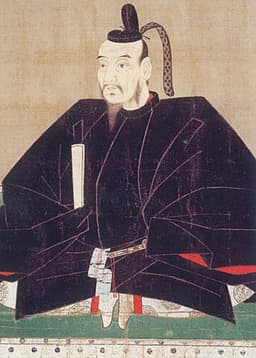
Chosokabe Motochika
General · Modern
55.9Total

Date Masamune
General · Modern
67.1Total
Basic Information
Born
1539
1567
Died
1599
1636
Era
Modern
Modern
Nationality
Japan
Japan
Occupation
General
General
Civilization
Eastern
Eastern
Score Comparison
Military (10%)
72.5
67.3
Political (20%)
68.0
70.0
Influence (20%)
56.4
72.0
Legacy (20%)
46.7
52.0
Leadership (15%)
40.0
85.0
Strategy (15%)
66.3
61.2
TOTAL
55.9
67.1
Chosokabe Motochika — Complete Timeline
1575 AD
Battle of Shimanto RiverWar
Chosokabe Motochika defeated the Ichijo clan at the Battle of Shimanto River in Tosa. This victory eliminated a major rival and solidified Motochika's control over Tosa Province.
Sengoku PeriodBattleTosa
constructive
1576 AD
Battle of HiketaWar◆ Major
Chosokabe Motochika defeated the Miyoshi clan at Hiketa in Sanuki Province. This victory allowed Motochika to gain control over much of Sanuki, advancing his unification of Shikoku.
Sengoku PeriodBattleUnification
Impact: regionalconstructive
1585 AD
Unification of ShikokuWar
Chosokabe Motochika completed the unification of Shikoku island under his control. He defeated the Kono clan in Iyo and the Sogo clan in Sanuki, becoming the dominant daimyo on the island.
Sengoku PeriodUnificationShikoku
Impact: regionalconstructive
Invasion of Shikoku by Toyotomi HideyoshiWar◆ Major
Toyotomi Hideyoshi launched a massive invasion of Shikoku, overwhelming Chosokabe Motochika's forces. Motochika surrendered and was forced to cede most of his territory, retaining only Tosa Province.
Sengoku PeriodInvasionSurrender
Impact: regionaldestructive
Date Masamune — Complete Timeline
1588 AD
Battle of KoriyamaWar
Date Masamune besieged Koriyama Castle in Mutsu Province. The castle fell after a fierce battle, further expanding Masamune's territory and demonstrating his military prowess.
Sengoku PeriodSiegeMutsu
Impact: regionalconstructive
1589 AD
Battle of SuriageharaWar◆ Major
Date Masamune defeated the Ashina clan at Suriagehara in Mutsu Province. This victory allowed Masamune to expand his territory and solidify his control over the southern Tohoku region.
Sengoku PeriodBattleTohoku
Impact: regionalconstructive
1590 AD
Submission to Toyotomi HideyoshiPolitical Action◆ Major
Date Masamune submitted to Toyotomi Hideyoshi after the Siege of Odawara. He was allowed to retain his domain but was forced to cede some territory, marking a shift from independent daimyo to vassal.
Sengoku PeriodSubmissionToyotomi
Impact: national
1601 AD
Founding of SendaiPolitical Action
Date Masamune founded the city of Sendai as his new capital. He built Sendai Castle and developed the surrounding area, establishing a prosperous domain that became a major center in northern Japan.
Sengoku PeriodCity FoundingSendai
Impact: regionalconstructive
Expert Analysis
Origins
Chosokabe Motochika was born in 1538 in Tosa Province on Shikoku, the son of Chosokabe Kunichika, a local warlord. His family was of modest rank among the Tosa clans, but his father laid the groundwork for expansion. Motochika received a samurai education, learning military tactics and governance. In contrast, Date Masamune was born in 1567 in Yonezawa Castle, Mutsu Province, to Date Terumune, a powerful daimyo of the Date clan. Masamune was the eldest son and heir, but his early life was marked by his mother's attempt to replace him with his younger brother due to his smallpox-caused blindness in one eye. This event forged his determination and ruthless ambition.
Rise to Power
Motochika became clan head in 1560 after his father's death. He spent the next two decades conquering rival clans on Shikoku. In 1575, he defeated the Ichijo clan at the Battle of Shimanto River, eliminating a major rival. By 1585, he unified Shikoku, defeating the Kono and Sogo clans. His military score of 72.5 reflects his success in island-wide conquest. Masamune became clan head in 1584 at age 17 after his father was killed by the Soma clan. He swiftly avenged his father and expanded Date territory. In 1585, he defeated the Ashina clan at the Battle of Suriagehara, gaining control over much of Mutsu. By 1590, he had become a major power in the Tohoku region. His political score of 70.0 and leadership of 85.0 highlight his ability to navigate complex alliances and command loyalty.
Leadership & Governance
Motochika governed Shikoku through a centralized system, appointing loyal retainers to key positions. He implemented land surveys and tax reforms to stabilize his domain. However, his governance was limited by the island's resources and his eventual submission to Toyotomi Hideyoshi. Masamune, on the other hand, founded the city of Sendai in 1601, developing a prosperous domain through trade, agriculture, and castle construction. He established a strong bureaucratic system and encouraged cultural development, inviting scholars and artisans. His leadership score of 85.0 reflects his effective governance, while Motochika's 40.0 indicates his more limited administrative reach.
Triumph & Tragedy
Motochika's greatest triumph was unifying Shikoku by 1585, a feat few had achieved. However, his tragedy came later that year when Hideyoshi invaded Shikoku with a massive army. Motochika surrendered and was forced to cede most of his territory, retaining only Tosa Province. His legacy score of 46.7 reflects this diminished state. Masamune's triumph was founding Sendai and expanding his domain to over 1 million koku. He survived the fall of the Toyotomi regime and thrived under the Tokugawa shogunate. His tragedy includes his submission to Hideyoshi in 1590, which curtailed his independence, and his later involvement in the Siege of Osaka, where he fought against Toyotomi loyalists. His legacy score of 52.0 is higher due to Sendai's enduring prosperity.
Character & Destiny
Motochika was a pragmatic and determined leader, but his ambition was checked by the overwhelming force of Hideyoshi. He accepted submission to preserve his clan, showing strategic flexibility. His strategy score of 66.3 indicates competence but not genius. Masamune was known for his daring and ruthlessness, earning the nickname "One-Eyed Dragon." He was a charismatic leader with high political acumen (70.0) and leadership (85.0), but his willingness to submit to stronger powers showed realism. His character allowed him to adapt and thrive in the changing political landscape, while Motochika's more limited scope confined his impact.
Legacy
Motochika is remembered as the unifier of Shikoku, but his legacy is overshadowed by his later submission. The Chosokabe clan continued as minor daimyo in Tosa until the Meiji Restoration. His military achievements are studied but his political influence was limited. Masamune's legacy is far greater: Sendai grew into a major city, and the Date clan remained powerful until the end of the samurai era. Masamune is celebrated in Japanese culture as a symbol of resilience and ambition. His influence score of 72.0 and legacy of 52.0 reflect his lasting impact, while Motochika's 56.4 and 46.7 show a more localized legacy.
Conclusion
While Motochika's unification of Shikoku was a notable military achievement, his overall impact was constrained by his inability to withstand Hideyoshi. Masamune, despite a lower military score (67.3 vs 72.5), demonstrated superior political skill (70.0 vs 68.0), leadership (85.0 vs 40.0), and influence (72.0 vs 56.4), resulting in a total score of 67.1 versus Motochika's 55.9. Masamune's foundation of Sendai and his clan's enduring power give him a greater historical footprint. Therefore, Date Masamune had a greater and more lasting impact on Japanese history.
Rankings
🥇
Date MasamuneLeader
Mil: 67.3Pol: 70.0Inf: 72.0
67.1
🥈
Chosokabe Motochika
Mil: 72.5Pol: 68.0Inf: 56.4
55.9
+11.2 behind
How This Comparison Works
Algorithm
Each figure is scored on 6 dimensions (0—100 scale) based on structured historical data: Military (10%), Political (20%), Influence (20%), Legacy (20%), Leadership (15%), Strategy (15%). The weighted total produces the final ranking.
Data Sources
Scores are computed from structured sub-indicators in the database. Scale factors adjust for era (Ancient ×0.85, Modern ×1.0) and civilization size (Eastern ×1.05, Other ×0.80) to account for differences in population and military scale.
Maximum 3 Figures
Comparisons are limited to 2—3 figures to ensure readability and statistical meaningfulness.
Error Margins
±5 points per dimension — Sub-scores are derived from historical records with inherent uncertainty. Two figures within 5 points on a dimension should be considered roughly equivalent in that area.
Total Score Accuracy
±3 points overall — The weighted combination of 6 dimensions produces a total score with approximately ±3 points of uncertainty. Differences of less than 3 points are not statistically significant— the figures are effectively tied.
Known Limitations
- Historical records are incomplete and uneven across civilizations
- Figures from oral-tradition societies may be underrepresented
- Occupation labels can misclassify multi-role figures
- Scores measure capability and impact, not moral character
- Quantitative scoring is a comparison tool, not absolute truth
Capability Radar
Military (10%) — Battles & Warfare
Battles
55
68
Win Rate
60
72
Expansion
55
65
Political (20%) — Governance & Reform
Reform
45
65
Diplomacy
40
72
Economy
50
68
Influence (20%) — Cultural & Global Reach
Cultural
40
60
Global
30
45
Legacy (20%) — Historical Impact
Historical
45
65
Longevity
35
55
Leadership (15%) — Power & Stability
Tenure
55
70
Stability
40
70
Strategy (15%) — Tactics & Innovation
Strategy
60
70
Tactics
65
75
Reform
50
60
Similar Comparisons
Comments & Discussion
No comments yet. Be the first to share your thoughts!