Loading...
Date Masamune vs Qin Shi Huang
Qin Shi Huang leads by 18.1 pts · 2 figures compared
…

Date Masamune
General · Modern
67.1Total
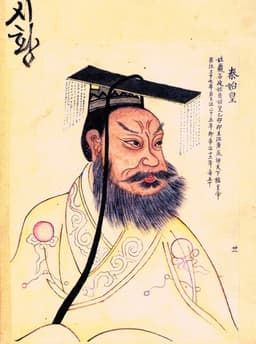
Qin Shi Huang
Emperor · Ancient
85.2Total
Basic Information
Born
1567
-259
Died
1636
-210
Era
Modern
Ancient
Nationality
Japan
China
Occupation
General
Emperor
Civilization
Eastern
Eastern
Score Comparison
Military (10%)
67.3
80.0
Political (20%)
70.0
90.0
Influence (20%)
72.0
85.0
Legacy (20%)
52.0
90.0
Leadership (15%)
85.0
78.0
Strategy (15%)
61.2
82.0
TOTAL
67.1
85.2
Date Masamune — Complete Timeline
1588 AD
Battle of KoriyamaWar
Date Masamune besieged Koriyama Castle in Mutsu Province. The castle fell after a fierce battle, further expanding Masamune's territory and demonstrating his military prowess.
Sengoku PeriodSiegeMutsu
Impact: regionalconstructive
1589 AD
Battle of SuriageharaWar◆ Major
Date Masamune defeated the Ashina clan at Suriagehara in Mutsu Province. This victory allowed Masamune to expand his territory and solidify his control over the southern Tohoku region.
Sengoku PeriodBattleTohoku
Impact: regionalconstructive
1590 AD
Submission to Toyotomi HideyoshiPolitical Action◆ Major
Date Masamune submitted to Toyotomi Hideyoshi after the Siege of Odawara. He was allowed to retain his domain but was forced to cede some territory, marking a shift from independent daimyo to vassal.
Sengoku PeriodSubmissionToyotomi
Impact: national
1601 AD
Founding of SendaiPolitical Action
Date Masamune founded the city of Sendai as his new capital. He built Sendai Castle and developed the surrounding area, establishing a prosperous domain that became a major center in northern Japan.
Sengoku PeriodCity FoundingSendai
Impact: regionalconstructive
Qin Shi Huang — Complete Timeline
246 BC
Construction of the Mausoleum and Terracotta ArmyOther◆ Major
Qin Shi Huang commissioned a vast mausoleum complex near Xi'an, guarded by thousands of life-sized terracotta soldiers, horses, and chariots. The project employed hundreds of thousands of workers and reflected his obsession with immortality and imperial power.
Impact: global
230 BC
Conquest of the Six Warring StatesWar
From 230 to 221 BCE, Ying Zheng led the Qin state in a series of campaigns that conquered the Han, Zhao, Wei, Chu, Yan, and Qi states. This unified China under a single ruler for the first time, ending the Warring States period.
Impact: global
221 BC
Standardization of Writing, Currency, and MeasurementsReform◆ Major
Qin Shi Huang ordered the standardization of Chinese script, currency, and weights and measures across the unified empire. This facilitated administration, trade, and cultural integration, laying a foundation for future dynasties.
Impact: globalconstructive
Proclamation of the Qin DynastyPolitical Action
After conquering the last independent state, Ying Zheng declared himself Shi Huangdi (First Emperor), founding the Qin Dynasty. He adopted a new title to signify his supreme authority and initiated centralized imperial rule.
Impact: global
214 BC
Initiation of the Great Wall ConstructionOther◆ Major
Qin Shi Huang ordered the connection and extension of existing northern fortifications to create a unified defensive wall against nomadic Xiongnu raids. This project involved massive conscripted labor and became the precursor to the later Great Wall.
Impact: regional
213 BC
Burning of Books and Burying of ScholarsPolitical Action◆ Major
On the advice of Li Si, Qin Shi Huang ordered the burning of historical records and philosophical texts not aligned with Legalist doctrine. He also had 460 Confucian scholars buried alive to suppress dissent and consolidate ideological control.
Impact: nationaldestructive
Expert Analysis
date-masamune-vs-qin-shi-huang
# The Dragon and the Dragonfly: Qin Shi Huang and Date Masamune
The First Emperor of China sat on his throne in Xianyang, a man who had conquered six kingdoms and now commanded the largest unified territory the East had ever seen. Across the sea, on the island of Japan, a young daimyo lost his right eye to smallpox and swore he would never be defeated again. One would build a civilization from blood and bronze; the other would carve a kingdom from chaos and rice paddies. Both were dragons—but one became a god, and the other became a ruler.
Origins
Ying Zheng was born into war. In 259 BC, the seven Warring States of China had been locked in conflict for centuries. His father, King Zhuangxiang of Qin, ruled a state that was already the most militarily disciplined and ruthlessly efficient of them all. The boy king ascended the throne at thirteen, surrounded by ministers who plotted, eunuchs who schemed, and a mother whose lover nearly destroyed the dynasty. From the beginning, Qin Shi Huang learned that trust was a weakness and total control was the only path to survival.
Date Masamune was born in 1567, during Japan's own Warring States period—the Sengoku era—when daimyo fought for supremacy in a land fractured by a century of civil war. His father, Date Terumune, ruled the Oshu region in northern Honshu. At fourteen, Masamune lost his right eye to disease and reportedly gouged it out himself when an elder suggested it was a weakness. He would later say, "A man who cannot see cannot be a general." But he became one anyway, earning the nickname "One-Eyed Dragon" for his ferocity in battle.
Rise to Power
Qin Shi Huang's path was one of methodical annihilation. From 230 to 221 BC, he unleashed a series of campaigns that swallowed the Han, Zhao, Wei, Chu, Yan, and Qi states one by one. Each conquest was a masterpiece of logistics and terror—he bribed ministers, assassinated generals, and when the walls fell, he showed no mercy. At twenty-eight, he declared himself Shi Huangdi—the First Emperor—and announced that his dynasty would last ten thousand generations. It lasted fifteen years.
Masamune's rise was more precarious. In 1588, he besieged Koriyama Castle and won. In 1589, at Suriagehara, he crushed the Ashina clan and expanded his territory into what is now Fukushima. But he made a fatal miscalculation: he moved too fast. Toyotomi Hideyoshi, who was unifying Japan under his own banner, saw Masamune as a threat. In 1590, after the Siege of Odawara, Masamune faced a choice—submit or be destroyed. He submitted, shaved his head in a gesture of humility, and appeared before Hideyoshi in white robes, as if for his own funeral. Hideyoshi laughed and let him live. Masamune had learned the art of survival through submission.
Leadership & Governance
Qin Shi Huang governed like a machine. He abolished feudalism, divided China into commanderies and counties, and appointed bureaucrats based on merit, not birth. He standardized writing—the small seal script—so that a decree from Xianyang could be read from the Yellow River to the Yangtze. He unified currency, weights, and measures, and built a network of roads and canals that bound the empire together. In 214 BC, he ordered the connection of northern fortifications into what would become the Great Wall, a barrier against the Xiongnu nomads. But his reforms came with a cost. In 213 BC, on the advice of his chancellor Li Si, he ordered the burning of all historical records and philosophical texts not aligned with Legalist doctrine. Scholars who resisted were buried alive. He believed that the past must be erased so that his new order could begin.
Date Masamune governed with a lighter hand. After serving under Tokugawa Ieyasu—who succeeded Hideyoshi after the Battle of Sekigahara—Masamune was confirmed as lord of the Sendai domain in 1601. He founded the city of Sendai, built a castle, and developed the surrounding region into a prosperous agricultural and commercial center. He encouraged trade with foreign nations, even sending an embassy to the Pope in Rome in 1613. He was a patron of the arts and a convert to Christianity—at least nominally—though he later persecuted Christians when the Tokugawa shogunate demanded it. Masamune understood that survival meant bending with the wind.
Triumph & Tragedy
Qin Shi Huang's greatest triumph was the unification itself—a feat that had eluded every ruler before him. His tragic flaw was his obsession with immortality. He sent expeditions to find the elixir of life, consulted magicians, and built a vast mausoleum complex near Xi'an, guarded by thousands of life-sized terracotta soldiers, complete with real weapons and a ceiling painted with constellations. He died in 210 BC at age forty-nine, possibly from mercury poisoning from his own immortality pills. Within three years, his dynasty collapsed in rebellion.
Masamune's greatest triumph was his survival—not just as a lord, but as a symbol of defiance. He fought in the Osaka campaigns that destroyed the Toyotomi clan in 1615, securing his place under the Tokugawa shogunate. His tragedy was that he never became shogun himself. He had the ambition, the military skill, and the cunning, but he arrived too late and under too powerful a shadow. The One-Eyed Dragon was tamed.
Character & Destiny
Qin Shi Huang was a man of absolute will. He believed that order could be imposed from above, that human nature could be reshaped by law, and that history began with him. He was paranoid, ruthless, and brilliant—a tyrant who understood that the only way to end centuries of war was to create a single, unbreakable state. His personality forged China's destiny: centralized, bureaucratic, and unified.
Masamune was a survivor. He knew when to fight and when to kneel. He wore his missing eye as a badge of honor, but he also wore humility as a shield. He was a poet and a warrior, a diplomat and a conqueror. His personality allowed him to navigate the treacherous currents of the Sengoku and early Edo periods, where one wrong step meant annihilation.
Legacy
Qin Shi Huang's legacy is the Chinese empire itself. Every dynasty that followed—Han, Tang, Ming, Qing—borrowed from his administrative blueprint. The writing system he standardized is still in use. The Great Wall became a national symbol. He is remembered as both a monster and a founder, the man who burned books and built a nation. His mausoleum remains unopened, a mystery that haunts the modern world.
Date Masamune's legacy is more localized but no less enduring. Sendai thrives as a major city. His armor, with its crescent-moon helmet, is iconic in Japanese culture. He appears in novels, video games, and television dramas as the One-Eyed Dragon who defied the odds. He is remembered as a symbol of northern Japan's pride and resilience.
Conclusion
Two dragons, two fates. Qin Shi Huang tried to conquer time itself and died poisoned by his own ambition. Date Masamune learned to dance with time and died in his bed at sixty-nine, having outlived almost all his enemies. One built an empire that lasted fifteen years but shaped two millennia. The other built a domain that lasted two centuries and shaped a region. In the end, the difference between them was not in their ambition—both dreamed of greatness—but in their understanding of power. Qin Shi Huang believed power came from crushing all opposition. Masamune knew that sometimes, the strongest move is to bow.
Rankings
🥇
Qin Shi HuangLeader
Mil: 80.0Pol: 90.0Inf: 85.0
85.2
🥈
Date Masamune
Mil: 67.3Pol: 70.0Inf: 72.0
67.1
+18.1 behind
How This Comparison Works
Algorithm
Each figure is scored on 6 dimensions (0—100 scale) based on structured historical data: Military (10%), Political (20%), Influence (20%), Legacy (20%), Leadership (15%), Strategy (15%). The weighted total produces the final ranking.
Data Sources
Scores are computed from structured sub-indicators in the database. Scale factors adjust for era (Ancient ×0.85, Modern ×1.0) and civilization size (Eastern ×1.05, Other ×0.80) to account for differences in population and military scale.
Maximum 3 Figures
Comparisons are limited to 2—3 figures to ensure readability and statistical meaningfulness.
Error Margins
±5 points per dimension — Sub-scores are derived from historical records with inherent uncertainty. Two figures within 5 points on a dimension should be considered roughly equivalent in that area.
Total Score Accuracy
±3 points overall — The weighted combination of 6 dimensions produces a total score with approximately ±3 points of uncertainty. Differences of less than 3 points are not statistically significant— the figures are effectively tied.
Known Limitations
- Historical records are incomplete and uneven across civilizations
- Figures from oral-tradition societies may be underrepresented
- Occupation labels can misclassify multi-role figures
- Scores measure capability and impact, not moral character
- Quantitative scoring is a comparison tool, not absolute truth
Capability Radar
Military (10%) — Battles & Warfare
Battles
68
85
Win Rate
72
90
Expansion
65
90
Political (20%) — Governance & Reform
Reform
65
95
Diplomacy
72
75
Economy
68
90
Influence (20%) — Cultural & Global Reach
Cultural
60
95
Global
45
85
Legacy (20%) — Historical Impact
Historical
65
95
Longevity
55
95
Leadership (15%) — Power & Stability
Tenure
70
70
Stability
70
65
Strategy (15%) — Tactics & Innovation
Strategy
70
85
Tactics
75
80
Reform
60
95
Similar Comparisons
Comments & Discussion
DragonTamer6/17/2026
Qin Shi Huang didn't just unify China; he invented modern governance. Standardized writing, currency, weights—that's infrastructure that lasted 2,000 years. Date Masamune? A regional warlord with a cool eyepatch who built Sendai. Nice city, but not exactly "unified an entire civilization." The First Emperor executed scholars and burned books, sure, but he was playing 4D chess while Masamune was playing shogi in the snow. Let's rank impacts, not aesthetics.
独眼魔龙6/17/2026
独眼龙政宗能跟秦始皇比?别逗了。秦始皇搞了书同文车同轨,统一度量衡,建立了中国历史上第一个中央集权帝国。政宗?不过是在东北乡下抢了几块稻田,给德川家康当狗罢了。他最有名的成就就是造了个仙台城,然后缩在里头绣龙纹盔甲。一个把中国变成一个国家,一个把自己变成一个传说——差距就在这儿了。
BronzeStandard6/17/2026
Data skeptic here: Qin Shi Huang's unification numbers are propaganda. Sure, he conquered six states, but his Qin Dynasty collapsed 15 years after his death. That's a statistical failure rate of 100% within a generation. Date Masamune's domain lasted until the Meiji Restoration—over 260 years of continuous rule. You want longevity? Sendai outlasted Xianyang by multiple dynasties. Also, Qin's census figures are notoriously inflated. Masamune's rice yield records? Actually verifiable from local te
法典铸匠6/17/2026
秦法是精密的杀人机器,这没错,但你别忘了秦始皇焚书坑儒的时候,把多少技术文献也烧了。政宗虽然没统一日本,可他保护了基督教传教士,引进了西洋火器,还在领地修了全日本第一个跳蚤市场——仙台市集。一个要控制思想,一个要开放贸易。谁的遗产更符合现代价值观?政宗那把名为"独眼龙"的刀切出来的路,比始皇的"书同文"宽得多。
京都之狼6/17/2026
政宗是天生的棋手,秦始皇是天生的暴君。论权谋,始皇赢在灭
Historian2616/17/2026
Classics scholar here—you're missing the mythological layer. Qin Shi Huang didn't just rule; he actively constructed himself as a living god, seeking immortality on Penglai, building a terracotta army for the afterlife. His entire reign was a cosmic performance. Date Masamune, by contrast, was a deeply human figure—he lost an eye, wrote poetry about impermanence, and negotiated with the shogunate. One built a tomb with mercury rivers; the other built a castle with cherry trees. Different genres