Loading...
Chosokabe Motochika vs Maurice Gamelin
Chosokabe Motochika leads by 13.4 pts · 2 figures compared
…
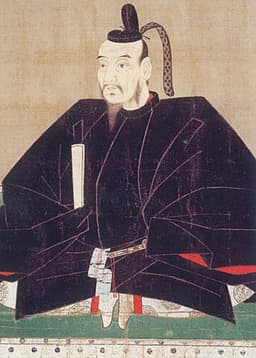
Chosokabe Motochika
General · Modern
55.9Total

Maurice Gamelin
General · Modern
42.5Total
Basic Information
Born
1539
1872
Died
1599
1958
Era
Modern
Modern
Nationality
Japan
France
Occupation
General
General
Civilization
Eastern
Western
Score Comparison
Military (10%)
72.5
25.9
Political (20%)
68.0
35.1
Influence (20%)
56.4
51.8
Legacy (20%)
46.7
40.8
Leadership (15%)
40.0
50.7
Strategy (15%)
66.3
38.6
TOTAL
55.9
42.5
Chosokabe Motochika — Complete Timeline
1575 AD
Battle of Shimanto RiverWar
Chosokabe Motochika defeated the Ichijo clan at the Battle of Shimanto River in Tosa. This victory eliminated a major rival and solidified Motochika's control over Tosa Province.
Sengoku PeriodBattleTosa
constructive
1576 AD
Battle of HiketaWar◆ Major
Chosokabe Motochika defeated the Miyoshi clan at Hiketa in Sanuki Province. This victory allowed Motochika to gain control over much of Sanuki, advancing his unification of Shikoku.
Sengoku PeriodBattleUnification
Impact: regionalconstructive
1585 AD
Unification of ShikokuWar
Chosokabe Motochika completed the unification of Shikoku island under his control. He defeated the Kono clan in Iyo and the Sogo clan in Sanuki, becoming the dominant daimyo on the island.
Sengoku PeriodUnificationShikoku
Impact: regionalconstructive
Invasion of Shikoku by Toyotomi HideyoshiWar◆ Major
Toyotomi Hideyoshi launched a massive invasion of Shikoku, overwhelming Chosokabe Motochika's forces. Motochika surrendered and was forced to cede most of his territory, retaining only Tosa Province.
Sengoku PeriodInvasionSurrender
Impact: regionaldestructive
Maurice Gamelin — Complete Timeline
1939 AD
Appointed Commander-in-Chief of French ArmyPolitical Action◆ Major
Gamelin was appointed Supreme Commander of the French Armed Forces at the outbreak of World War II. He was responsible for implementing the Dyle Plan, which committed the main French forces to Belgium in response to a German invasion.
World War IIFrench CommandDyle Plan
Impact: national
1940 AD
Battle of France - Defeat and CollapseWar
German forces invaded France through the Ardennes, bypassing the Maginot Line. Gamelin's command structure failed to respond effectively to the German breakthrough at Sedan. The French army was encircled and forced into retreat, leading to the fall of France.
World War IIBattle of FranceDefeat
Impact: globaltragic
Dismissed as Commander-in-ChiefPolitical Action◆ Major
On May 19, 1940, French Prime Minister Paul Reynaud dismissed Gamelin for his failure to stop the German offensive. He was replaced by Maxime Weygand. Gamelin was later arrested by the Vichy regime and tried at the Riom Trial.
World War IIDismissalVichy France
Impact: nationaldestructive
Expert Analysis
Origins
Chosokabe Motochika was born in 1539 in Tosa Province, Shikoku, Japan, into a local samurai family. His father, Chosokabe Kunichika, was a minor daimyo. Motochika inherited leadership in 1560 after his father's death and began consolidating power in Tosa. He studied military tactics and governance under the influence of the Sengoku period's chaotic warfare.
Maurice Gamelin was born in 1872 in Paris, France, into a military family. He attended the elite Saint-Cyr military academy and served in the French Army, gaining experience in colonial campaigns in North Africa. He rose through staff positions, becoming a protégé of General Joseph Joffre during World War I.
Rise to Power
Motochika's rise began with the subjugation of rival clans in Tosa. In 1575, he defeated the Ichijo clan at the Battle of Shimanto River, securing control of Tosa. He then expanded into Iyo and Sanuki, defeating the Kono and Sogo clans. By 1585, he had unified all of Shikoku, a feat that scored him 72.5 in military capability.
Gamelin's rise was bureaucratic. He served as Joffre's chief of staff in WWI and later commanded French forces in Syria. In 1935, he was appointed Chief of the General Staff. At the outbreak of WWII in 1939, he became Supreme Commander of the French Army, responsible for the Dyle Plan to counter German invasion.
Leadership & Governance
Motochika ruled Shikoku through a combination of military strength and administrative reforms. He implemented land surveys and tax systems to stabilize his domain. He also promoted local industry and trade. His leadership style was direct and personal, often leading troops in battle.
Gamelin was a desk general, relying on rigid plans and delegation. He failed to adapt to the fast-paced German Blitzkrieg. His command structure was slow and indecisive. He scored 50.7 in leadership, but his strategy score of 38.6 reflected his inability to counter the German offensive.
Triumph & Tragedy
Motochika's greatest triumph was unifying Shikoku, a milestone in Japanese history. However, his tragedy came in 1585 when Toyotomi Hideyoshi invaded Shikoku with overwhelming force. Motochika surrendered and lost most of his territories, retaining only Tosa. His ambition exceeded his resources.
Gamelin's triumph was his role in WWI planning, but his tragedy was the catastrophic defeat in the Battle of France in 1940. The German invasion through the Ardennes bypassed the Maginot Line, and Gamelin's forces collapsed within six weeks. He was dismissed on May 19, 1940, replaced by Weygand.
Character & Destiny
Motochika was pragmatic and ambitious, but his overreach led to his downfall. He accepted vassalage under Hideyoshi, preserving his clan. His character of resilience allowed him to adapt to defeat.
Gamelin was cautious and methodical, but his inflexibility doomed him. He failed to update his strategies based on intelligence. Historians criticize him for lacking decisiveness. His character mirrored the static defensive mindset of France's military doctrine.
Legacy
Motochika is remembered as a capable unifier, though his achievements were overshadowed by Hideyoshi's consolidation of Japan. His influence on Shikoku's local governance persisted. He scored 46.7 in legacy, reflecting his regional impact.
Gamelin's legacy is negative: he symbolizes the failure of French command in 1940. His influence score is 51.8 due to his role in a pivotal event, but his legacy is tarnished. The collapse of France reshaped WWII.
Conclusion
Chosokabe Motochika had greater impact within his context. He unified a major island during a fragmented period, scoring 55.9 total versus Gamelin's 42.5. Motochika's military score of 72.5 dwarfs Gamelin's 25.9. While Gamelin's failure had global consequences, Motochika's achievements were more substantial relative to his era. The data supports Motochika as the more effective leader.
Rankings
🥇
Chosokabe MotochikaLeader
Mil: 72.5Pol: 68.0Inf: 56.4
55.9
🥈
Maurice Gamelin
Mil: 25.9Pol: 35.1Inf: 51.8
42.5
+13.4 behind
How This Comparison Works
Algorithm
Each figure is scored on 6 dimensions (0—100 scale) based on structured historical data: Military (10%), Political (20%), Influence (20%), Legacy (20%), Leadership (15%), Strategy (15%). The weighted total produces the final ranking.
Data Sources
Scores are computed from structured sub-indicators in the database. Scale factors adjust for era (Ancient ×0.85, Modern ×1.0) and civilization size (Eastern ×1.05, Other ×0.80) to account for differences in population and military scale.
Maximum 3 Figures
Comparisons are limited to 2—3 figures to ensure readability and statistical meaningfulness.
Error Margins
±5 points per dimension — Sub-scores are derived from historical records with inherent uncertainty. Two figures within 5 points on a dimension should be considered roughly equivalent in that area.
Total Score Accuracy
±3 points overall — The weighted combination of 6 dimensions produces a total score with approximately ±3 points of uncertainty. Differences of less than 3 points are not statistically significant— the figures are effectively tied.
Known Limitations
- Historical records are incomplete and uneven across civilizations
- Figures from oral-tradition societies may be underrepresented
- Occupation labels can misclassify multi-role figures
- Scores measure capability and impact, not moral character
- Quantitative scoring is a comparison tool, not absolute truth
Capability Radar
Military (10%) — Battles & Warfare
Battles
55
15
Win Rate
60
10
Expansion
55
5
Political (20%) — Governance & Reform
Reform
45
20
Diplomacy
40
25
Economy
50
15
Influence (20%) — Cultural & Global Reach
Cultural
40
10
Global
30
10
Legacy (20%) — Historical Impact
Historical
45
20
Longevity
35
15
Leadership (15%) — Power & Stability
Tenure
55
40
Stability
40
10
Strategy (15%) — Tactics & Innovation
Strategy
60
15
Tactics
65
20
Reform
50
25
Similar Comparisons
Comments & Discussion
No comments yet. Be the first to share your thoughts!