Loading...
Christian VIII of Denmark vs Jayachamarajendra Wadiyar
Jayachamarajendra Wadiyar leads by 8.0 pts · 2 figures compared
…

Christian VIII of Denmark
Emperor · Modern
43.1Total
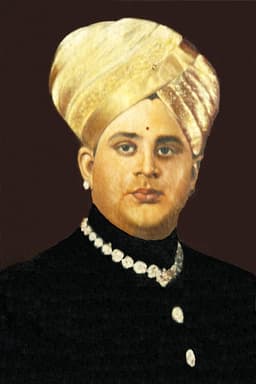
Jayachamarajendra Wadiyar
Emperor · Modern
51.1Total
Basic Information
Born
1786
1919
Died
1848
1974
Era
Modern
Modern
Nationality
Denmark
India
Occupation
Emperor
Emperor
Civilization
Western
Indian
Score Comparison
Military (10%)
48.9
51.7
Political (20%)
39.4
45.1
Influence (20%)
46.3
53.3
Legacy (20%)
36.7
40.0
Leadership (15%)
45.0
65.7
Strategy (15%)
47.7
60.0
TOTAL
43.1
51.1
Christian VIII of Denmark — Complete Timeline
1839 AD
Accession and Liberal ReformsPolitical Action◆ Major
Christian VIII ascended the throne and introduced liberal reforms, including freedom of the press and a consultative assembly. His policies aimed to modernize Denmark and address growing demands for constitutional government.
ReformLiberalismConstitution
Impact: nationalprogressive
1840 AD
Support for the Arts and SciencesCultural
Christian VIII was a patron of the arts and sciences, supporting figures like Hans Christian Andersen and the sculptor Bertel Thorvaldsen. His patronage contributed to the Danish Golden Age of culture.
PatronageArtsGolden Age
Impact: nationalconstructive
1848 AD
First Schleswig WarWar◆ Major
Christian VIII faced the outbreak of the First Schleswig War, a rebellion by German-speaking duchies against Danish rule. The war began just before his death and continued under his successor, Frederick VII.
WarSchleswigRebellion
Impact: regional
Drafting of the June ConstitutionPolitical Action◆ Major
Christian VIII initiated the drafting of a new constitution, which would establish a constitutional monarchy. He died before its completion, but his work paved the way for the Danish Constitution of 1849.
ConstitutionReformDemocracy
Impact: nationalprogressive
Jayachamarajendra Wadiyar — Complete Timeline
1940 AD
Patronized Carnatic Music and DanceCultural◆ Major
Jayachamarajendra was a noted patron of Carnatic music and dance. He supported musicians and dancers, and himself composed several kritis (musical compositions) under the pen name 'Sri Vidya'. His patronage helped preserve and promote South Indian classical arts.
MusicPatronageCarnatic
Impact: regionalconstructive
1947 AD
Acceded to the Dominion of IndiaPolitical Action
Jayachamarajendra Wadiyar signed the Instrument of Accession, merging Mysore with the Dominion of India. This ended the princely state's sovereignty and integrated it into the Indian Union, a key step in India's unification.
Indian IndependenceAccessionPrincely State
Impact: national
1950 AD
Published Philosophical Works on Advaita VedantaCultural
Jayachamarajendra wrote several books on Advaita Vedanta philosophy, including 'The Quest for Truth' and 'The Philosophy of the Upanishads'. His works were recognized by scholars and contributed to Indian philosophical literature.
PhilosophyLiteratureAdvaita Vedanta
Impact: nationalconstructive
1956 AD
Served as Governor of Mysore StatePolitical Action
After the reorganization of states, Jayachamarajendra served as the Governor of Mysore State (later Karnataka) from 1956 to 1964. He performed ceremonial duties and represented the state at the national level.
GovernorPost-IndependenceMysore
Impact: regional
Expert Analysis
Origins
Christian VIII was born on September 18, 1786, in Copenhagen, Denmark, into the House of Oldenburg. He was the son of Crown Prince Frederick (later Frederick VI) and Sophia Frederica of Mecklenburg-Schwerin. He received a thorough education in statecraft and military affairs, and early on showed interest in liberal ideas. Jayachamarajendra Wadiyar was born on July 18, 1919, in Mysore, India, into the Wadiyar dynasty. He was the son of Maharaja Krishnaraja Wadiyar IV and Maharani Lakshmivilasa Sannidhana. He was educated at the Maharaja's College in Mysore and later at the University of Mysore. He was deeply influenced by Hindu philosophy and Carnatic music.
Rise to Power
Christian VIII ascended the throne of Denmark on December 3, 1839, after the death of his cousin Frederick VI. He had previously served as governor of Norway and had been briefly king of Norway in 1814 before being forced to abdicate. His rise was smooth due to his royal lineage. Jayachamarajendra Wadiyar became the Maharaja of Mysore on August 3, 1940, upon the death of his father. He inherited a prosperous state with a modern administration. His rise was as a constitutional monarch under British suzerainty.
Leadership & Governance
Christian VIII introduced liberal reforms, including freedom of the press (1840) and the establishment of consultative assemblies (1841). His governance aimed at gradual democratization but faced opposition from conservatives. He initiated the drafting of the June Constitution, which would establish a constitutional monarchy, but died before its completion. Jayachamarajendra Wadiyar ruled as a constitutional monarch under British oversight until 1947. After India's independence, he signed the Instrument of Accession on August 15, 1947, merging Mysore with India. He later served as Governor of Mysore State (1956-1964), performing ceremonial duties.
Triumph & Tragedy
Christian VIII's greatest success was his liberal reforms and the groundwork for the June Constitution, which was adopted after his death. His greatest failure was his inability to prevent the First Schleswig War (1848-1851), which erupted due to nationalist tensions. The war exposed the limits of his reforms. Jayachamarajendra Wadiyar's triumph was his peaceful accession to India and his patronage of Carnatic music and philosophy. He composed over 100 kritis and wrote books on Advaita Vedanta. His tragedy was the loss of his kingdom's sovereignty, though he retained influence as Governor.
Character & Destiny
Christian VIII was a liberal-minded but cautious ruler. He sought to modernize Denmark while preserving the monarchy. His character of gradual reform led to mixed results: he earned praise for his reforms but criticism for indecisiveness. Jayachamarajendra was a philosopher-king, deeply spiritual and artistic. His decision to accede to India was pragmatic and peaceful, reflecting his character. He scored 65.7 in leadership compared to Christian's 45.0, showing more effective governance.
Legacy
Christian VIII's legacy is tied to the June Constitution of 1849, which established constitutional monarchy in Denmark. His reforms paved the way for modern Danish democracy. He scored 36.7 in legacy. Jayachamarajendra's legacy is as a patron of arts and philosophy. He is remembered for preserving Mysore's cultural heritage and his philosophical works. His legacy score is 40.0. Both had moderate impact.
Conclusion
Jayachamarajendra Wadiyar had greater overall impact based on total score (51.1 vs 43.1) and effective leadership. His peaceful transition and cultural patronage left a lasting mark. Christian VIII's reforms were significant but incomplete, and his reign was marred by war. The philosopher-king's holistic influence on music, philosophy, and governance edges out the liberal reformer.
Rankings
🥇
Jayachamarajendra WadiyarLeader
Mil: 51.7Pol: 45.1Inf: 53.3
51.1
🥈
Christian VIII of Denmark
Mil: 48.9Pol: 39.4Inf: 46.3
43.1
+8.0 behind
How This Comparison Works
Algorithm
Each figure is scored on 6 dimensions (0—100 scale) based on structured historical data: Military (10%), Political (20%), Influence (20%), Legacy (20%), Leadership (15%), Strategy (15%). The weighted total produces the final ranking.
Data Sources
Scores are computed from structured sub-indicators in the database. Scale factors adjust for era (Ancient ×0.85, Modern ×1.0) and civilization size (Eastern ×1.05, Other ×0.80) to account for differences in population and military scale.
Maximum 3 Figures
Comparisons are limited to 2—3 figures to ensure readability and statistical meaningfulness.
Error Margins
±5 points per dimension — Sub-scores are derived from historical records with inherent uncertainty. Two figures within 5 points on a dimension should be considered roughly equivalent in that area.
Total Score Accuracy
±3 points overall — The weighted combination of 6 dimensions produces a total score with approximately ±3 points of uncertainty. Differences of less than 3 points are not statistically significant— the figures are effectively tied.
Known Limitations
- Historical records are incomplete and uneven across civilizations
- Figures from oral-tradition societies may be underrepresented
- Occupation labels can misclassify multi-role figures
- Scores measure capability and impact, not moral character
- Quantitative scoring is a comparison tool, not absolute truth
Capability Radar
Military (10%) — Battles & Warfare
Battles
25
28
Win Rate
24
30
Expansion
28
35
Political (20%) — Governance & Reform
Reform
40
35
Diplomacy
30
30
Economy
20
30
Influence (20%) — Cultural & Global Reach
Cultural
15
45
Global
10
15
Legacy (20%) — Historical Impact
Historical
20
30
Longevity
10
20
Leadership (15%) — Power & Stability
Tenure
10
40
Stability
25
25
Strategy (15%) — Tactics & Innovation
Strategy
31
36
Tactics
35
41
Reform
40
45
Similar Comparisons
Comments & Discussion
No comments yet. Be the first to share your thoughts!