Loading...
Jayachamarajendra Wadiyar vs Julius Caesar
Julius Caesar leads by 31.7 pts · 2 figures compared
…
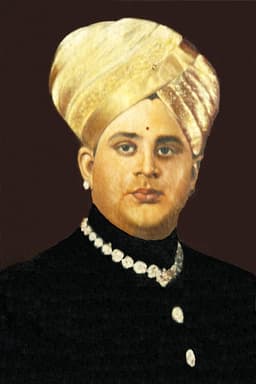
Jayachamarajendra Wadiyar
Emperor · Modern
51.1Total

Julius Caesar
General · Ancient
82.8Total
Basic Information
Born
1919
-100
Died
1974
-44
Era
Modern
Ancient
Nationality
India
Roman Republic
Occupation
Emperor
General
Civilization
Indian
Western
Score Comparison
Military (10%)
51.7
88.0
Political (20%)
45.1
78.0
Influence (20%)
53.3
85.0
Legacy (20%)
40.0
82.0
Leadership (15%)
65.7
80.0
Strategy (15%)
60.0
85.0
TOTAL
51.1
82.8
Jayachamarajendra Wadiyar — Complete Timeline
1940 AD
Patronized Carnatic Music and DanceCultural◆ Major
Jayachamarajendra was a noted patron of Carnatic music and dance. He supported musicians and dancers, and himself composed several kritis (musical compositions) under the pen name 'Sri Vidya'. His patronage helped preserve and promote South Indian classical arts.
MusicPatronageCarnatic
Impact: regionalconstructive
1947 AD
Acceded to the Dominion of IndiaPolitical Action
Jayachamarajendra Wadiyar signed the Instrument of Accession, merging Mysore with the Dominion of India. This ended the princely state's sovereignty and integrated it into the Indian Union, a key step in India's unification.
Indian IndependenceAccessionPrincely State
Impact: national
1950 AD
Published Philosophical Works on Advaita VedantaCultural
Jayachamarajendra wrote several books on Advaita Vedanta philosophy, including 'The Quest for Truth' and 'The Philosophy of the Upanishads'. His works were recognized by scholars and contributed to Indian philosophical literature.
PhilosophyLiteratureAdvaita Vedanta
Impact: nationalconstructive
1956 AD
Served as Governor of Mysore StatePolitical Action
After the reorganization of states, Jayachamarajendra served as the Governor of Mysore State (later Karnataka) from 1956 to 1964. He performed ceremonial duties and represented the state at the national level.
GovernorPost-IndependenceMysore
Impact: regional
Julius Caesar — Complete Timeline
58 BC
Gallic WarsWar◆ Major
Caesar, as proconsul of Gaul, launched a series of campaigns that conquered all of Gaul (modern France, Belgium, and parts of Switzerland). He fought numerous battles, including against the Helvetii, the Belgae, and the Gallic chieftain Vercingetorix. The wars brought immense wealth and a loyal army to Caesar.
Gallic WarsConquestRoman Expansion
Impact: regional
49 BC
Crossing the RubiconPolitical Action◆ Major
Caesar led Legio XIII across the Rubicon River into Italy, defying the Roman Senate's order to disband his army. This act triggered a civil war against Pompey and the Optimates, ultimately leading to Caesar's dictatorship and the end of the Roman Republic.
Roman Civil WarEnd of RepublicPower Struggle
Impact: global
48 BC
Battle of PharsalusWar◆ Major
Caesar's outnumbered army defeated the larger forces of Pompey the Great at Pharsalus in Greece. Caesar's tactical use of a reserve line to counter Pompey's cavalry charge proved decisive. Pompey fled to Egypt, where he was assassinated, leaving Caesar as the undisputed master of the Roman world.
Roman Civil WarBattleDecisive Victory
Impact: regional
44 BC
Appointment as Dictator for LifePolitical Action◆ Major
The Roman Senate appointed Caesar dictator perpetuo (dictator for life), granting him unprecedented personal power. This move concentrated military, legislative, and judicial authority in one person, effectively ending the Roman Republic's traditional system of checks and balances and alarming many senators.
DictatorshipEnd of RepublicPower Consolidation
Impact: regionaldestructive
Assassination on the Ides of MarchPolitical Action◆ Major
A group of Roman senators, led by Marcus Junius Brutus and Gaius Cassius Longinus, stabbed Caesar to death at a meeting of the Senate in the Theatre of Pompey. The assassination was intended to restore the Republic, but instead triggered another civil war that led to the rise of the Roman Empire.
AssassinationRoman PoliticsEnd of Republic
Impact: globaldestructive
Expert Analysis
Origins
Jayachamarajendra Wadiyar was born on July 18, 1919, into the Wadiyar dynasty of Mysore, a princely state in British India. He was the only son of Maharaja Krishnaraja Wadiyar IV and Maharani Lakshmivilasa Sannidhana. Educated at the Maharaja's College, Mysore, and later at the University of Mysore, he developed interests in philosophy, music, and administration. His early life was shaped by the progressive governance of his father, who modernized Mysore.
Julius Caesar was born on July 12, 100 BCE, into the patrician Julian family in Rome. His father died when he was 16, and he was raised by his mother, Aurelia. He received a traditional Roman education in rhetoric, law, and military tactics. His aunt Julia was the wife of Gaius Marius, a populist leader, which exposed Caesar to political turbulence. He fled Rome during Sulla's proscriptions, serving in Asia Minor and earning the civic crown for bravery.
Rise to Power
Jayachamarajendra ascended the throne at age 21 after his father's death in 1940. He ruled as Maharaja of Mysore until 1950, when India became a republic. In 1947, he signed the Instrument of Accession, merging Mysore with the Dominion of India, a decision that ended princely sovereignty but ensured a smooth transition. He later served as Governor of Mysore State (1956–1964), a ceremonial role that extended his public service.
Caesar's rise began with his election as Pontifex Maximus in 63 BCE. He formed the First Triumvirate with Pompey and Crassus in 60 BCE, securing the consulship in 59 BCE. As proconsul of Gaul (58–50 BCE), he conquered the region, amassing wealth and a loyal army. His crossing of the Rubicon in 49 BCE triggered a civil war, defeating Pompey at Pharsalus in 48 BCE. He became dictator in 47 BCE and dictator for life in 44 BCE.
Leadership & Governance
Jayachamarajendra's leadership was characterized by constitutional monarchy and cultural patronage. He accepted the transition to democracy without resistance, focusing on philanthropy and the arts. He composed over 100 kritis in Carnatic music under the pen name 'Sri Vidya' and wrote philosophical works on Advaita Vedanta, such as 'The Quest for Truth'. His governance score of 69.9 reflects his effective but limited political role.
Caesar ruled as a military autocrat, centralizing power and implementing reforms. He introduced the Julian calendar, granted citizenship to provincials, and initiated public works. His land reforms and debt relief won popular support but alienated the Senate. His leadership score of 80.0 indicates his ability to command loyalty, but his concentration of power led to his assassination.
Triumph & Tragedy
Jayachamarajendra's triumph was his peaceful integration of Mysore into India, preserving stability during a turbulent era. He earned respect as a scholar and patron, with his musical compositions still performed. His tragedy was the loss of his kingdom's sovereignty; he became a figurehead in a democratic system. His legacy score of 53.5 is modest because his impact was regional and cultural rather than global.
Caesar's triumphs include the conquest of Gaul (scored 88.0 in military), defeating 300 tribes, and his victory in the civil war. His reforms shaped the Roman Empire. His tragedy was his assassination on the Ides of March (44 BCE), which plunged Rome into further civil wars. His political score of 78.0 reflects his failure to secure a lasting political structure.
Character & Destiny
Jayachamarajendra was introspective, scholarly, and resigned to his fate. He accepted the end of monarchy with grace, focusing on intellectual pursuits. His character led to a quiet, respected but limited role in history. Caesar was ambitious, calculating, and ruthless. His drive for power led him to cross the Rubicon, but his arrogance and disregard for republican norms sealed his fate. The historian Suetonius noted his clemency, but also his ambition.
Legacy
Jayachamarajendra's legacy is cultural: he is remembered as a philosopher-king who preserved Mysore's heritage. His works on Advaita Vedanta are studied, and his musical compositions are part of the Carnatic repertoire. He scored 72.0 in influence, primarily in South India. Caesar's legacy is immense: the term 'Caesar' became synonymous with emperor, his calendar lasted 1,600 years, and his military tactics are still studied. His score of 82.0 in legacy reflects his transformation of the Roman world.
Conclusion
Julius Caesar had greater impact, with a total score of 82.8 versus 63.4. Caesar's actions reshaped the Mediterranean world, ending the Roman Republic and paving the way for the Empire. Jayachamarajendra's contributions, while significant in culture and philosophy, were confined to a small region and a transitional period. Caesar's military and political achievements altered the course of Western civilization, making him the more consequential figure.
Rankings
🥇
Julius CaesarLeader
Mil: 88.0Pol: 78.0Inf: 85.0
82.8
🥈
Jayachamarajendra Wadiyar
Mil: 51.7Pol: 45.1Inf: 53.3
51.1
+31.7 behind
How This Comparison Works
Algorithm
Each figure is scored on 6 dimensions (0—100 scale) based on structured historical data: Military (10%), Political (20%), Influence (20%), Legacy (20%), Leadership (15%), Strategy (15%). The weighted total produces the final ranking.
Data Sources
Scores are computed from structured sub-indicators in the database. Scale factors adjust for era (Ancient ×0.85, Modern ×1.0) and civilization size (Eastern ×1.05, Other ×0.80) to account for differences in population and military scale.
Maximum 3 Figures
Comparisons are limited to 2—3 figures to ensure readability and statistical meaningfulness.
Error Margins
±5 points per dimension — Sub-scores are derived from historical records with inherent uncertainty. Two figures within 5 points on a dimension should be considered roughly equivalent in that area.
Total Score Accuracy
±3 points overall — The weighted combination of 6 dimensions produces a total score with approximately ±3 points of uncertainty. Differences of less than 3 points are not statistically significant— the figures are effectively tied.
Known Limitations
- Historical records are incomplete and uneven across civilizations
- Figures from oral-tradition societies may be underrepresented
- Occupation labels can misclassify multi-role figures
- Scores measure capability and impact, not moral character
- Quantitative scoring is a comparison tool, not absolute truth
Capability Radar
Military (10%) — Battles & Warfare
Battles
28
95
Win Rate
30
92
Expansion
35
97
Political (20%) — Governance & Reform
Reform
35
90
Diplomacy
30
85
Economy
30
82
Influence (20%) — Cultural & Global Reach
Cultural
45
88
Global
15
94
Legacy (20%) — Historical Impact
Historical
30
95
Longevity
20
96
Leadership (15%) — Power & Stability
Tenure
40
75
Stability
25
60
Strategy (15%) — Tactics & Innovation
Strategy
36
94
Tactics
41
96
Reform
45
88
Similar Comparisons
Comments & Discussion
No comments yet. Be the first to share your thoughts!