Loading...
Christian VIII of Denmark vs Sabah Al-Ahmad Al-Jaber
Sabah Al-Ahmad Al-Jaber leads by 9.0 pts · 2 figures compared
…

Christian VIII of Denmark
Emperor · Modern
43.1Total
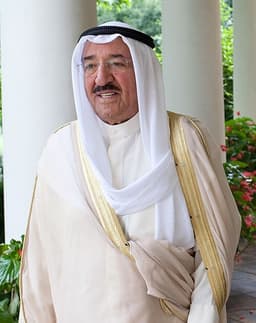
Sabah Al-Ahmad Al-Jaber
Emperor · Modern
52.1Total
Basic Information
Born
1786
1929
Died
1848
—
Era
Modern
Modern
Nationality
Denmark
Kuwait
Occupation
Emperor
Emperor
Civilization
Western
Middle Eastern
Score Comparison
Military (10%)
48.9
11.9
Political (20%)
39.4
72.0
Influence (20%)
46.3
59.0
Legacy (20%)
36.7
44.2
Leadership (15%)
45.0
78.0
Strategy (15%)
47.7
26.5
TOTAL
43.1
52.1
Christian VIII of Denmark — Complete Timeline
1839 AD
Accession and Liberal ReformsPolitical Action◆ Major
Christian VIII ascended the throne and introduced liberal reforms, including freedom of the press and a consultative assembly. His policies aimed to modernize Denmark and address growing demands for constitutional government.
ReformLiberalismConstitution
Impact: nationalprogressive
1840 AD
Support for the Arts and SciencesCultural
Christian VIII was a patron of the arts and sciences, supporting figures like Hans Christian Andersen and the sculptor Bertel Thorvaldsen. His patronage contributed to the Danish Golden Age of culture.
PatronageArtsGolden Age
Impact: nationalconstructive
1848 AD
First Schleswig WarWar◆ Major
Christian VIII faced the outbreak of the First Schleswig War, a rebellion by German-speaking duchies against Danish rule. The war began just before his death and continued under his successor, Frederick VII.
WarSchleswigRebellion
Impact: regional
Drafting of the June ConstitutionPolitical Action◆ Major
Christian VIII initiated the drafting of a new constitution, which would establish a constitutional monarchy. He died before its completion, but his work paved the way for the Danish Constitution of 1849.
ConstitutionReformDemocracy
Impact: nationalprogressive
Sabah Al-Ahmad Al-Jaber — Complete Timeline
2003 AD
Appointed as Deputy Prime Minister and Foreign MinisterPolitical Action◆ Major
Sabah Al-Ahmad Al-Jaber was appointed Deputy Prime Minister and Minister of Foreign Affairs of Kuwait in 2003. He played a key role in shaping Kuwait's foreign policy, focusing on Gulf diplomacy and regional stability.
DiplomacyGulf Cooperation Council
Impact: regionalconstructive
2006 AD
Accession as Emir of KuwaitPolitical Action◆ Major
Sabah Al-Ahmad Al-Jaber became Emir of Kuwait on January 29, 2006, after the death of Emir Jaber Al-Ahmad Al-Jaber. His accession was confirmed by the National Assembly, marking a smooth succession.
SuccessionKuwaiti Monarchy
Impact: national
2010 AD
Oversaw Economic Reforms and DevelopmentReform
Under Emir Sabah's rule, Kuwait implemented economic reforms including the Kuwait Development Plan (2010-2015) aimed at diversifying the economy away from oil. The plan included infrastructure projects and private sector growth.
Economic ReformDevelopment
Impact: nationalconstructive
2013 AD
Hosted International Humanitarian ConferencesPolitical Action◆ Major
Emir Sabah convened the International Humanitarian Pledging Conference for Syria in Kuwait in 2013, raising over $1.5 billion for humanitarian aid. This established Kuwait as a major humanitarian donor and mediator.
Humanitarian AidSyrian Civil War
Impact: globalconstructive
2014 AD
Mediated Gulf Diplomatic CrisisPolitical Action◆ Major
Emir Sabah mediated the 2014 diplomatic rift between Qatar and other Gulf states, helping to restore relations. His efforts reinforced his reputation as a regional peacemaker and architect of Gulf diplomacy.
DiplomacyGulf Cooperation Council
Impact: regionalconstructive
Expert Analysis
Origins
Christian VIII of Denmark (born September 18, 1786) was the son of Crown Prince Frederick and Princess Sophia Frederica of Mecklenburg-Schwerin. He received a thorough education in law, history, and languages, and developed a strong interest in the arts and sciences. His early experiences as governor-general of Norway (1813-1814) shaped his understanding of governance, though his brief reign as king of Norway ended with the country's cession to Sweden. Sabah Al-Ahmad Al-Jaber Al-Sabah (born June 16, 1929) was the fourth son of Ahmad Al-Jaber Al-Sabah, the tenth ruler of Kuwait. He was educated at Kuwait's Al-Mubarakiya School and later privately studied English and international relations. His early career in the Kuwaiti police force and as head of the Department of Public Security gave him administrative experience.
Rise to Power
Christian VIII ascended the Danish throne on December 3, 1839, after the death of his half-brother Frederick VI. His accession was initially welcomed due to his reputation as a liberal-minded prince. However, his liberal reforms were cautious, as he sought to balance progressive ideas with the preservation of royal authority. Sabah Al-Ahmad's rise was slower: he served as Minister of Foreign Affairs from 1963 to 1991 and again from 1992 to 2003, becoming a key architect of Kuwait's foreign policy. He was appointed Deputy Prime Minister in 2003 and became Emir on January 29, 2006, after the death of his half-brother, Emir Jaber Al-Ahmad. His succession was confirmed by the National Assembly, reflecting his political skill.
Leadership & Governance
Christian VIII's leadership style was reformist but cautious. He introduced freedom of the press in 1840 and established consultative assemblies in 1841, but resisted full parliamentary democracy. His governance was marked by attempts to integrate the duchies of Schleswig and Holstein into a unified Danish state, which inflamed German nationalism. Sabah Al-Ahmad's leadership was diplomatic and humanitarian. He focused on economic diversification through the Kuwait Development Plan (2010-2015) and maintained Kuwait's neutrality in regional conflicts. His foreign policy skill scored a political score of 72.0, contrasting with Christian VIII's 39.4. Sabah Al-Ahmad also hosted international humanitarian conferences, raising over $1.5 billion for Syrian refugees.
Triumph & Tragedy
Christian VIII's greatest success was initiating the drafting of the June Constitution, which would have transformed Denmark into a constitutional monarchy. However, he died on January 20, 1848, before its completion. His greatest failure was the mishandling of the Schleswig-Holstein question, which led to the First Schleswig War (1848-1851) after his death. Sabah Al-Ahmad's triumphs include mediating the 2014 Gulf diplomatic crisis between Qatar and other Gulf states, and his humanitarian efforts earned him the title "Humanitarian Emir." His failures include slow economic reforms and persistent budget deficits due to reliance on oil revenues. His military score of 11.9 reflects Kuwait's limited military engagement.
Character & Destiny
Christian VIII was intelligent and cultured but indecisive. His liberal leanings were tempered by a desire to maintain royal power, leading to half-measures that satisfied neither conservatives nor liberals. His patronage of the arts, supporting Hans Christian Andersen and Bertel Thorvaldsen, showed his appreciation for culture but did not translate into political success. Sabah Al-Ahmad was pragmatic and patient, with a talent for diplomacy. His calm demeanor and ability to build consensus made him a respected mediator. His character shaped his destiny as a peacemaker, but his avoidance of bold reforms left structural economic issues unaddressed.
Legacy
Christian VIII's legacy is mixed. He is remembered as a transitional figure who paved the way for Denmark's constitutional monarchy, but his inability to solve the Schleswig-Holstein issue led to war and eventual loss of territory. His total score of 43.1 reflects moderate impact. Sabah Al-Ahmad's legacy is more positive: he transformed Kuwait into a humanitarian hub and strengthened its diplomatic standing. His influence score of 59.0 and leadership score of 78.0 highlight his effective statecraft. However, his economic reforms were incomplete, leaving Kuwait vulnerable to oil price fluctuations.
Conclusion
Sabah Al-Ahmad Al-Jaber Al-Sabah had greater impact than Christian VIII of Denmark. His total score of 52.1 versus 43.1 reflects his superior political and leadership abilities. While Christian VIII initiated important liberal reforms, his indecisiveness and the disastrous Schleswig-Holstein crisis limited his achievements. Sabah Al-Ahmad's diplomatic successes and humanitarian legacy had a lasting positive effect on Kuwait and the Gulf region. The score gap of 9.0 points underscores this conclusion.
Rankings
🥇
Sabah Al-Ahmad Al-JaberLeader
Mil: 11.9Pol: 72.0Inf: 59.0
52.1
🥈
Christian VIII of Denmark
Mil: 48.9Pol: 39.4Inf: 46.3
43.1
+9.0 behind
How This Comparison Works
Algorithm
Each figure is scored on 6 dimensions (0—100 scale) based on structured historical data: Military (10%), Political (20%), Influence (20%), Legacy (20%), Leadership (15%), Strategy (15%). The weighted total produces the final ranking.
Data Sources
Scores are computed from structured sub-indicators in the database. Scale factors adjust for era (Ancient ×0.85, Modern ×1.0) and civilization size (Eastern ×1.05, Other ×0.80) to account for differences in population and military scale.
Maximum 3 Figures
Comparisons are limited to 2—3 figures to ensure readability and statistical meaningfulness.
Error Margins
±5 points per dimension — Sub-scores are derived from historical records with inherent uncertainty. Two figures within 5 points on a dimension should be considered roughly equivalent in that area.
Total Score Accuracy
±3 points overall — The weighted combination of 6 dimensions produces a total score with approximately ±3 points of uncertainty. Differences of less than 3 points are not statistically significant— the figures are effectively tied.
Known Limitations
- Historical records are incomplete and uneven across civilizations
- Figures from oral-tradition societies may be underrepresented
- Occupation labels can misclassify multi-role figures
- Scores measure capability and impact, not moral character
- Quantitative scoring is a comparison tool, not absolute truth
Capability Radar
Military (10%) — Battles & Warfare
Battles
25
7
Win Rate
24
7
Expansion
28
10
Political (20%) — Governance & Reform
Reform
40
60
Diplomacy
30
85
Economy
20
65
Influence (20%) — Cultural & Global Reach
Cultural
15
45
Global
10
50
Legacy (20%) — Historical Impact
Historical
20
40
Longevity
10
35
Leadership (15%) — Power & Stability
Tenure
10
70
Stability
25
75
Strategy (15%) — Tactics & Innovation
Strategy
31
14
Tactics
35
19
Reform
40
18
Similar Comparisons
Comments & Discussion
No comments yet. Be the first to share your thoughts!