Loading...
Christopher Hatton vs Julius Caesar
Julius Caesar leads by 39.7 pts · 2 figures compared
…
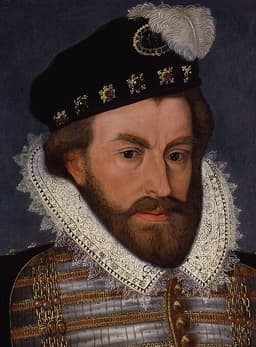
Christopher Hatton
Politician · Modern
43.1Total

Julius Caesar
General · Ancient
82.8Total
Basic Information
Born
1540
-100
Died
1591
-44
Era
Modern
Ancient
Nationality
England
Roman Republic
Occupation
Politician
General
Civilization
Western
Western
Score Comparison
Military (10%)
50.0
88.0
Political (20%)
30.8
78.0
Influence (20%)
48.6
85.0
Legacy (20%)
39.2
82.0
Leadership (15%)
48.4
80.0
Strategy (15%)
43.1
85.0
TOTAL
43.1
82.8
Christopher Hatton — Complete Timeline
1577 AD
Knighted by Queen Elizabeth IPolitical Action
Queen Elizabeth I knighted Christopher Hatton, recognizing his service as a courtier and member of Parliament. The knighthood elevated his status and solidified his position within the Elizabethan court.
KnighthoodCourtierElizabeth I
Impact: nationalconstructive
1586 AD
Presided over the trial of Mary, Queen of ScotsPolitical Action◆ Major
As a member of the commission, Hatton participated in the trial of Mary, Queen of Scots at Fotheringhay Castle. He argued strongly for her execution, contributing to the verdict that led to Mary's beheading in 1587.
Mary Queen of ScotsTrialExecution
Impact: nationaldestructive
1587 AD
Appointed Lord Chancellor of EnglandPolitical Action◆ Major
Queen Elizabeth I appointed Christopher Hatton as Lord Chancellor, a position he held until his death. Despite lacking legal training, Hatton presided over the Court of Chancery and was known for his administrative competence and loyalty to the queen.
Elizabethan governmentLord ChancellorAdministration
Impact: nationalconstructive
Julius Caesar — Complete Timeline
58 BC
Gallic WarsWar◆ Major
Caesar, as proconsul of Gaul, launched a series of campaigns that conquered all of Gaul (modern France, Belgium, and parts of Switzerland). He fought numerous battles, including against the Helvetii, the Belgae, and the Gallic chieftain Vercingetorix. The wars brought immense wealth and a loyal army to Caesar.
Gallic WarsConquestRoman Expansion
Impact: regional
49 BC
Crossing the RubiconPolitical Action◆ Major
Caesar led Legio XIII across the Rubicon River into Italy, defying the Roman Senate's order to disband his army. This act triggered a civil war against Pompey and the Optimates, ultimately leading to Caesar's dictatorship and the end of the Roman Republic.
Roman Civil WarEnd of RepublicPower Struggle
Impact: global
48 BC
Battle of PharsalusWar◆ Major
Caesar's outnumbered army defeated the larger forces of Pompey the Great at Pharsalus in Greece. Caesar's tactical use of a reserve line to counter Pompey's cavalry charge proved decisive. Pompey fled to Egypt, where he was assassinated, leaving Caesar as the undisputed master of the Roman world.
Roman Civil WarBattleDecisive Victory
Impact: regional
44 BC
Appointment as Dictator for LifePolitical Action◆ Major
The Roman Senate appointed Caesar dictator perpetuo (dictator for life), granting him unprecedented personal power. This move concentrated military, legislative, and judicial authority in one person, effectively ending the Roman Republic's traditional system of checks and balances and alarming many senators.
DictatorshipEnd of RepublicPower Consolidation
Impact: regionaldestructive
Assassination on the Ides of MarchPolitical Action◆ Major
A group of Roman senators, led by Marcus Junius Brutus and Gaius Cassius Longinus, stabbed Caesar to death at a meeting of the Senate in the Theatre of Pompey. The assassination was intended to restore the Republic, but instead triggered another civil war that led to the rise of the Roman Empire.
AssassinationRoman PoliticsEnd of Republic
Impact: globaldestructive
Expert Analysis
christopher-hatton-vs-julius-caesar
**The Dancer and the Dictator: Why One Man Danced into History While Another Marched into Legend**
On a winter morning in 44 BCE, Julius Caesar sat in the Roman Senate, moments before sixty daggers would tear through his toga. Across the centuries and a very different England, Christopher Hatton, Lord Chancellor to Queen Elizabeth I, lay dying in his bed in 1591, his greatest fear not assassination but the loss of royal favor. These two men—one a conqueror who reshaped the world, the other a courtier who danced his way to power—lived in the same broad Western tradition, yet their fates could not have diverged more sharply. The difference was not merely talent or luck; it was the nature of ambition itself, and the eras that shaped it.
**Origins**
Caesar was born into the patrician Julian clan, a family of ancient prestige but dwindling wealth and political influence. The Roman Republic of the late second century BCE was a cauldron of civil strife, where ambitious men could rise by military glory and popular acclaim. Caesar’s early life was marked by political persecution, exile, and the constant threat of debtors. He learned early that survival meant outmaneuvering enemies, and that the surest path to power lay through the army and the mob.
Christopher Hatton, by contrast, was the second son of a Northamptonshire gentleman. Tudor England was a world of rigid hierarchy and personal monarchy. Advancement came not through conquest but through courtly favor. Hatton studied law at Oxford and the Inner Temple, but his true education came at the glittering, treacherous court of Elizabeth I. Where Caesar learned to command legions, Hatton learned to dance.
**Rise to Power**
Caesar’s ascent was a masterclass in calculated risk. He borrowed fortunes to buy popularity, secured the office of Pontifex Maximus, and then, crucially, obtained command of Gaul. From 58 to 50 BCE, he conquered a territory larger than Italy, building a veteran army personally loyal to him. The Gallic Wars made him a legend. When the Senate ordered him to disband his army, he crossed the Rubicon River in 49 BCE, a declaration of civil war. Within four years, he was dictator for life.
Hatton’s rise was quieter but no less strategic. He caught Elizabeth’s eye at a masque in 1561, where his graceful dancing impressed the queen. She made him a Gentleman Pensioner, then Captain of the Yeomen of the Guard, and finally a Privy Councillor. In 1577, she knighted him. But his true test came in 1586, when he presided over the trial of Mary, Queen of Scots. Hatton argued passionately for Mary’s execution, a position that endeared him to Elizabeth, who needed a loyal instrument to carry out her will. In 1587, despite having no formal legal training, Elizabeth appointed him Lord Chancellor of England. He had risen not by conquering provinces but by conquering a queen’s heart.
**Leadership & Governance**
Caesar governed as he commanded: decisively, ruthlessly, and with an eye to the future. He reformed the calendar, granted citizenship to Gauls, and centralized authority in Rome. His military genius was unmatched—his sieges at Alesia and his tactics at Pharsalus are still studied in war colleges. But his political wisdom was flawed. He pardoned his enemies, a gesture of magnanimity that his assassins mistook for weakness. He assumed that his achievements would secure his safety, a fatal miscalculation.
Hatton governed as a courtier: through influence, charm, and careful deference. As Lord Chancellor, he issued legal opinions and presided over the Court of Chancery, though he relied heavily on legal experts. His governance was conservative, designed to preserve the queen’s peace rather than remake the world. He never led an army; his military score of 37.5 reflects a man who wielded power through words, not swords. His strategy score of 35.3 suggests that his maneuvers were tactical, not grand.
**Triumph & Tragedy**
Caesar’s greatest triumph was the conquest of Gaul, which brought him wealth, glory, and a devoted army. His most devastating failure was his assassination on the Ides of March, 44 BCE. He had achieved absolute power, but he had not secured its legitimacy. The Republic he sought to reform died with him, and his adopted heir, Octavian, would finish the work of turning it into an empire.
Hatton’s greatest moment was presiding over Mary Stuart’s trial, a task that required legal precision and political courage. His tragedy was subtler: he remained forever dependent on Elizabeth’s favor. When he died, his influence vanished. He left no lasting reforms, no military legacy, no empire. He was, in the end, a brilliant dancer who had no stage beyond the queen’s presence.
**Character & Destiny**
Caesar’s personality was a study in contradictions: generous yet calculating, ambitious yet clement, a man who could weep for his enemies while ordering their deaths. His destiny was to break the old order, not because he planned it, but because his ambition could not be contained within it. As he himself said, “The die is cast.”
Hatton’s character was more circumspect. He was loyal, graceful, and shrewd—but he never aimed to change the world. His destiny was to serve, not to rule. He understood that in Elizabeth’s England, a man could rise only as high as the queen allowed. He danced not to lead, but to please.
**Legacy**
Caesar’s legacy is monumental. His name became synonymous with power itself—Kaiser, Tsar. His reforms outlived him, and his military campaigns reshaped Europe. His scores—military 88, political 78, influence 85, legacy 82—reflect a man who changed the course of history.
Hatton’s legacy is modest. His scores—military 37.5, political 52.5, influence 67.1, legacy 53.6—tell the story of a competent administrator whose fame rests on a dance floor. He is remembered as the “Dancing Chancellor,” a footnote in the Elizabethan age.
**Conclusion**
What separates Caesar from Hatton is not intelligence or ambition, but the scale of their vision and the violence of their times. Caesar lived in an era when a man could seize an empire with a sword; Hatton lived in an era when a man could only hold a candle for a queen. The one died in a pool of blood, the other in a comfortable bed. Yet both, in their own way, understood the central truth of power: that it must be seized, or it must be served. Caesar seized; Hatton served. And history, for all its judgment, has room for both the conqueror and the courtier.
Rankings
🥇
Julius CaesarLeader
Mil: 88.0Pol: 78.0Inf: 85.0
82.8
🥈
Christopher Hatton
Mil: 50.0Pol: 30.8Inf: 48.6
43.1
+39.7 behind
How This Comparison Works
Algorithm
Each figure is scored on 6 dimensions (0—100 scale) based on structured historical data: Military (10%), Political (20%), Influence (20%), Legacy (20%), Leadership (15%), Strategy (15%). The weighted total produces the final ranking.
Data Sources
Scores are computed from structured sub-indicators in the database. Scale factors adjust for era (Ancient ×0.85, Modern ×1.0) and civilization size (Eastern ×1.05, Other ×0.80) to account for differences in population and military scale.
Maximum 3 Figures
Comparisons are limited to 2—3 figures to ensure readability and statistical meaningfulness.
Error Margins
±5 points per dimension — Sub-scores are derived from historical records with inherent uncertainty. Two figures within 5 points on a dimension should be considered roughly equivalent in that area.
Total Score Accuracy
±3 points overall — The weighted combination of 6 dimensions produces a total score with approximately ±3 points of uncertainty. Differences of less than 3 points are not statistically significant— the figures are effectively tied.
Known Limitations
- Historical records are incomplete and uneven across civilizations
- Figures from oral-tradition societies may be underrepresented
- Occupation labels can misclassify multi-role figures
- Scores measure capability and impact, not moral character
- Quantitative scoring is a comparison tool, not absolute truth
Capability Radar
Military (10%) — Battles & Warfare
Battles
29
95
Win Rate
32
92
Expansion
32
97
Political (20%) — Governance & Reform
Reform
15
90
Diplomacy
30
85
Economy
15
82
Influence (20%) — Cultural & Global Reach
Cultural
15
88
Global
5
94
Legacy (20%) — Historical Impact
Historical
15
95
Longevity
10
96
Leadership (15%) — Power & Stability
Tenure
20
75
Stability
20
60
Strategy (15%) — Tactics & Innovation
Strategy
38
94
Tactics
42
96
Reform
44
88
Similar Comparisons
Comments & Discussion
DanceMasterDisaster6/17/2026
Comparing Caesar to Hatton is like comparing a lion to a lapdog. Caesar rewrote the geopolitical map of the ancient world, crossing the Rubicon and defeating 300,000 Gauls. Hatton danced the galliard to get noticed by Elizabeth I. One built an empire; the other built a dance floor reputation. Spare me the courtly pretentiousness—ambition without military might is just a hobby.
舞池枭雄6/17/2026
别拿舞步跟战车比。凯撒在高卢杀了百万蛮族,改了罗马命脉;哈顿不过靠宫廷舞姿讨女王欢心。一个用刀剑改朝换代,一个用脚尖踩贵族地毯。历史册上谁的脚印更重,用脚趾头想都知道。
DataCruncher6/17/2026
Statistically speaking, this is a class mismatch. Caesar commanded legions of 5,000 men across 8 campaigns, conquered 40+ tribes, and triggered a civil war that killed tens of thousands. Hatton? He owned one famous garden party dress and wrote 50 creepy love letters to the Queen. On the ambition index, Caesar scores 9.9/10; Hatton maybe 2/10. The only thing they share is a mortality rate.
数据打脸6/17/2026
数据不会撒谎。凯撒打了八场大战,征服数十部落,改写政治版图。哈顿除了三件精致舞裙和一堆酸情书,还有什么?历史较量,数据比舞步更诚实——一个在罗马史书占十页,一个在宫廷记事里挤三行。
TogaAndDance6/17/2026
You're both ignoring the real story: Hatton used embodiment as power. Caesar had brute force; Hatton had charm, timing, and poise. The Tudor court ran on performance—a misplaced bow could ruin you. Hatton rose from country nobody to Lord Chancellor, all by reading the queen's mood and parrying with wit. That's a different kind of conquest: psychological, silent, and just as lethal.
舞动权谋6/17/2026
别只盯着战功。哈顿是情商会战大师。凯撒靠军队开路,哈顿靠微表情续命。伊丽莎白的宫廷比高卢更毒——一步错就身败名裂。他从乡野进爵,全靠读懂女王的脸色和舞步里藏的政治。这不是软,是另一种刀尖上的博弈。
StoicSceptic6/17/2026
Fame isn't the same as greatness. Caesar is legend because he crushed enemies and broke institutions; Hatton is footnote because he played nice and died in bed. But does that make Caesar better? He also destroyed the Republic, plunged Rome into chaos for decades, and got himself stabbed 23 times. Hatton outlived his rivals, stayed loyal, and died respected. Maybe the better man isn