Loading...
Christopher Loeak vs Julius Caesar
Julius Caesar leads by 35.6 pts · 2 figures compared
…
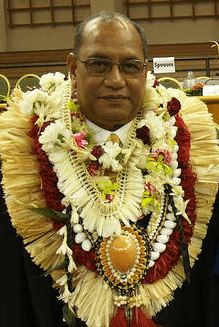
Christopher Loeak
Politician · Modern
47.2Total

Julius Caesar
General · Ancient
82.8Total
Basic Information
Born
1952
-100
Died
—
-44
Era
Modern
Ancient
Nationality
Marshall Islands
Roman Republic
Occupation
Politician
General
Civilization
Other
Western
Score Comparison
Military (10%)
36.5
88.0
Political (20%)
43.7
78.0
Influence (20%)
52.5
85.0
Legacy (20%)
40.8
82.0
Leadership (15%)
62.2
80.0
Strategy (15%)
43.8
85.0
TOTAL
47.2
82.8
Christopher Loeak — Complete Timeline
2012 AD
Elected President of the Marshall IslandsPolitical Action◆ Major
Christopher Loeak was elected President by the Nitijela (parliament). His presidency focused on climate change advocacy and seeking compensation for nuclear testing impacts.
PresidencyNuclear Compensation
Impact: national
2013 AD
Advocated for Nuclear Test CompensationPolitical Action◆ Major
Loeak actively pursued compensation from the United States for the health and environmental effects of nuclear testing in the Marshall Islands. He raised the issue at international forums.
Nuclear TestingAdvocacy
Impact: regionalconstructive
2016 AD
Lost Re-election BidPolitical Action
Loeak was defeated in the presidential election by Casten Nemra. His loss marked a shift in Marshallese politics.
Election LossPolitical Transition
Impact: national
Julius Caesar — Complete Timeline
58 BC
Gallic WarsWar◆ Major
Caesar, as proconsul of Gaul, launched a series of campaigns that conquered all of Gaul (modern France, Belgium, and parts of Switzerland). He fought numerous battles, including against the Helvetii, the Belgae, and the Gallic chieftain Vercingetorix. The wars brought immense wealth and a loyal army to Caesar.
Gallic WarsConquestRoman Expansion
Impact: regional
49 BC
Crossing the RubiconPolitical Action◆ Major
Caesar led Legio XIII across the Rubicon River into Italy, defying the Roman Senate's order to disband his army. This act triggered a civil war against Pompey and the Optimates, ultimately leading to Caesar's dictatorship and the end of the Roman Republic.
Roman Civil WarEnd of RepublicPower Struggle
Impact: global
48 BC
Battle of PharsalusWar◆ Major
Caesar's outnumbered army defeated the larger forces of Pompey the Great at Pharsalus in Greece. Caesar's tactical use of a reserve line to counter Pompey's cavalry charge proved decisive. Pompey fled to Egypt, where he was assassinated, leaving Caesar as the undisputed master of the Roman world.
Roman Civil WarBattleDecisive Victory
Impact: regional
44 BC
Appointment as Dictator for LifePolitical Action◆ Major
The Roman Senate appointed Caesar dictator perpetuo (dictator for life), granting him unprecedented personal power. This move concentrated military, legislative, and judicial authority in one person, effectively ending the Roman Republic's traditional system of checks and balances and alarming many senators.
DictatorshipEnd of RepublicPower Consolidation
Impact: regionaldestructive
Assassination on the Ides of MarchPolitical Action◆ Major
A group of Roman senators, led by Marcus Junius Brutus and Gaius Cassius Longinus, stabbed Caesar to death at a meeting of the Senate in the Theatre of Pompey. The assassination was intended to restore the Republic, but instead triggered another civil war that led to the rise of the Roman Empire.
AssassinationRoman PoliticsEnd of Republic
Impact: globaldestructive
Expert Analysis
christopher-loeak-vs-julius-caesar
# The Measure of Greatness: Julius Caesar and Christopher Loeak
On the Ides of March, 44 BCE, blood pooled on the marble floor of the Roman Senate as sixty conspirators plunged their daggers into Gaius Julius Caesar. In a cramped conference room 2,056 years later, Christopher Loeak sat across from American officials, pressing a slim folder of medical records across a polished table—evidence of cancers that had radiated through generations of Marshallese islanders. Two men, separated by millennia, oceans, and every conceivable scale of power. One reshaped the Western world; the other fought for the survival of his people. What drove them, and why do we remember one as a colossus and the other as a footnote?
Origins
Caesar was born into the patrician Julian clan, a family claiming descent from the goddess Venus, but his Rome was a Republic choking on its own ambition. His father died when Caesar was sixteen, leaving him to navigate a brutal political arena where alliances shifted like desert sands. He learned early that survival meant audacity—borrowing fortunes he could not repay, marrying into the powerful populares faction, and fleeing Sulla’s proscriptions with a price on his head.
Christopher Loeak entered the world in 1952 on Ailinglaplap Atoll, a necklace of coral and palm trees in the vast Pacific. The Marshall Islands had just emerged from American trusteeship after World War II, but the legacy of war was already poisoning the water. Between 1946 and 1958, the United States detonated 67 nuclear weapons in the Marshall Islands—the equivalent of 1.6 Hiroshima bombs per day for twelve years. Loeak grew up in a world where the sky had glowed orange, where children played in radioactive ash, and where his people were slowly dying from cancers that had no name in the Marshallese language.
Rise to Power
Caesar’s ascent was a masterpiece of calculated risk. He served as quaestor in Spain, where he wept before a statue of Alexander the Great—frustrated that at thirty-three, he had achieved nothing compared to the Macedonian conqueror. He climbed the cursus honorum through bribery, military command, and the shrewd manipulation of Rome’s factional hatreds. His appointment as governor of Gaul in 58 BCE gave him the army he needed. For eight years, he conquered a territory larger than Italy, wrote his own propaganda in elegant Latin, and built a legend that made the Senate tremble.
Loeak’s path was quieter but no less determined. He studied law, entered the Nitijela (parliament), and became a voice for the victims of the nuclear testing program. In 2012, he was elected President of the Marshall Islands—a position that gave him a platform but little power. His nation had no army, no navy, no economy beyond subsistence fishing and American aid. His rise was not marked by conquests but by petitions, speeches at the United Nations, and the slow, grinding work of documenting the dead.
Leadership & Governance
Caesar governed as he conquered: with speed, ruthlessness, and a vision that saw beyond the Republic. As dictator, he reformed the calendar, granted citizenship to provincials, redistributed land to veterans, and began public works that would outlast him. His military genius lay in speed and logistics—he crossed the Rhine, invaded Britain, and crushed Pompey’s armies at Pharsalus with a fraction of the enemy’s numbers. But his political wisdom was flawed. He pardoned his enemies, only to have them stab him. He centralized power, only to make himself the target of every ambitious senator.
Loeak governed from a position of weakness, but he turned that weakness into moral authority. His presidency focused on two issues: climate change and nuclear compensation. He stood before the International Court of Justice and reminded the world that the Marshall Islands had been sacrificed for the Cold War. He argued that rising sea levels—driven by the same industrial powers that had tested bombs—would erase his country entirely. His leadership was not about conquest but about witness. He could not command armies; he could only tell the truth and hope the world listened.
Triumph & Tragedy
Caesar’s triumph was absolute. In 46 BCE, he celebrated four successive triumphs in Rome—for Gaul, Egypt, Pontus, and Africa—parading captives, treasures, and the captured standards of his enemies. He was declared dictator for life, his face stamped on coins, his name synonymous with power. But the tragedy was equally absolute. On March 15, 44 BCE, he was assassinated by men he had trusted, bleeding out at the foot of Pompey’s statue—the man he had defeated. His last breath was not a grand speech but a stunned silence.
Loeak’s triumph was quieter. In 2013, he secured a $2.3 billion settlement from the United States for nuclear test victims—not enough to undo the damage, but enough to fund healthcare and relocation for thousands. His tragedy came in 2016, when he lost re-election to Casten Nemra. The shift in Marshallese politics was not a coup or a conspiracy; it was simply the exhaustion of a small nation with limited resources and a world that had stopped listening.
Character & Destiny
Caesar was driven by an insatiable hunger for glory. He gambled everything—his fortune, his life, his legacy—on the belief that he was destined for greatness. He wrote his own history, controlled his own narrative, and died believing he had become immortal. In a sense, he was right. His name became a title: Kaiser, Tsar, Caesar.
Loeak was driven by duty, not glory. He did not seek greatness; he sought justice for a people the world had forgotten. He knew that his name would never be carved into marble, that his face would not appear on coins. But he also knew that the children of the Marshall Islands deserved to grow up without watching their parents die from radiation sickness. That was his victory.
Legacy
Caesar’s legacy is the Roman Empire itself—the legal system, the Latin language, the calendar, the very shape of Western civilization. He is remembered as a genius, a tyrant, a martyr, a god. His story is taught in every school, debated in every history department, reenacted in every Shakespearean theater.
Loeak’s legacy is more fragile. The Marshall Islands still exist, but rising seas threaten to erase them. The nuclear compensation fund still pays out, but new cancers appear every year. He is remembered by his people, by a handful of environmental activists, by the United Nations delegates who nodded politely at his speeches. He will not be a figure in world history textbooks. But he was no less heroic.
Conclusion
We measure greatness by scale—by the size of armies, the breadth of empires, the weight of influence. Caesar toppled a republic and built an empire that lasted fifteen centuries. Loeak could not stop the bombs or the tides. But greatness is also measured by courage—by the willingness to stand before overwhelming power and speak the truth. Caesar crossed the Rubicon because he believed he deserved the world. Loeak crossed the ocean because he believed his people deserved to live. Both were right. Both were wrong. And both, in their own way, changed history. The difference is not in their achievements, but in the size of the stage on which they performed.
Rankings
🥇
Julius CaesarLeader
Mil: 88.0Pol: 78.0Inf: 85.0
82.8
🥈
Christopher Loeak
Mil: 36.5Pol: 43.7Inf: 52.5
47.2
+35.6 behind
How This Comparison Works
Algorithm
Each figure is scored on 6 dimensions (0—100 scale) based on structured historical data: Military (10%), Political (20%), Influence (20%), Legacy (20%), Leadership (15%), Strategy (15%). The weighted total produces the final ranking.
Data Sources
Scores are computed from structured sub-indicators in the database. Scale factors adjust for era (Ancient ×0.85, Modern ×1.0) and civilization size (Eastern ×1.05, Other ×0.80) to account for differences in population and military scale.
Maximum 3 Figures
Comparisons are limited to 2—3 figures to ensure readability and statistical meaningfulness.
Error Margins
±5 points per dimension — Sub-scores are derived from historical records with inherent uncertainty. Two figures within 5 points on a dimension should be considered roughly equivalent in that area.
Total Score Accuracy
±3 points overall — The weighted combination of 6 dimensions produces a total score with approximately ±3 points of uncertainty. Differences of less than 3 points are not statistically significant— the figures are effectively tied.
Known Limitations
- Historical records are incomplete and uneven across civilizations
- Figures from oral-tradition societies may be underrepresented
- Occupation labels can misclassify multi-role figures
- Scores measure capability and impact, not moral character
- Quantitative scoring is a comparison tool, not absolute truth
Capability Radar
Military (10%) — Battles & Warfare
Battles
23
95
Win Rate
23
92
Expansion
26
97
Political (20%) — Governance & Reform
Reform
35
90
Diplomacy
45
85
Economy
25
82
Influence (20%) — Cultural & Global Reach
Cultural
20
88
Global
25
94
Legacy (20%) — Historical Impact
Historical
30
95
Longevity
15
96
Leadership (15%) — Power & Stability
Tenure
30
75
Stability
30
60
Strategy (15%) — Tactics & Innovation
Strategy
31
94
Tactics
33
96
Reform
36
88
Similar Comparisons
Comments & Discussion
No comments yet. Be the first to share your thoughts!